
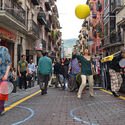
The spatial consequences of urban form are revealed when health outcomes are mapped over neighborhoods. Neighborhoods that support walking, daily errands, social interaction, and access to essential services create opportunities to incorporate physical activity into routine tasks. Places that are organized around long distances and automobile travel suppress this opportunity. Physical activity and the motivation to incorporate it into daily life are shaped by the distance to a grocery store, the safety of a pedestrian crossing, the frequency of public transportation, the width of a sidewalk, and the quantity of services within walking distance.
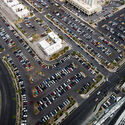

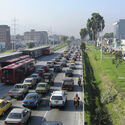

For decades, conversations about rising obesity and metabolic health have concentrated on individual behavior. People are encouraged to exercise more, eat better, and make healthier choices. Good urban design practices challenge the environment that makes these practical and accessible. Consider a neighborhood where the nearest grocery store is several miles away, the streets are wide with high travel speeds, sidewalks are intermittent, and services between are dispersed. Driving is the rational response for this specific task of reaching the grocery store. Walking requires additional time, exposure to traffic and unsafe sidewalk conditions, or routes that don't offer safety or shade. Repeated across millions of daily trips, these ordinary choices influence how people move through their environments.


