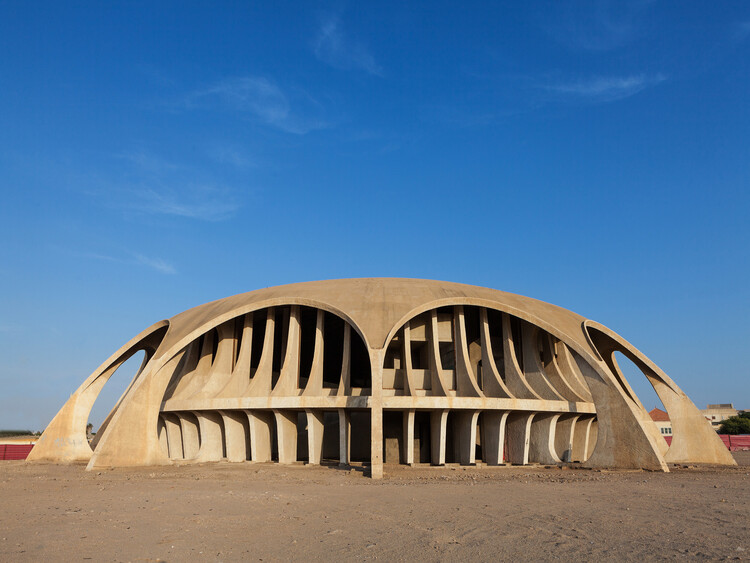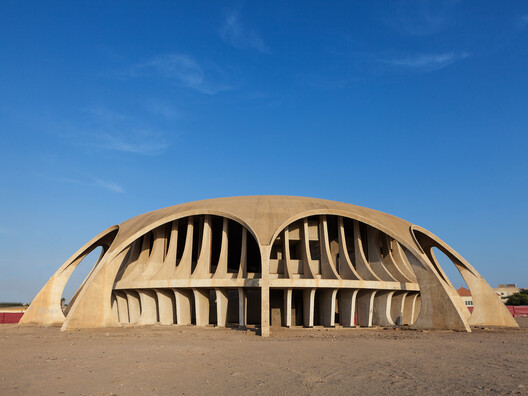
What sustains the purpose of architecture that has never been occupied? For decades, this was the question surrounding the Namibe Cinema-Studio, built on the coast of Angola in 1973. Conceived as a film screening venue, the building remained closed and abandoned, never fulfilling the role for which it was created. Yet it withstood the passage of time, becoming an icon of the Angolan landscape and architecture, until finally screening its first film nearly fifty years later.
But what kept this building alive in the collective imagination for so long? Was it precisely its bold, singular architecture that was able to give meaning to a project that never had a use?