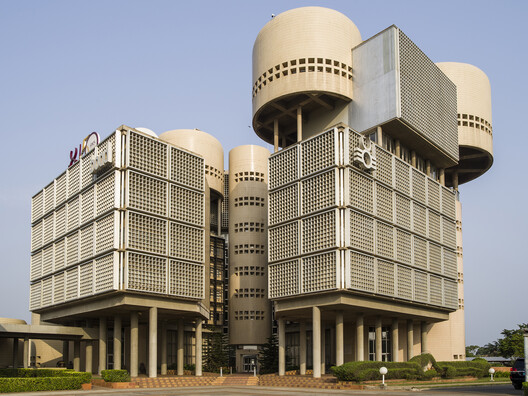
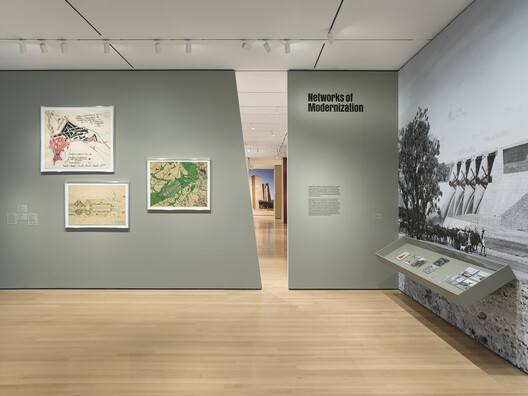
The Museum of Modern Art in New York inaugurated the exhibition Architects of Liberation: Modernism in Western Africa on July 5, 2026, on view through January 2, 2027. The exhibition examines African modern architecture from the late 1950s through the early 1980s in the context of political independence in the region. Works span seven countries: Benin, Cameroon, Côte d'Ivoire, Ghana, Nigeria, Senegal, and Togo. The display is organised around anchor projects selected as "entry points" into categories such as cityscapes, education, and housing. It is curated by Martino Stierli, The Philip Johnson Chief Curator of Architecture and Design, and Ikem Stanley Okoye, guest curator and associate professor at the University of Delaware, with Mallory Cohen, curatorial associate in the Department of Architecture and Design.
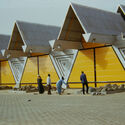
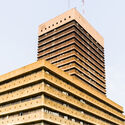
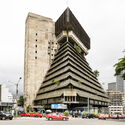
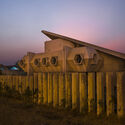
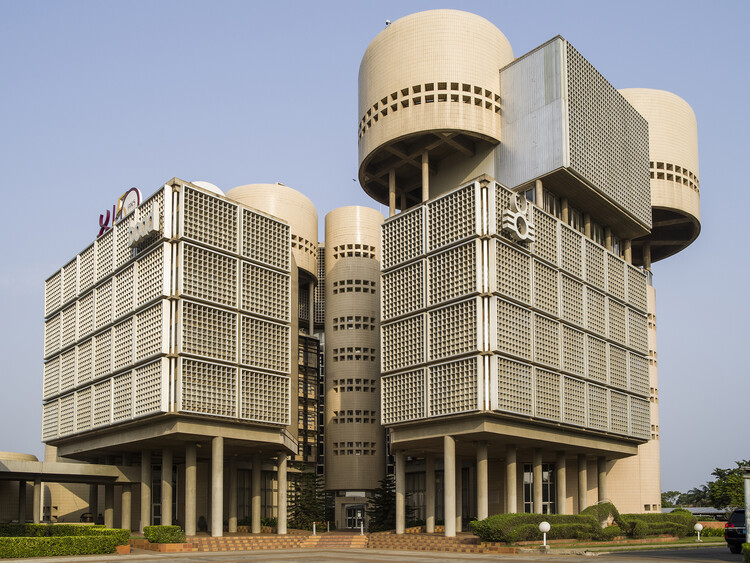
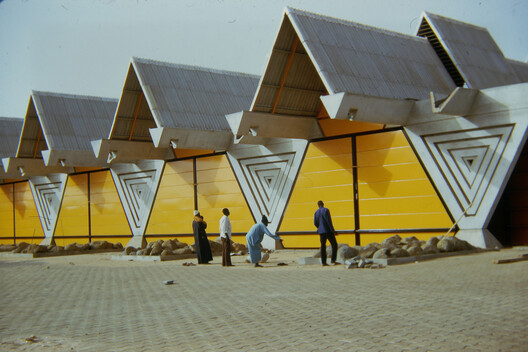
Architects of Liberation: Modernism in Western Africa highlights the independence period on the continent as a prolific time of architectural production. The period covered by the curatorship is characterised by African independence movements that culminated in the "Year of Africa" in 1960, when seventeen countries across the continent gained political independence from their colonial rulers. According to MoMA, leaders of the newly founded African nations sought to redefine themselves and their countries in contrast to colonial rule, facing questions that went hand in hand with a new cultural awakening in art, music, dance, and literature. This new architectural identity engaged deeply with broader political ideas of Pan-Africanism and Africanisation.
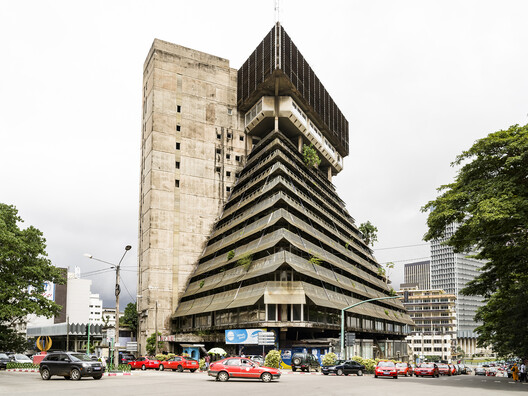
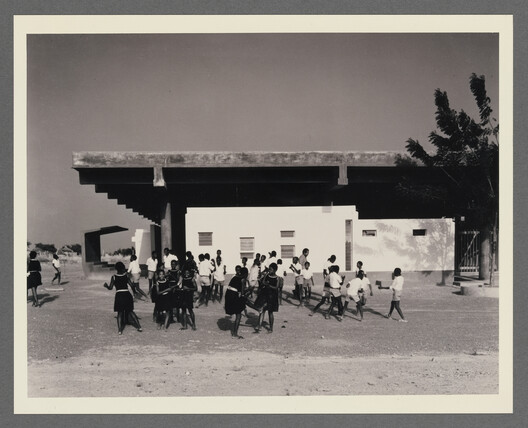
Featured works from this period pay particular attention to the critical contributions of the first generation of trained African architects. The curatorial approach applies the term "western Africa" loosely, designating the broad coastal region spanning from Senegal to the eastern reaches of the Gulf of Guinea. According to curator Martino Stierli, the exhibition brings to light an under-examined period of African history at mid-century, offering a new perspective on the continent. Featuring approximately 450 objects, the result of four years of extensive research in the region, Architects of Liberation aims to present an "architectural language of self-determination" that sought to adapt, adopt, or reinvent the idiom of modernism for specific cultural, political, and economic purposes, and for particular climatic conditions.
The material on display includes architectural drawings, models, and archival photographs drawn from the collections of over 50 lenders across 17 countries. The vast majority of the objects on view have never previously been presented publicly, and most of the architects included have never before been featured in an exhibition or scholarly publication. The exhibition also includes original and newly commissioned architectural models, alongside a suite of new films and commissioned photographs.
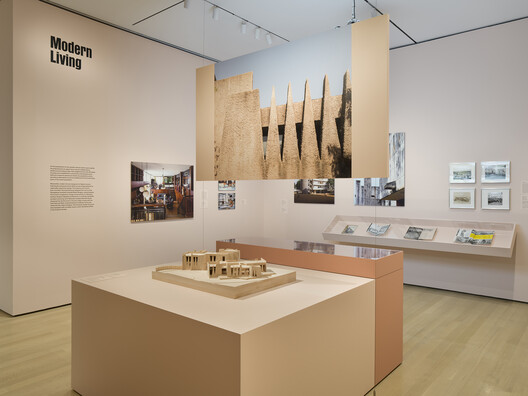
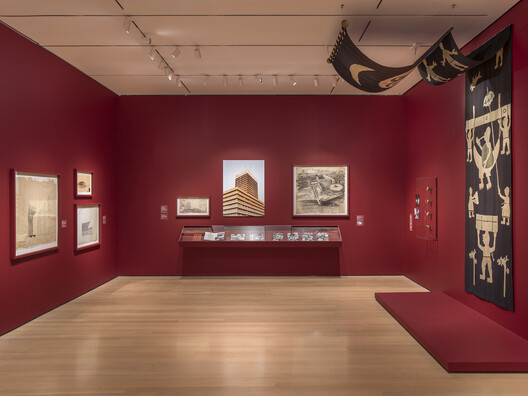
Buildings on display in the exhibition include the Africa Pavilion at the Accra Trade Fair in Ghana, a circular pavilion symbolising Ghanaian unity, designed by Vic Adegbite, Jacek Chyrosz, and Stanisław Rymaszewski and led by the Ghana National Construction Corporation (GNCC) between 1962 and 1967; The Pyramide in Côte d'Ivoire, an iconic high-rise designed by Rinaldo Olivieri and completed in 1973, which reshaped the skyline of Abidjan, the country's largest city; CICES in Senegal, a trade-fair campus designed by French architects Jean-François Lamoureux and Jean-Louis Marin, emblematic of President Léopold Senghor's concept of "asymmetrical parallelism," which introduced diverse, non-repeating elements to create dynamic harmonies; Gare de Bessengue in Cameroon, a train station designed by Jacques Nsangue Akwa and Emilien Douala Bell; and the University of Ife in Nigeria, an ambitious educational project with a masterplan by Arieh Sharon.
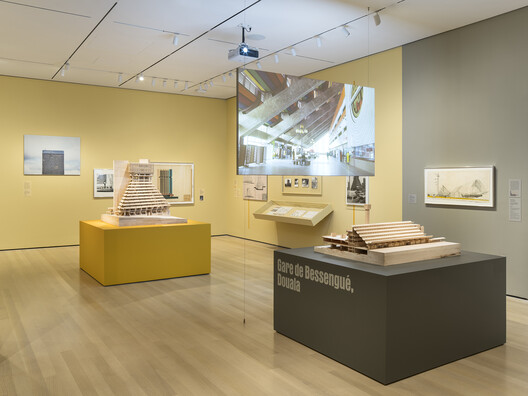
The display highlights a diverse group of practitioners, including Jean Léon (Côte d'Ivoire), Cheikh Ngom (Senegal), Demas Nwoko (Nigeria), John Owusu Addo (Ghana), and Vic Adegbite (Ghana), alongside architects from outside the African continent, such as Zoran Bojović (Yugoslavia), Rinaldo Olivieri (Italy), and Henri Chomette (France). It is accompanied by a catalogue featuring 175 colour illustrations, edited by Stierli and Okoye with Cohen, including a newly commissioned photographic portfolio by François-Xavier Gbré, alongside contributions by Adekunle Adeyemo, Guillermo S. Arsuaga, Sabrine Bako, Antawan I. Byrd, Brunno Douat, Johan Lagae, Sonia Lawson, Ayala Levin, Prita Meier, Monika Motylińska, Marcos García Mouronte, Studio NEiDA, and Łukasz Stanek, Y. L. Lucy Wang. On view from July 5, 2026, through January 2, 2027, Architects of Liberation: Modernism in Western Africa is located in The Robert B. Menschel Galleries on the Museum's third floor.
The exhibition What Is This? A Spa, a Gym, a Zoo for Tiny Animals? is on view at the Palau Victòria Eugènia in Barcelona from May 11 to July 5, 2026. Organised by the Fundació Mies van der Rohe and curated by Anna Sala and Ivan Blasi, the exhibition presents the institution's archive through a new curatorial framework, bringing together architectural models, drawings, documents, films, and records of artistic interventions that have taken place at the Barcelona Pavilion since 1986. Elsewhere, the third edition of the Sharjah Architecture Triennial (SAT03), taking place from November 14, 2026, to April 14, 2027, under the title Architecture Otherwise: Building Civic Infrastructure for Collective Futures, recently announced its list of participants. Meanwhile, the 15th São Paulo International Architecture Biennial (BIAsp), scheduled for September and October 2027, announced architects Gabriela de Matos and Pedro Rossi as the event's chief curators.


