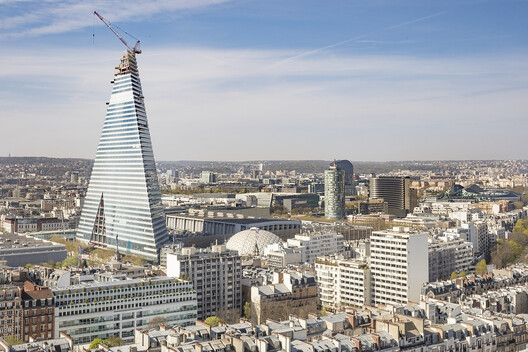
Twenty years after its ideation, Herzog & de Meuron's controversial Tour Triangle in Paris is reaching completion. The triangular, all-glass tower located in the city's 15th arrondissement topped out at 42 stories on April 24, 2026. The project's progress was marked by opposition, financial roadblocks, and legal disputes before construction began in 2022. The 180-meter tower is now the third-tallest building within Paris city limits, behind the 330-meter-tall Eiffel Tower, the 231-meter-tall The Link in La Défense, and the 210-meter-tall Tour Montparnasse. The building will retain this title indefinitely due to a skyscraper ban reinstated in 2023 by Mayor Anne Hidalgo, following persistent opposition to tall buildings in the city. The recent progress was documented by photographer Stefano Candito, ranging from an urban view of the building to a close-up look at its nearly completed structure.
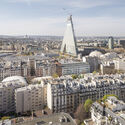
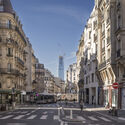
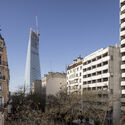
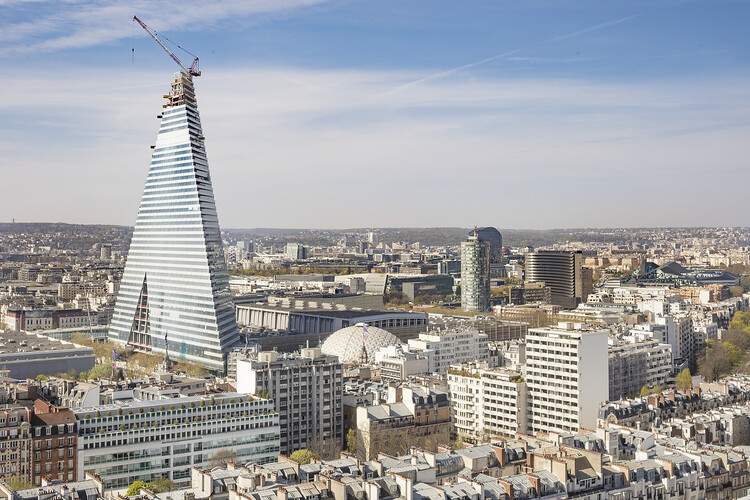
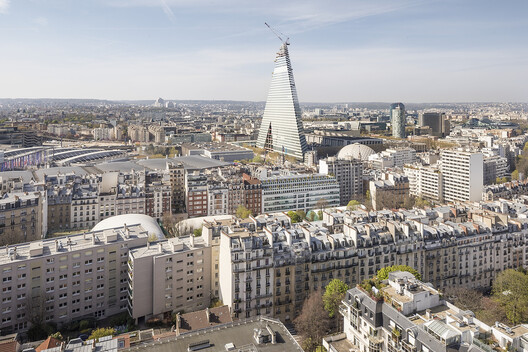
Tour Triangle, designed by Herzog & de Meuron in collaboration with Valode & Pistre, is located on the Place de la Porte de Versailles, at the southern edge of the 15th arrondissement, at the edge of Paris's ring road. The neighbourhood is shaped mainly by middle-class Parisian residential fabric, Haussmann-era buildings, and small businesses, an "urban infrastructure zone" aimed to be regenerated through this mixed-use project and the ongoing renovation of the Paris Expo exhibition and conference centre. Wider at the base due to its trapezoidal shape, the Tour's ground level is open to the public: with a daycare centre, a health centre, a cultural centre, restaurants, cafés, and shops, it's designed for pedestrian circulation. A hotel, offices, a restaurant, and a panoramic belvedere are situated on the top four floors of the tower's publicly accessible peak. The building reads at a metropolitan scale. According to the architects, the triangular form responds to its context by reducing the projection of shadows onto neighbouring buildings.
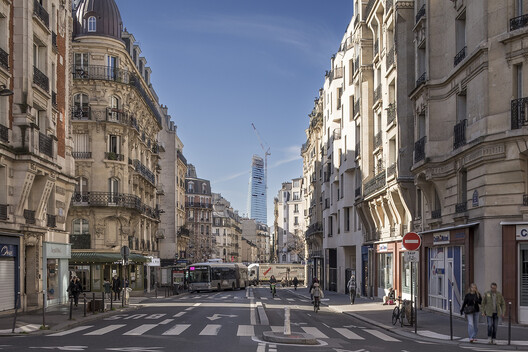
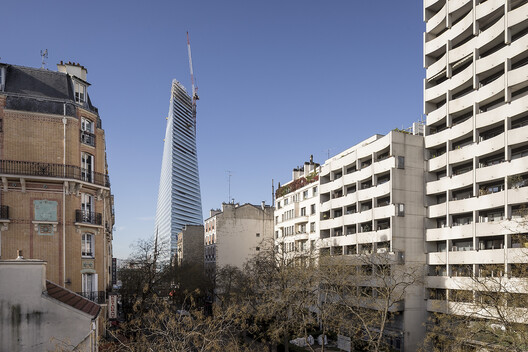
The project went through twenty years marked by opposition and conflict, running more than a decade behind schedule. In 2008, Mayor Delanoë presented the tower, initially planned to be completed by 2014. In 2010, the City of Paris raised its building height limit to 180 m, enabling the project, and the site was cleared in 2013. But in 2014, Paris city councillors rejected the project amid concerns over its height and impact on the city's historic landscape. The ruling was later declared invalid, giving way to a second ballot in 2015, which passed and allowed the permit to be officially issued in April of that year. The plan survived multiple court challenges, with an administrative court upholding the permit in 2019. Financing was secured in 2021, when developer Unibail-Rodamco-Westfield struck a partnership deal with an investment arm of French insurance multinational AXA. The project finally broke ground in 2022, sixteen years after the first designs were drawn, reaching full height in April 2026.
Throughout this period, environmentalists, heritage preservationists, housing advocates, and conservative politicians aligned against the project. Concerns centred mainly on the building's scale, as the city had consistently limited building heights to preserve views of its famous monuments, such as the Arc de Triomphe and Notre-Dame. The Ecologist Party denounced the glass tower as "an ecological aberration in an era of global warming," while campaign and residents' groups called the project a scandal, unnecessary, and unresponsive to contemporary needs such as housing, public transport, and a sustainable environment. The controversy ultimately contributed to the city reinstating its height limit of 37 meters, or 12 storeys. Opposition groups also attempted to stop the project on grounds of potential favoritism on the part of the office of Mayor Anne Hidalgo, particularly after she declared the initial 2014 rejection vote invalid and called a second one that passed in the tower's favour.
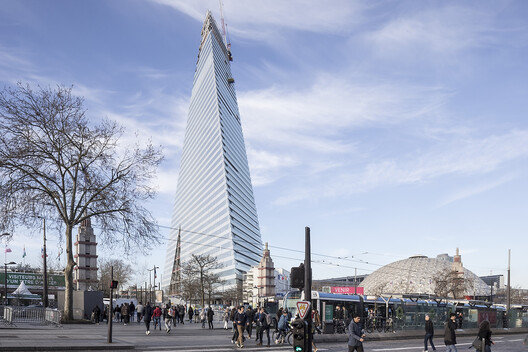
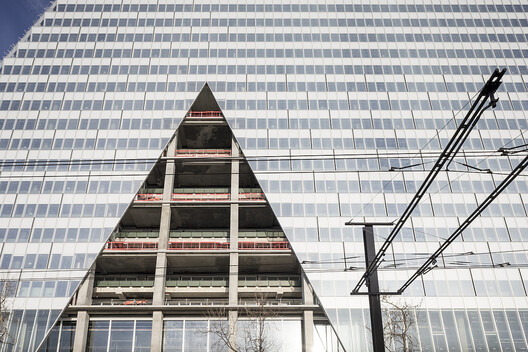
The project weathered all opposition and is now standing and nearly complete. Stefano Candito's images document this final stage, providing a comprehensive picture of the tower as it nears completion. They show the project's presence within the urban landscape, its relationship to its surroundings, and the texture and rhythm of its nearly fully glazed façade. The tower joins a growing list of renovations and large-scale projects underway in the French capital. On May 21st, a life-size cave appeared on Paris's Pont Neuf, the oldest standing bridge across the Seine, as a temporary inflatable artwork by street artist JR. Earlier this month, Selldorf Architects, STUDIOS Architecture, and BASE Paysagiste were selected to renovate the Louvre Museum, while Bernard Tschumi's Parc de la Villette is undergoing a major transformation to adapt the 55.5-hectare park to climate change. Earlier this year, RSHP won a competition to redevelop an 8-hectare site at the western edge of La Défense into a low-carbon, mixed-use neighbourhood. Meanwhile, the long-debated Tour Montparnasse closed in March 2026 ahead of a major redevelopment of the tower and its surrounding complex.


