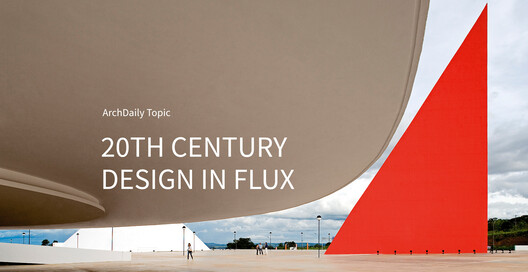
"The story of architecture is not wrong," argued Lesley Lokko in her introduction to the Venice Architecture Biennale 2023, "but it is incomplete." For most of the 20th century, architectural history spoke in one tongue: a singular, dominant narrative centered on a handful of movements, names, and cities, whose reach and influence appeared universal precisely because alternative voices were rendered inaudible. Design movements, however, rarely traveled intact across borders. They were frequently absorbed, resisted, reinterpreted, and transformed depending on geography, politics, economy, climate, and available materials. What arrived in one place as doctrine became, somewhere else, something entirely different.
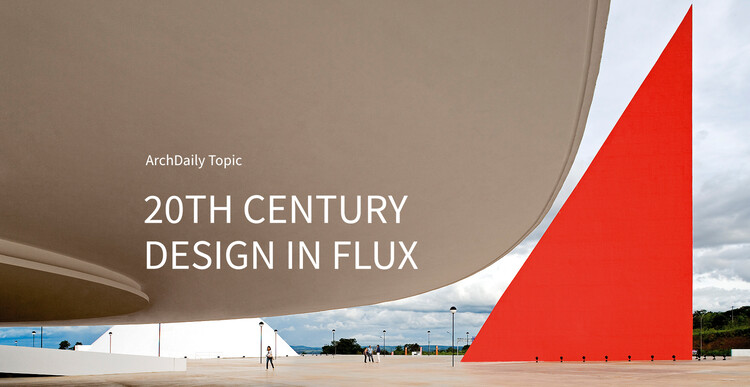
This month, ArchDaily explores 20th Century Design in Flux: A Global Reinterpretation of Architectural History, a topic that traces the century's design languages not as a single canon but as a constellation of evolving, intersecting, and continually reinvented trajectories. The theme challenges the assumption that regional and non-Western architectures were merely derivative — positioning them instead as sites of active reinterpretation, where global ideas were filtered through local materials, climates, labor, and cultural practices to produce something entirely distinct.
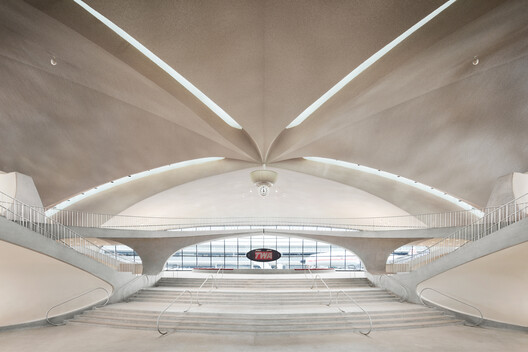
The coverage approaches this reinterpretation from multiple scales and geographies. A comparative reading of Chandigarh and Brasília examines two of the 20th century's most ambitious urban experiments and what their diverging afterlives reveal about ideology, climate, and the unfinished promises of modernist planning. In Southeast Asia, the satellite city model found unexpected continuations, evolving into transit-linked urban forms that outlasted the ideological frameworks that inspired them. The coverage also turns inward: furniture, domestic objects, and interior environments are examined as sites where grand modernist ideas became lived experience, carrying global movements into the everyday home. And in contemporary cinema architecture, the material cultures and spatial legacies of 20th-century design resurface in new contexts, asking how the century's visual languages persist, mutate, and find new audiences.
Related Article
The Birth of Design Movements: Where Are We Now?Across these investigations, a shared concern emerges: the story of 20th-century design is not one story, but many — shaped by postcolonial independence, political ideology, climate, and cultural exchange in ways that canonical timelines have largely failed to capture.
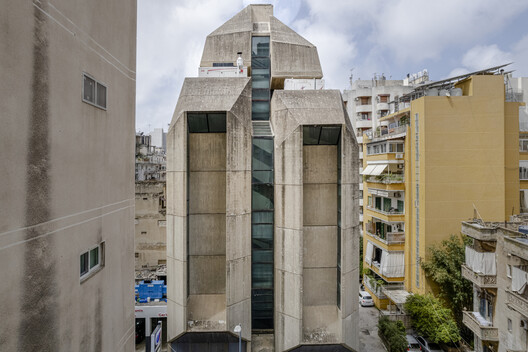
As these perspectives unfold, deeper questions emerge: What alternative design genealogies appear when the lens shifts beyond Western canons? How did interior spaces reinterpret and reshape global movements from within? And why do certain regional histories remain at the margins of architectural discourse?
This month's coverage invites readers to look again at a century they may think they already know and to find in its gaps, peripheries, and overlooked geographies a far more complex and more complete story.
This article is part of the ArchDaily Topic: 20th Century Design in Flux: A Global Reinterpretation of Architectural History. Every month we explore a topic in-depth through articles, interviews, news, and architecture projects. We invite you to learn more about our ArchDaily Topics. And, as always, at ArchDaily we welcome the contributions of our readers; if you want to submit an article or project, contact us.