The flood does not arrive as a surprise. It returns, following the same swollen rivers and monsoon skies, loosening the ground and entering homes that were never meant to resist it. Walls are untied before they are lost, materials are gathered before they drift, and structures are rebuilt with a familiarity that suggests this is not destruction, but sequence. In landscapes where water returns each year, survival is defined by the ability to begin again.
Across the floodplains of Bangladesh, the Brahmaputra basin, and the Mekong Delta, inundation is a seasonal certainty. Reports by institutions such as the World Bank and the Intergovernmental Panel on Climate Change often frame floods through exposure and damage, measuring success through resistance and durability. Yet in territories that are submerged annually, such metrics only partially describe the problem. The ground itself oscillates between solid and liquid states. To build as if it were fixed is to design against the very condition that defines it.
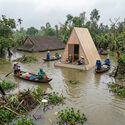
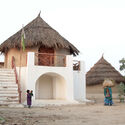
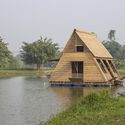

In response, architecture operates through a different set of decisions, calibrated not for permanence, but for reversibility. Materials are selected for ease of replacement, structural systems for disassembly, and spatial layouts for movement with minimal effort. The Khudi Bari housing system in Bangladesh makes this logic explicit: a lightweight bamboo frame reduces structural load, joints allow the structure to be taken apart, and construction relies on local labor rather than specialized processes. What appears modest is, in fact, highly precise. Every decision anticipates a future moment of disassembly.
Related Article
Building Optimism: Lessons from Climate Adaptation in 2025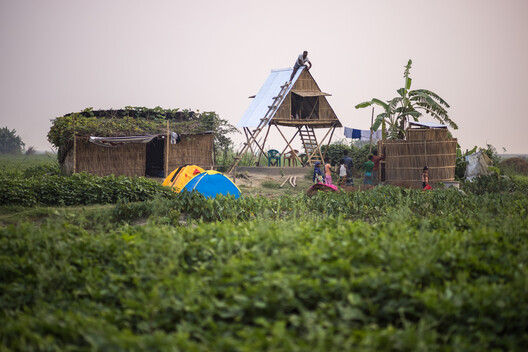
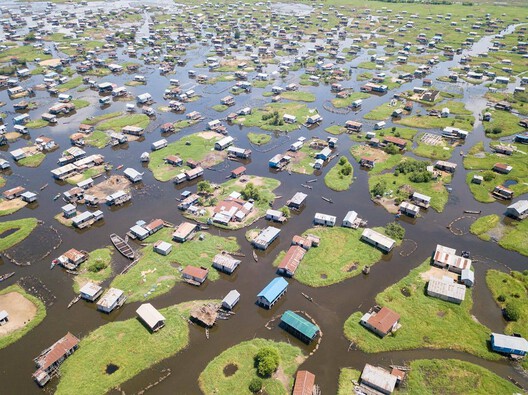
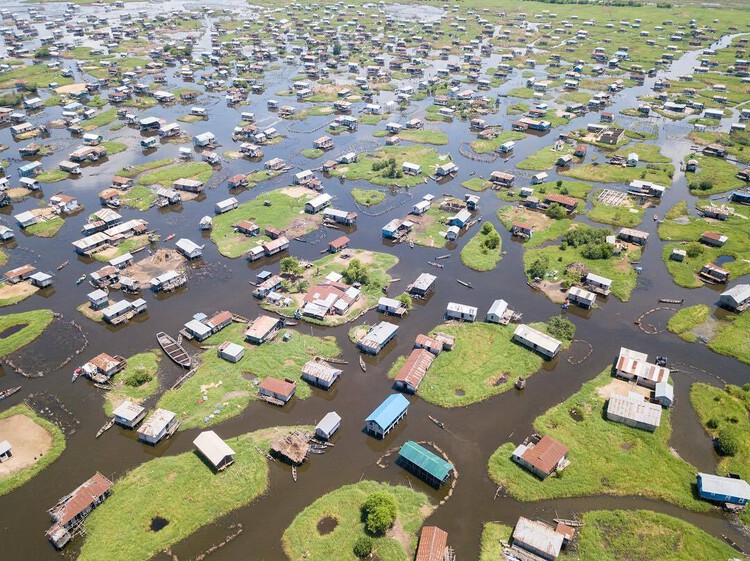
This logic extends beyond the scale of the individual dwelling. When flooding is not an interruption but a recurring condition, entire settlements reorganize around water. In Ganvié, a village built over a lagoon in Benin, houses are elevated on stilts, circulation takes place by boat, and daily life unfolds on a surface that is never fully dry. The settlement does not defend itself against flooding; it is structured by it. Stability is achieved not by fixing buildings to the ground, but by aligning them with a condition of constant fluctuation.
What emerges from these systems is not fragility, but a different kind of performance. Lightweight and modular architectures tend to fail incrementally rather than catastrophically, allowing parts to be repaired or replaced without total loss. In contrast, heavier and more rigid constructions are designed to resist specific thresholds; when those thresholds are exceeded, failure is often abrupt and recovery prolonged. Studies by institutions such as the Asian Development Bank and the World Bank suggest that in flood-prone regions, resilience is often tied less to preventing damage and more to reducing recovery time and maintaining continuity of use.
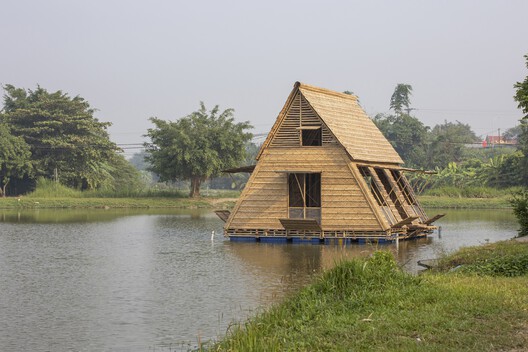
The Floating Bamboo House by H&P Architects extends this performance through minimal intervention. A bamboo structural system keeps the building light, while recycled barrels provide buoyancy, allowing the house to rise with floodwaters. Rather than attempting to keep water out, the design accommodates its presence, enabling occupation to continue during inundation. Here, resilience shifts from post-disaster recovery to continuous habitation, a subtle but significant redefinition.
More engineered responses, such as the amphibious houses developed by CTA Creative Architects, operate on similar principles but introduce greater technical complexity. Buoyant foundations and vertical guideposts allow structures to rise in place as water levels increase. These systems demonstrate how adaptability can be integrated into formal construction, but they also reveal a tension. As architecture becomes more engineered, it risks losing the accessibility and repairability that define many vernacular systems. What is gained in precision may be offset by dependence on systems that are harder to maintain locally.
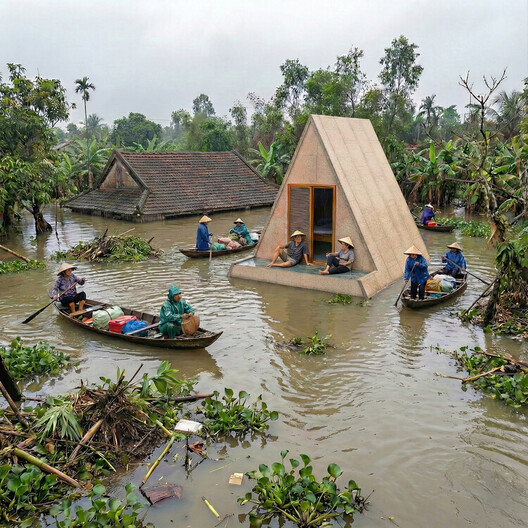
This tension becomes more pronounced when adaptive logics are translated into institutional frameworks. Standardization often replaces variability, and durability is prioritized over flexibility. What was once a system capable of evolving with environmental conditions becomes fixed into a repeatable model. In this process, resilience is subtly redefined, not as the capacity to adapt, but as the ability to endure without change.
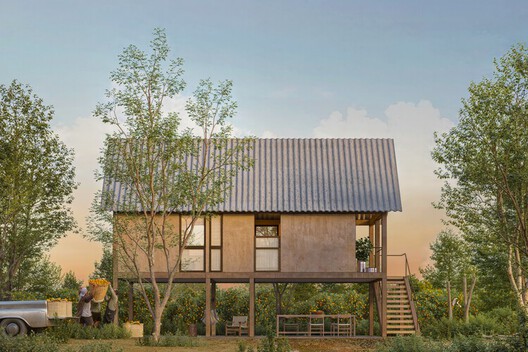
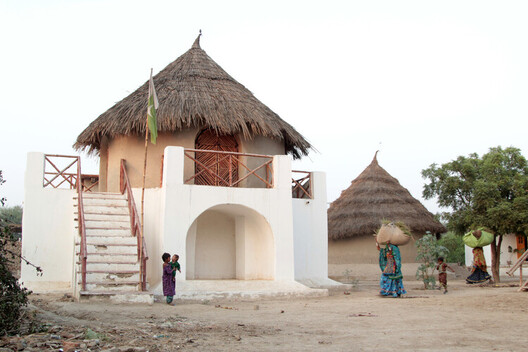
Part of this misalignment lies in how such architectures are understood. Systems that rely on lightness, modularity, and transformation often fall outside dominant architectural categories. They are read as temporary rather than intentional, informal rather than designed. This interpretation exposes a limitation in the framework used to assess them. Anthropological studies, such as those by William Balée, have shown how landscapes that appear "natural" are often the result of long-term human cultivation. A similar misrecognition occurs in flood-prone settlements, where what appears as impermanence is, in reality, a system refined over time.
Here, architecture is not confined to a singular object, but distributed across processes: how structures are assembled, dismantled, relocated, and rebuilt. It operates through time rather than against it. The building is only one moment within a longer cycle.
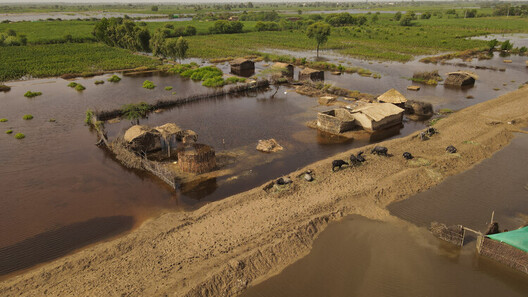
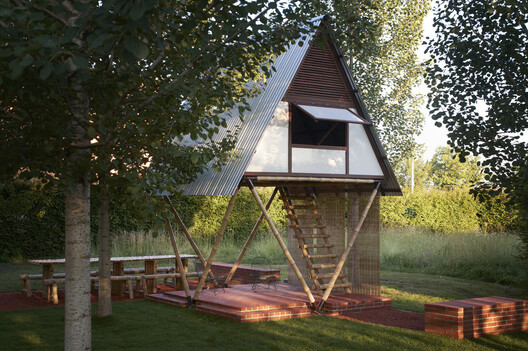
To address this gap, resilience must be reconsidered. Instead of measuring how well a building resists water, we might evaluate how easily it can be repaired, relocated, or rebuilt. Instead of focusing solely on damage, we might consider recovery time, material reuse, and continuity of habitation. Frameworks such as those proposed by the United Nations Office for Disaster Risk Reduction begin to gesture toward this shift, but often remain tied to assumptions of stability that do not fully hold in fluctuating landscapes.
Across flood-prone regions, architecture already operates within this expanded understanding. It remains light so it can move. Its parts return to use through rebuilding. Adaptability follows from the demands of the environment. These qualities are not signs of deficiency, but of precision: responses calibrated over time to align with cycles of water rather than resist them. In such contexts, resilience is not defined by what remains unchanged. It is defined by what can disappear, return, and continue, again and again.
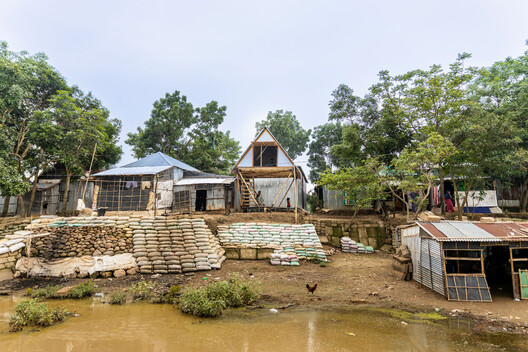
This article is part of the ArchDaily Topic: Light, Lighter, Lightest: Redefining How Architecture Touches the Earth, proudly presented by Vitrocsa, the original minimalist windows since 1992.
Vitrocsa designed the original minimalist window systems, a unique range of solutions, dedicated to the frameless window boasting the narrowest sightline barriers in the world. Manufactured in line with the renowned Swiss Made tradition for 30 years, Vitrocsa's systems "are the product of unrivaled expertise and a constant quest for innovation, enabling us to meet the most ambitious architectural visions."
Every month we explore a topic in-depth through articles, interviews, news, and architecture projects. We invite you to learn more about our ArchDaily Topics. And, as always, at ArchDaily we welcome the contributions of our readers; if you want to submit an article or project, contact us.