1. ArchDaily
  2. Lighter

Lighter: The Latest Architecture and News

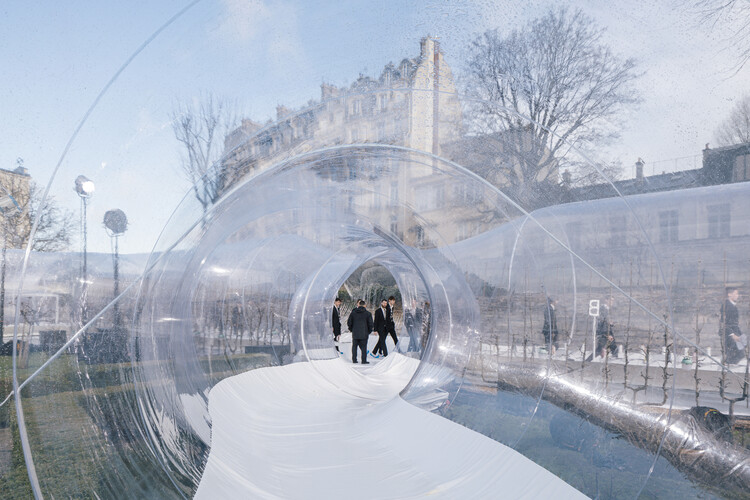
Transparent Lightness: When Pneumatic Architecture Connects with the Environment

In Six Memos for the Next Millennium, Italo Calvino explores lightness from a literary perspective and argues, "Opposed to lightness is weight. Removing weight produces lightness; it is a value, not a defect." Drawing on Greek mythology, he reflects on one of Perseus's feats after severing the head of the terrible Gorgon Medusa without being turned to stone. Assisted by the gods Hades, Hermes, and Athena, Perseus flies with his winged sandals and uses a bronze shield as a mirror to reflect her image. Relying, like many architects, on what is lightest—the wind and the clouds—he also fixes his gaze on what is revealed through indirect vision: an image reflected in a mirror.

Historically, transparency has been naturalized as an inherent condition of modern architecture. With the shift from the heavy load-bearing wall to the lightweight glass envelope, glass was introduced into the discipline, blurring the boundaries between interior and exterior spaces. In connection with inflatable architecture, transparency is linked to lightness and impermanence, leaving temporary traces on the landscapes it inhabits. By using textiles or plastics as main materials and air as a structural system, the search for lightness in the built environment now recognizes more than a single atmosphere of application.


Transparent Lightness: When Pneumatic Architecture Connects with the Environment - Image 1 of 4Transparent Lightness: When Pneumatic Architecture Connects with the Environment - Image 2 of 4Transparent Lightness: When Pneumatic Architecture Connects with the Environment - Image 3 of 4Transparent Lightness: When Pneumatic Architecture Connects with the Environment - Image 4 of 4Transparent Lightness: When Pneumatic Architecture Connects with the Environment - More Images+ 15

The Alchemy of Mass: Peter Zumthor and the Perception of Lightness

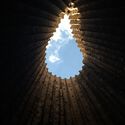
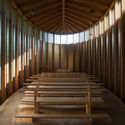
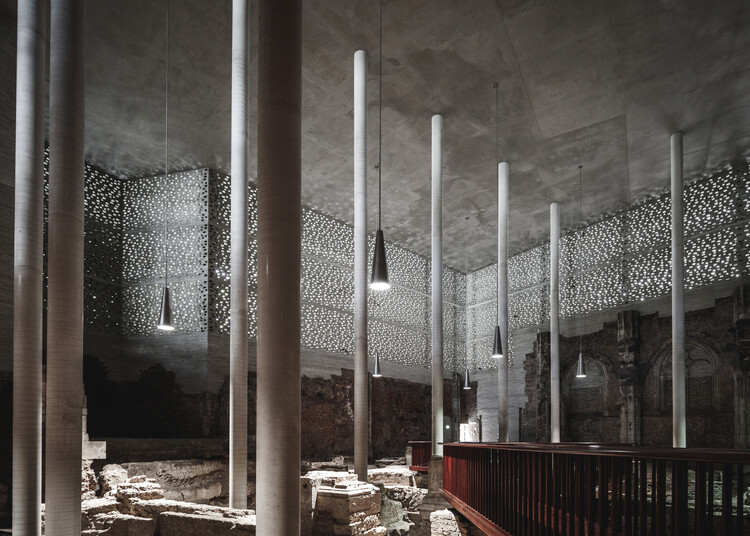
Architecture begins as an encounter with gravity. It is the ancient act of placing weight upon the earth, of persuading matter to stand, hold, and shelter. Within this fundamental condition of heaviness, however, lies a quieter possibility: density itself can generate a sense of lightness—a perceptual condition in which the body, fully convinced of matter's weight, begins to experience space as suspension.

Much of contemporary architecture has pursued lightness through reduction: thinner structures, smoother surfaces, increasingly seamless transitions between interior and exterior. Here, lightness is equated with disappearance, as if gravity could be overcome by withdrawing material presence. Yet there exists another register in which lightness is not the result of absence, but of intensification. It emerges when material presence becomes so precise, so fully asserted, that it begins to alter perception itself—when mass remains heavy, but no longer behaves as simply inert.
The Alchemy of Mass: Peter Zumthor and the Perception of Lightness - Image 1 of 4The Alchemy of Mass: Peter Zumthor and the Perception of Lightness - Image 13 of 4The Alchemy of Mass: Peter Zumthor and the Perception of Lightness - Image 3 of 4The Alchemy of Mass: Peter Zumthor and the Perception of Lightness - Image 17 of 4The Alchemy of Mass: Peter Zumthor and the Perception of Lightness - More Images+ 16

What Lies Beneath: 10 Projects Reshaping the Ground Level

Architecture has long been drawn to the idea of lightness. From early modernist experiments that sought to preserve landscapes, elevating buildings has been understood as a way to preserve the ground while maintaining continuity across the terrain. Volumes are lifted on columns, infrastructures detach circulation from the surface, and entire programs are suspended above the ground.

This was formalised in the early twentieth century through Le Corbusier's concept of the pilotis, which proposed the liberation of the ground floor from enclosure. By raising buildings on columns, architects sought to maintain continuity with the terrain, allowing movement, vegetation, and collective use to unfold beneath constructed volumes. The building would occupy the air, while the ground would remain open, accessible, and shared.

What Lies Beneath: 10 Projects Reshaping the Ground Level - Image 1 of 4What Lies Beneath: 10 Projects Reshaping the Ground Level - Image 2 of 4What Lies Beneath: 10 Projects Reshaping the Ground Level - Image 3 of 4What Lies Beneath: 10 Projects Reshaping the Ground Level - Image 4 of 4What Lies Beneath: 10 Projects Reshaping the Ground Level - More Images+ 19

Building Light in a Flood Zone: Architecture for Seasonal Inundation

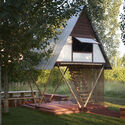
The flood does not arrive as a surprise. It returns, following the same swollen rivers and monsoon skies, loosening the ground and entering homes that were never meant to resist it. Walls are untied before they are lost, materials are gathered before they drift, and structures are rebuilt with a familiarity that suggests this is not destruction, but sequence. In landscapes where water returns each year, survival is defined by the ability to begin again.

Across the floodplains of Bangladesh, the Brahmaputra basin, and the Mekong Delta, inundation is a seasonal certainty. Reports by institutions such as the World Bank and the Intergovernmental Panel on Climate Change often frame floods through exposure and damage, measuring success through resistance and durability. Yet in territories that are submerged annually, such metrics only partially describe the problem. The ground itself oscillates between solid and liquid states. To build as if it were fixed is to design against the very condition that defines it.

Building Light in a Flood Zone: Architecture for Seasonal Inundation - Image 1 of 4Building Light in a Flood Zone: Architecture for Seasonal Inundation - Image 2 of 4Building Light in a Flood Zone: Architecture for Seasonal Inundation - Image 3 of 4Building Light in a Flood Zone: Architecture for Seasonal Inundation - Image 4 of 4Building Light in a Flood Zone: Architecture for Seasonal Inundation - More Images+ 6

The Illusion of Lightness: Designing Civic Voids for Public Life

In our current cities, urban density and rising land values often force a choice between large-scale civic buildings and open public space. Traditionally, plazas have been treated as areas surrounding a building's footprint, but this strategy was modified when pilotis were introduced by the early 20th-century modernist movement. While the original intent was to create a sense of lightness that would allow circulation and light to flow beneath a structure, contemporary requirements for seismic loads, fire egress, and heavy occupancies render thin columns insufficient for the needs of current large-scale civic projects.

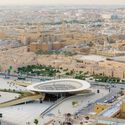
However, the pursuit of architectural lightness is not a strictly contemporary phenomenon. Following the modernist introduction of pilotis, several mid-century projects began experimenting with the illusion of suspension to achieve civic transparency. In 1953, the National Congress of Honduras in Tegucigalpa, designed by Mario Valenzuela, applied these principles to a legislative setting. The building consists of a solid assembly chamber elevated on a series of slender columns. Because the site sits on a terrace at the end of a sloping street, the resulting void does more than just provide circulation; it frames views of the city, creating the impression that the heavy legislative mass is lightly suspended above the urban fabric.

The Illusion of Lightness: Designing Civic Voids for Public Life - Image 1 of 4The Illusion of Lightness: Designing Civic Voids for Public Life - Image 2 of 4The Illusion of Lightness: Designing Civic Voids for Public Life - Image 3 of 4The Illusion of Lightness: Designing Civic Voids for Public Life - Image 4 of 4The Illusion of Lightness: Designing Civic Voids for Public Life - More Images+ 11

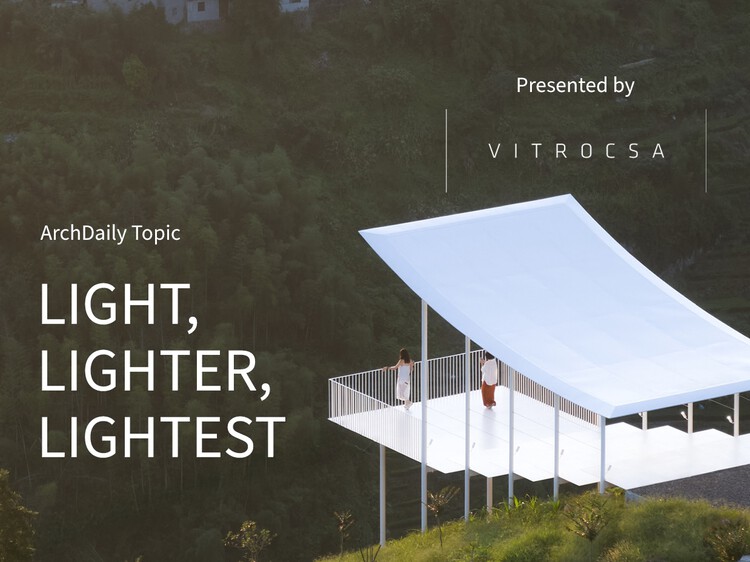
Light, Lighter, Lightest: ArchDaily’s April Editorial Focus

Architecture has long been drawn upward. In Air and Dreams, Gaston Bachelard writes about an imagination shaped by movement; by the urge to rise, to drift, to escape the pull of the ground. Air, for him, invites imagination to distort, to invent, to go beyond what is given rather than simply reproduce it. In that sense, lightness is not only a physical condition, but a feeling: a desire to transcend the weight of the earth and move toward something less tangible. This impulse can be traced across architecture's enduring attempts to lift itself, from pilotis and long spans to suspended systems and tensile membranes. To build lightly, then, is not only a technical ambition, but also a cultural one – a way of reaching toward the sky.

Today, this pursuit of lightness takes on renewed urgency. As environmental concerns, climate risks, and technological advancements reshape the built environment, building lightly is no longer only an aesthetic or structural ambition; it is increasingly framed as an ecological and ethical imperative.

Light, Lighter, Lightest: ArchDaily’s April Editorial Focus - Image 1 of 4Light, Lighter, Lightest: ArchDaily’s April Editorial Focus - Image 2 of 4Light, Lighter, Lightest: ArchDaily’s April Editorial Focus - Image 3 of 4Light, Lighter, Lightest: ArchDaily’s April Editorial Focus - Image 4 of 4Light, Lighter, Lightest: ArchDaily’s April Editorial Focus - More Images+ 6