
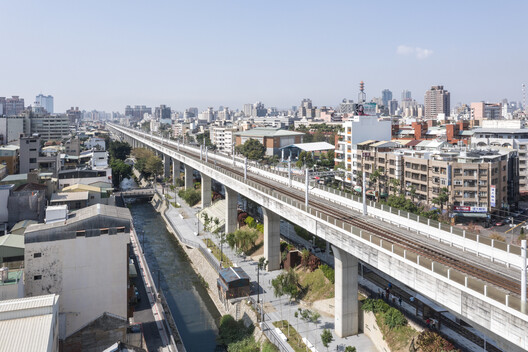
Architecture has long been drawn to the idea of lightness. From early modernist experiments that sought to preserve landscapes, elevating buildings has been understood as a way to preserve the ground while maintaining continuity across the terrain. Volumes are lifted on columns, infrastructures detach circulation from the surface, and entire programs are suspended above the ground.
This was formalised in the early twentieth century through Le Corbusier's concept of the pilotis, which proposed the liberation of the ground floor from enclosure. By raising buildings on columns, architects sought to maintain continuity with the terrain, allowing movement, vegetation, and collective use to unfold beneath constructed volumes. The building would occupy the air, while the ground would remain open, accessible, and shared.
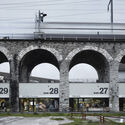
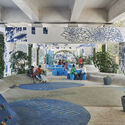
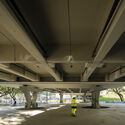
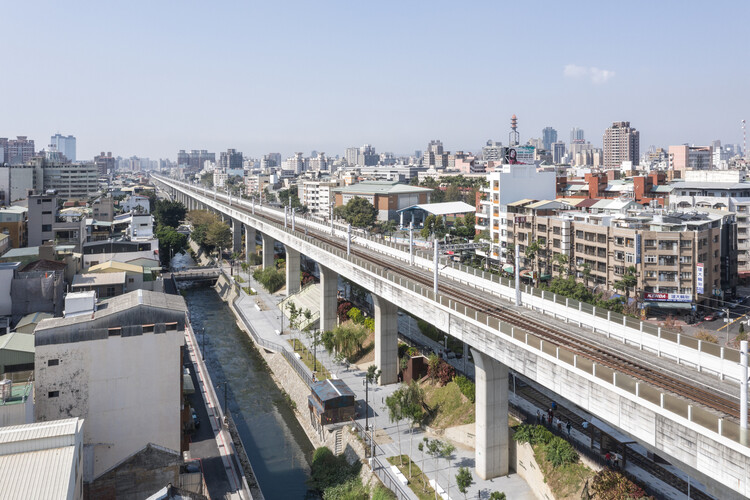
Yet this promise has proven difficult to sustain. Instead of producing continuous public space, elevated architecture often generates conditions that are ambiguous, fragmented, or underused. The ground is not eliminated, nor simply freed. It is reorganised into a secondary layer of the project, which remains structurally necessary but programmatically unresolved. If architecture aspires to lightness above, it must also account for the spatial and social realities that emerge below.
Appropriation and Informal Uses
Spaces beneath elevated structures often exist in a state of indeterminacy. They are neither fully public nor private, neither interior nor exterior. Exposed to weather, lacking clear ownership, and frequently disconnected from surrounding urban systems, these areas resist predefined uses. In many cases, they remain overlooked, treated as residual byproducts of structural decisions.
However, despite this ambiguity, such spaces rarely remain empty. Over time, they are appropriated by users who adapt them to immediate needs. Informal markets, temporary shelters, parking areas, or spontaneous gathering spaces emerge beneath buildings and infrastructures, revealing a capacity for occupation that was not explicitly planned. The underside becomes a byproduct of infrastructural performance, rather than a space of deliberate architectural intervention.
When the logic of elevation extends to infrastructure, the scale of these conditions expands significantly. Highways, railways, and large transport systems systematically detach movement from the ground, producing extensive territories beneath them. These environments are typically characterized by noise, pollution, and fragmentation. They act as physical and perceptual barriers, dividing neighbourhoods and disrupting spatial continuity.
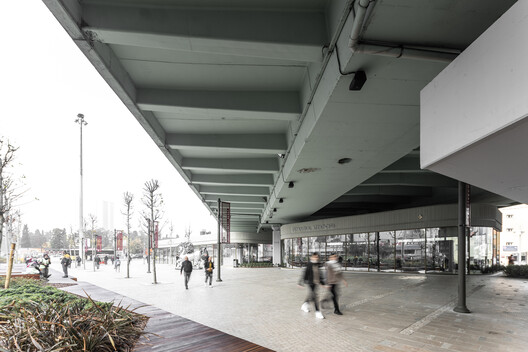
Mecidiyekoy Art & Istanbul Bookstore / KAAT ARCHITETURE + URBAN + caps.office
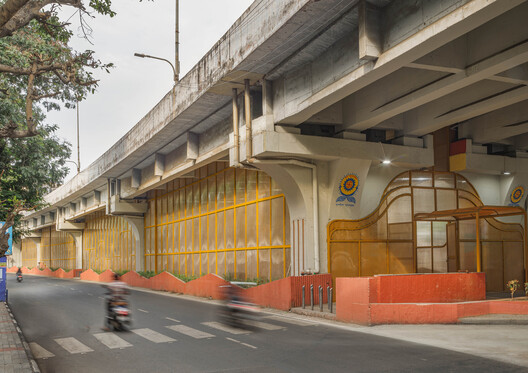
The Under Space Revival / Aangan Collaborative LLP
One Green Mile / MVRDV
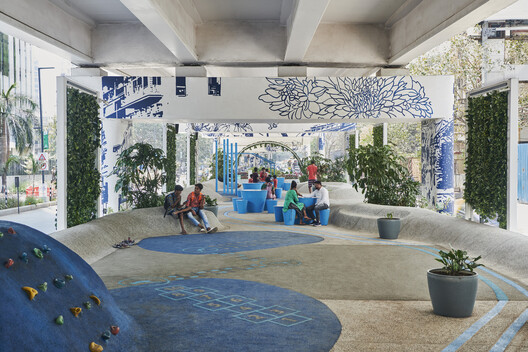
Fonte Nova Square / José Adrião Arquitetos
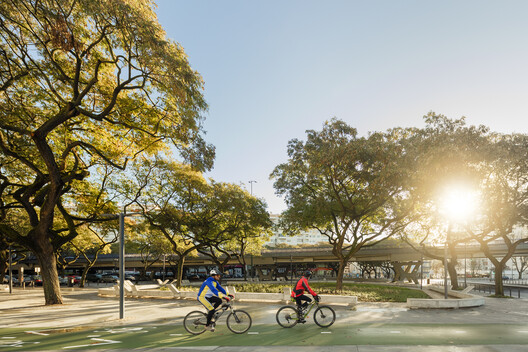
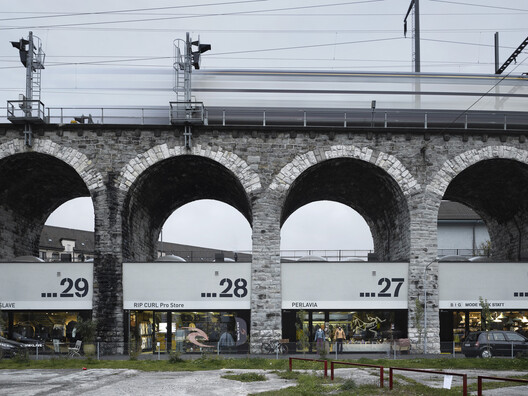
Refurbishment Viaduct Arches / EM2N
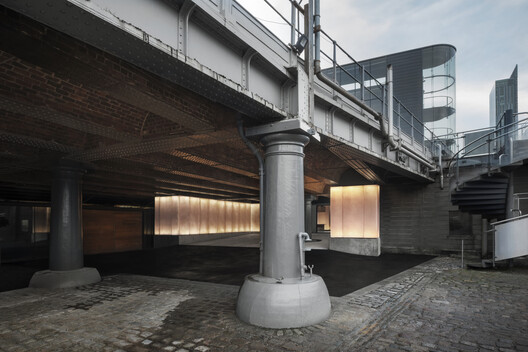
New Special Exhibitions Gallery / Carmody Groarke
(Extra)Ordinary Arboretum / Emer-sys
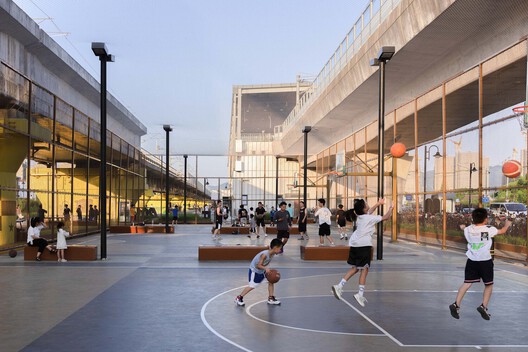
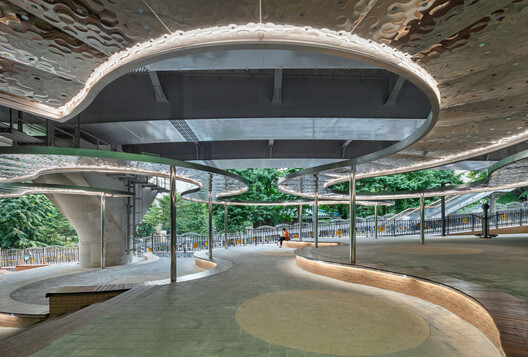
Wuxiang 987 High Line Park / Ningbo Urban Construction Design & Research Institute
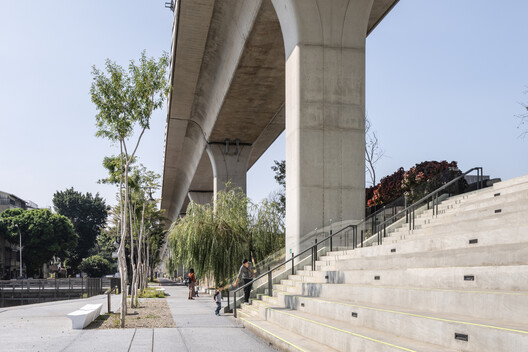
Taichung Green Corridor / Mecanoo
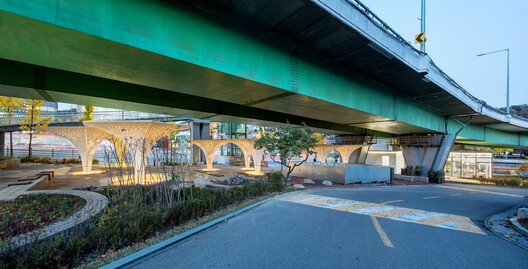
Eungbong Terrace / YZA
As cities continue to densify and infrastructural systems expand, the spaces beneath elevated architecture will play an increasingly significant role in shaping the built environment. Engaging with them requires recognising that architecture does not end at the objects it lifts, but extends into the ground it leaves behind. To build lightly, in this sense, is not to escape the ground, but to take full responsibility for it.
This article is part of the ArchDaily Topic: Light, Lighter, Lightest: Redefining How Architecture Touches the Earth, proudly presented by Vitrocsa, the original minimalist windows since 1992.
Vitrocsa designed the original minimalist window systems, a unique range of solutions, dedicated to the frameless window boasting the narrowest sightline barriers in the world. Manufactured in line with the renowned Swiss Made tradition for 30 years, Vitrocsa's systems "are the product of unrivaled expertise and a constant quest for innovation, enabling us to meet the most ambitious architectural visions."
Every month we explore a topic in-depth through articles, interviews, news, and architecture projects. We invite you to learn more about our ArchDaily Topics. And, as always, at ArchDaily we welcome the contributions of our readers; if you want to submit an article or project, contact us.


