

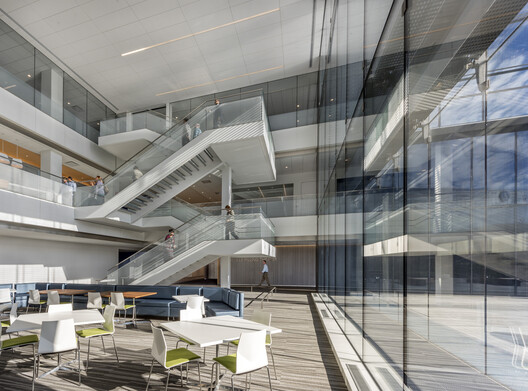
Scientifically, glass is defined as an amorphous solid, meaning its atoms are not arranged in a regular crystalline structure. This is why the material is often described as a "liquid frozen in time." This structural configuration explains one of its most distinctive qualities: transparency. Without a crystalline lattice capable of scattering light, radiation passes through the material with relatively little interference. Although it often appears delicate, this same structure also allows glass to achieve significant mechanical performance. With industrial processes such as tempering, lamination, and specialized coatings, the material can reach high levels of strength, safety, and environmental performance.
Glass has profoundly shaped modern architecture. Its ability to admit light while defining physical boundaries transformed the way buildings relate to their surroundings, opening interiors toward cities, landscapes, and the sky. From the continuous curtain walls of International Style office towers to the high-performance envelopes of contemporary architecture, the material has become ubiquitous. This widespread use has been accompanied by continuous innovation in manufacturing, expanding architectural possibilities and influencing not only the appearance of buildings but also their energy performance and environmental impact.
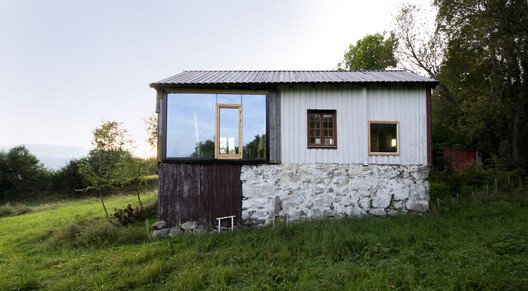
Among the companies that contributed to this technological evolution, Pilkington holds a significant place. Emerging at a time when the glass industry was still taking shape, the company would go on to play a decisive role in many of the transformations that followed. In 2026, Pilkington marks 200 years since it was founded in northwest England, a milestone that reflects its long-standing influence on the development of architectural glass.
The history of architectural glass is closely tied to the industrialization of the nineteenth century. Before this period, production was limited in scale and often resulted in uneven surfaces, restricting its use in buildings. It was within this broader context of industrial expansion that the St Helens Crown Glass Company was established. The choice of location was not accidental: Merseyside offered ideal conditions for glass production, with abundant coal and sand, as well as a transportation network that supported Britain's rapidly industrializing economy.
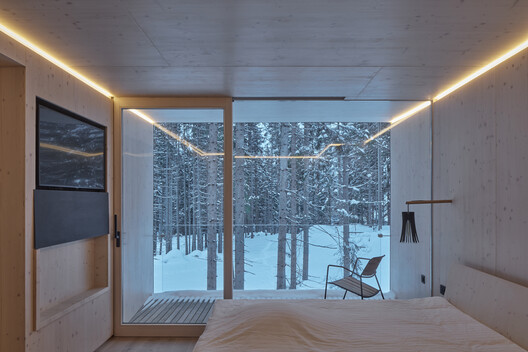
As the century progressed, glass production scaled up alongside growing cities and evolving construction techniques. Demand for shopfronts, railway stations, and sunlit public buildings drove the development of industrial methods capable of producing larger, more consistent glass panels. Gradually, glass moved beyond its decorative role or small window openings to assume a more structural role in architecture.
The Float Glass Revolution
A defining moment in the evolution of architectural glass came in 1959, when Sir Alastair Pilkington introduced a new manufacturing method that would profoundly transform the industry: the float glass process. In this method, molten glass is poured onto a bath of molten tin, where it floats and spreads evenly before solidifying. The result is a perfectly flat, continuous surface with controlled thickness and superior optical quality. Beyond the technical brilliance, it made the consistent, large sheet production possible, something that had previously been difficult to achieve.
The introduction of the float process transformed the global glass industry and quickly became the dominant standard of production. For architecture, its effects were equally significant. The ability to manufacture large transparent surfaces with precision and consistency contributed directly to the rise of curtain wall systems and the expansion of glass-dominated architecture that defined much of the twentieth century. Office towers, airports, cultural institutions, and residential high-rises began to use glass as a central component of their building envelopes, redefining the relationship between interior and exterior while enhancing the role of natural light in architectural experience.
High-Performance Glass
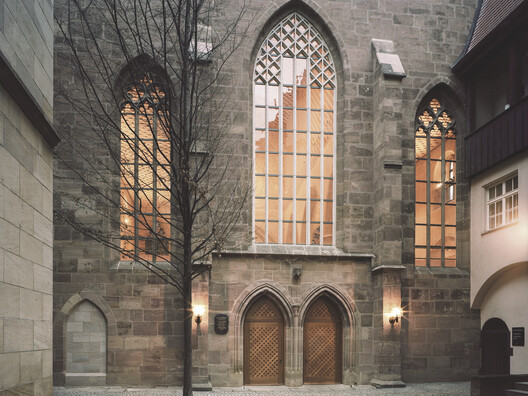
As transparent surfaces expanded across building façades, new technical demands began to emerge. Beyond producing large glass panels, it became essential to ensure safety and energy efficiency. One of the earliest breakthroughs came in 1978 with the development of fire-resistant glass. Crafted from specialized compositions, often combining multiple laminated layers with intumescent interlayers or transparent gels, these systems are designed to maintain their structural integrity under extreme heat, typically for 30 to 120 minutes. When exposed to high temperatures, these materials expand or become opaque, creating a barrier that slows heat transfer and prevents flames and smoke from spreading.
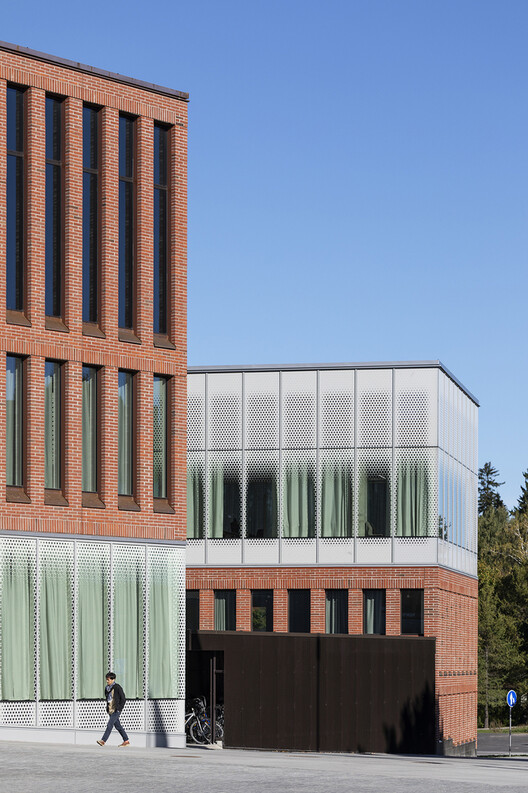
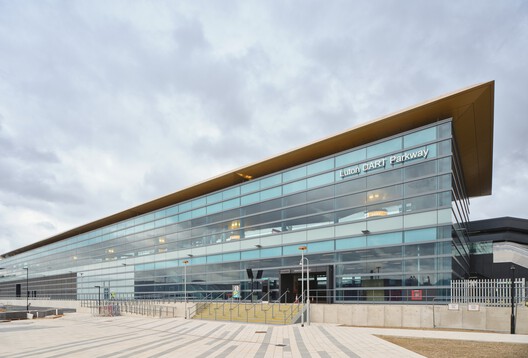
In the following decades, energy efficiency emerged as a key focus. The 1989 launch of Pilkington K Glass™ introduced a new generation of glass. By applying a microscopic metallic coating directly during manufacturing, the glass could control heat exchange between interior and exterior without sacrificing transparency. The result was improved thermal insulation and more energy-efficient buildings. The search for new functionalities also led to solutions that expanded the role of glass in façade maintenance and performance. In 2001, the company introduced Pilkington Activ™, widely considered the world's first self-cleaning glass. It uses an ultra-thin photocatalytic coating applied to the surface. When exposed to sunlight, this coating triggers a chemical reaction that breaks down organic residues like dust, pollution, and other particles. Instead of forming isolated droplets, rainwater spreads into a thin film that washes away these residues more effectively. For buildings with large glazed surfaces or hard-to-reach façades, this technology reduces maintenance operations, lowering the use of equipment, water, and cleaning products throughout the building's lifecycle.
More recently, architectural glass has also started to address its impact on urban wildlife. In dense, glass-clad cities, bird collisions with transparent façades are a growing problem., Birds often mistake reflections of sky, trees, or open space for real habitat. To tackle this, Pilkington introduced Pilkington AviSafe™ in 2020. The coating embeds ultraviolet-reflective patterns that are visible to birds but almost invisible to human spectrum. These markings help birds recognize the glass as a barrier, reducing collisions while preserving the building's visual clarity.
Decarbonizing Glass Production
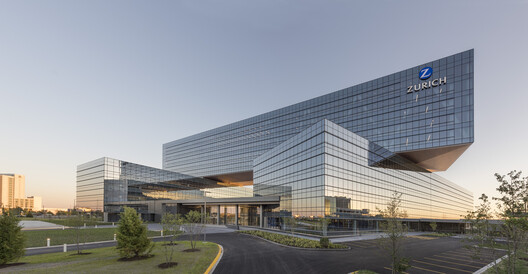
Manufacturing glass requires extremely high temperatures, traditionally achieved through the combustion of fossil fuels. As a result, several recent initiatives have sought to transform the industrial processes behind its production. And if innovation in architectural glass during the twentieth century was largely focused on building performance, the twenty-first century has introduced a new challenge: reducing the carbon emissions associated with its production.
In 2021, Pilkington conducted a pioneering trial using hydrogen as a fuel in float glass manufacturing, considered the first experiment of its kind in the industry. The following year, in 2022, the company also carried out a biofuel trial, exploring alternative energy sources capable of reducing emissions associated with the melting process.
At the same time, new generations of products have aimed to lower the embodied carbon of the material itself. In 2023, Pilkington Mirai™ was introduced, an architectural glass with approximately 52% less embodied carbon compared to conventional float glass. This reduction results from a combination of renewable energy, higher recycled glass content, and alternative fuels used during manufacturing.
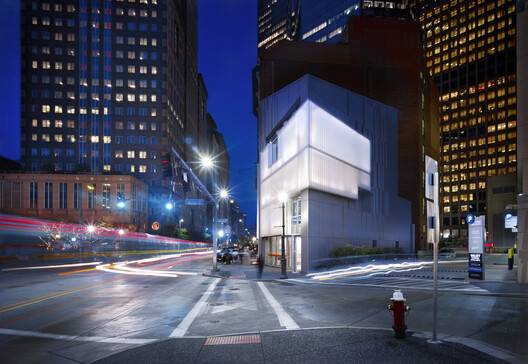
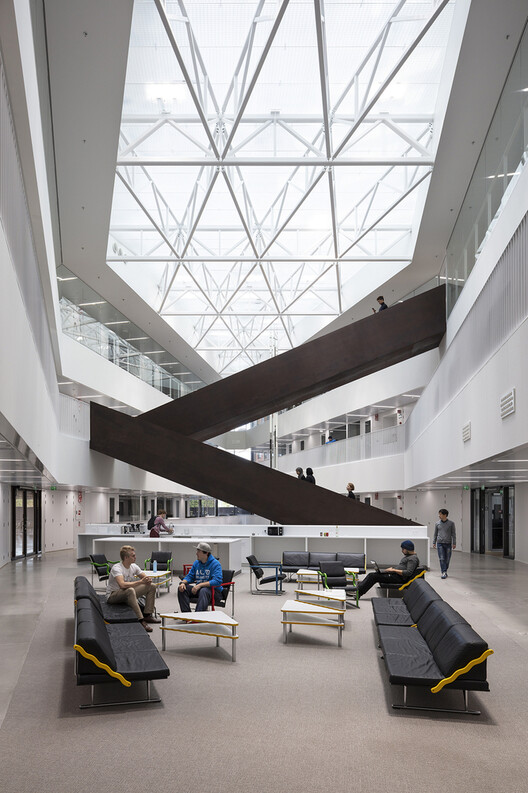
Beyond technological innovation, Pilkington's contribution can also be understood through its presence in major architectural projects around the world. Its glass has been used in a wide range of contexts, from heritage interventions to contemporary high-rise developments. Projects such as The Shard in London, and the Empire State Building's renovation illustrate how advances in glass manufacturing translate into built form at different scales. From iconic cultural landmarks to commercial and residential buildings, these applications demonstrate how material precision, performance, and consistency become critical in real architectural conditions.
Over nearly two centuries, architectural glass has evolved alongside the changing ambitions of architecture. From nineteenth-century industrial experiments to the float process and today's low-carbon manufacturing, each technological shift has expanded what architects can ask of a material that once seemed simple. Today, glass functions as a highly engineered interface between buildings and their environment, and its evolution mirrors many of the broader transformations that have shaped architecture itself.


