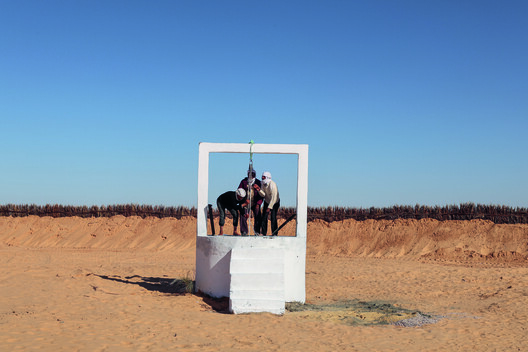
In some languages, the very word for building refers to its immovability. The discipline of engineering related to buildings is referred to as statics. Thus, architecture is closely related to the fixed and the immobile. And yet, for millions of nomadic people around the world, shelters must be of a light and distinctly movable structure, while home is the vast landscape in which they reside. Such lifestyles, which carry centuries of traditions, are constantly under threat from the pull factors of sedentary life in towns and cities. In Tunisia, one project acknowledges the risk of heritage loss and attempts to improve conditions for nomadic herders.
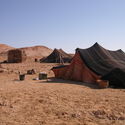
The Sahara Desert and the Sahel region of Africa constitute one of the concentrations of nomadic communities in the world. In these areas, nomads are primarily pastoralist herders, keeping goats, sheep, camels, or cows, and travelling between areas of new pasture for the animals. They include Arab Bedouins, Touareg, Berbers, Beja, among others. In many cases, travelling routes do not follow national borders, and many communities stretch across multiple countries. In the Sahel area, movement can follow the rains, heading north in the wetter seasons, and south in the drier months.


