1. ArchDaily
  2. Wooden Construction

Wooden Construction: The Latest Architecture and News

From Tradition to Modern Living: The Versatility and Elegance of Timber in 12 Japanese Interiors

Subscriber Access | 

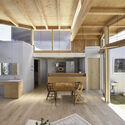
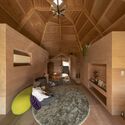
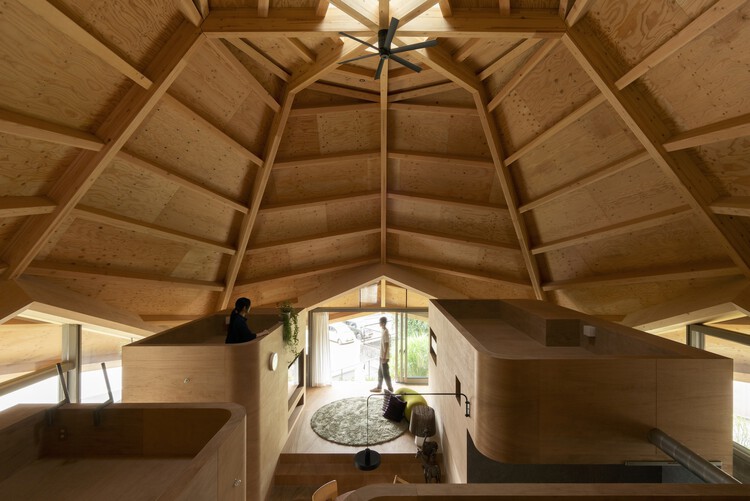
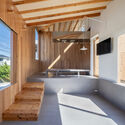
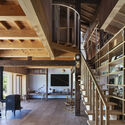
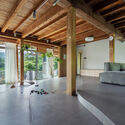
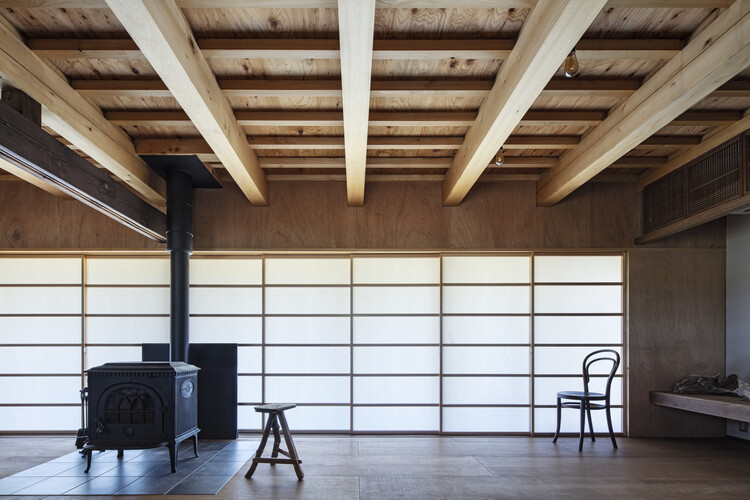
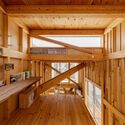
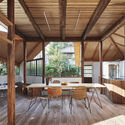
Contemporary Japanese architecture continues to demonstrate how to adapt the evolving needs of modern residents to a rich building tradition and artisanal legacy. Wood has always been the soul of Japanese architecture. In many recent residential projects, this material transcends its structural role to become the primary finish for various surfaces — ranging from floors and ceilings to furniture and architectural elements. These environments strike a delicate balance between elegance and coziness.

The use of natural, unpainted finishes highlights the material's inherent honesty while also celebrating the unique character of each piece, its natural grain, and the diversity of the overall composition. While some houses feature sober, dark-stained timbers to create a grounded atmosphere, others utilize lighter woods like pine to foster a bright, airy, and ethereal feel. This versatility proves that wood can adapt to any aesthetic, from the rustic to the ultra-minimalist.
From Tradition to Modern Living: The Versatility and Elegance of Timber in 12 Japanese Interiors - Image 1 of 4From Tradition to Modern Living: The Versatility and Elegance of Timber in 12 Japanese Interiors - Image 2 of 4From Tradition to Modern Living: The Versatility and Elegance of Timber in 12 Japanese Interiors - Image 3 of 4From Tradition to Modern Living: The Versatility and Elegance of Timber in 12 Japanese Interiors - Image 4 of 4From Tradition to Modern Living: The Versatility and Elegance of Timber in 12 Japanese Interiors - More Images+ 9

Renovation and Continuity in Japanese Architecture: The Work of 1110 Office for Architecture

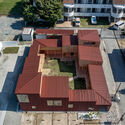
In a shifting societal and environmental landscape, how can architectural design respond to transformation while meaningfully engaging with what endures? 1110 Office for Architecture, based in Osaka, Japan, approaches this question through a body of work defined by careful residential renovations and precise spatial interventions.

Named a winner of the ArchDaily 2025 Next Practices Awards, the practice represents an emerging voice in redefining architecture's role within conditions of change.

Renovation and Continuity in Japanese Architecture: The Work of 1110 Office for Architecture - Image 1 of 4Renovation and Continuity in Japanese Architecture: The Work of 1110 Office for Architecture - Image 2 of 4Renovation and Continuity in Japanese Architecture: The Work of 1110 Office for Architecture - Image 3 of 4Renovation and Continuity in Japanese Architecture: The Work of 1110 Office for Architecture - Image 4 of 4Renovation and Continuity in Japanese Architecture: The Work of 1110 Office for Architecture - More Images+ 17

Notre Dame Rebuilt: A Journey of Restoration for France's Iconic Cathedral

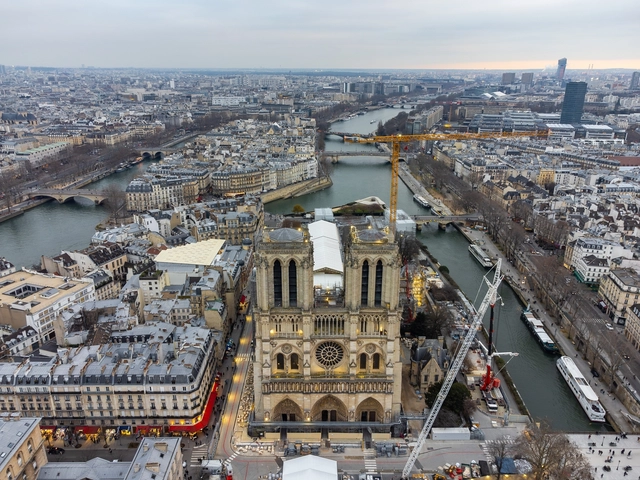
Notre Dame Cathedral reopened on December 7th, 2024, welcoming visitors for the first time since the 2019 fire. The restoration of Notre Dame Cathedral was a massive undertaking, led by chief architect Philippe Villeneuve, assisted by Rémi Fromont and Pascal Prunet. The project involved approximately 2,000 craftspeople, 250 companies, and about $900 million, demonstrating the immense scale and complexity of the work on a tight deadline. Despite the major milestone of opening before the end of the year, the restoration works are not yet complete, as they are scheduled to continue through 2026.

Notre Dame Rebuilt: A Journey of Restoration for France's Iconic Cathedral - Image 1 of 4Notre Dame Rebuilt: A Journey of Restoration for France's Iconic Cathedral - Image 2 of 4Notre Dame Rebuilt: A Journey of Restoration for France's Iconic Cathedral - Image 3 of 4Notre Dame Rebuilt: A Journey of Restoration for France's Iconic Cathedral - Image 4 of 4Notre Dame Rebuilt: A Journey of Restoration for France's Iconic Cathedral - More Images+ 11

Sustainability and Innovation in Ephemeral Architecture: 15 Wooden Pavilions

Throughout the modern era, pavilion architecture has consistently reflected cutting-edge architectural trends. These temporary or semi-permanent structures, often featured in exhibitions, fairs, cultural events, and sports gatherings, provide a platform for exploring new materials and design concepts. Pavilion designs are intended for easy assembly and disassembly and are typically used for short durations, making it crucial to consider reducing environmental impact without sacrificing aesthetics and innovation. In this endeavor, wood emerges as a key ally.

Sustainability and Innovation in Ephemeral Architecture: 15 Wooden Pavilions - Image 1 of 4Sustainability and Innovation in Ephemeral Architecture: 15 Wooden Pavilions - Image 2 of 4Sustainability and Innovation in Ephemeral Architecture: 15 Wooden Pavilions - Image 3 of 4Sustainability and Innovation in Ephemeral Architecture: 15 Wooden Pavilions - Image 4 of 4Sustainability and Innovation in Ephemeral Architecture: 15 Wooden Pavilions - More Images+ 12

Hello Wood’s Builder Summit Experiments with Construction Techniques to Revive an Abandoned Quarry in Hungary

Subscriber Access | 

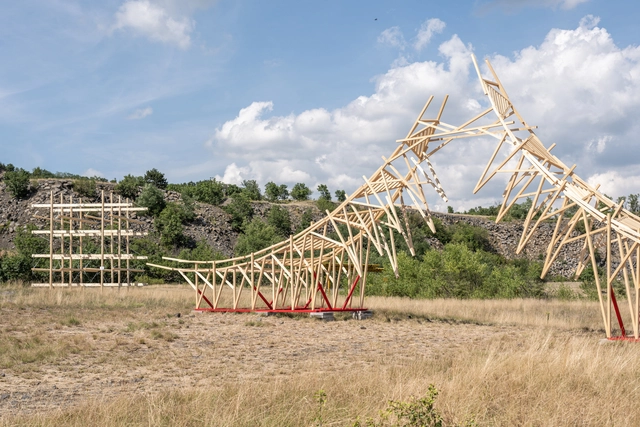
After a three-year break, Hello Wood’s builder festival returns to welcome students, architects, and young professionals from all across the world to join the 10-day builder camp to test their wooden construction abilities, learn to collaborate, and participate actively in on-site design and construction. For the first time in Hello Wood’s 13-year history, this year’s workshop takes place at a new location, in the crater of an abandoned basalt quarry on Haláp Mountain in Hungary. The workshop also aligns with and supports Veszprém’s title of 2023 European Capital of Culture, which also includes over a hundred other villages and towns across the Bakony-Balaton region. The event took place between July 6 and 15, ending in a two-day music festival open to all.

Hello Wood’s Builder Summit Experiments with Construction Techniques to Revive an Abandoned Quarry in Hungary - Image 1 of 4Hello Wood’s Builder Summit Experiments with Construction Techniques to Revive an Abandoned Quarry in Hungary - Image 2 of 4Hello Wood’s Builder Summit Experiments with Construction Techniques to Revive an Abandoned Quarry in Hungary - Image 3 of 4Hello Wood’s Builder Summit Experiments with Construction Techniques to Revive an Abandoned Quarry in Hungary - Image 6 of 4Hello Wood’s Builder Summit Experiments with Construction Techniques to Revive an Abandoned Quarry in Hungary - More Images+ 59

Construction Works Begin on Shigeru Ban's Hybrid Residential Tower in Belgium

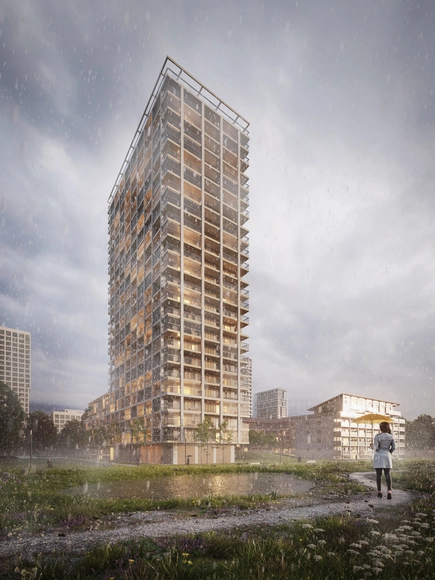
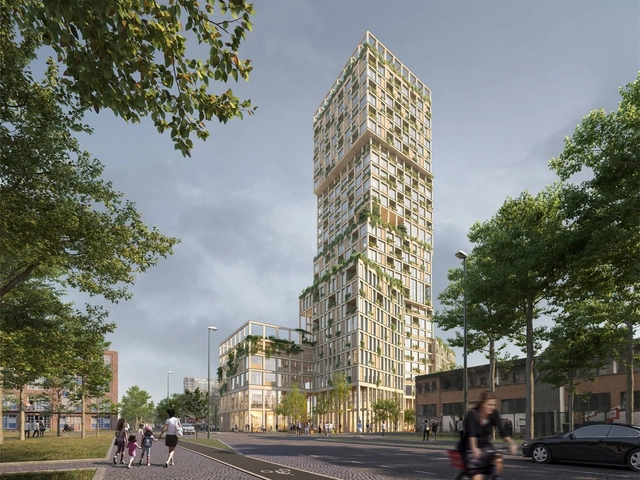
Shigeru Ban has just launched the office’s most recent project in Nieuw Zuid in Antwerp, Belgium. Named Ban, after its creator, and in collaboration with Bureau Bouwtechniek, the complex puts in place a 25-story residential tower and a separate building, creating a total of 295 residential units. During the breaking ground ceremony, the architect also inaugurated an exhibition of images highlighting his humanitarian work in conflict and disaster areas, in near proximity to the construction site.

Construction Works Begin on Shigeru Ban's Hybrid Residential Tower in Belgium  - Image 1 of 4Construction Works Begin on Shigeru Ban's Hybrid Residential Tower in Belgium  - Image 2 of 4Construction Works Begin on Shigeru Ban's Hybrid Residential Tower in Belgium  - Image 3 of 4Construction Works Begin on Shigeru Ban's Hybrid Residential Tower in Belgium  - Image 4 of 4Construction Works Begin on Shigeru Ban's Hybrid Residential Tower in Belgium  - More Images+ 2

"I Want My Places to Come Alive": In conversation with Brian Mac

American architect Brian Mac grew up near Detroit. He graduated from the Architecture School at the University of Detroit in 1988 and for the next five years worked for a preservationist firm, Quinn Evans Architects in Ann Arbor. There he learned to love historic architectural detailing, and, while working at the firm, in 1992, became a licensed architect. Then followed a short period of disillusion with the profession and moving to Ohio to work in a residential treatment center for adolescent felony offenders.

"I Want My Places to Come Alive": In conversation with Brian Mac  - Image 1 of 4"I Want My Places to Come Alive": In conversation with Brian Mac  - Image 2 of 4"I Want My Places to Come Alive": In conversation with Brian Mac  - Image 3 of 4"I Want My Places to Come Alive": In conversation with Brian Mac  - Image 4 of 4I Want My Places to Come Alive: In conversation with Brian Mac  - More Images+ 19

10 Wooden Stilt Houses that are Lifting Architecture off the Ground

Subscriber Access | 

Stilt houses are houses raised on piles over the surface of the soil or a body of water. Dating back to the Neolithic and the Bronze Ages, a wide variety of raised dwellings have been identified in a variety of forms worldwide, designed with several diverse and innovative methodologies. Stilt houses are well suited to coastal regions and subtropical climates. More than just a distinctive structural design resolution, they also protect against floods, maximize views and allow homeowners to build on rocky, steep, or unstable land. They also serve to keep out animals and vermin, provide ventilation from underneath, and minimize a house’s ecological footprint. 

Mad Arkitekter to Design Germany's Tallest Wooden Tower

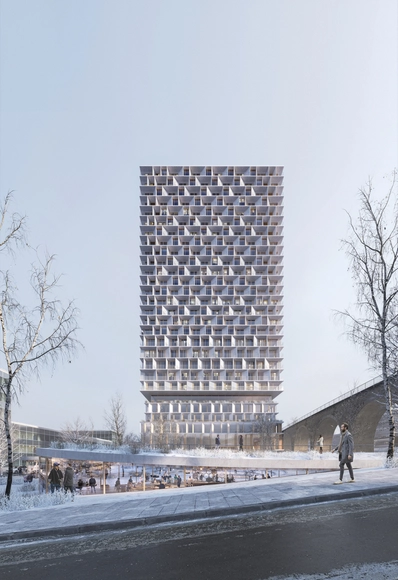
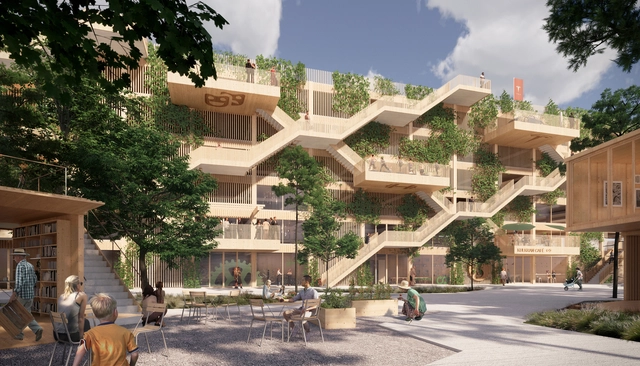
Mad Arkitekter and Mud Landscape Architects, have won the international competition to design a vertical city quarter in Kreuzberg, Berlin. Selected from 14 submissions of well-known European architecture firms taking part in the contest, the proposal re-interprets the district in a vertical configuration. Set to be 98 meters high, with 29 floors, the Woho project will become Germany's tallest three-hybrid construction, once completed.

Mad Arkitekter to Design Germany's Tallest Wooden Tower - Image 1 of 4Mad Arkitekter to Design Germany's Tallest Wooden Tower - Image 2 of 4Mad Arkitekter to Design Germany's Tallest Wooden Tower - Image 3 of 4Mad Arkitekter to Design Germany's Tallest Wooden Tower - Image 4 of 4Mad Arkitekter to Design Germany's Tallest Wooden Tower - More Images+ 2

3XN and IttenBrechbühl Win International Competition to Design Wooden Tower in Lausanne, Switzerland

3XN and IttenBrechbühl have been selected to design Tilia Tower, an 85-meter-tall mixed-use wooden building that includes apartments, retail, and a hotel. Located in Lausanne, Switzerland, the project also encompasses the transformation and renovation of two existing buildings, as well as the implementation of new public spaces, bringing vitality to the neighborhood.

3XN and IttenBrechbühl Win International Competition to Design Wooden Tower in Lausanne, Switzerland - Image 1 of 43XN and IttenBrechbühl Win International Competition to Design Wooden Tower in Lausanne, Switzerland - Image 2 of 43XN and IttenBrechbühl Win International Competition to Design Wooden Tower in Lausanne, Switzerland - Image 3 of 43XN and IttenBrechbühl Win International Competition to Design Wooden Tower in Lausanne, Switzerland - Image 4 of 43XN and IttenBrechbühl Win International Competition to Design Wooden Tower in Lausanne, Switzerland - More Images

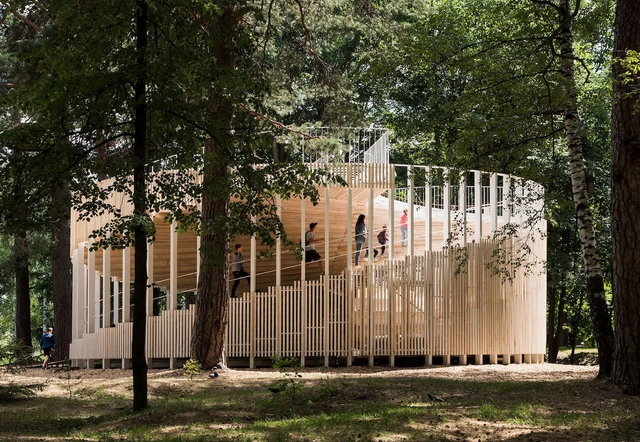
Pavilion of the Future / NOVOE

Pavilion of the Future / NOVOE - Pavilion
© Ilya Ivanov

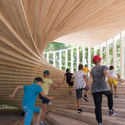
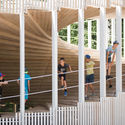
Pavilion of the Future / NOVOE - Exterior Photography, Pavilion, Facade, ArchPavilion of the Future / NOVOE - Interior Photography, Pavilion, Stairs, ArchPavilion of the Future / NOVOE - PavilionPavilion of the Future / NOVOE - Interior Photography, Pavilion, Fence, Facade, Beam, HandrailPavilion of the Future / NOVOE - More Images+ 8

Vyksa, Russia
  • Architects: NOVOE
  • Area Area of this architecture project Area:  465
  • Year Completion year of this architecture project Year:  2019

Costa Nova Sailing Club Restaurant / Ferreira Arquitectos

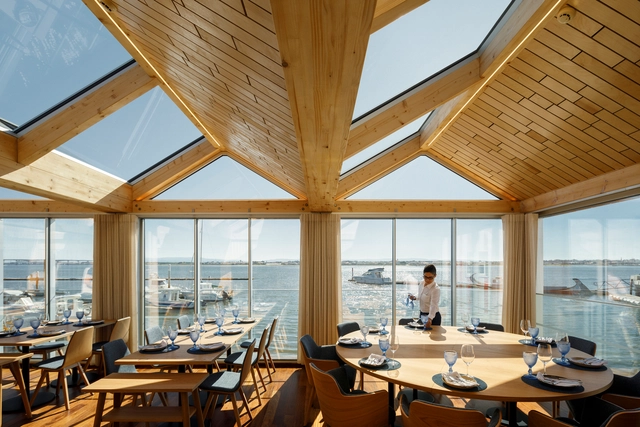
Costa Nova Sailing Club Restaurant / Ferreira Arquitectos - Interior Photography, Restaurant & Bar Interiors, BeamCosta Nova Sailing Club Restaurant / Ferreira Arquitectos - Exterior Photography, Restaurant & Bar InteriorsCosta Nova Sailing Club Restaurant / Ferreira Arquitectos - Interior Photography, Restaurant & Bar Interiors, Kitchen, BeamCosta Nova Sailing Club Restaurant / Ferreira Arquitectos - Interior Photography, Restaurant & Bar Interiors, Table, ChairCosta Nova Sailing Club Restaurant / Ferreira Arquitectos - More Images+ 38

Gafanha da Encarnação, Portugal
  • Year Completion year of this architecture project Year:  2020
  • Manufacturers Brands with products used in this architecture project
    Manufacturers:  Gresanit Valadares, Oli

How to Bend Wood

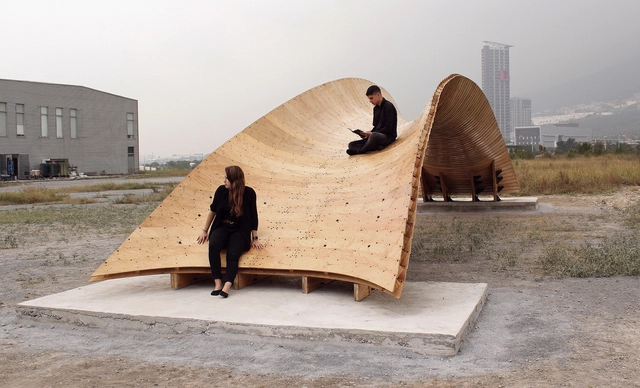
From its starting to point as a tree to its product form as a beam or piece of furniture, wood used in architecture and interior design goes through several stages and processes. A renewable resource and popular traditional building material, wood is also often cited as a promising construction material of the future, one that is suitable for the new demands of sustainability. But unlike concrete, whose molds can create even the most complex curves, wooden architecture most commonly uses straight beams and panels. In this article, we will cover some techniques that allow for the creation of curved pieces of wood at different scales, some of which are handmade and others of which seek to make the process more efficient and intelligent at a larger scale.

Open Platform and JAJA Architects Win Competition to Design Denmark’s First Wooden Parking House

Open Platform (OP) and JAJA Architects, together with Rama Studio and Søren Jensen Engineers, have won the open competition for a new parking house in Aarhus. In line with Denmark’s vision of becoming climate neutral by 2050, the structure will be the country’s first wooden parking house.

Open Platform and JAJA Architects Win Competition to Design Denmark’s First Wooden Parking House - Image 1 of 4Open Platform and JAJA Architects Win Competition to Design Denmark’s First Wooden Parking House - Image 2 of 4Open Platform and JAJA Architects Win Competition to Design Denmark’s First Wooden Parking House - Image 3 of 4Open Platform and JAJA Architects Win Competition to Design Denmark’s First Wooden Parking House - Image 4 of 4Open Platform and JAJA Architects Win Competition to Design Denmark’s First Wooden Parking House - More Images+ 15

Störmer Murphy and Partners Will Design Germany’s First Wooden High-Rise

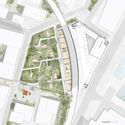
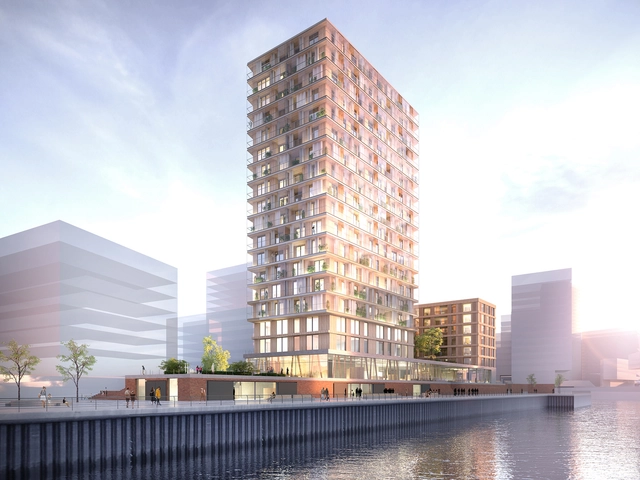
Germany’s first wooden high-rise, the “Wildspitze,” is being designed by Störmer Murphy and Partners. At 18 stories and 64 meters high, this residential tower will be one of Europe’s largest urban development projects.

Located in Elbbrücken, a peninsula neighborhood within Hamburg's HafenCity, Wildspitze will add 189 residential units on its riverside site. Each apartment will feature a loggia behind a double glass facade.

Newly Discovered Molecular ‘Glue’ May hold the Key to Strong Wooden Skyscrapers

The key to engineering wood strong enough to support skyscrapers may lie in the interaction between molecules 10,000 times narrower than the width of a human hair.

A new study by researchers at the Universities of Warwick and Cambridge has solved a long-held mystery of how key polymers in plant cells bind to form strong, indigestible materials such as wood and straw. By recreating this ‘glue’ in a lab, engineers may be able to produce new wood-based materials that surpass current strength capabilities.

The Compact Wooden City: A Life-Cycle Analysis of How Timber Could Help Combat Climate Change

Subscriber Access | 

Nowadays the main building materials used in the construction industry are concrete, steel and timber. From the point of view of ecological sustainability, there are four important differences between these three materials: first, timber is the only material of the three that is renewable; second, timber needs only a small amount of energy to be extracted and recycled compared to steel and concrete (but the implementation of its potential is not as developed yet); third, timber does not produce waste by the end of its life since it can be reused many times in several products before decomposing or being used as fuel and; and fourth, timber traps huge amounts of carbon from the atmosphere – a tree can contain a ton of CO2 [1] – and the carbon absorbed remains embedded as long as the wood is in use.

Considering the fact that 36 percent of total carbon emissions in Europe during the last decade came from the building industry,[2] as well as 39 percent of total carbon emissions in the United States,[3] the materiality of construction should be a priority for governments’ regulations in the future as measurements against global warming. The amount of CO2 in the atmosphere and the level of carbon emissions of the big economies across the globe are big issues that need to be solved with urgency in order to avoid larger, more frequent climate catastrophes in the future. The current regulation in several countries of the EU, which is incentivizing the use of renewable materials in buildings, is showing the direction the building industry in many other parts of the world should follow. And if these measures are adopted across the EU and beyond – if other countries start to follow this tendency as well – there will be significantly more wood in cities.

The Compact Wooden City: A Life-Cycle Analysis of How Timber Could Help Combat Climate Change - Image 1 of 4The Compact Wooden City: A Life-Cycle Analysis of How Timber Could Help Combat Climate Change - Image 2 of 4The Compact Wooden City: A Life-Cycle Analysis of How Timber Could Help Combat Climate Change - Image 3 of 4The Compact Wooden City: A Life-Cycle Analysis of How Timber Could Help Combat Climate Change - Image 4 of 4The Compact Wooden City: A Life-Cycle Analysis of How Timber Could Help Combat Climate Change - More Images+ 2

Subversive Methods Make A Skyscraper in Michael Ryan Charters and Ranjit John Korah's "Unveiled"

Subversive Methods Make A Skyscraper in Michael Ryan Charters and Ranjit John Korah's "Unveiled" - Facade, Cityscape
Night View. Image Courtesy of Michael Ryan Charters and Ranjit John Korah

In a Los Angeles Times article last December, “The future is in the past: Architecture trends in 2014,” acting critic Christopher Hawthorne sought to make sense of a year that included Koolhaas’s Venice Biennale, Smiljan Radic’s Serpentine Pavilion, and periodicals like Log 31: New Ancients and San Rocco 8: What’s Wrong with the Primitive Hut? Through these examples and others, Hawthorne concluded that it was a year of overdue self-reflection, where in order to determine architecture’s future it was necessary to mine the past.
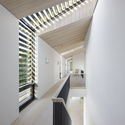
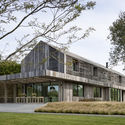
Building on these precedents, Hawthorne predicted that after years of baroque parametricism, in 2015 architects would use last year’s meditations on history as a practical foundation for new projects and proposals. An example of this can be found in the work of Michael Ryan Charters and Ranjit John Korah, a duo who recently shared the top-five prize for the CAF led ChiDesign Competition (part of the Chicago Architecture Biennial) for their project Unveiled. In a brief that called for “a new center for architecture, design and education,” and with lauded jurors including Stanley Tigerman, David Adjaye, Ned Cramer, Monica Ponce de Leon, and Billie Tsien, Charters and Korah proposed what could casually be summarized as a terracotta framework over a multi-story crystalline form of wooden vaults, but is actually something much more complex.
Subversive Methods Make A Skyscraper in Michael Ryan Charters and Ranjit John Korah's "Unveiled" - Facade, Column, Arch, Handrail, ArcadeSubversive Methods Make A Skyscraper in Michael Ryan Charters and Ranjit John Korah's "Unveiled" - Arch, Arcade, Column, LightingSubversive Methods Make A Skyscraper in Michael Ryan Charters and Ranjit John Korah's "Unveiled" - Facade, CityscapeSubversive Methods Make A Skyscraper in Michael Ryan Charters and Ranjit John Korah's "Unveiled" - Arch, Arcade, Column, CityscapeSubversive Methods Make A Skyscraper in Michael Ryan Charters and Ranjit John Korah's Unveiled - More Images+ 3