Renovation and Continuity in Japanese Architecture: The Work of 1110 Office for Architecture

Sponsored Content

In a shifting societal and environmental landscape, how can architectural design respond to transformation while meaningfully engaging with what endures? 1110 Office for Architecture, based in Osaka, Japan, approaches this question through a body of work defined by careful residential renovations and precise spatial interventions.

Named a winner of the ArchDaily 2025 Next Practices Awards, the practice represents an emerging voice in redefining architecture's role within conditions of change.
Renovation and Continuity in Japanese Architecture: The Work of 1110 Office for Architecture - Image 2 of 22Renovation and Continuity in Japanese Architecture: The Work of 1110 Office for Architecture - Image 3 of 22Renovation and Continuity in Japanese Architecture: The Work of 1110 Office for Architecture - Image 4 of 22Renovation and Continuity in Japanese Architecture: The Work of 1110 Office for Architecture - Image 5 of 22Renovation and Continuity in Japanese Architecture: The Work of 1110 Office for Architecture - More Images+ 17

Founded in 2017 by Hiroto Kawaguchi, following several years of design experience at Takenaka Corporation, the studio operates across multiple scales and typologies. Its portfolio spans residential renovations, galleries, restaurants, and educational facilities, grounded in the notion of adaptation and continuity. 


Related Article

20 Practices Shaping the Future of Architecture: Winners of the ArchDaily 2025 Next Practices Awards

Renovation and Continuity in Japanese Architecture: The Work of 1110 Office for Architecture - Image 18 of 22
© Yohei Sasakura

Renovation as a Cultural Practice

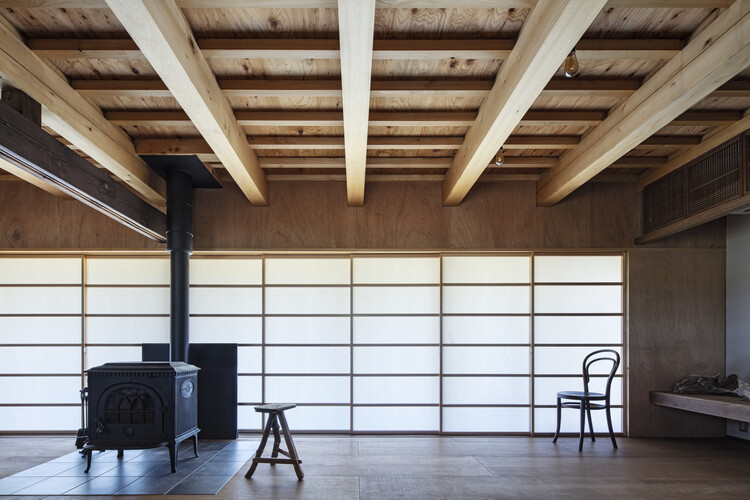
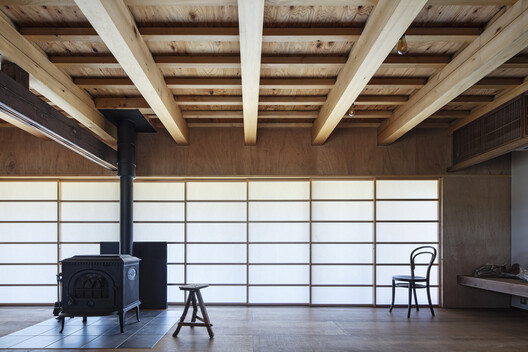
Amid the proliferation of high-rise apartment developments in populated Japanese cities, the renovation of existing houses in suburban and rural contexts is an increasingly compelling architectural approach. In this context, the office engages renovation as a design strategy and a cultural act. Rather than treating existing buildings as constraints, 1110 Office for Architecture approaches them as repositories of buildings' layered histories, material memory, and inherited carpentry craftsmanship. Each intervention begins with a careful and methodical reading of the existing building and urban fabric, examining structural systems, material conditions, and embedded construction knowledge. These conditions become a design framework, allowing new spatial configurations to emerge in dialogue with the original structure and its surroundings.

Renovation and Continuity in Japanese Architecture: The Work of 1110 Office for Architecture - Image 12 of 22
© Kenta Hasegawa

Spatial Articulation and Topographic Response

This sensitivity to the existing extends to its broader environmental context. Across both renovation and new-build projects, the studio's design language is defined by a nuanced relationship to the surrounding landscape and topography. Through the rhythmic composition of plans, elevations, and programmatic sequences, their projects establish an interplay between interior and exterior, building and landscape. Openings, sectional shifts, and material transitions are deployed, allowing light, air, and views to mediate the relationship between built form and its surroundings. 

Renovation and Continuity in Japanese Architecture: The Work of 1110 Office for Architecture - Image 16 of 22
© Yohei Sasakura

Broadly, Kawaguchi frames architecture as a platform for everyday life. The studio's work foregrounds a dialogue between past and present, between building and landscape, and, through architecture, supports both personal and collective experience. In this way, the 1110 Office for Architecture's practice enables the built environment to evolve in continuity with what came before, while remaining open to what lies ahead.

Terraced House

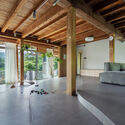
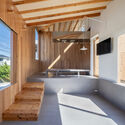
The refurbishment of a traditional Japanese house in rural Osaka transforms the house into a dialogue with its terraced rice-field landscape. The ground floor was fully opened, retaining only the essential wooden structure, creating a bright, flexible living space that flows seamlessly to the outdoors. Stepped, wave-like floors mimic the surrounding terraces, creating playful spaces for children. The second floor frames panoramic views of mountains and paddies, while former outbuildings were removed to enhance light and expand perspectives.

Renovation and Continuity in Japanese Architecture: The Work of 1110 Office for Architecture - Image 6 of 22
© Yohei Sasakura

101 Years House

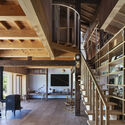
Despite the clients' initial plan to demolish it, a 100-year-old wooden house in Nagano Prefecture was renovated as a weekend house and future retirement home while preserving its craftsmanship and historical value. The house is designed around a central wall where shelves and stairs are placed. A north-facing study frames distant mountains, while living and dining areas open southward to a wooden deck and garden. An atrium and acrylic-panel ceilings bring light throughout, creating a bright, continuous interior. By reducing the footprint and maximizing openings, the house achieves flexibility, expansive views, and adaptable living spaces.

Renovation and Continuity in Japanese Architecture: The Work of 1110 Office for Architecture - Image 4 of 22
© Kenta Hasegawa

Necklace Villa

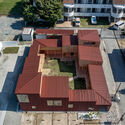
Situated on Awaji Island, the sea-facing rental villa for dog owners responds to a rapidly changing coastal context. The design centers on a courtyard building that buffers noise from the road and neighbors while opening strategically to sea views and street life. The exterior adopts a roof-and-wall integrated form without eaves to deflect strong sea breezes, clad in salt-resistant galvanized steel. Its reddish-brown facade references the surrounding streetscape, while wooden finishes highlight the layered forms and varied perspectives within the house. Skipped floor levels create a gentle hill in the courtyard, connecting interior and exterior spaces and allowing residents and dogs to move freely together. At the same time, rooms are arranged in a circular layout, guiding daily activities from eating and relaxing to sleeping.

Renovation and Continuity in Japanese Architecture: The Work of 1110 Office for Architecture - Image 2 of 22
© Yohei Sasakura

Arima's Warehouses

In Miyamae, Kawasaki, the studio converted a traditional agricultural warehouse into a restaurant and added a new warehouse alongside it to store local produce. In the original structure, a light well was cut in, and the flooring was replaced, drawing daylight into the interior and exposing the timber frame. Cedar cladding lines the walls inside. The new warehouse was designed to match the height and proportions of the old one; its hammered copper roof picks up reflections from the garden. A small tea room, angled slightly off the main axis, looks out onto the garden and sits between the two buildings.

Renovation and Continuity in Japanese Architecture: The Work of 1110 Office for Architecture - Image 22 of 22
© Torimura Kouichi

This article is presented by Buildner. As sponsor of ArchDaily's 2025 Next Practices Awards, Buildner—the world's leading architecture competition organizer—helps architects get what they enter competitions for: recognition, opportunity, and progress.

Exercise your creativity now: the Buildner UNBUILT Award 2026 is open to all, with a €100,000 prize fund. Submit your unrealized designs and celebrate your creativity now

Image gallery

See allShow less
About this author
Cite: Miwa Negoro. "Renovation and Continuity in Japanese Architecture: The Work of 1110 Office for Architecture" 19 Mar 2026. ArchDaily. Accessed . <https://www.archdaily.com/1039728/renovation-and-continuity-in-japanese-architecture-the-work-of-1110-office-for-architecture> ISSN 0719-8884

You've started following your first account!

Did you know?

You'll now receive updates based on what you follow! Personalize your stream and start following your favorite authors, offices and users.