Wine production has long been tied to place, climate, and culture, and in recent decades, architecture has become a central part of this relationship. Wineries are no longer understood only as functional facilities for fermentation, storage, and distribution, but also as spaces where landscape, materiality, and visitor experience intersect. From subterranean cellars hidden beneath fields to sculptural landmarks rising in rural territories, these buildings shape the identity of winemaking regions while offering visitors a carefully choreographed encounter with the process of production.
At the intersection of agriculture, tourism, and culture, wineries present architects with unique opportunities to merge technical requirements with a spatial narrative. They must respond to environmental conditions, manage temperature and humidity with precision, and integrate with delicate ecosystems, while also providing spaces for tasting, gathering, and celebration. As a result, the typology has given rise to a wide range of architectural solutions. Some are rooted in tradition and local craft, others are exploring advanced technologies and contemporary forms.
This week in architecture, global recognitions and new unveilings underscored the field's growing commitment to climate awareness, cultural continuity, and adaptive reuse. From Expo 2025 Osaka's closing ceremonies to international award announcements, the focus turned to architects and designers redefining the relationship between place, material, and community. Alongside these recognitions, major new projects, from Dubai to California, illustrated how design continues to evolve across scales: shaping cities, preserving heritage, and addressing urgent global challenges through context-driven architecture.
The ArchDaily projects library is managed by our curators who constantly seek to populate our stream with the most interesting global works, showcasing evolving focuses and criteria. While we usually share our reader’s top 100 favorites, this year, we also decided to initiate our editor’s picks on the ArchDaily Instagram account, where our curators highlight some projects that include interesting themes and unique traits.
Tourist facilities are a significant architectural program as they not only provide essential amenities for travelers but also encapsulate the cultural essence of a destination. Resorts and hotels experiment with ideas of comfort and leisure, restaurants bring visitors into the local culinary culture, while wineries merge craftsmanship, tradition, and modernity. Visitor centers are another facility often provided for travelers, serving as gateways to exploring the city. Besides their flexible program, these architectural interventions most often strive to relate and harmonize with the local context to enrich the narrative of the space and create a memorable experience for every visitor.
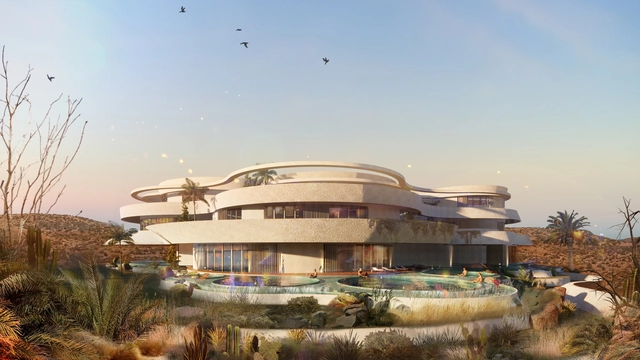
This week's curated selection of Best Unbuilt Architecture highlights projects submitted by the ArchDaily community that showcase various amenities dedicated to tourists, from wine cellars, specialty restaurants, and visitor centers to isolated camping sites in the mountains or lavish spa hotels in the arid areas of the Middle East. Featuring projects from emerging and established architectural offices such as Melike Altınışık Architects, Lockhart Krause Architects, MUA, and OMBI Innovation Lab the selection includes a wide range of programs and scales, showcasing designs that rethink conventional tourist facilities while establishing a connection with their surroundings and cultural context.
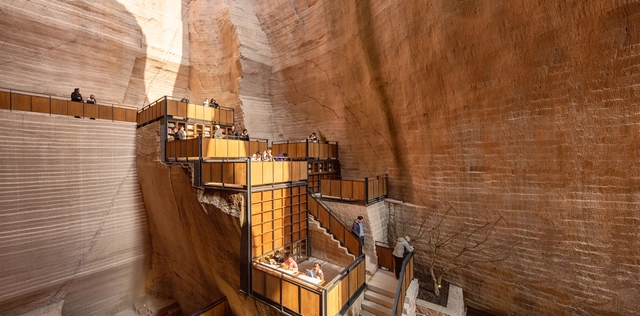
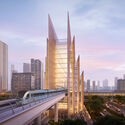
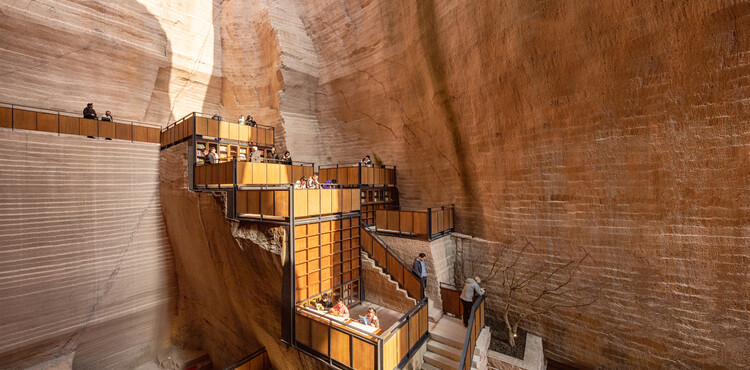
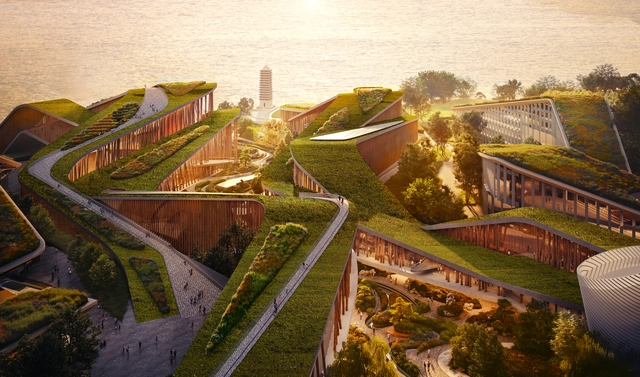
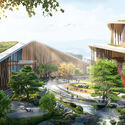
Büro Ole Scheeren has designed a new campus and experience center located in the historical city of Yibin, a region known for its rich cultural heritage and the geographical source of the Yangtze River. The campus was commissioned by Wuliangye, one of China’s leading winemakers. The project represents a large development inspired by the shape of a natural canyon, with two dynamic parallel structures defining a central space. On either side of this structure, called the Wuliang Interstice, are the Wuliangye World and the Wine Culture Exhibition Center respectively. Wuliangye World is an experience center where visitors can engage with the tradition of winemaking, while the exhibition center tells the story of wine culture through a series of themed exhibition halls.
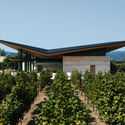
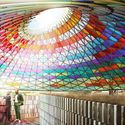
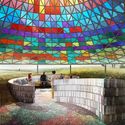
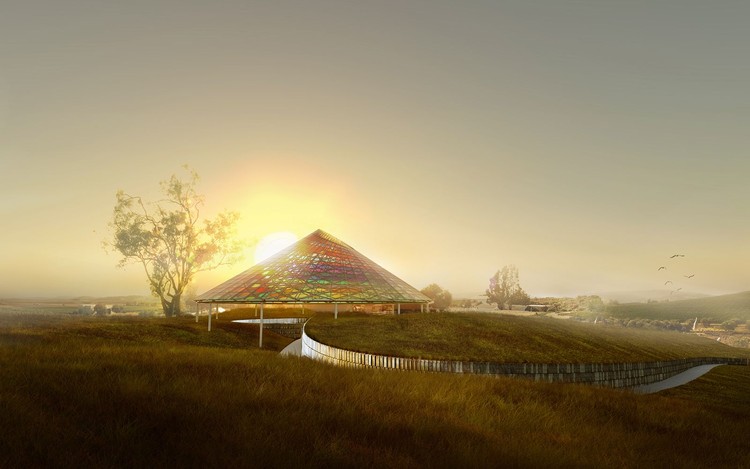
Studio Other Spaces, founded by artist Olafur Eliasson and architect Sebastian Behmann, has unveiled its wine tasting pavilion for California wine producer The Donum Estate. The design weaves together various elements of the site in what the designers describe as a vertical panorama, and essentializes a vertical cut through the landscape and the conditions that make for a thriving vineyard, proposing a holistic experience addressing all senses. The roof’s colored glass tiles represent an abstract calendar depicting the yearly averages of parameters such as wind intensity, temperature and humidity.
The oldest record of barrel vaults is estimated to date back to 4000 BC. These provided the spans in the Sumerian ziggurat at Nippur in Babylonia, built from fired bricks amalgamated with clay mortar. This type of vault was built as a continuous round arch and became a characteristic architectural element of Roman architecture, later used also in Renaissance architecture.
Le Dome Winery, Bordeaux, France. Image Courtesy of Foster + Partners
Foster + Partners have released images for their proposal for the new Le Dôme winery in Saint-Émilion, the firm’s second winery in the Bordeaux area, the first being Château Margaux in 2015. Located in a UNESCO World Heritage Cultural Landscape, the design blends seamlessly with the topography.
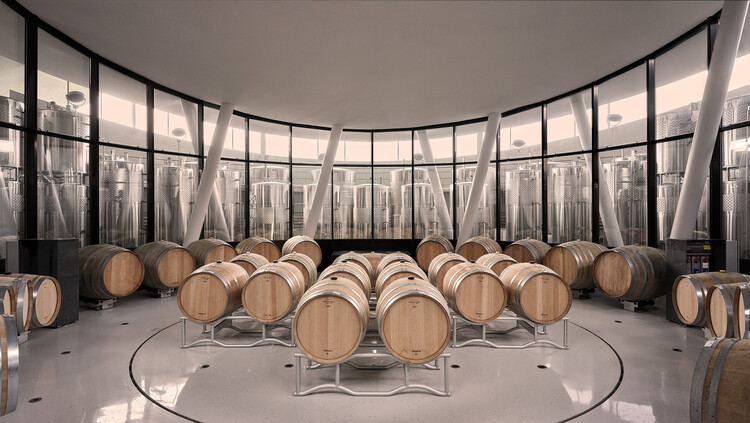
Wine production is an industry that combines robust economic activity with an extensive cultural legacy. Although there are several programs related to the wine sector, we commonly find spaces dedicated to the process of fermenting grapes into wine. However, there are a variety of duties grouped around wine production that play an important role in boosting the industry, such as tasting rooms, education centers, sales rooms, or broadcast. Below, a selection of 27 inspiring projects of wine architecture.
A few kilometers at the South East of Orange, in the municipality of Courthézon, the Château de Beaucastel vineyard spreads over 130 hectares. The vineyard, where legendary wines are produced, is the jewel of the Perrin Family, already famous among wine lovers in France and worldwide.
The castle has kept extending since the mansion was built by Pierre de Beaucastel at the heart of the estate, in the XVIIth century. Various extensions were made in order to suit the owners’ needs along time until the castle got its actual shape. This composite assembly includes buildings whose architectural quality is not always consistent with that of the wines stored therein.
Considering this situation, the Perrin Family, motivated by a need for space linked with the development of their business, wishes to take advantage of this need to extend the estate in order to consider an overall renovation project.
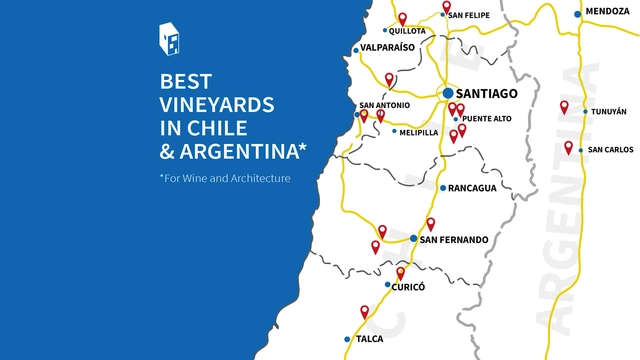
Each year millions of wine enthusiasts travel the globe in search of memorable tasting experiences. And architecture-loving Oenophiles (wine aficionados) are likely to seek vineyards that not only produce outstanding libations, but also those with impressive architecture. With world-famous wines and evergrowing international renown, the vineyards of South America accommodate thousands of wine tourists each year. Chile and Argentina currently sit in the top 10 wine-exporting countries; Chile exported $1.9 billion worth of wine in 2016 and Argentina exported $816.8 million in the same year.
Separated by the Andes, the valleys surrounding Argentina's Mendoza and Chile's central valley (including Elqui, Limarí, Aconcagua, Maipo, Casablanca, Colchagua, Cachapoal, Maule and Curicó valleys) attract a high number of enotourists. The wineries and vineyards featured below have moved away from the traditional image of the historic country house in both aesthetic terms and (sometimes) in the use of materials in the winemaking process. These properties also exist in natural harmony with the surrounding landscape to make the most of sunlight, air circulation and topography for the construction of wine cellars, hotels, tasting rooms, lookouts and viewing points, and research centers. The new and vibrant architectural designs serve as innovation inspiration in their production of the wines as well.
https://www.archdaily.com/881430/best-vineyards-in-chile-and-argentina-for-wine-and-architectureArchDaily Team
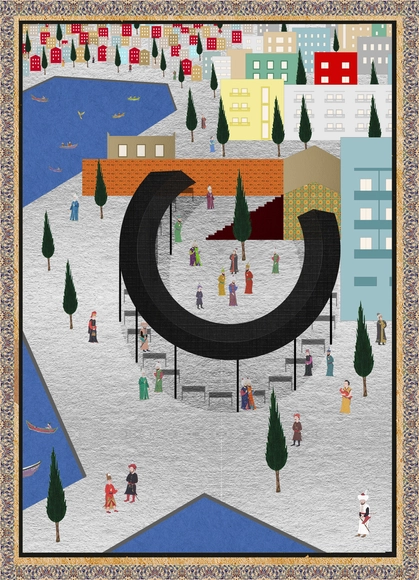
Over the following weeks we will be sharing a selection of unrealized student projects, alongside realized schemes by practices who explore representational techniques, in collaboration with KooZA/rch. The aim is "to explore the role of the architectural drawing as a tool for communication" and, in the process, provoke a conversation about the contemporary use, format, and role of drawing.
Rafael López de Heredia Tondonia Winery is one of the oldest and more famous winery in the Spanish region of La Rioja. To celebrate their 125th anniversary they decided to rehabilitate a very old store that the winery founder took to Brussel’s World Fair in 1910 and had been disassembled ever since.
In 2002 current owners (direct descendants of the founder), discovered how beautiful the old store was and decided to built an exterior volume to house the old store. This would become the future wine store and a place where visitors could taste the great wines they produce. This pavillion is only part of all the project that will include three more tasting rooms and a cleaning room. More images and architect’s description after the break.