1. ArchDaily
  2. Waterfront

Waterfront: The Latest Architecture and News

SLA Designs Public Spaces and Streetscapes for Toronto's New Island Community in the Port Lands

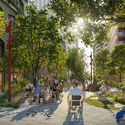
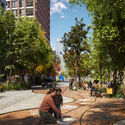
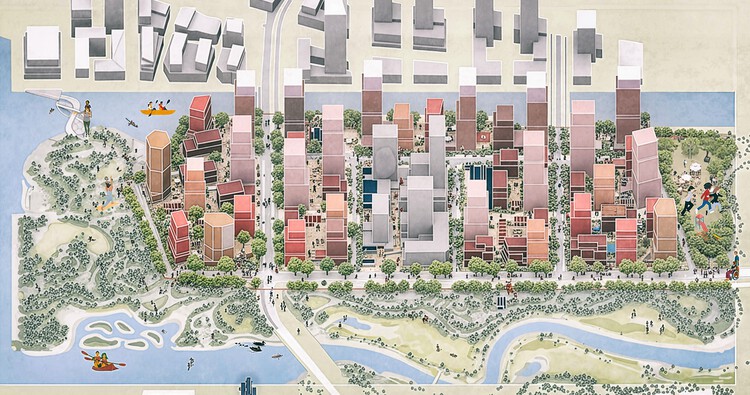
Landscape and urban design studio SLA has unveiled the design for the public realm and streetscapes of Toronto's new 39.8-hectare waterfront community. The urban landscape project "Ookwemin Minising" is located in the Port Lands, an industrial and recreational district southeast of downtown Toronto, currently undergoing urban revitalization to transform the area from a former industrial zone into a naturalized river valley, mixed-use neighbourhoods, and public parkland. The overall transformation is being led by Waterfront Toronto, a publicly funded, not-for-profit corporation established in 2001 to oversee the regeneration of the area, as part of a broader government initiative to renaturalize urban areas and increase housing density. The redevelopment of Ookwemin Minising is expected to be completed in phases between 2031 and 2040.
SLA Designs Public Spaces and Streetscapes for Toronto's New Island Community in the Port Lands - Image 1 of 4SLA Designs Public Spaces and Streetscapes for Toronto's New Island Community in the Port Lands - Image 2 of 4SLA Designs Public Spaces and Streetscapes for Toronto's New Island Community in the Port Lands - Image 3 of 4SLA Designs Public Spaces and Streetscapes for Toronto's New Island Community in the Port Lands - Image 4 of 4SLA Designs Public Spaces and Streetscapes for Toronto's New Island Community in the Port Lands - More Images+ 6

MVRDV and OODA Reveal Landscape-Led Masterplan for Lisbon’s Marvila Riverfront Regeneration

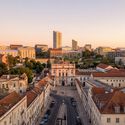
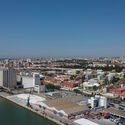
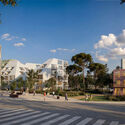
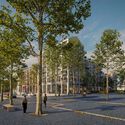
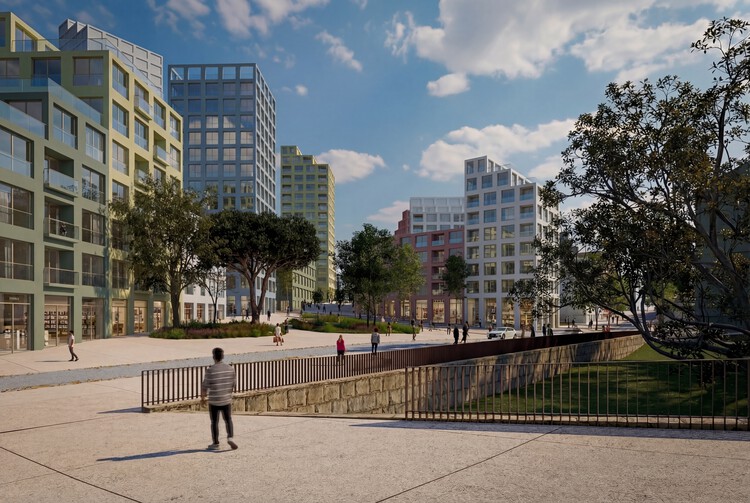
MVRDV and OODA have revealed a new masterplan for the regeneration of a vacant 28-hectare site between Marvila and Beato on Lisbon's riverfront. Recently approved by the Lisbon City Council, the project was developed in collaboration with LOLA Landscape Architects and Thornton Tomasetti to transform the area into a landscape-led urban district. Titled The Marvila Masterplan, the proposal establishes a framework for introducing 1,400 homes alongside public facilities, commercial spaces, and services within a fragmented and largely abandoned territory. The project is a private initiative led by the principal landowner and developed in coordination with the Lisbon City Council and Infraestruturas de Portugal.

MVRDV and OODA Reveal Landscape-Led Masterplan for Lisbon’s Marvila Riverfront Regeneration - Image 1 of 4MVRDV and OODA Reveal Landscape-Led Masterplan for Lisbon’s Marvila Riverfront Regeneration - Image 2 of 4MVRDV and OODA Reveal Landscape-Led Masterplan for Lisbon’s Marvila Riverfront Regeneration - Image 3 of 4MVRDV and OODA Reveal Landscape-Led Masterplan for Lisbon’s Marvila Riverfront Regeneration - Image 4 of 4MVRDV and OODA Reveal Landscape-Led Masterplan for Lisbon’s Marvila Riverfront Regeneration - More Images+ 18

Beyond the Street: Climate, Commerce, and the Evolution of Hong Kong’s Elevated Networks

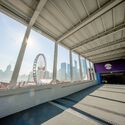
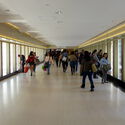
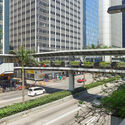
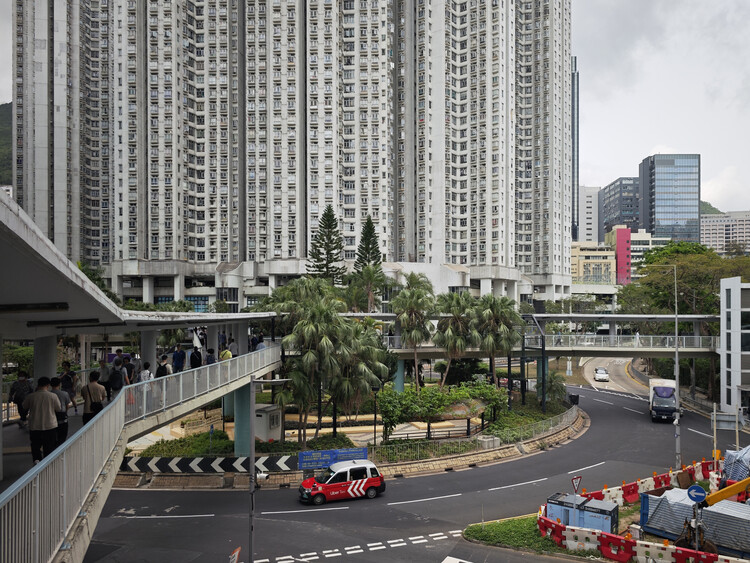
In 2012, Cities Without Ground: A Hong Kong Guidebook offered one of the clearest documentations of a condition that many residents experience intuitively but rarely name: Hong Kong's dependence on elevated, second-storey urbanism. Through drawings and careful mapping, the book captured how the city's pedestrian networks are routinely lifted above the street—separating people from traffic, extending commercial frontage beyond ground level, and negotiating a hilly topography where "flat" circulation is often an engineered achievement. Since its publication, these systems have only grown in prominence—not only for their sheer spatial complexity, but for the way they recast public space as something continuous yet selective, connective yet curated.

This fascination, however, has always carried a parallel unease. Elevated passages can be generous and effective, offering sheltered movement and reliable connectivity. Yet they also raise persistent questions: where do these routes lead, who gets to connect, and what kinds of programs are invited—or excluded—by this "privileged" level of circulation? The second-storey city does not simply bypass vehicles; it can also bypass the street as a civic stage. Over time, it risks shifting architectural attention away from ground-level public life, relieving designers from having to negotiate pedestrian scale, frontage, and the messy reciprocity of the street. In its worst moments, the result is a landscape of podium clusters and sealed megastructures—buildings that perform connectivity at Level 2 while remaining indifferent to the neighborhood at Level 0.
Beyond the Street: Climate, Commerce, and the Evolution of Hong Kong’s Elevated Networks - Image 1 of 4Beyond the Street: Climate, Commerce, and the Evolution of Hong Kong’s Elevated Networks - Image 2 of 4Beyond the Street: Climate, Commerce, and the Evolution of Hong Kong’s Elevated Networks - Image 3 of 4Beyond the Street: Climate, Commerce, and the Evolution of Hong Kong’s Elevated Networks - Image 4 of 4Beyond the Street: Climate, Commerce, and the Evolution of Hong Kong’s Elevated Networks - More Images+ 17

The Embarcadero Freeway: Elevated Infrastructure and Urban Regeneration in San Francisco

Subscriber Access | 

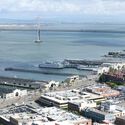
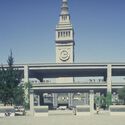
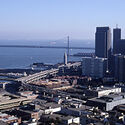
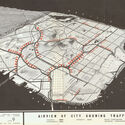
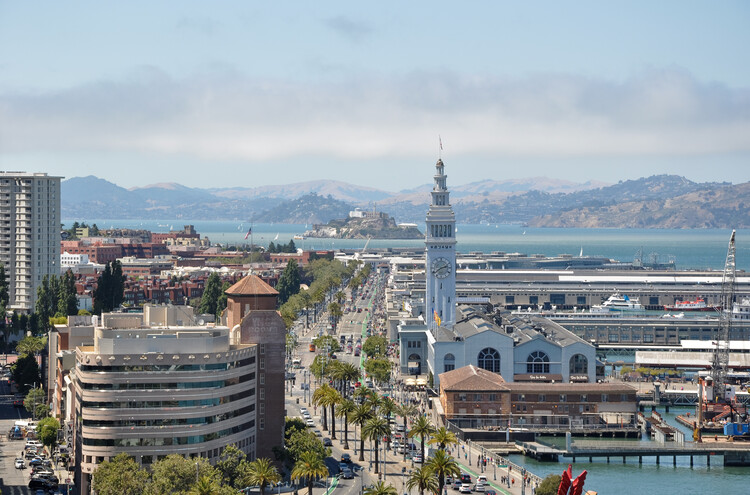
In recent decades, cities across the world have seen an increase in the demolition of elevated concrete freeways. Taipei, Seoul, Portland, and Boston, for example, have all seen the rise and fall of these infrastructures to give way to parks and new urban regeneration ideas. In other cases, like Montreal in Canada, some people opposed the freeways even before they were built, effectively rerouting viaducts, preserving heritage, and freeing waterfront views. For San Francisco, in the United States, the story of the Embarcadero Freeway is one of those narratives that serves as a case study of the city's mid-century infrastructural ambition, people's reaction to the project, and its eventual reversal in favor of urban connectivity.
The Embarcadero Freeway: Elevated Infrastructure and Urban Regeneration in San Francisco - Image 1 of 4The Embarcadero Freeway: Elevated Infrastructure and Urban Regeneration in San Francisco - Image 2 of 4The Embarcadero Freeway: Elevated Infrastructure and Urban Regeneration in San Francisco - Image 3 of 4The Embarcadero Freeway: Elevated Infrastructure and Urban Regeneration in San Francisco - Image 4 of 4The Embarcadero Freeway: Elevated Infrastructure and Urban Regeneration in San Francisco - More Images+ 3

No Solid Ground: Three Approaches to Building Below Sea Level in Rotterdam

Architects carefully calibrate their relationship to the earth, adjusting foundations to soil, groundwater, climate, risk, and culture. Driven timber piles, rammed-earth platforms, and poured concrete slabs are each a response to a specific set of ground conditions, and each shapes the architecture that rises from it. The way a building meets the earth determines its durability and its limits because foundations are among the most consequential design choices an architect makes.

The city of Rotterdam sits approximately one meter below sea level, an organizing condition that shapes daily life in the Netherlands' second-largest city and is a growing preoccupation amid unstable coastal conditions. The city occupies the delta of the Rhine and Maas rivers, a landscape that was never naturally dry but has been kept functional through centuries of hydraulic intervention. The water boards in this region are among the oldest democratic institutions in the world, created in the thirteenth century to manage shared water drainage and still operating today as elected bodies with technical capacity. As sea levels rise and rainfall across Northern Europe grows less predictable and more extreme, Rotterdam faces a significantly increased risk of coastal storm surges and urban flooding driven by overwhelmed drainage infrastructure.

No Solid Ground: Three Approaches to Building Below Sea Level in Rotterdam - Image 16 of 4No Solid Ground: Three Approaches to Building Below Sea Level in Rotterdam - Image 57 of 4No Solid Ground: Three Approaches to Building Below Sea Level in Rotterdam - Image 25 of 4No Solid Ground: Three Approaches to Building Below Sea Level in Rotterdam - Image 54 of 4No Solid Ground: Three Approaches to Building Below Sea Level in Rotterdam - More Images+ 65

6 Unbuilt Retreats Exploring Hospitality Through Landscape and Refuge

Subscriber Access | 

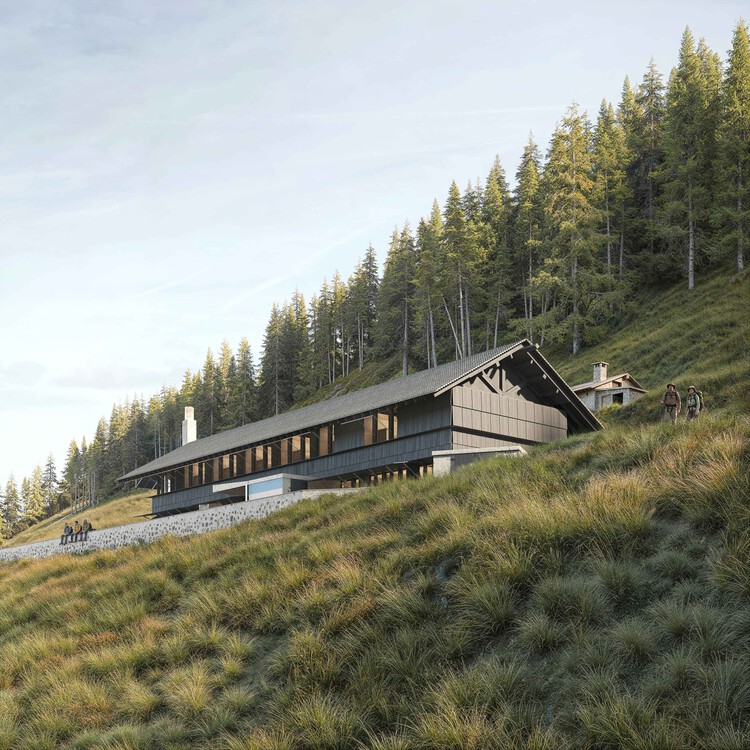
Spaces of retreat continue to offer fertile ground for unbuilt exploration, revealing how architecture can support rest, reflection, and immersion in nature amid shifting environmental and cultural conditions. In this Unbuilt edition, submitted by the ArchDaily community, the selected projects assemble a diverse range of proposals that reconsider hospitality through the lens of refuge. These works position accommodation not as spectacle or excess, but as spatial frameworks shaped by landscape, climate, material restraint, and shared experience.

Across distinct geographies, from Southeast Asian hillsides and Indonesian coastlines to African wilderness, Alpine terrain, Middle Eastern landscapes, and North American forests, the proposals demonstrate varied architectural responses to sensitive sites. They include elevated structures that hover lightly above steep ground, temporary lodge systems embedded in remote ecologies, reconstructed mountain shelters grounded in memory and reuse, courtyard-centered communal stays shaped by lifestyle cultures, contemplative desert retreats, and inclusive woodland camps designed for accessibility and environmental balance.

6 Unbuilt Retreats Exploring Hospitality Through Landscape and Refuge - Image 5 of 46 Unbuilt Retreats Exploring Hospitality Through Landscape and Refuge - Image 31 of 46 Unbuilt Retreats Exploring Hospitality Through Landscape and Refuge - Image 10 of 46 Unbuilt Retreats Exploring Hospitality Through Landscape and Refuge - Image 14 of 46 Unbuilt Retreats Exploring Hospitality Through Landscape and Refuge - More Images+ 35

SCAPE and BIG Unveil Final Plans for Manresa Wilds on Former Power Plant Site in Norwalk, US

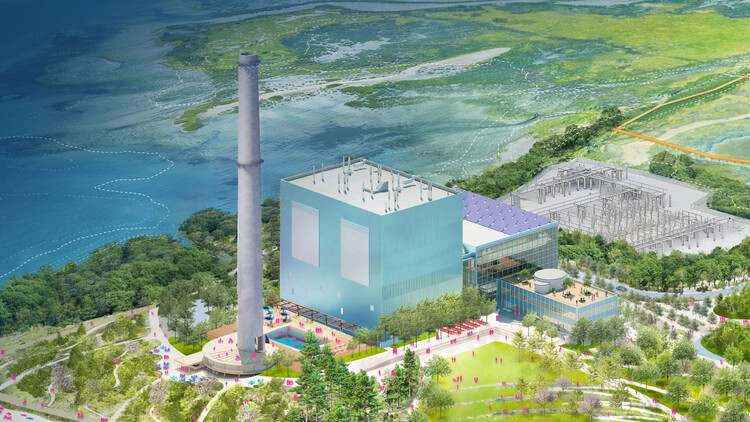
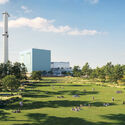
Manresa Island Corp. has unveiled the final vision for Manresa Wilds, a 125-acre waterfront park planned on a former power plant peninsula along Long Island Sound in Norwalk, United States. Developed in collaboration with landscape architecture firm SCAPE and architecture studio BIG, the proposal outlines the transformation of a polluted and long-inaccessible industrial shoreline into a publicly accessible coastal landscape. Following the receipt of a stewardship permit from Connecticut's Department of Energy and Environmental Protection in December 2025, the project will move forward in phases, beginning with the opening of the 28-acre Northern Forest in spring 2027. Subsequent phases, extending into the early 2030s, will deliver the majority of the restored landscape and the adaptive reuse of the 1960s-era power plant as a year-round civic and educational hub, opening nearly two miles of coastline that have been closed to the public for decades.

SCAPE and BIG Unveil Final Plans for Manresa Wilds on Former Power Plant Site in Norwalk, US - Image 1 of 4SCAPE and BIG Unveil Final Plans for Manresa Wilds on Former Power Plant Site in Norwalk, US - Image 2 of 4SCAPE and BIG Unveil Final Plans for Manresa Wilds on Former Power Plant Site in Norwalk, US - Image 3 of 4SCAPE and BIG Unveil Final Plans for Manresa Wilds on Former Power Plant Site in Norwalk, US - Image 4 of 4SCAPE and BIG Unveil Final Plans for Manresa Wilds on Former Power Plant Site in Norwalk, US - More Images+ 21

Zaha Hadid Architects Designs Cultural District Along the Qiantang Bay Central Water Axis in Hangzhou, China

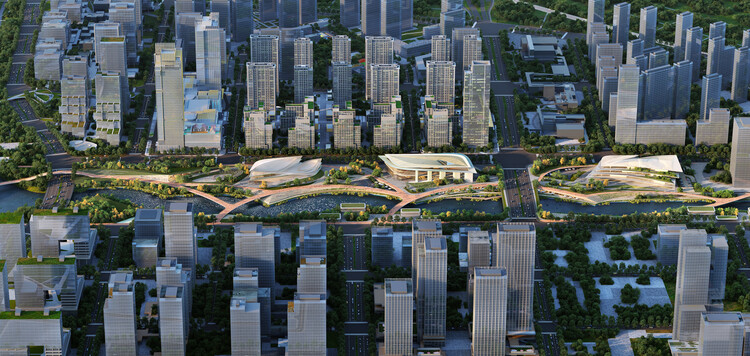
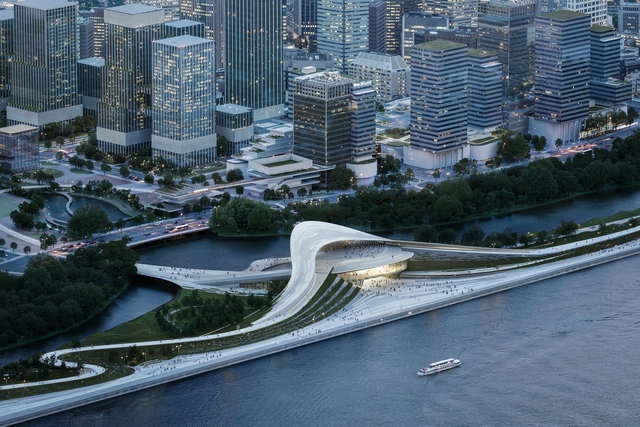
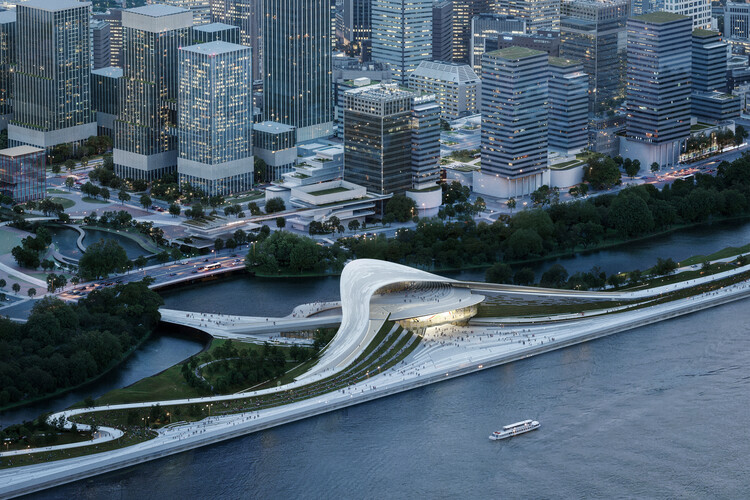
Zaha Hadid Architects has released images of its design for the redevelopment of the waterfront along the Zhedong Canal in Hangzhou's Xiaoshan District, China. The Qiantang Bay Central Water Axis project envisions a sequence of landscaped parklands, terraces, and gardens along the canal basin, proposing the transformation of former industrial areas into a green corridor extending toward the city center. The proposal adds to other recent design initiatives in the area, including Snøhetta's Qiantang Bay Art Museum, planned at the confluence of the Qiantang River and the Central Water Axis, as well as Zaha Hadid Architects' Grand Canal Gateway Bridge, a pedestrian bridge intended to connect the firm's 800,000-square-meter Seamless City masterplan on the east and west banks of the Grand Canal.

Zaha Hadid Architects Designs Cultural District Along the Qiantang Bay Central Water Axis in Hangzhou, China - Image 1 of 4Zaha Hadid Architects Designs Cultural District Along the Qiantang Bay Central Water Axis in Hangzhou, China - Image 2 of 4Zaha Hadid Architects Designs Cultural District Along the Qiantang Bay Central Water Axis in Hangzhou, China - Image 3 of 4Zaha Hadid Architects Designs Cultural District Along the Qiantang Bay Central Water Axis in Hangzhou, China - Image 4 of 4Zaha Hadid Architects Designs Cultural District Along the Qiantang Bay Central Water Axis in Hangzhou, China - More Images+ 2

Busan’s First Opera House by Snøhetta Nears Completion

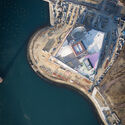
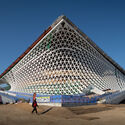
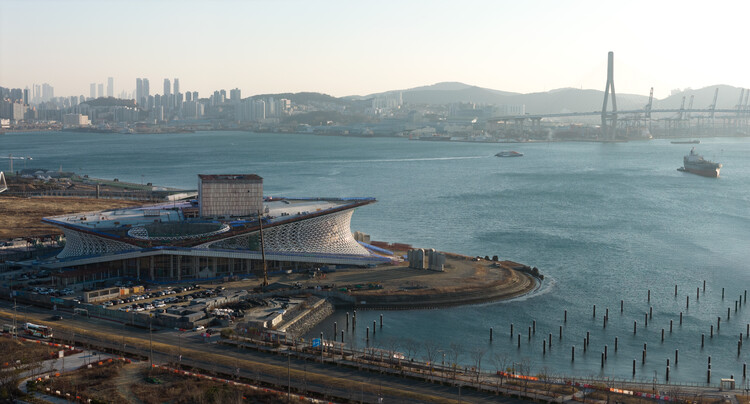
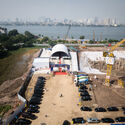
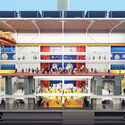
Commissioned in 2012 following an international design competition, Snøhetta's Busan Opera House is under construction on the city's North Port waterfront, with major works scheduled for completion in late 2026 and an opening planned for 2027. Conceived as the first opera house in South Korea's second-largest city, the project redefines the traditional opera house as an open and inclusive civic institution. Rather than operating solely as a venue for performance, the building is envisioned as a public destination that supports everyday use, collective experience, and long-term cultural engagement within Busan's evolving urban landscape.

Busan’s First Opera House by Snøhetta Nears Completion - Image 1 of 4Busan’s First Opera House by Snøhetta Nears Completion - Image 2 of 4Busan’s First Opera House by Snøhetta Nears Completion - Image 3 of 4Busan’s First Opera House by Snøhetta Nears Completion - Image 4 of 4Busan’s First Opera House by Snøhetta Nears Completion - More Images+ 12

3XN’s Sydney Fish Market to Open as Blackwattle Bay’s First Completed Project

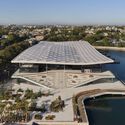
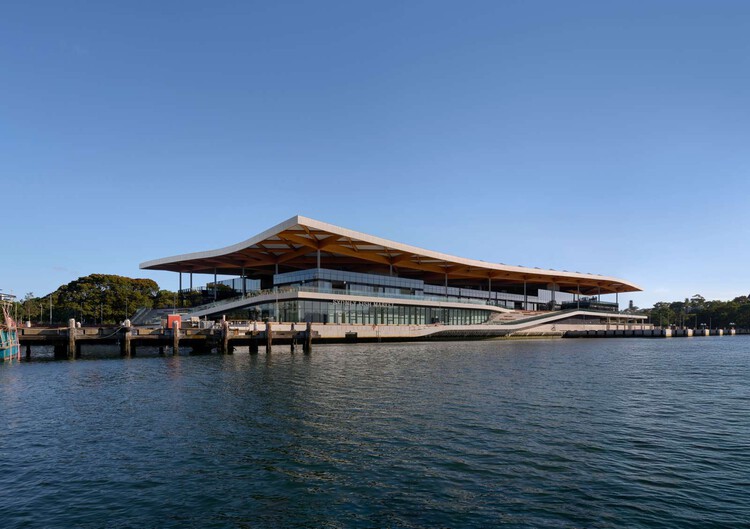
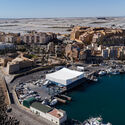
Set to open on January 19, 2026, the Sydney Fish Market marks the first completed project within the broader renewal of Blackwattle Bay on Sydney's inner harbour. Designed by 3XN in collaboration with BVN and Aspect Studios, and delivered by Multiplex, the purpose-built facility replaces the former market with a contemporary structure that combines an operating wholesale fish market with retail, dining, and publicly accessible waterfront spaces. Positioned approximately one mile southwest of Sydney's central business district, the project reframes one of the world's largest fish markets by volume as both working infrastructure and a civic destination.

3XN’s Sydney Fish Market to Open as Blackwattle Bay’s First Completed Project - Image 1 of 43XN’s Sydney Fish Market to Open as Blackwattle Bay’s First Completed Project - Image 2 of 43XN’s Sydney Fish Market to Open as Blackwattle Bay’s First Completed Project - Image 3 of 43XN’s Sydney Fish Market to Open as Blackwattle Bay’s First Completed Project - Image 4 of 43XN’s Sydney Fish Market to Open as Blackwattle Bay’s First Completed Project - More Images+ 10

Frida Escobedo to Design Qatar’s New Ministry Building with Adaptive Reuse of a Modernist Landmark in Doha

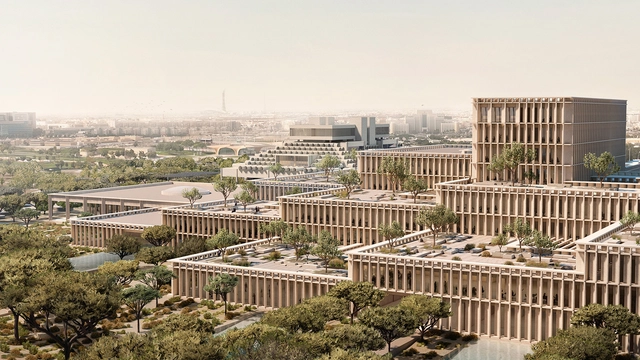
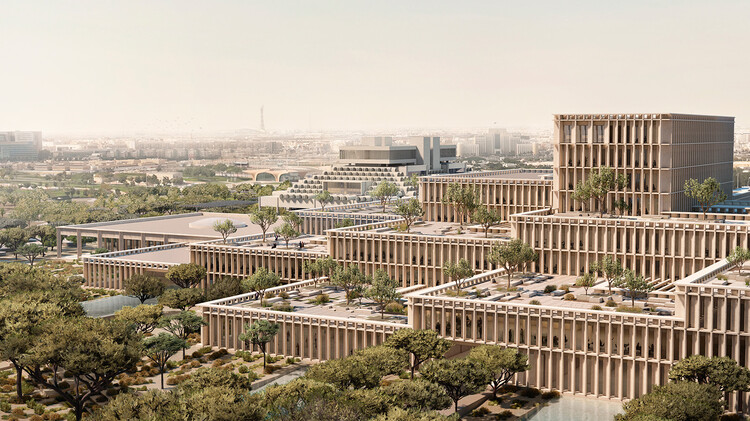
The State of Qatar announced on December 4, 2025, the selection of Frida Escobedo Studio, with Buro Happold engineers and Studio Zewde landscape designers, to design the new headquarters for the Ministry of Foreign Affairs. Intended to establish a more visible civic presence for the Qatari diplomatic service and provide public access to the Ministry complex, the project is planned for a prominent site along Doha's waterfront, transforming a significant section of the city's Corniche. Situated beside Doha Bay, the 70,000-square-meter (750,000-square-foot) project is conceived as a combination of new construction and the adaptive reuse of the historic modernist General Post Office currently on the site.

Frida Escobedo to Design Qatar’s New Ministry Building with Adaptive Reuse of a Modernist Landmark in Doha - Image 1 of 4Frida Escobedo to Design Qatar’s New Ministry Building with Adaptive Reuse of a Modernist Landmark in Doha - Image 2 of 4Frida Escobedo to Design Qatar’s New Ministry Building with Adaptive Reuse of a Modernist Landmark in Doha - Image 3 of 4Frida Escobedo to Design Qatar’s New Ministry Building with Adaptive Reuse of a Modernist Landmark in Doha - Image 4 of 4Frida Escobedo to Design Qatar’s New Ministry Building with Adaptive Reuse of a Modernist Landmark in Doha - More Images

Mecanoo’s Natural History Museum Opens in Abu Dhabi’s Saadiyat Cultural District

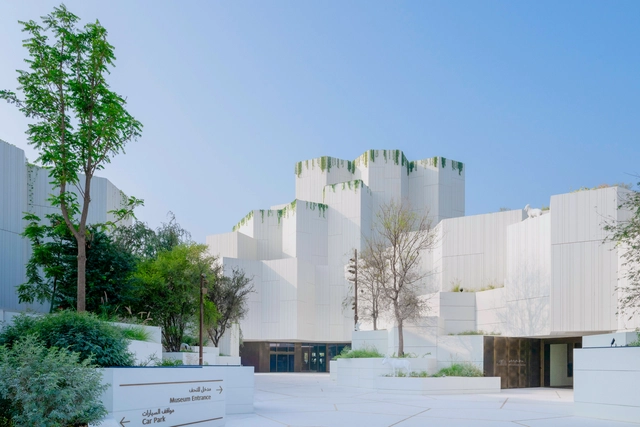
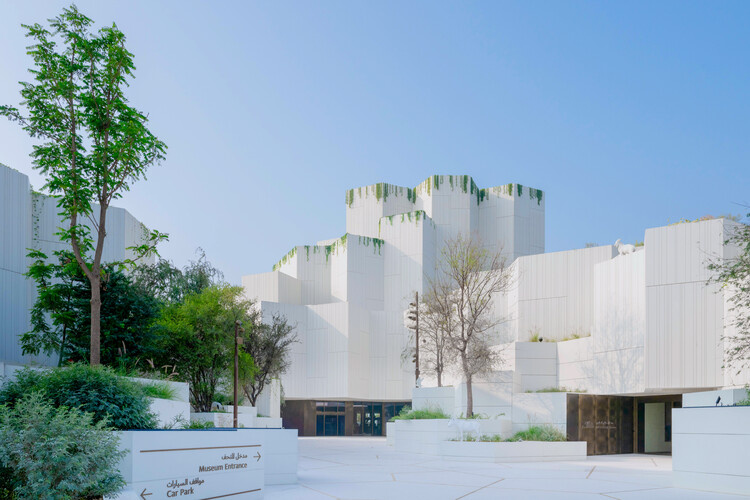
Back in April 2022, Abu Dhabi unveiled the first images of a new Natural History Museum designed by the Dutch practice Mecanoo. Three years later, on November 22, 2025, the museum opened its doors to the public, presenting 13.8 billion years of science and discovery with a special focus on the Arabian region. Covering more than 35,000 sqm, the design is intended to resonate with natural rock formations. Geometry acts as the unifying theme, with pentagonal shapes referencing cellular structures. Water and vegetation, symbols of life in the desert, also play an important role in the design. Located in Abu Dhabi's Saadiyat Cultural District, the building houses rare meteorites, dinosaur fossils, and reconstructions of the region's prehistoric landscapes, combining natural history, storytelling, and immersive environments. Through interactive exhibitions, special events, and community-science programmes, the museum seeks to encourage audiences of all ages to engage with the natural world.

Mecanoo’s Natural History Museum Opens in Abu Dhabi’s Saadiyat Cultural District - Image 1 of 4Mecanoo’s Natural History Museum Opens in Abu Dhabi’s Saadiyat Cultural District - Image 2 of 4Mecanoo’s Natural History Museum Opens in Abu Dhabi’s Saadiyat Cultural District - Image 3 of 4Mecanoo’s Natural History Museum Opens in Abu Dhabi’s Saadiyat Cultural District - Image 4 of 4Mecanoo’s Natural History Museum Opens in Abu Dhabi’s Saadiyat Cultural District - More Images+ 8

Snøhetta Selected to Design the New Qiantang Bay Art Museum in Hangzhou, China

Snøhetta has been selected to design the Qiantang Bay Art Museum, a new cultural landmark within the Qiantang Bay Future Headquarters development in Xiaoshan District, Hangzhou, China. Conceived in collaboration with the Architectural Design & Research Institute of Zhejiang University Co., Ltd. and Buro Happold, the project encompasses architecture, landscape architecture, and interior design over 18,000 square meters. The museum will form part of Hangzhou's expanding downtown area along the Qiantang River, serving as an important destination for art, culture, and public life.

Snøhetta Selected to Design the New Qiantang Bay Art Museum in Hangzhou, China - Image 1 of 4Snøhetta Selected to Design the New Qiantang Bay Art Museum in Hangzhou, China - Image 2 of 4Snøhetta Selected to Design the New Qiantang Bay Art Museum in Hangzhou, China - Image 3 of 4Snøhetta Selected to Design the New Qiantang Bay Art Museum in Hangzhou, China - Image 4 of 4Snøhetta Selected to Design the New Qiantang Bay Art Museum in Hangzhou, China - More Images+ 2

From Albania to Iran: 7 Unbuilt Infrastructure Projects Reimagining Mobility, Ecology, and Connection

Subscriber Access | 

Infrastructure has long defined the backbone of cities by linking people, landscapes, and economies through systems that often go unnoticed until they fail. Today, as global challenges demand more adaptive and human-centered responses, architects are rethinking what infrastructure can be: not just a framework for movement and utility, but a catalyst for ecological restoration, cultural continuity, and civic imagination. The following unbuilt projects, submitted by the ArchDaily community, explore this expanded role of infrastructure, where airports, bridges, industrial parks, and pedestrian networks become architectural expressions of connection and care.

From Albania to Iran: 7 Unbuilt Infrastructure Projects Reimagining Mobility, Ecology, and Connection - Image 6 of 4From Albania to Iran: 7 Unbuilt Infrastructure Projects Reimagining Mobility, Ecology, and Connection - Image 10 of 4From Albania to Iran: 7 Unbuilt Infrastructure Projects Reimagining Mobility, Ecology, and Connection - Image 15 of 4From Albania to Iran: 7 Unbuilt Infrastructure Projects Reimagining Mobility, Ecology, and Connection - Image 24 of 4From Albania to Iran: 7 Unbuilt Infrastructure Projects Reimagining Mobility, Ecology, and Connection - More Images+ 36

Shifting Sediments: Rivers as an Architectural and Cultural Catalyst

Subscriber Access | 

Rivers generate a distinct typology of architecture bound by design threads of material practice, environmental adaptation, cultural symbolism, and imagination. Each river system produces a unique ecosystem where water, soil, vegetation, and settlement converge to form a living network. Designing within this environment requires a capacity to read movement rather than resist it, to build on uncertain ground, and to understand permanence as a balance in motion. Unlike the fixed horizon of the sea, the river is never still. It teaches architects to think in gradients rather than boundaries, and to design as part of an evolving landscape.

Shifting Sediments: Rivers as an Architectural and Cultural Catalyst - Image 1 of 4Shifting Sediments: Rivers as an Architectural and Cultural Catalyst - Image 2 of 4Shifting Sediments: Rivers as an Architectural and Cultural Catalyst - Image 3 of 4Shifting Sediments: Rivers as an Architectural and Cultural Catalyst - Image 4 of 4Shifting Sediments: Rivers as an Architectural and Cultural Catalyst - More Images+ 8

Renzo Piano Building Workshop Designs Curved Concrete Opera Hall Rising from Hanoi’s West Lake

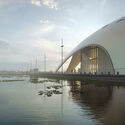
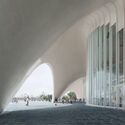
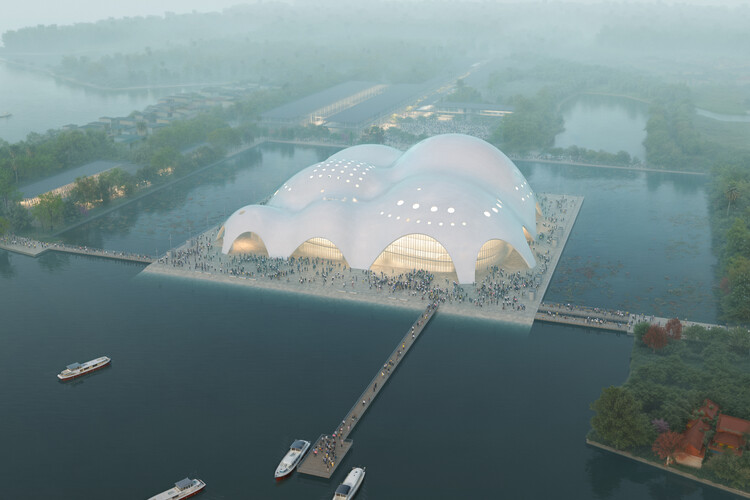
Renzo Piano Building Workshop (RPBW), in collaboration with Sydney and Hanoi-based PTW Architects, has begun construction of the Isola della Musica, a new opera house and convention center in Hanoi, Vietnam. Commissioned by Sun Group, the project was first conceived in 2017 and forms part of a broader masterplan that reshapes the existing boundary between West Lake and Đầm Trị Lake. Inspired by the region's history of pearl cultivation, the building features a series of curved concrete shells whose forms and surfaces evoke the texture and luminosity of mother-of-pearl.

Renzo Piano Building Workshop Designs Curved Concrete Opera Hall Rising from Hanoi’s West Lake - Image 1 of 4Renzo Piano Building Workshop Designs Curved Concrete Opera Hall Rising from Hanoi’s West Lake - Image 2 of 4Renzo Piano Building Workshop Designs Curved Concrete Opera Hall Rising from Hanoi’s West Lake - Image 3 of 4Renzo Piano Building Workshop Designs Curved Concrete Opera Hall Rising from Hanoi’s West Lake - Image 4 of 4Renzo Piano Building Workshop Designs Curved Concrete Opera Hall Rising from Hanoi’s West Lake - More Images+ 6

Why Sit by the Dock of the Bay? Designing Thresholds to the Water

Subscriber Access | 

Boat docks and harbors are liminal spaces where the shore marks the meeting of land and water, and serve as a space for the convergence of culture, industry, and community. For those who work at sea, from commercial fishers to marine freight operators, the dock is a threshold between labor and rest, between oceanic uncertainty and terrestrial stability. For others, the dock serves as a gateway to recreation, sport, and adventure, accommodating everything from rowing clubs to family sailing trips. And for many who never board a vessel, the dock offers a powerful connection to the marine environment where one can pause, observe, and engage with the rhythmic tides.

Why Sit by the Dock of the Bay? Designing Thresholds to the Water - Image 1 of 4Why Sit by the Dock of the Bay? Designing Thresholds to the Water - Image 2 of 4Why Sit by the Dock of the Bay? Designing Thresholds to the Water - Image 3 of 4Why Sit by the Dock of the Bay? Designing Thresholds to the Water - Image 4 of 4Why Sit by the Dock of the Bay? Designing Thresholds to the Water - More Images+ 48

MVRDV Designs Masterplan with Rock-Inspired Tourist Facilities for Jialeshui, Taiwan

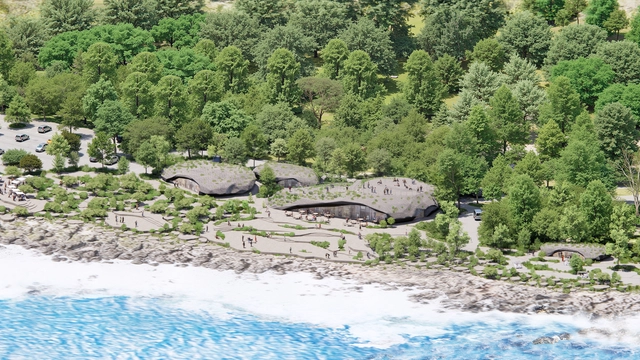
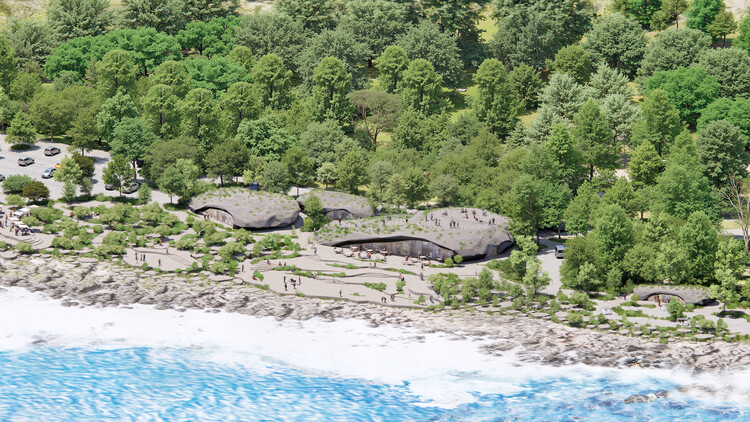
MVRDV revealed the design of rock-like tourist facilities and infrastructure for the Taiwanese coastal area of Jialeshui, a scenic destination in the southernmost part of Taiwan. The Pingtung County Government recently selected the design proposal submitted by MVRDV in collaboration with HWC Architects for the transformation of an area known for its rock formations shaped by wind and water, including a series of structures inspired by these natural forms. The project, a masterplan titled Nature Rocks, introduces a network of new pathways and public spaces and adds small-scale buildings, including a central visitor centre and three lookout points, within the existing built footprint.

MVRDV Designs Masterplan with Rock-Inspired Tourist Facilities for Jialeshui, Taiwan - Image 1 of 4MVRDV Designs Masterplan with Rock-Inspired Tourist Facilities for Jialeshui, Taiwan - Image 2 of 4MVRDV Designs Masterplan with Rock-Inspired Tourist Facilities for Jialeshui, Taiwan - Image 3 of 4MVRDV Designs Masterplan with Rock-Inspired Tourist Facilities for Jialeshui, Taiwan - Image 4 of 4MVRDV Designs Masterplan with Rock-Inspired Tourist Facilities for Jialeshui, Taiwan - More Images+ 16