1. ArchDaily
  2. Villa Savoye

Villa Savoye: The Latest Architecture and News

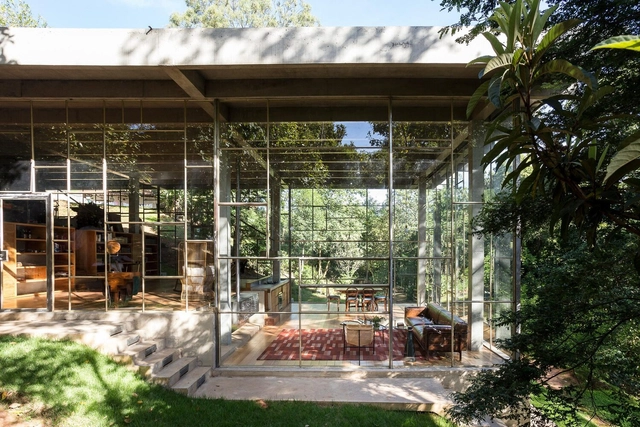
Modernism Reconsidered: Revisiting the Movement’s Complex Relationship with Sustainability

Modernism emerged in the early 20th century as a revolutionary movement that rejected historical styles, prioritizing functionality, innovation, and rationality. Grounded in the promise of industrial progress, architects like Walter Gropius, Le Corbusier, and Ludwig Mies van der Rohe championed using new materials and construction methods, striving for a universal architectural language. Their work introduced radical ideas: open floor plans, expansive glazing for natural light, and pilotis that elevated structures, symbolizing a new architectural era. However, alongside its groundbreaking ideas, modernism's relationship with sustainability has sparked ongoing debates.

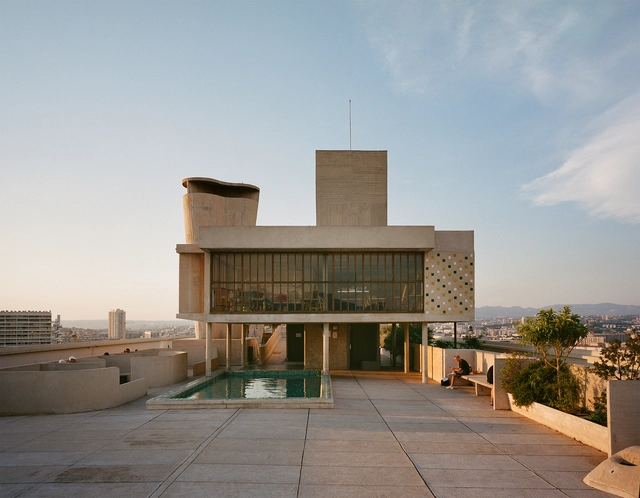
While modernist architects sought to address social and economic challenges through affordable housing and efficient design, their reliance on energy-intensive materials like concrete and steel created unintended environmental consequences. The large-scale industrialization celebrated by modernists often disregarded local climates and ecological systems, leading to inefficiencies. Yet, the principles of functionality and adaptability embedded in modernist architecture laid the groundwork for what we now recognize as sustainable practices. From Le Corbusier's rooftop gardens to Frank Lloyd Wright's integration of nature, the seeds of environmentally conscious design were undeniably present, albeit limited in their execution.

Modernism Reconsidered: Revisiting the Movement’s Complex Relationship with Sustainability - Image 1 of 4Modernism Reconsidered: Revisiting the Movement’s Complex Relationship with Sustainability - Image 2 of 4Modernism Reconsidered: Revisiting the Movement’s Complex Relationship with Sustainability - Image 3 of 4Modernism Reconsidered: Revisiting the Movement’s Complex Relationship with Sustainability - Image 4 of 4Modernism Reconsidered: Revisiting the Movement’s Complex Relationship with Sustainability - More Images+ 25

Promenade Architecturale: How the Modernist Concept Continues to Inspire Contemporary Architecture

Subscriber Access | 

In modernist architecture, promenade architecturale emerged as a key design strategy, embodying the principles of functionality, aesthetics, and integration with the urban context. Le Corbusier’s iconic projects, such as Villa La Roche (1925) and Villa Savoye (1929), exemplify this idea by guiding visitors through an ascending journey that culminates in the rooftop garden—a space where the building and nature seamlessly interact. A century later, this concept remains influential, continuing to shape contemporary designs that explore the relationship between movement and space in various architectural typologies, including houses, museums, libraries, and parks.

Promenade Architecturale: How the Modernist Concept Continues to Inspire Contemporary Architecture - Image 1 of 4Promenade Architecturale: How the Modernist Concept Continues to Inspire Contemporary Architecture - Image 2 of 4Promenade Architecturale: How the Modernist Concept Continues to Inspire Contemporary Architecture - Image 3 of 4Promenade Architecturale: How the Modernist Concept Continues to Inspire Contemporary Architecture - Image 4 of 4Promenade Architecturale: How the Modernist Concept Continues to Inspire Contemporary Architecture - More Images+ 14

Villa Cravois: A Timeless Dialogue Between Modernism and Artistic Expression

Subscriber Access | 

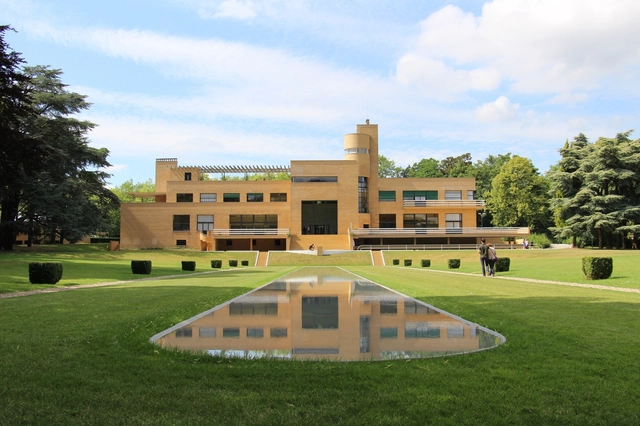
The Villa Cavrois stands as a powerful testament to early modernist architecture and the vision of architect Robert Mallet-Stevens. Built between 1929 and 1932 in Croix, France, this landmark residence was commissioned by Paul Cavrois, a prominent textile industrialist, to embody modern values and house his growing family. Mallet-Stevens' design merges Modernist ideals with a luxurious, functional aesthetic that breaks sharply from traditional styles, creating a space defined by clean lines, balanced proportions, and innovative materials.


More than just a family home, Villa Cavrois was designed as an architectural manifesto, presenting bold new ideas in residential design that would inspire generations. Its meticulously crafted layout, advanced technological features, and harmonious connection to the surrounding landscape positioned it as a symbol of modern living.

Villa Cravois: A Timeless Dialogue Between Modernism and Artistic Expression - Image 1 of 4Villa Cravois: A Timeless Dialogue Between Modernism and Artistic Expression - Image 2 of 4Villa Cravois: A Timeless Dialogue Between Modernism and Artistic Expression - Image 3 of 4Villa Cravois: A Timeless Dialogue Between Modernism and Artistic Expression - Image 4 of 4Villa Cravois: A Timeless Dialogue Between Modernism and Artistic Expression - More Images+ 23

The Myth of Pure White Architecture: How Architects of Modernity Used Color

Given that the architects of modernity were in search of purity of form, it stands to reason that the image of this modern architecture is almost inevitably rendered in white in the collective imagination. Relieved of superfluous decorations, modern architecture became associated with the predominant use of white surfaces to highlight the volumetric composition. Combined with the concept of “material truth” first articulated by Victorian critic John Ruskin, white-colored architecture is often understood as straightforward, clear, and sincere.

The Myth of Pure White Architecture: How Architects of Modernity Used Color - Image 1 of 4The Myth of Pure White Architecture: How Architects of Modernity Used Color - Image 2 of 4The Myth of Pure White Architecture: How Architects of Modernity Used Color - Image 3 of 4The Myth of Pure White Architecture: How Architects of Modernity Used Color - Image 4 of 4The Myth of Pure White Architecture: How Architects of Modernity Used Color - More Images+ 9

Le Corbusier's Enduring Spirit: Celebrating 100 Years of Architectural Influence

One hundred years ago, in 1923, Le Corbusier’s “Vers une Architecture” was published in the magazine “L’Esprit Nouveau.” The controversial collection of essays authored by the Modernist master served as a manifesto for the development of modern architecture, influencing generations of architects and sparking polemics on the proposed principles of architectural design. The book advocates for the beauty of streamlined industrial designs, like those of airplanes, automobiles or ocean liners; it proposes a completely different way of building cities, favoring tall and slender towers surrounded by abundant greenery, and introduces Le Corbusier’s 5 principles for modern design.

Now, a century later, these theories have become part of every architect’s education, but they are also highly contested. Some critics argue that the rigid approach, especially in relation to urban planning principles, fails to engage the cultural and contextual nuances of different communities, leading to alienating urban environments. Still, the legacy of Le Corbusier is significant, serving as a constant point of reference for architects when exploring the balance between functionality, aesthetics, symbolism and the social impact of their designs.

Le Corbusier's Enduring Spirit: Celebrating 100 Years of Architectural Influence - Image 1 of 4Le Corbusier's Enduring Spirit: Celebrating 100 Years of Architectural Influence - Image 2 of 4Le Corbusier's Enduring Spirit: Celebrating 100 Years of Architectural Influence - Image 3 of 4Le Corbusier's Enduring Spirit: Celebrating 100 Years of Architectural Influence - Image 4 of 4Le Corbusier's Enduring Spirit: Celebrating 100 Years of Architectural Influence - More Images+ 16

Form, Function - Freedom? Modernism, Ocean Liners, and Class

Subscriber Access | 

The early 20th century saw the birth of Modernist architecture. It brought with it a central architectural movement that in turn birthed off-shoots of its own. A figure often seen as the defining face of this movement is Le Corbusier, whose 1923 treatise Toward an Architecture was influential to his Modernist contemporaries – a manifesto including the phrase “a house is a machine for living in” where good architecture would have to be intrinsically linked to function and the demands of industry.

Form, Function - Freedom? Modernism, Ocean Liners, and Class - Image 1 of 4Form, Function - Freedom? Modernism, Ocean Liners, and Class - Image 2 of 4Form, Function - Freedom? Modernism, Ocean Liners, and Class - Image 3 of 4Form, Function - Freedom? Modernism, Ocean Liners, and Class - Image 4 of 4Form, Function - Freedom? Modernism, Ocean Liners, and Class - More Images+ 11

The 5 Points of Modern Architecture in Contemporary Projects

In 1926, Le Corbusier developed the five points that would become the foundations for modern architecture. Once materialized in 1929 in the iconic Villa Savoye project, Le Corbusier's principles - pilotis, free design of the ground plan, free design of the facade, horizontal window, and roof garden - have been extensively explored in modern architecture and continue to influence the most diverse contemporary architectural projects to this day.

The five points became a kind of guideline for the New Architecture, as Corbusier used to call it. Even after decades, new technologies, materials, and demands of society have continued to update those architectural solutions, announced almost a century ago as the basis for a new architecture.

The 5 Points of Modern Architecture in Contemporary Projects - Image 1 of 4The 5 Points of Modern Architecture in Contemporary Projects - Image 6 of 4The 5 Points of Modern Architecture in Contemporary Projects - Image 21 of 4The 5 Points of Modern Architecture in Contemporary Projects - Image 24 of 4The 5 Points of Modern Architecture in Contemporary Projects - More Images+ 26

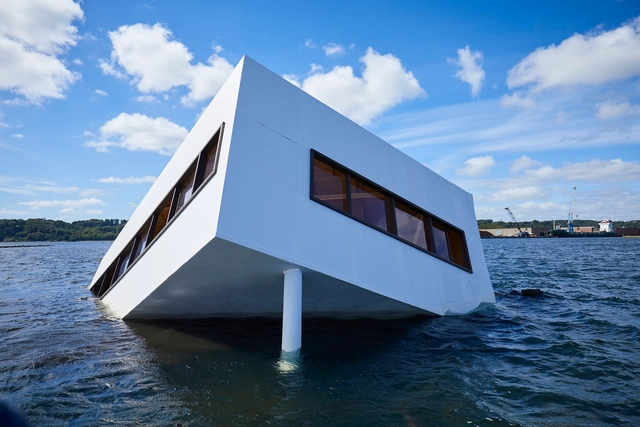
Full-Size Replica of Le Corbusier's Villa Savoye Sunk in Danish Fjord

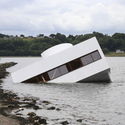
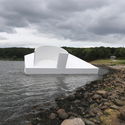
A giant replica of Le Corbusier’s iconic Villa Savoye has been half-sunk off a Danish fjord as part of the country’s Floating Art 2018 festival. The installation titled “Flooding Modernity” has been designed by artist Asmund Havsteen-Mikkelsen as a “comment on the sinking of the public sphere after the disclosure of the Cambridge Analytica scandal and the manipulation of democratic elections through social media.”

As part of the summer art festival hosted by the city of Vejle and the Veijle Art Museum, the five-tonne model was towed into the fjord and sunk to sit as a half-submerged testament to a once visionary future.

Full-Size Replica of Le Corbusier's Villa Savoye Sunk in Danish Fjord - Image 1 of 4Full-Size Replica of Le Corbusier's Villa Savoye Sunk in Danish Fjord - Image 2 of 4Full-Size Replica of Le Corbusier's Villa Savoye Sunk in Danish Fjord - Image 3 of 4Full-Size Replica of Le Corbusier's Villa Savoye Sunk in Danish Fjord - Image 4 of 4Full-Size Replica of Le Corbusier's Villa Savoye Sunk in Danish Fjord - More Images+ 10

Luxury Living Through the Ages, From the Castle to the Villa

Although societies have transformed through the ages, wealth never truly seems to go out of style. That said, the manner in which it is expressed continually adapts to each successive cultural epoch. As a consequence of evolving social mores and emerging technologies, the ideal of “luxury” and “splendour” sees priorities shift from opulence to subtlety, from tradition to innovation, and from visual ornamentation to physical comfort.

AD Classics are ArchDaily's continually updated collection of longer-form building studies of the world's most significant architectural projects. In these ten examples of "high-end" residences, which represent centuries of history across three separate continents, the ever-changing nature of status, power and fine living is revealed.

Luxury Living Through the Ages, From the Castle to the Villa - Image 1 of 4Luxury Living Through the Ages, From the Castle to the Villa - Image 2 of 4Luxury Living Through the Ages, From the Castle to the Villa - Image 3 of 4Luxury Living Through the Ages, From the Castle to the Villa - Image 4 of 4Luxury Living Through the Ages, From the Castle to the Villa - More Images+ 5

How 'Vandalizing' a Classic Exposes the Hypocrisy of Today's Modernists

Subscriber Access | 

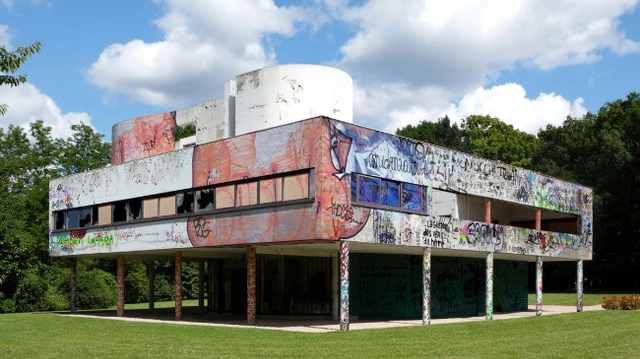
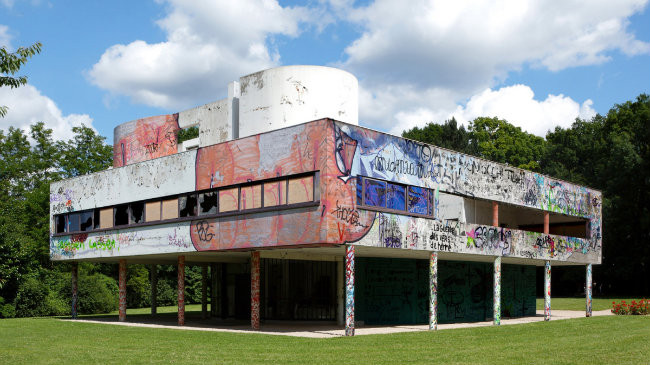
These images from artist Xavier Delory show Le Corbusier's celebrated Villa Sovoye in a shocking state of disrepair. With stones and spray paint, vandals have tragically defaced its pristine walls and windows. Don't panic: the images shown here are photoshopped. But what if they weren't? In this article originally published by Metropolis Magazine as "Modernism in Ruins: Artist "Vandalizes" a Le Corbusier Masterpiece," AJ Artemel explores how our shock and dismay at such images exposes an underlying hypocrisy in our reverence for famous modernist works, and proposes that perhaps Modernism and vandalism are more closely related than we thought.

How 'Vandalizing' a Classic Exposes the Hypocrisy of Today's Modernists - Image 1 of 4How 'Vandalizing' a Classic Exposes the Hypocrisy of Today's Modernists - Image 2 of 4How 'Vandalizing' a Classic Exposes the Hypocrisy of Today's Modernists - Image 3 of 4How 'Vandalizing' a Classic Exposes the Hypocrisy of Today's Modernists - Image 4 of 4How 'Vandalizing' a Classic Exposes the Hypocrisy of Today's Modernists - More Images

VIDEO: Villa Savoye, The Five Points of a New Architecture

Subscriber Access | 

Andrea Stinga of OMBÚ Architecture has shared with us her latest creation with visual artist Federico Gonzalez: a video that illustrates Le Corbusier’s “Five Points of a New Architecture” in his 1929 masterpiece, Villa Savoye.

A Doll's House for Clementine / TDO Architecture

Subscriber Access | 
A Doll's House for Clementine / TDO Architecture - Image 8 of 4
Courtesy of TDO Architecture

TDO was commissioned by Wallpaper* Magazine to re-approach the design of a doll’s house. They were asked to consider Le Corbusier’s Villa Savoye as an inspirational starting point, and from there developed a concept that successfully responded with a functional doll’s house with a contemporary design.