

-
Architects: Flores & Prats
- Year: 2023


In light of the looming climate crisis and the pursuit of sustainability, the concepts of revival and reuse have emerged as crucial strategies in the quest for decarbonization in the architecture industry. These principles preach that creating new structures may be sustainable but encourage architects to minimize their ecological footprint by reactivating and recycling existing resources. This year specifically, innovative projects in line with these themes were displayed as part of the 18th International Architecture Exhibition – La Biennale di Venezia. This world-renowned event’s core purpose is to serve as a platform for architects, designers, and thinkers to collectively reimagine sustainability, decarbonization, resource conservation, and the industry's future.
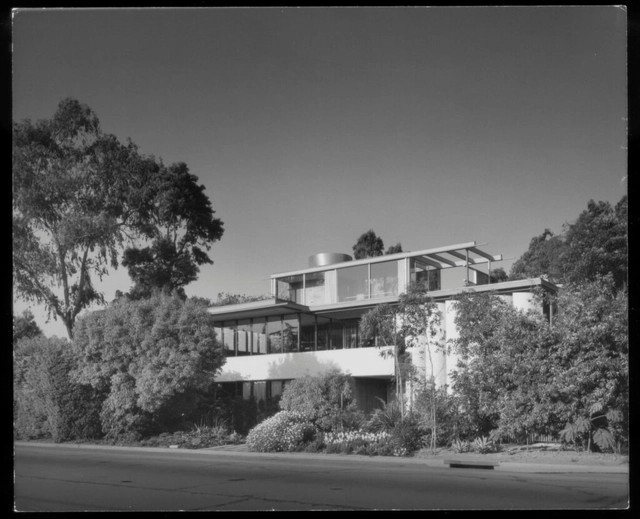
It was, of course, Frank Lloyd Wright who set up the ground for modern architecture to happen in Los Angeles. Then came the Viennese, Rudolph Schindler in 1920 and Richard Neutra in 1925 at the invitation of Schindler. Both worked for Wright choosing to learn from him what they saw as essential—by focusing on spatial and formal clarity, transformability, restrained materiality, and the living environment to achieve a desirable quality of life within. Neutra and Schindler collaborated at first, and then each built a rich portfolio, mainly comprising houses and apartment blocks. Universal in principle, these abstract robust structures defined and led the development of a local building vernacular. These buildings, of which there are several hundred, are now strongly associated with the two architects’ adopted city.
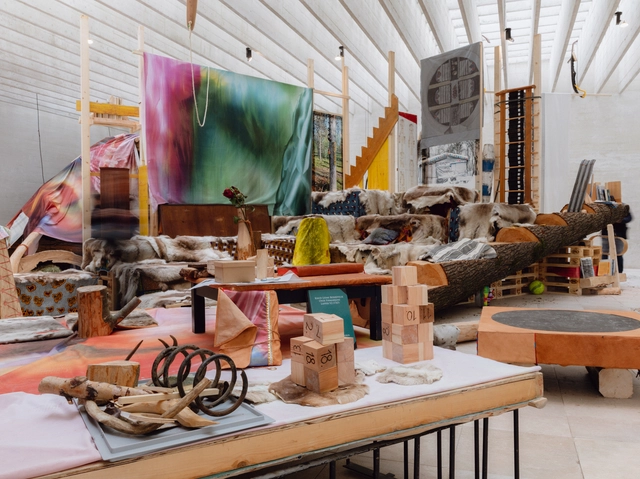
The German Pavilion Open for Maintenance / Wegen Umbau geöffnet at this years 18th International Architecture Exhibition – La Biennale di Venezia was curated by ARCH+ and Summacumfemmer Büro Juliane Greb. At its core, the exhibition addresses the resource problem and the material cycles of the biennale. Inside the pavilion is a functioning workshop dedicated to applying these concepts of care, repair, and maintenance to Venice onsite. In Venice, ArchDaily had the chance to speak with the co-curator Anh-Linh Ngo, where he discussed the different aspects of the German Pavilion.
During this year’s edition of the Venice Architecture Biennale, ArchDaily had the chance to discuss with Giacomo Ardesio and Claudia Mainardi of Fosbury Architecture, the curators of the Italian Pavilion together with Alessandro Bonizzoni, Nicola Campri and Veronica Caprino. The curatorial project, titled “Spaziale: Everyone Belongs to Everyone Else,” aims to provide a distinctive and original portrait of Italian architecture within the international context. The curators discussed the origins of their office, their sources of inspiration and the thinking behind the design decisions that led to the creation of the curatorial project for the Italian Pavilion.
This year’s Danish Pavilion at The 18th International Architecture Exhibition – La Biennale di Venezia, was curated by Josephine Michau. Titled “Coastal Imaginaries,” the exhibition addresses solutions to alleviate global challenges such as rising sea levels and storm floods. Onsite in Venice, ArchDaily had the chance to speak with the curator Josephine Michau, where she discussed the thought process behind the pavilion, the collaborations, and her hopes of starting meaningful dialogue as a result of the exhibition.
At the 18th International Architecture Exhibition – La Biennale di Venezia, Karin Sander, and Philip Ursprung curated the Swiss Pavilion “Neighbors”. In her interview with Louisiana Channel, Karin Sander talks about expanding the understanding of the pavilion, reimagining the connected role of architecture and art, and explaining her artistic process. “Neighbors” was focused on spatial proximity between the Swiss Pavilion and its Venezuelan neighbor. Sander highlights also the conversation between the two structures, that became possible after the removal of a separating wall.
During their visit to the 18th International Architecture Exhibition in Venice, ArchDaily had the opportunity to engage in a conversation with Sevince Bayrak and Oral Göktaş, founders of the Istanbul-based studio SO? Architecture and Ideas, curators for the Pavilion of Türkiye. Their exhibition, titled Ghost Stories: Carrier Bag Theory of Architecture, explores the status and hidden potential of abandoned buildings across Türkiye to discover more hopeful proposals for the future. The conversations opened with an exploration of the status of these forgotten structures and their hidden potential, leading into the intentions behind the exhibition in Venice and the curator’s message for the wider audience.
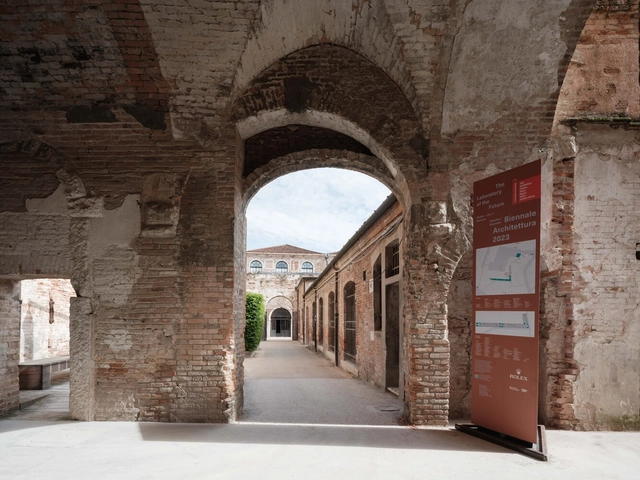
Neri&Hu presented “Liminality”, a multimedia exhibition selected by Lesley Lokko, at the International Architecture Exhibition in Venice. The exhibition took place in the Dangerous Liaisons section of La Biennale di Venezia at the Arsenale. In response to Lokko’s curatorial statement, Neri&Hu’s display explored the concept of liminality, the “zone” between design practice and theoretical exploration. The display consisted of three adaptive reuse projects that represent the practice’s research in “Reflective Nostalgia, Recasting Vernacular, and Ruinophilia/Future Artifact.”
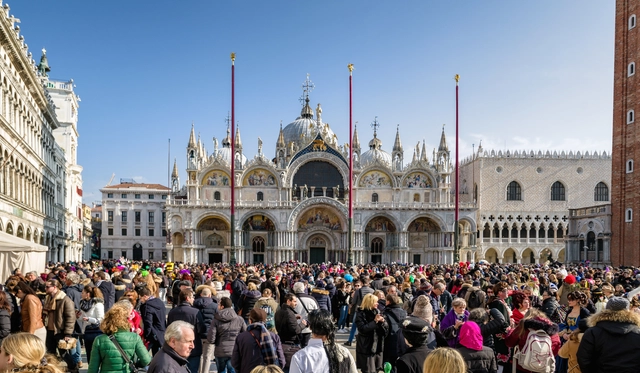
Since pandemic-imposed restrictions have been lifted, Europe has experienced a surge in tourism, with millions of people visiting some of its most attractive destinations, such as Venice, Barcelona or Paris. The large number of visitors has proved to be a challenge for the cities, creating overcrowding and affecting the local population, urban development, and even the natural ecosystems surrounding the urban areas. In a bid to limit this influx, some of Europe’s most popular cities are taking various measures to address the overcrowding and the subsequent social and infrastructural issues. The measures include fines, entrance fees, and time-slot systems to impose some restrictions.

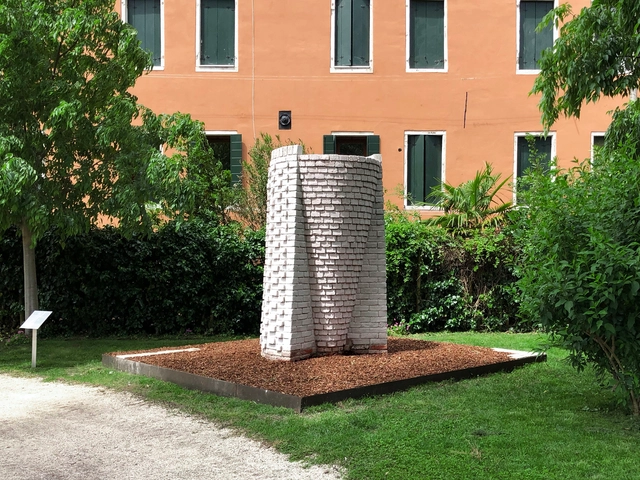
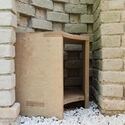
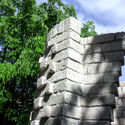
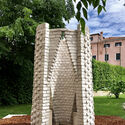
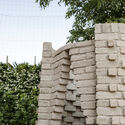
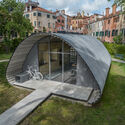
Urban Radicals presented a temporary pavilion “A Brick for Venice” as part of the European Cultural Center’s “Time Space Existence program during the same time as the 2023 Venice Architecture Biennale. The entirety of the brick pavilion was made with mud from the city’s canals. Furthermore, “A Brick for Venice” is the first proof of concept for the team’s novel waste-based construction product.
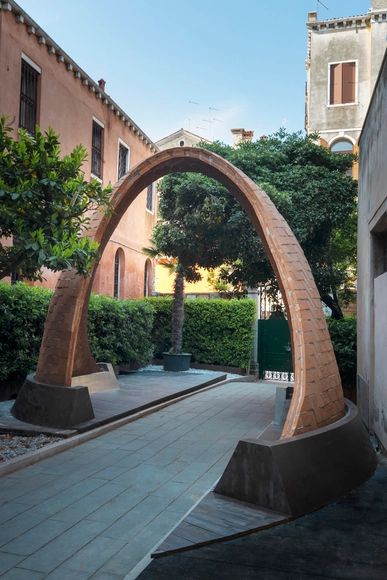
The European Cultural Centre (ECC), a non-profit organization dedicated to fostering cultural exchanges on an international scale, showcased its sixth edition of the Time Space Existence architecture exhibition alongside this year's Venice Architecture Biennale. The 2023 installment was centered on the theme of sustainability in its various forms, encompassing subjects related to migration, digital building technologies and material research, future urban developments, and housing, bringing together architects, designers, artists, academics, and photographers from 52 different countries.
Through diverse mediums and perspectives, participants have explored the philosophical concepts of Time, Space, and Existence. With a total of 217 projects on display, the exhibition is held at Palazzo Bembo, Palazzo Mora, and the Marinaressa Gardens in Venice, throughout the six-month duration of the 2023 Venice Architecture Biennale, running from May 20th to November 26th, 2023. Focusing also on emerging young architects, designers, and researchers, the 2023 edition of the exhibition is a proactive endeavor to reimagine alternative lifestyles and reconceptualize architecture within the contemporary landscape.
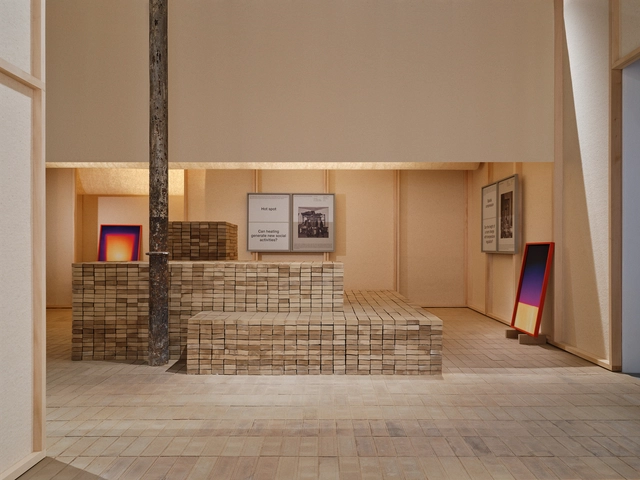
At the 18th International Architecture Exhibition of La Biennale di Venezia, the Pavilion of Slovenia set out to explore the theme of ecology and the paradoxical ways in which architecture relates to it. Instead of understanding it strictly through energy-efficient adaptations like heat pumps or recovery ventilation, the exhibition titled +/- 1 °C: In Search of a Well-Tempered Architecture aims to address the theme holistically. The Pavilion curators Jure Grohar, Eva Gusel, Maša Mertelj, Anja Vidic, Matic Vrabič, together with fifty European architects and creatives, researched and analyzed vernacular buildings from Europe to gain insight into the living example of intuitive adaptations.
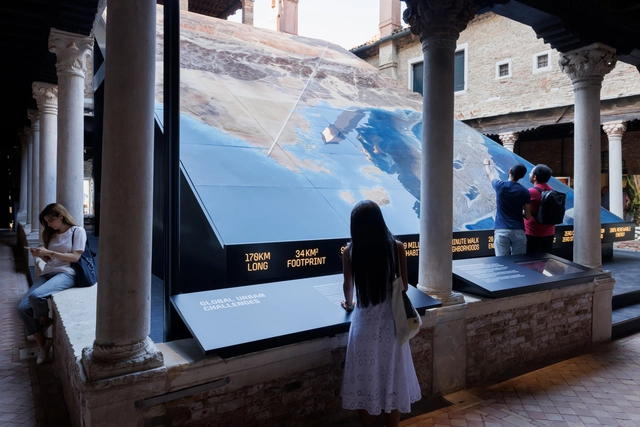
At the 18th International Architecture Exhibition of La Biennale di Venezia, NEOM has unveiled the “Zero Gravity Urbanism- Principles for a New Livability” exhibition to present the concept and standards guiding the design of the Line, their proposed 170-kilometer-long linear city in north-west Saudi Arabia. The event aims to introduce to the public an alternative vision for urban planning whose compact configuration strives to become a model for the development of more efficient and sustainable cities. Prior to the opening of the exhibition, more than 20 internationally recognized architects and designers joined the design team, including Sir Peter Cook, Massimiliano Fuksas, Jean Nouvel, and Ben van Berkel. The exhibition is open from 20 May to 24 September 2023 at Abbazia di San Gregorio, Venice.
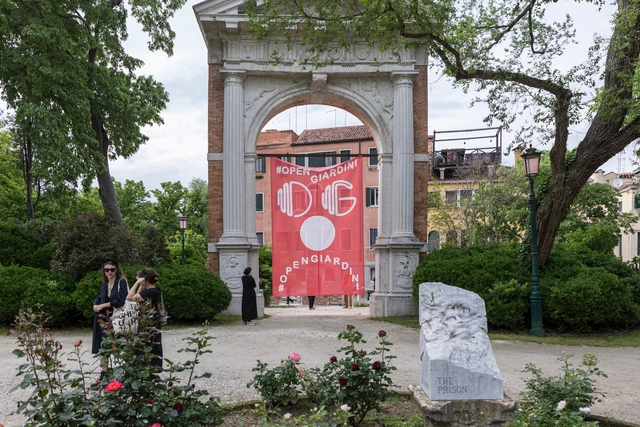
The Unfolding Pavilion is a recurring exhibition and editorial project by Daniel Tudor Munteanu and Davide Tommaso Ferrando that aims to highlight previously inaccessible but architecturally significant spaces. Now in its fourth edition, the exhibition is dedicated to the Giardini della Biennale, the Venetian garden that became the main location for one of the most important architecture exhibitions worldwide, the Venice Biennale. Through a series of site-specific interventions and photographs by Laurian Ghinițoiu, the Unfolding Pavilion #OPENGIARDINI set out to explore the paradoxical state of this public space that is not publicly accessible.
The Nordic Countries Pavilion for the 18th International Architecture Exhibition “Girjegumpi”, is a collaborative library archive of Sámi architecture. While exploring La Biennale di Venezia onsite in Venice, ArchDaily had the chance to speak with the architect Joar Nango and also with the curators James Taylor-Foster and Carlos Mínguez Carrasco about the pavilion and its depths.
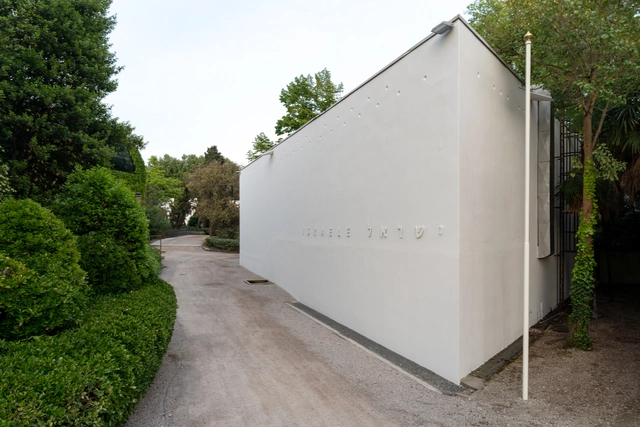
The National Pavilion of Israel presents “Cloud-to-ground,” an immersive installation exploring the nature of modern communication networks at the 18th International Architecture Exhibition of La Biennale di Venezia. The exhibition, curated by Arch. Oren Eldar, Arch. Edith Kofsky, and Hadas Maor, aims to initiate a multifaceted discussion regarding the physical aspects of virtual networks: the data centers and telephone exchanges commonly referred to as “black boxes.” The chosen theme is relevant for Israel due to its strategic location set at the intersection of continents and cultures. The pavilion in the Giardini will remain open for visitors until November 26, 2023.