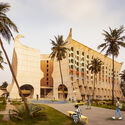
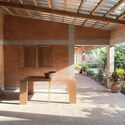
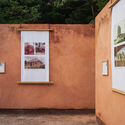
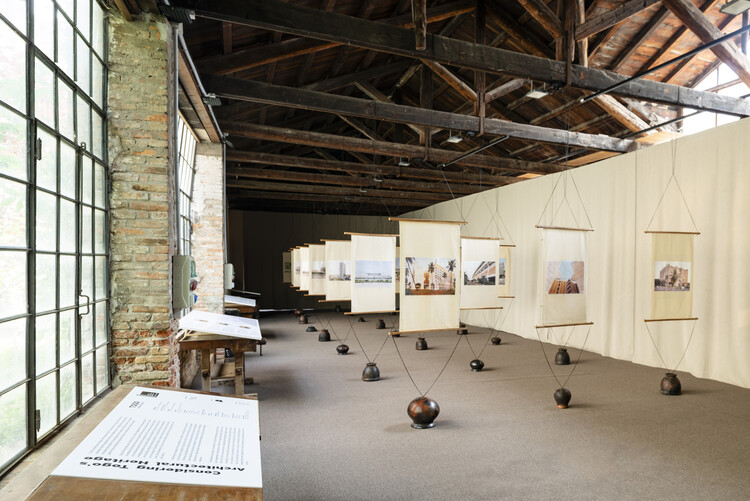
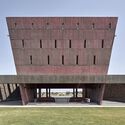
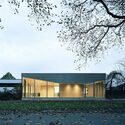
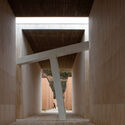
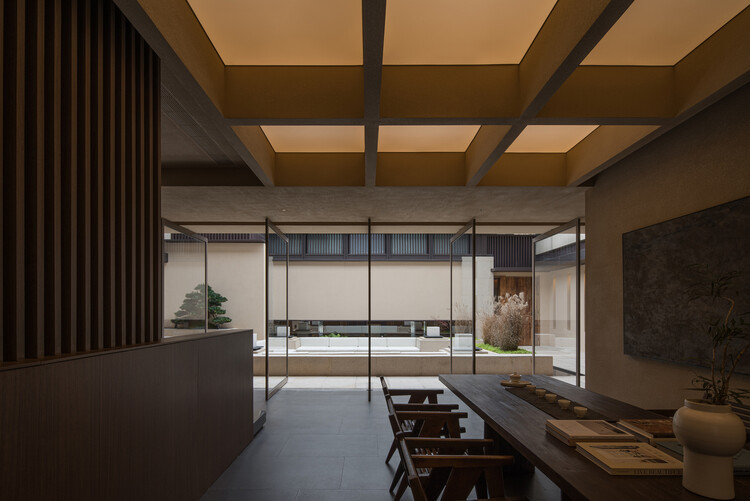
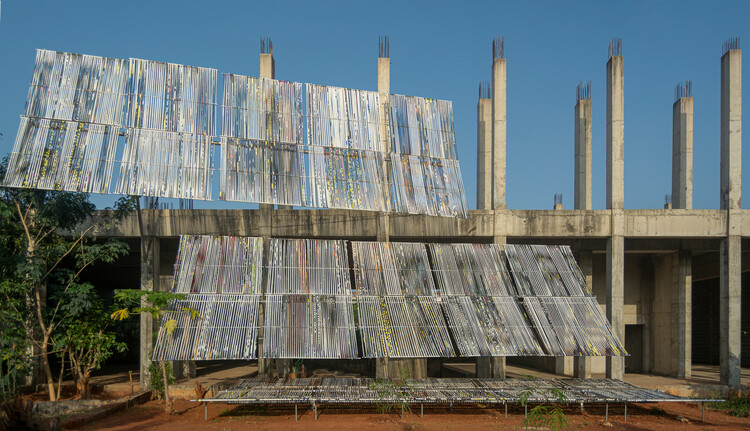
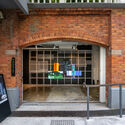
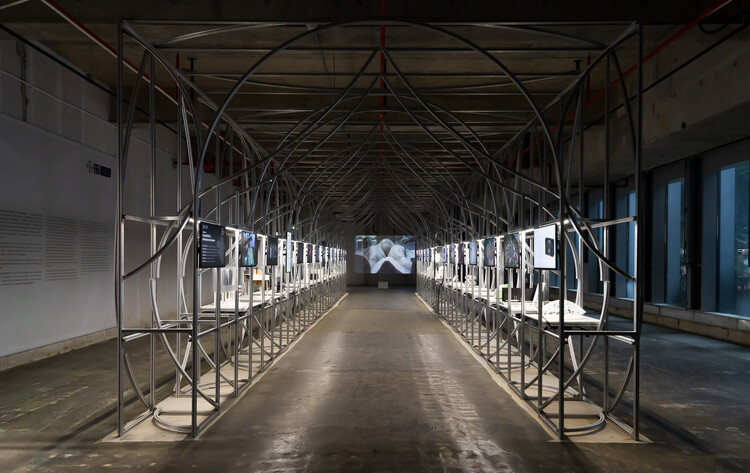
Studio NEiDA operates at the intersection of architectural practice, research, and curatorial work, with a consistent focus on how buildings emerge from the material and cultural conditions of a place. Rather than treating materiality as a finishing language, the studio frames it as the beginning of an architectural narrative—starting from what is locally available, they look at what craft knowledge exists on the ground, and how those resources and skills situate a project within an architectural lineage. This approach foregrounds limitations and possibilities as productive forces, and positions design as an iterative process of aligning spatial intent with the realities of construction culture and vernacular intelligence.
Across their work, NEiDA's interests extend beyond form toward the socio-political and climatic contexts that shape how architecture is made and inhabited. They emphasize learning from non-authored, vernacular, and informal building practices as a way of establishing a shared grammar for intervention, and they describe an indoor–outdoor continuity not as a stylistic preference but as a response to local life and ventilation logics—where outdoor rooms can be as spatially defined and programmatically central as interior ones. Collaboration, in this framework, is not auxiliary: the studio highlights on-site exchange with craftspeople and builders as a core methodology, where projects evolve through collective intelligence and adaptive communication.
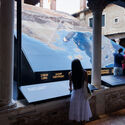
This week marked World Health Day, observed annually on April 7 by the World Health Organization. This year's edition issued the call to "Stand with science," inviting renewed engagement with scientific knowledge as a foundation for collective action across disciplines. In architecture and urban design, this imperative resonates through projects that translate research into spatial strategies: from the deployment of digital twins to inform urban planning and decision-making, to rewilding initiatives that integrate biodiversity as a tool to mitigate climate change, and materially informed practices that engage resource-conscious construction. Within this broader framework, recent works also foreground architecture's social agency at multiple scales, including a landscape-driven cancer support center in Kent that aligns wellbeing with environmental sensitivity, an urban installation in Brescia operating as a civic awareness device around life in prison and pathways to reintegration, and the transformation of a street in Mantua into a pedestrian-oriented, biodiversity-rich public space.
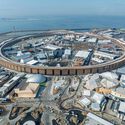
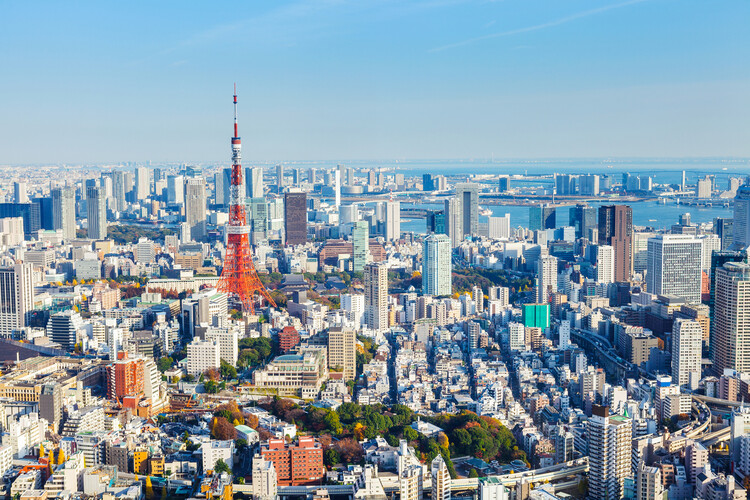
"Map the New World" is the motto of Project PLATEAU, led by Japan's Ministry of Land, Infrastructure, Transport and Tourism (MLIT), to develop and expand access to 3D models representing the diversity of cities across the country. Japan comprises a total of 744 cities, including 14 with populations exceeding one million, 190 with between 100,000 and one million inhabitants, and 540 with populations between 10,000 and 100,000. To date, 3D models of more than 250 cities have been made available as open data through the country's public G-Spatial Information Center, and can also be accessed via an online browser viewer. According to public authorities, the project aims to strengthen urban resilience by providing society with new tools to address local challenges. This involves not only urban space modeling but also collaboration with local governments, private companies, and technology communities. The project also includes a digital reconstruction of the recently closed Osaka World Expo site.
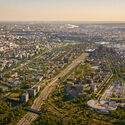
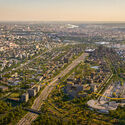
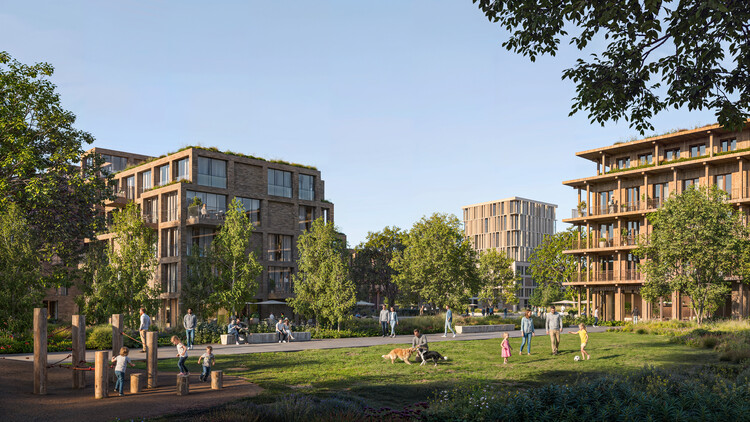
Coldefy Budapest Masterplan Competition. Image Courtesy of ZOA Studio
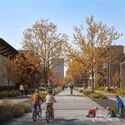
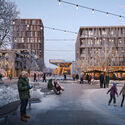
A team led by French architecture practice Coldefy, comprising CITYFÖRSTER, Sporaarchitects, TREIBHAUS.LAND, Marko & Placemakers has won the competition to design a masterplan for Rákosrendező in Budapest, with visualizations by ZOA Studio. The project is developed for the Budapest Capital Asset Management Centre, acting on behalf of the Municipality of Budapest. The design outlines a 15-year scheme to transform a brownfield site long regarded as the city's "rust belt," located on the eastern side of the Hungarian capital. The regeneration plan includes over 10,000 apartments, new transportation links, and commercial and civic spaces, forming a comprehensive urban redevelopment strategy aligned with 15-minute city principles.
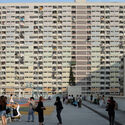
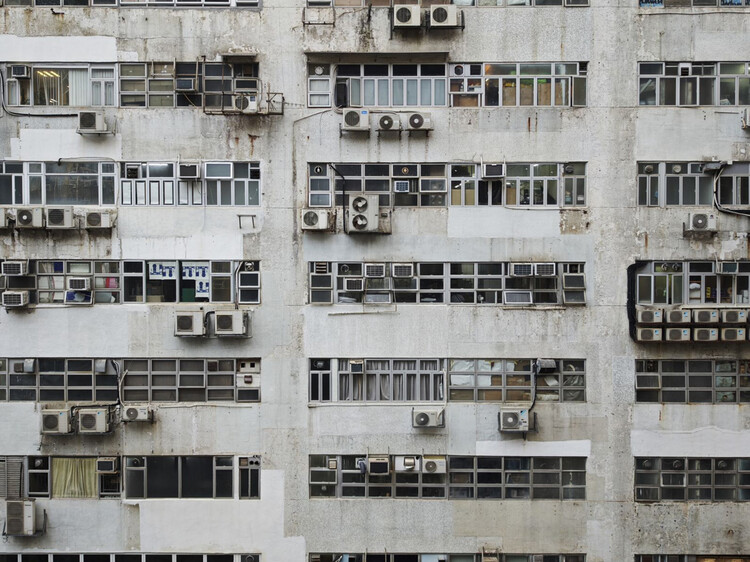
Establishing thermal comfort once demanded a far more deliberate and calibrated architectural intelligence—an interplay of orientation, massing, material behavior, ventilation potential, shading, and the ways daylight and surfaces absorb and release heat. This was not simply a matter of taste, but of necessity. When many of Hong Kong's post-war modernist buildings were constructed in the late 1960s and 1970s, forming a substantial portion of the city's public housing and broader residential stock, air-conditioning was not yet a ubiquitous, default service. Cooling, where present at all, was limited and unevenly distributed; comfort had to be negotiated through passive means, through section, façade depth, operable openings, and climatic detailing. It was only later, particularly through the 1970s and 1980s, as air-conditioning became increasingly standardized across the region, that mechanical cooling began to displace this earlier matrix of architectural decision-making.
Did air conditioning negatively affect architectural space, particularly in Hong Kong and the nearby region? The more precise claim is that widespread reliance on AC has profoundly rearranged the incentive structure of building design.
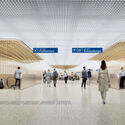
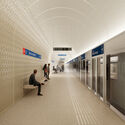
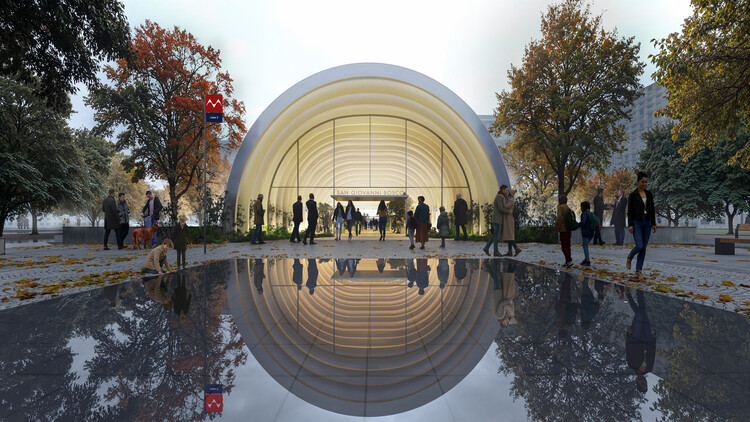
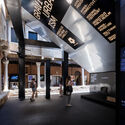
UNS's design proposal for Turin's new Metro Line 2, developed in collaboration with Settanta7, Mijksenaar, Frigorosso, 3BA, and WSP, has been selected by an international jury of experts chaired by Dominique Perrault. The proposal is based on the idea of "flow," a concept that has historically shaped the Italian city, from the Po and Dora rivers to the 18 kilometers of arcaded porticoes that structure how residents and visitors move. The project envisions Line 2 as a new "urban river," guided by three design principles to facilitate this flow: branding, transit experience, and scales of identity. With 32 stations planned in total, the initial design phase includes 10 stations, among them Mole Giardini, San Giovanni Bosco, and Carlo Alberto.
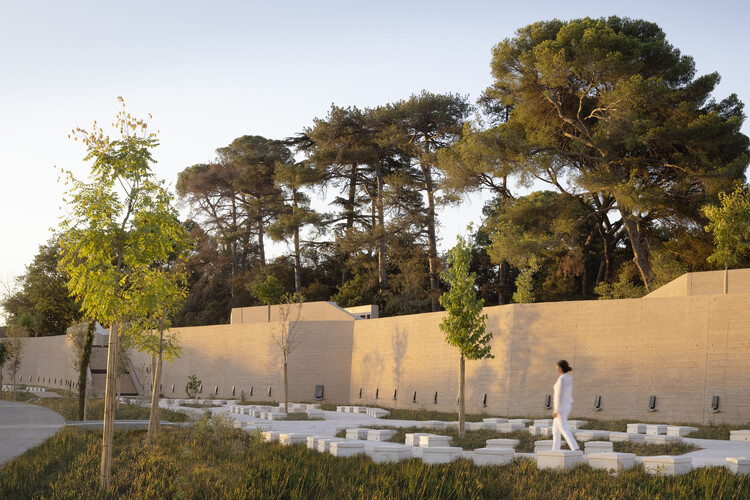
Death is a certainty, but its architecture has never been stable. Every period and culture has invented a different way of placing the dead in the world (close or far, visible or screened, monumental or almost anonymous), and those choices have always carried social and political weight. Cemeteries are where that weight becomes legible in space, turning belief and regulation into boundaries, paths, and names.
In that sense, a cemetery behaves like a piece of city-making. It needs access, limits, and an internal order that can grow without losing clarity. It depends on ground and water management as much as on symbolism, and on administration as much as on form. But its real architectural problem is how to make a large, evolving territory readable while preserving the intimacy of a visit. Names must be locatable; routes must remain legible; trees grow, paths shift, stones weather, records accumulate. What looks fixed is, in practice, a living system designed to be used and revisited, long after the first grief has passed.
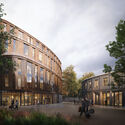
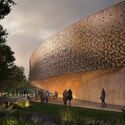
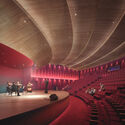
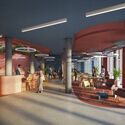
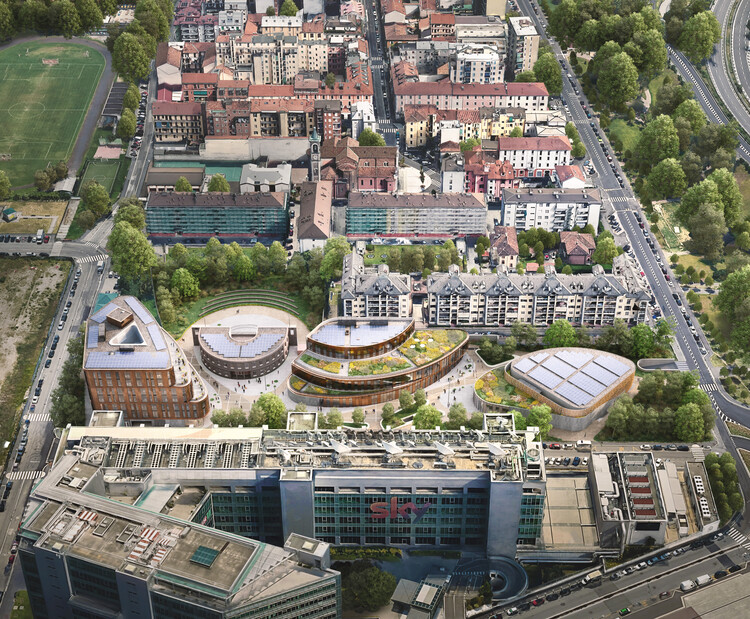
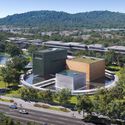
The architecture firm Settanta7 has begun the construction of Bosco della Musica, a new campus for the Conservatorio Giuseppe Verdi in Milan. The site is located in Rogoredo, a former industrial area in the southeastern part of the city, currently under scrutiny due to incidents of violence and public safety concerns. The area is therefore the focus of development initiatives by the Italian Ministry of Transport and Infrastructure, including the competition for this project, which was awarded to Settanta7 in 2022. The firm is responsible for the design and is overseeing the coordination of all disciplines as lead consultant for the construction of the entire project: a broader urban regeneration program that includes the redevelopment of the 17,400 sqm site and the adaptive reuse of the "Ex Chimici" industrial building, alongside the construction of four new buildings, three dedicated to educational activities and one intended for student housing.
In South China, there is occasionally an urban myth—especially across Hong Kong, Shenzhen, and Guangzhou—about choosing a home that avoids western light. Over decades, the west-facing sun has proven to be a particularly difficult condition to live with: its low angle in the afternoon, its aggressive heat gain (especially in summer), and the way it penetrates deep into interiors. With global warming and longer, hotter seasons, that much-romanticized "afternoon glow" is increasingly experienced less as romance and more as glare, heat, and fatigue. Although this wisdom circulates as a community-driven rule of thumb, it carries an undeniable architectural clarity about building orientations: avoiding western light is not only about thermal comfort, but also about avoiding the sharpest, most intrusive form of direct illumination—light that strikes at the most unforgiving angle, washing surfaces, flattening depth, and turning rooms into high-contrast fields of discomfort.
As housing shortages and affordability challenges intensify across global cities, this week's architectural discourse centers on how design, policy, and adaptive strategies intersect to shape the future of urban living. Initiatives range from grassroots movements and legislative reforms aimed at expanding access to housing to innovative models that rethink ownership, development, and community engagement. At the same time, architects are reimagining existing structures and districts, transforming underused offices, historic landmarks, and unfinished buildings into mixed-use, culturally significant, or publicly accessible spaces. Across scales, these stories illustrate how architecture negotiates scarcity, value, and social priorities, demonstrating its capacity not only to produce new buildings but also to recalibrate urban environments in ways that balance heritage, sustainability, and human experience.
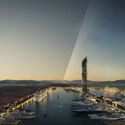
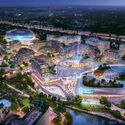
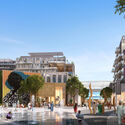
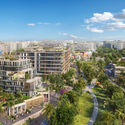
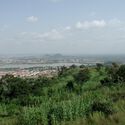
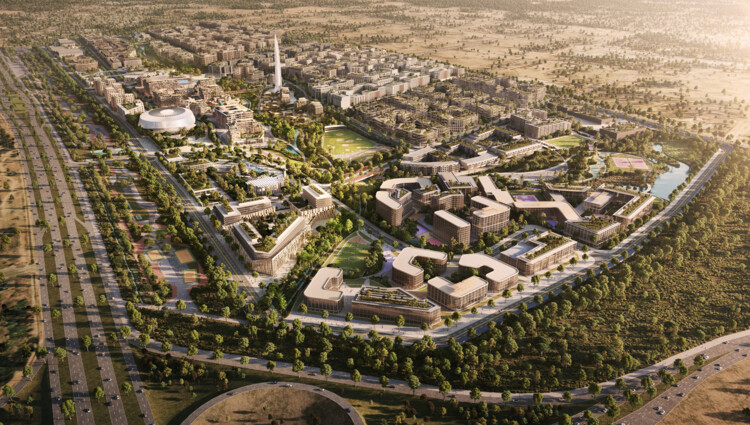
Abuja was named the capital city of Nigeria on December 12, 1991. Located in the central Federal Capital Territory (FCT), it replaced the most populous coastal city of Lagos in a process of structural reform aimed at national integration and more balanced regional development. Like other capital relocations, Nigeria's capital was moved for strategic reasons to transform Abuja into the country's new administrative center, often referred to as "the center of unity." It was envisioned as a planned city based on a master plan developed by the United States-based consortium International Planning Associates (IPA). More than three decades later, a new master plan titled "City Walk" has been developed by MAG International Links Limited and designed by Benoy as a mixed-use district integrating hotels, offices, residential, retail, cultural, educational, and healthcare facilities, alongside a 450-meter tower and a 13,000-seat indoor arena across 250 hectares.
Amid the rapid build-out of data centres and AI economies across the Greater Bay Area—and alongside the celebration of AI as a tool and "author," as featured in 2025 Hong Kong–Shenzhen Bi-City Biennale of Urbanism\Architecture (Hong Kong)—a parallel question becomes unavoidable: how do the planning and construction of AI infrastructure actually begin to shape everyday life? Many of the facilities already built remain intentionally distant from daily experience. The "cloud" may be marketed as immaterial, but its architecture is profoundly physical: high-power, high-heat, service-heavy environments that are often sited in remote or low-density areas to take advantage of lower land costs and to minimize friction with nearby communities. Security and risk management further reinforce this logic. Data centres hold sensitive, privileged information—corporate assets, legal records, government and institutional data—and remoteness becomes part of their operating model, keeping the infrastructures of AI both spatially and socially out of sight.
This week has been marked by the deliberate, rampant, and unjust destruction of war in Southeast Asia. As one of the most damaging manifestations of human abuse of power, we have witnessed the destruction of places that hold memories and sustain culture, as well as the loss and irreparable harm to the human lives that lend them their identity. With the expectation of offering brighter and more constructive scenarios in the future, we present, in contrast to this reality, a scenario of progress in the gender gap that characterizes architecture and its paths forward, a group of landmark projects of public and community interest moving forward from Türkiye to Mexico, and three major multimodal transport infrastructure projects improving the way we circulate and inhabit public space in Europe and the United States.
On March 5, 2026, Skidmore, Owings & Merrill (SOM) revealed images of a new landmark project in Kazakhstan, in Central Asia. The project consists of two towers, the "Iconic Complex," and a master plan for the area, the "Gateway District." The complex is located in Alatau, a new city along the Almaty–Qonaev highway planned to become an international investment hub. A strategic project for the country, the city's master plan extends through 2050, with the first phase of major infrastructure projects scheduled for completion by 2030. Within this context, SOM's design is expected to serve as the city's economic and administrative nucleus, establishing the central business district of Alatau City and setting a benchmark for future investment projects in the area.
For centuries, large-scale infrastructure operated in the background. Ports, power plants, and energy facilities were positioned at the edges of cities, designed primarily for efficiency, and rarely considered part of civic life. Their function was indispensable, yet their architectural presence remained secondary. These structures supported urban growth and global exchange while maintaining a spatial distance from everyday urban experience.
Today, this condition is gradually shifting. As global trade intensifies and energy systems expand in complexity, the buildings that coordinate and house these networks are becoming more visible within the urban landscape. Rather than remaining neutral containers for technical operations, they begin to assert spatial identity. Infrastructure is no longer only operational; it is increasingly institutional, symbolic, and urban. The architecture that supports these systems now participates in how cities project themselves.
As artificial intelligence continues to disrupt sectors of the economy and reshape entire industries, institutions and individuals alike are bracing—and rapidly adapting—to the changes that machines seem to hold over our heads. Yet the more precise pressure is not simply AI altering the way people work and live, but the business models and investment logics of the companies developing these systems: the concentration of capital, the new requirements for compute, the race for compartmentalized talent, and the infrastructural footprint needed to sustain it. In the Greater Bay Area—anchored by Guangzhou, Shenzhen, and Hong Kong—this dynamic is especially pronounced. Government-led initiatives are actively accelerating the industry's growth, with policy and planning mechanisms beginning to translate an ostensibly intangible field into physical form: zoning updates, earmarked land, and the emergence of AI-oriented building types, from research laboratories to large-scale data centers.