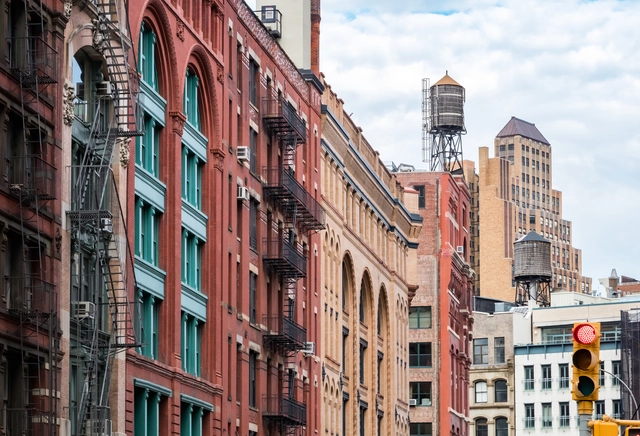
Dozens of neighborhoods in New York City have been upzoned based on contrived, and even false claims made by the city, which promised more diversity, affordable housing, minimum displacement, and other worthy goals. None of those projections materialized, but this is never acknowledged. Worse, the upzoning created the opposite conditions: less diversity, fewer affordable units, and whiter, wealthier neighborhoods. This, too, is never acknowledged. But the damage is done—and developers are having their way—following the new zoning. Then it’s onto the next neighborhood, with the same approach. Roberta Brandes Gratz explores in her article city planning and city promises in New Tork City, disclosing zoning regulations that lead to the opposite of what they preach.
Jennifer Toole, ASLA, is the founder and President of Toole Design and has over 30 years of experience planning and designing multimodal transportation systems. A certified planner with a degree in landscape architecture, Toole has a strong background in urban design. She has been involved in numerous projects of national significance for the Federal Highway Administration, American Association of State Highway and Transportation Officials (AASHTO), and National Highway Traffic Safety Administration (NHTSA).
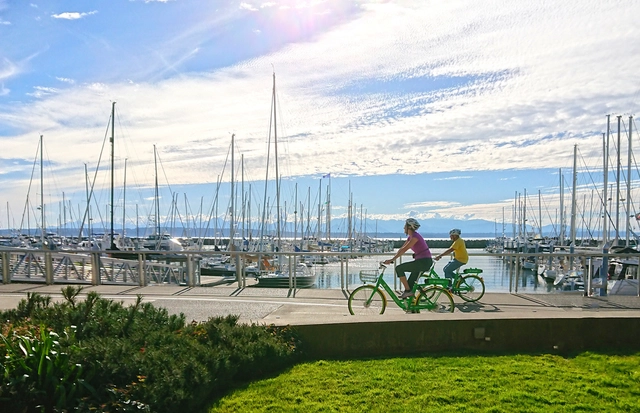
https://www.archdaily.com/960917/jennifer-toole-makes-the-case-for-better-bike-networksJared Green
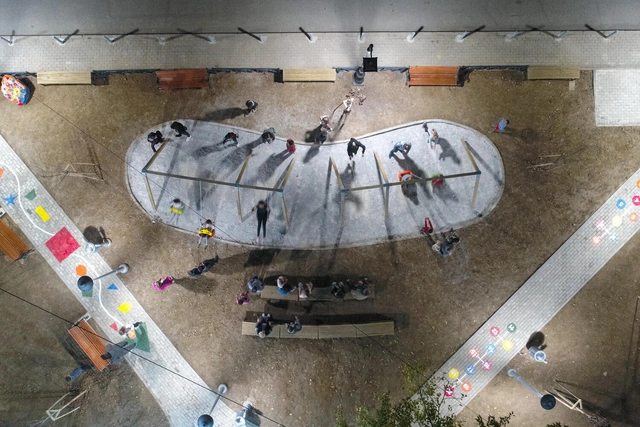
Kosovo - Implementation during Covid-19. Image Courtesy of UN-Habitat, Global Public Space Programme
The Un-Habitat or the United Nations agency for human settlements and sustainable urban development, whose primary focus is to deal with the challenges of rapid urbanization, has been developing innovative approaches in the urban design field, centered on the active participation of the community. ArchDaily has teamed up with UN-Habitat to bring you weekly news, article, and interviews that highlight this work, with content straight from the source, developed by our editors.
As the fight against coronavirus keeps on bringing many cities around the world to a standstill, the need to support urban entities and local governments is greater than ever. Although the pandemic has drastically changed our relationship with the public realm, due to all the imposed but necessary restrictions, from physical distancing to limiting access, the demand for public space has not decreased. People still need to go outside, commute, work, study, play, socialize, and maintain a healthy mental state. Discover in this article UN-Habitat’s key areas of focus for an effective urban response for COVID-19 that local and national governments should focus on to prevent the spread of the virus and to develop resilience to and preparedness for events of a similar nature.
The City Prosperity Index, CPI, set by UN-Habitat, evaluates urban prosperity according to five parameters as productivity, infrastructure development, environmental sustainability, quality of life, and equity/social inclusion. To a greater or lesser extent, these five factors are represented in the street pattern of every city in the world. Streets have multiple functions as the mobility of people and goods, the supply of energy, water, and information, the collection of waste, the growth of trees, plants, insects or birds, the shadow and sun radiation, the bench where to sit, the place to salute and talk with your neighbors, a playground, or the access to the bakery where you buy the bread. In this sense, streets are public and vibrant spaces, which can perform multiple functions and activities.
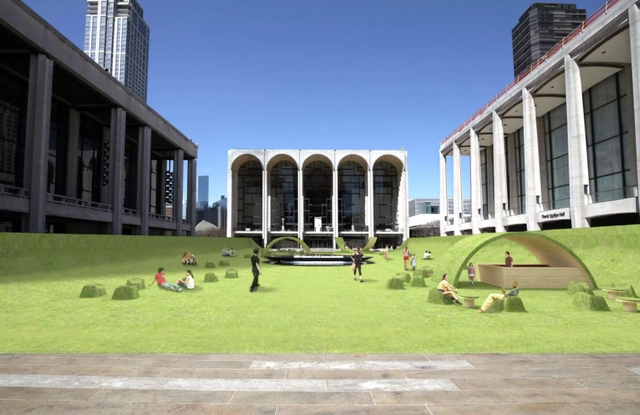
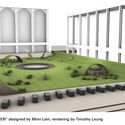
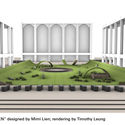
The Green. Image Courtesy of Mimi Lien/Rendering by Timothy Leung
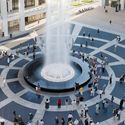
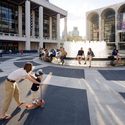
After several event cancellations due to the pandemic, Manhattan’s Lincoln Center for the Performing Arts complex have transformed their outdoor plaza into a green park and outdoor performance venue called The Green. As of May 10, the Restart Stagesinitiative will add fake grass across the 14,000-square-foot (1,300 sqm) Josie Robertson Plaza. The plaza, which was originally designed by Philip Johnson, Wallace K. Harrison, and Max Abramovitz, and renovated by award-winning architecture firm DS+R in 2010, will transform into a public urban space of gathering, leisure, and entertainment.
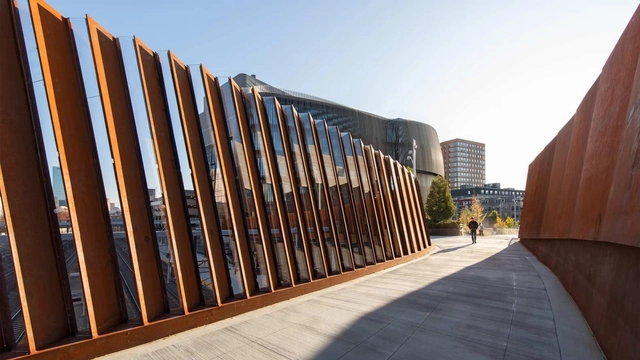
Northeastern University Interdisciplinary Science and Engineering Complex by Payette. Image Courtesy of The American Institute of Architects
The American Institute of Architects (AIA) has announced five projects recognized with its 2021 Regional and Urban Design Awards. As the Institute notes, the best planning accounts for the entire built environment, local culture, and available resources. The Regional & Urban Design program recognizes the best in urban design, regional and city planning, and community development.
Courtesy of OUTCOMIST, Diller Scofidio + Renfro, PLP Architecture, CRA - Carlo Ratti Associati and Arup
Led by OUTCOMIST, an international design team including Diller Scofidio + Renfro, PLP Architecture, CRA - Carlo Ratti Associati, and Arup won the competition to revitalize the Porta Romana Railway Area, transforming the industrial site into a diverse green neighborhood in Milan. Rehabilitating a disused railway yard into a connective tissue that links the southeast area of the city to the center, the development will generate a rich biodiverse public space, including a large urban park.
Powerhouse Company has won the competition to transform the Alo-location and neighborhood in Groningen, a city in the Netherlands. They teamed up with Houben/Van Mierlo, Vector-i and landscape architect DELVA to create the proposal. Dubbed HOLT, the project was developed with MWPO, Nijestee and Nijhuis Bouw. The plan for a new green and healthy neighborhood looks to the future of healthy living in the city.
Fred Kent, the founder of the nonprofit organization Project for Public Spaces, once stated that “If you plan cities for cars and traffic, you get cars and traffic. If you plan for people and places, you get people and places." It may sound obvious, nevertheless, our cities today are indeed undergoing a rapid transformation from a car-oriented society to a pedestrian-friendly community.
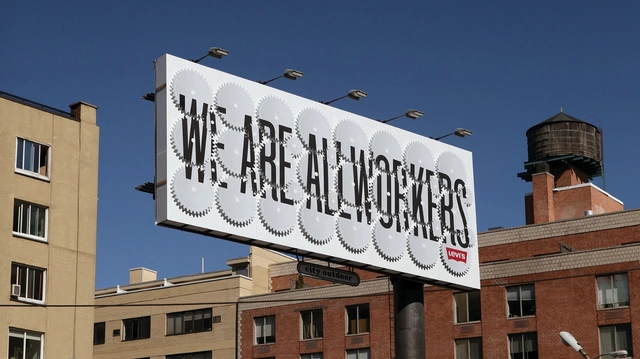
Stefan Sagmeister - Levi's Billboard. Image Courtesy of reSITE
For the fourth episode of Design and the City, a podcast by reSITE on how to make cities more livable and lovable, by raising questions and proposing solutions for the city of the future, the team interviewed Stefan Sagmeister, an Austrian-born graphic designer and typographer. In this episode, the designer discusses the importance of beauty in design, its utility for any properly functioning space or city, and how it contributes to the happiness of citizens.
While in a lot of countries around the world, the construction, architecture, engineering, and urban planning sectors, are still reserved for men, initiatives that empower women in these fields are surfacing everywhere around the globe. Playing a huge role in the integration of female power into these disciplines, these movements take on many forms such as organizations, websites, platforms, etc. working with professionals, artisans, and workers.
From providing skills, connecting outstanding females, ensuring exposure, and promoting the works of pioneers, these initiatives have the common purpose of encouraging women to have an impact on their built environment.
HerCity is a platform that involves women in urban development, in order to make better cities for everyone. Turning the tables and putting girls in the expert position, the digital toolbox aims to create more inclusive, equal, and sustainable cities and communities. The initiative makes methods and tools available to urban actors globally, in order to support cities in integrating girls’ participation in their long-term strategies.
Launched on Women’s day 2021, the guide for urban planning and design is a collaborative effort between UN-Habitat and Global Utmaning, the Swedish independent think tank. ArchDaily had the chance to talk with the team behind this digital toolbox, discussing the narratives, the process, and inclusive planning on a worldwide level.
Dorte Mandrup has imagined ‘The Hinge’, a landmark transition between the new urban area Aarhus Ø and the historic town of Denmark’s second-largest city. The new city gate will put in place an innovative and sustainable urban focal point. Expected to open in 2026, The Hinge was designed in collaboration with landscape architect Kristine Jensen and Søren Jensen Consulting Engineers.
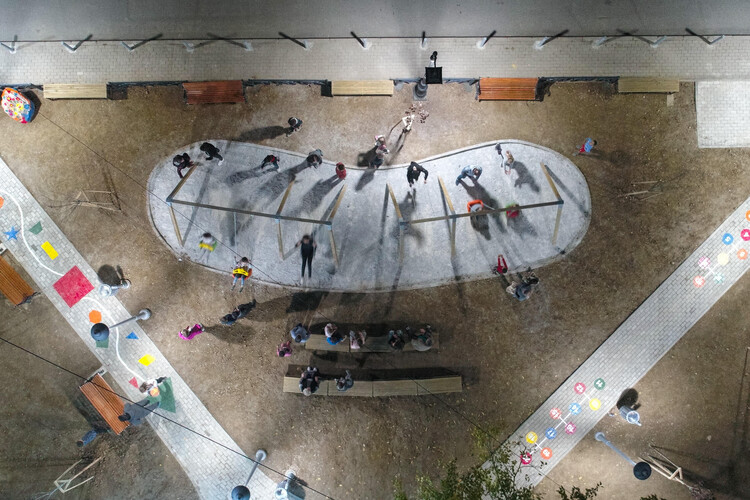
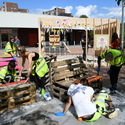
Mobile playground in Vietnam. Image Courtesy of UN-Habitat, Global Public Space Programme
The Un-Habitat or the United Nations agency for human settlements and sustainable urban development, whose primary focus is to deal with the challenges of rapid urbanization, has been developing innovative approaches in the urban design field, centered on the active participation of the community. ArchDaily has teamed up with UN-Habitat to bring you weekly news, article, and interviews that highlight this work, with content straight from the source, developed by our editors.
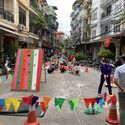
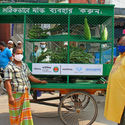
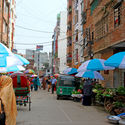
“During this pandemic, public spaces have played a vital role in the health and sustainability of urban communities around the world” states James Delaney, Block by Block chair. In fact, people need to go outside, now more than ever. In order to equip these public spaces to face the challenges of Covid-19, UN-Habitat with the Block by Block Foundation has been supporting ten cities, throughout this past year. With the help of local governments and the community, the initiatives helped covid-proof open urban entities, especially in poor neighborhoods, where there are few shared and green spaces. From creating mobile pop-up playgrounds for children in Hanoi, Vietnam, improving livelihood for street vendors in Dhaka and Khulna, Bangladesh to Covid Proofing of Public Spaces in Bhopalinformal settlements, India, these responses have provided help to those who need it the most.
The Chicago Architecture Biennial (CAB) and the Danish Arts Foundation (DAF) have selected Soil Lab as the winning project of a DAF Open Call for a major new commission in the North Lawndale neighborhood of Chicago. Responding to the biennial’s 2021 edition theme The Available City, led by Artistic Director David Brown, the proposal, chosen to represent Denmark at the 2021 Chicago Architecture Biennial, was imagined by an international design team that includes Eibhlín Ní Chathasaigh (Dublin), James Albert Martin (Dublin), Anne Dorthe Vester (Copenhagen), Maria Bruun (Copenhagen) and Chicago residents.
FOUN’TA’SY. Image Courtesy of Public Housing Enterprise J.S.C
Looking at the urban environment, this week’s curated selection of the Best Unbuilt Architecture highlights interventions in public spaces, submitted by the ArchDaily Community. Suitable for this monthly topic, the article underlines worldwide approaches that tackle the challenges of these areas through the introduction of innovative solutions.
Exploring a multitude of methods fitting for different contexts, this feature presents a tactical urban strategy implemented in a neighborhood in Kosovo and micro-mobility measures in Italy. Other projects evoke public approaches in private developments and enhanced historical and cultural connections between parks, buildings, and cities. In addition, this roundup showcases conceptual interventions that tackle social distancing and the challenges of the pandemic, in order to allow people to move freely and safely across space.
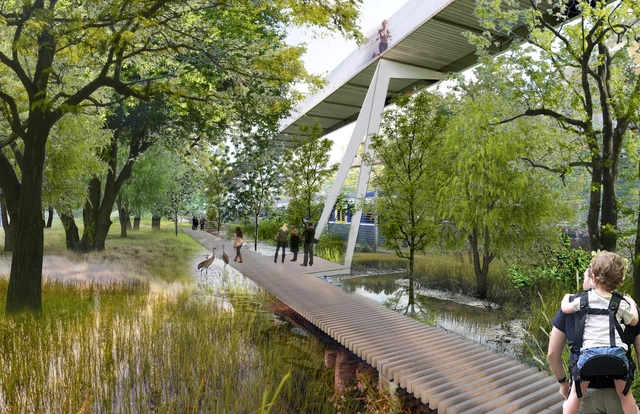
Understanding what drives economic, social, and educational disparities between communities is one of urbanism’s most critical and highly-discussed topics. It’s an increasingly complex issue, with many factors at play- one of them being the design and location of desirable urban green spaces. While sometimes they are a tool that helps to bolster underserved communities in terms of health and economic benefits, safety, and climate resistance, other times they can actually drive out the residents that they are created to serve. Now, the challenge lies in how to design these recreational sites to create better futures for all.
















_photo_credit_-_Kalpesh_Lathigra.jpg?1614596399 "Becontree Estate. Image © Kalpesh Lathigra")




(1).jpg?1614161719&format=webp&width=640&height=580)
.jpg?1614161736 "Mobile playground in Vietnam. Image Courtesy of UN-Habitat, Global Public Space Programme")
(1).jpg?1614161719)
.jpg?1613993872&format=webp&width=640&height=580)
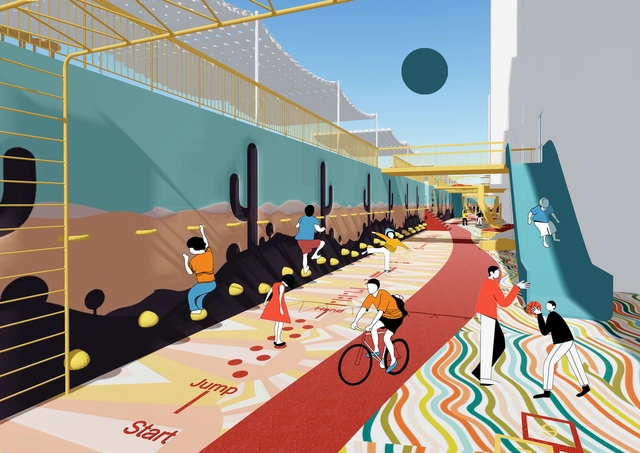
(%C2%A9minorormajor).jpg?1612954566 "Oasis-Playground. Image Courtesy of Studio Minorormajor")