1. ArchDaily
  2. Traditional Chinese Style

Traditional Chinese Style: The Latest Architecture and News

Witnessing the Growth of Xiangshan Campus of China Academy of Art: 2007 vs 2021

Subscriber Access | 

The Xiangshan campus of China Academy of Art was designed by the recipient of the 2012 Pritzker Architecture Prize, Shu Wang and Wenyu Lu from Amateur Architecture Studio. The studio was responsible for the overall project completion from master planning to architectural design and landscape design. On the north side of Xiangshan is the first phase of the campus. It was designed in 2001 and completed in 2004. It is a complex of ten buildings and two bridges, with a construction area of about 70,000 square meters. The second phase of the campus is located on the south side of Xiangshan, and it was designed in 2004 and completed in 2007. It consists of ten large buildings and two small buildings with a construction area of nearly 80,000 square meters.

The construction period of the two phases was 14 months each. A large number of craftmanship during the construction has produced many problems that could only be solved on-site, therefore the site was repeatedly touched and shaped by countless hands. In 2007, the photographer Iwan Baan recorded the campus after completion. In 2021, photographer Sai Zhao used the lens of original focal length to take pictures of the campus at the same location. Over the course of more than ten years, green plants have covered and sheltered the structure, and the building now has its own life.

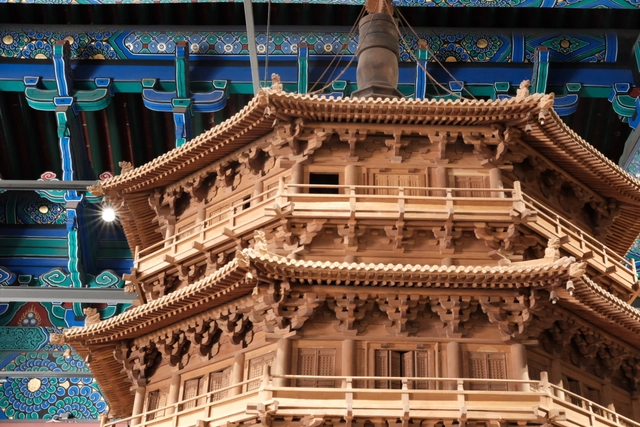
Rendering as a Tool to Restore the Glory of Ancient Chinese Architecture

Heritage buildings are precious treasures passed down to us by our ancestors. They are also intangible cultural gifts for all mankind, a discovery of the past. Nevertheless, as time changes, ancient Chinese architecture, either destroyed by the forces of wars or nature, is gradually losing its original glory, making the protection and restoration of ancient buildings an urgent matter in this contemporary world.

From Ancient to Modern: Modular Construction in Chinese Timber Architecture

As our cities continue to grow and expand rapidly, there has been an increasing demand for architects and craftsmen to build houses more cost-efficiently under tight deadlines. Modular architecture has been introduced as a concept which involves assembling multiple pre-fabricated modules on site to create a working unit. By joining similar elements together in various ways, modular architecture allows for more flexibilities in design and standardized repair.

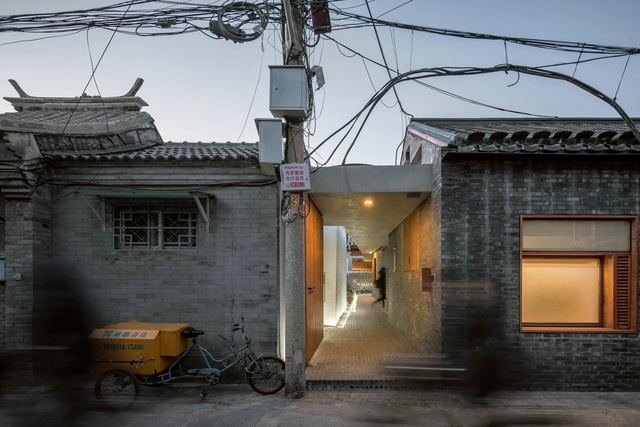
The Hutong Renovation in Beijing: Reimagining Tiny Spaces in a Historic Neighbourhood

For centuries, Hutongs have been recognized as one of the most treasured types of vernacular housing in China. Witnessing the cultural and historical transformation in Beijing ever since the Yuan Dynasty (1271 – 1368), the name Hutong is derived from a Mongolian word that means ‘water well’. In fact, this term was given to small streets that originated during the Yuan Dynasty when the emperor attempted to organize the urban fabric in a grid-like pattern in order to manage properly property ownership and to form an efficient transit system.

Amateur Architecture Studio’s Works on Contemporary Chinese Architecture with Recycled Materials

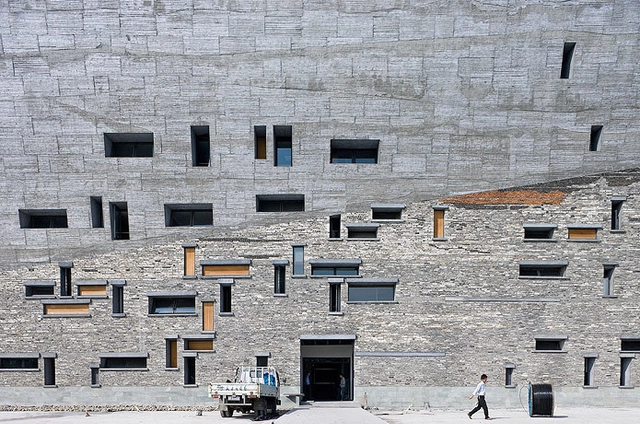
Over the past two centuries, cities in China have multiplied and expanded on a large scale, under accelerated urbanization. Mass demolition of the old city fabric, occurring everywhere, is leaving industrial debris and fragmented cultural artifacts buried forever, under shiny new skyscrapers. As old Chinese cities are collapsing and new urban centers are outspreading, a part of the city was lost, the old demolished landscape. Wang Shu and Lu Wenyu, the first Chinese citizens to win the Pritzker Architecture Prize, responded to this past-present relation by working with recycled materials and traditional know-how. In the following, we explore some of this couple's renowned works such as Ningbo History Museum, Ningbo (2008), Xiangshan Campus of China Academy of Art, Hangzhou (2004), and Ningbo Contemporary Art Museum (2005), to examine his humanistic approach to the city.

Folk Culture Center / Lacime Architects

Folk Culture Center / Lacime Architects - Cultural Center, Courtyard, Facade, Column
© Qianxi Zhang

Folk Culture Center / Lacime Architects - Cultural Center, Courtyard, Door, Facade, StairsFolk Culture Center / Lacime Architects - Cultural Center, Patio, Facade, Beam, Table, ChairFolk Culture Center / Lacime Architects - Cultural Center, Facade, Column, Beam, Arch, ArcadeFolk Culture Center / Lacime Architects - Cultural Center, Deck, Facade, Stairs, Beam, DoorFolk Culture Center / Lacime Architects - More Images+ 31

Jiaxing City, China