1. ArchDaily
  2. Toyo Ito & Associates, Architects

Toyo Ito & Associates, Architects: The Latest Architecture and News

Choreographing Space: Architecture and Dance as Interdisciplinary Practices

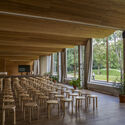
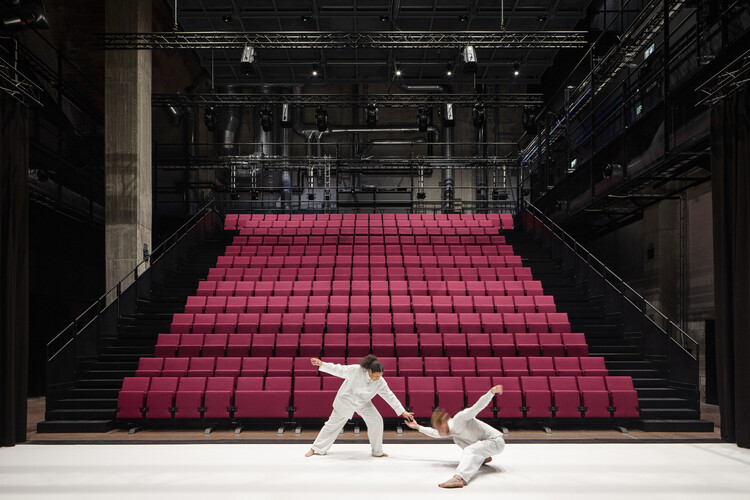
"Dance, dance… otherwise we are lost." This oft-cited phrase by Pina Bausch encapsulates not only the urgency of movement, but its capacity to reveal space itself. In her choreographies, space is never a neutral backdrop, it becomes a partner, an obstacle, a memory. Floors tilt, chairs accumulate, walls oppress or liberate. These are architectural conditions, staged and contested through the body. What Bausch exposes — and what architecture often forgets — is that space is not simply built, it is performed. Her work invites architects to think not only in terms of materials and forms, but of gestures, relations, and rhythms. It suggests that architecture, like dance, is ultimately about how we inhabit, structure, and emotionally charge the spaces we move through.

Historically, architecture and dance have operated in parallel, shaping human experience through the body's orientation in space and time. From the choreographed rituals of classical temples to the axial logics of Baroque palaces, built space has always implied movement. The Bauhaus took this further, as Oskar Schlemmer's Triadic Ballet visualized space as a geometric extension of the body. This was not scenery, but spatial thinking made kinetic. In the 20th century, choreographers like William Forsythe and Anne Teresa De Keersmaeker integrated architectural constraints into their scores, while architects such as Steven Holl, Diller Scofidio + Renfro, and Toyo Ito designed buildings that unfold as spatial sequences, inviting movement, drift, and delay.

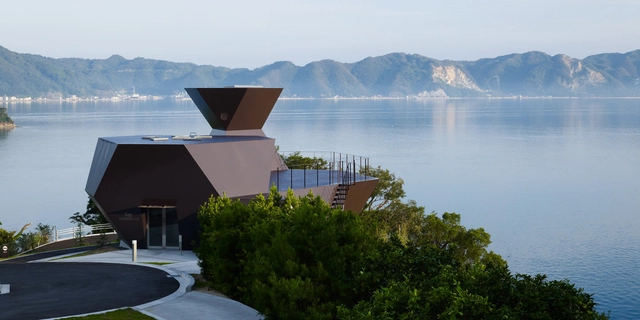
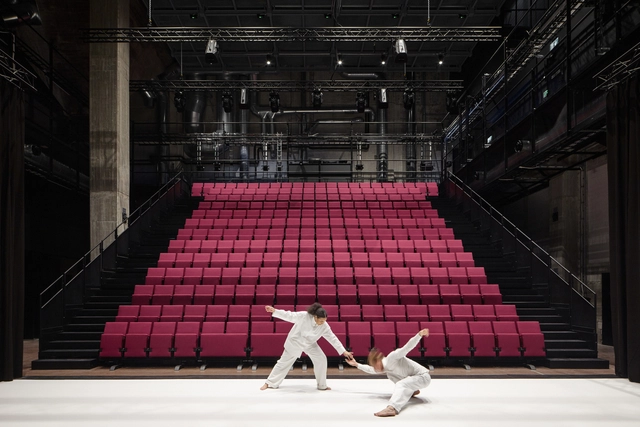
Choreographing Space: Architecture and Dance as Interdisciplinary Practices - Image 1 of 4Choreographing Space: Architecture and Dance as Interdisciplinary Practices - Image 2 of 4Choreographing Space: Architecture and Dance as Interdisciplinary Practices - Image 3 of 4Choreographing Space: Architecture and Dance as Interdisciplinary Practices - Image 4 of 4Choreographing Space: Architecture and Dance as Interdisciplinary Practices - More Images+ 35

Navigating Boundaries: The Architectural Legacy of Lighthouses

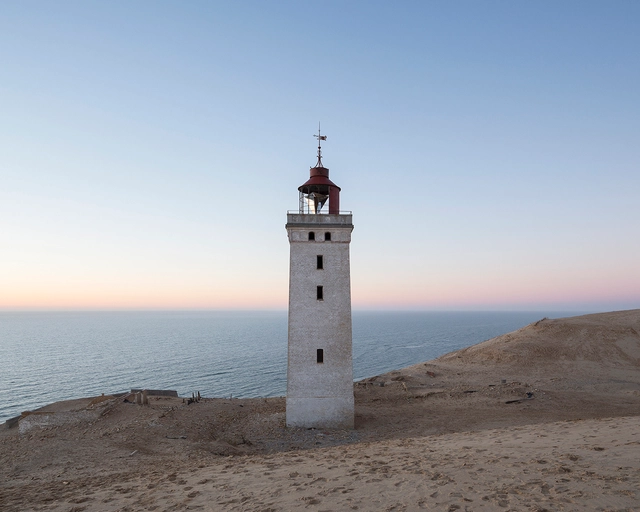
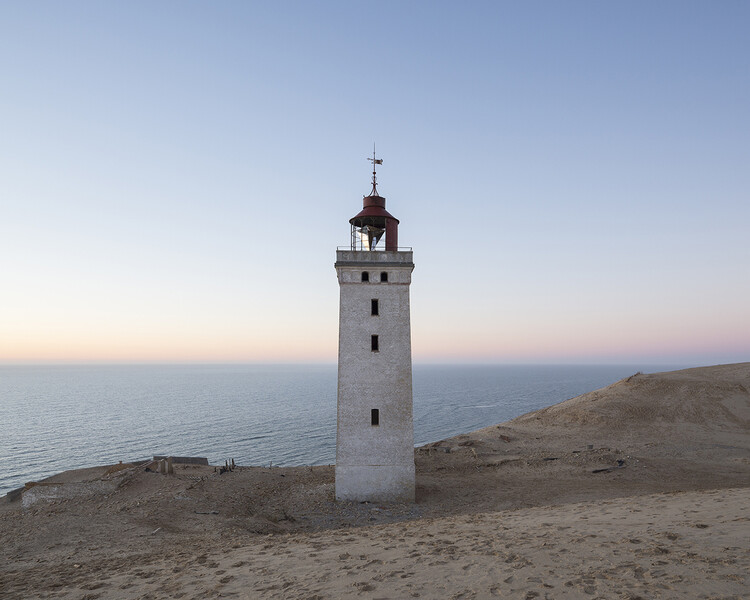
Lighthouses have stood along the margins of continents and islands for centuries as points of light in vast maritime territories. Rising in solitude from rocky cliffs, reefs, and headlands, these towers were tools for navigation and instruments of spatial clarity, shaping coastlines and marking the boundary between land and sea. Built to guide, warn, and locate, they constituted a global network of visibility long before the advent of digital mapping. Yet as maritime technologies evolved, many of these structures lost their original purpose. The typology, once essential, now stands at the edge of obsolescence. What remains is not merely an architectural relic, but a powerful spatial form — resilient, symbolic, and increasingly open to reinterpretation.

Navigating Boundaries: The Architectural Legacy of Lighthouses - Image 1 of 4Navigating Boundaries: The Architectural Legacy of Lighthouses - Image 2 of 4Navigating Boundaries: The Architectural Legacy of Lighthouses - Image 3 of 4Navigating Boundaries: The Architectural Legacy of Lighthouses - Image 4 of 4Navigating Boundaries: The Architectural Legacy of Lighthouses - More Images+ 26

A Look Back at the 9 Japanese Architects Honored with the Pritzker Prize

Last week, Japanese architect and social advocate Riken Yamamoto was announced as the 2024 Pritzker Architecture Prize Laureate, becoming the 9th Japanese architect honored with the profession's most prestigious award. Throughout the 45-year history of the Pritzker Prize, Japan stands out as the nation with the highest number of laureates. While geography is not a criterion in the selection of the laureates, Japanese architecture consistently impresses with its interplay of light and shadow, the careful composition of spaces, soft transitions between interior and exterior, and attention to detail and materiality. An ingrained culture of building also celebrates diverse designs and encourages global dialogue and the exchange of ideas and best practices. Read on to rediscover the 9 Japanese Pritzker laureates and glimpse into their body of work.

A Look Back at the 9 Japanese Architects Honored with the Pritzker Prize - Image 1 of 4A Look Back at the 9 Japanese Architects Honored with the Pritzker Prize - Image 2 of 4A Look Back at the 9 Japanese Architects Honored with the Pritzker Prize - Image 3 of 4A Look Back at the 9 Japanese Architects Honored with the Pritzker Prize - Image 4 of 4A Look Back at the 9 Japanese Architects Honored with the Pritzker Prize - More Images+ 6

Toyo Ito Donates His Archive to CCA for Broad Research Access

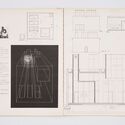
Architect Toyo Ito has donated his archive of architectural works to the Canadian Centre for Architecture (CCA), an international research institution and museum focused on increasing the accessibility of architectural knowledge. Toyo Ito is now contributing to the CCA Collection, which contains over 200 archival holdings, following his intention to encourage new research into his work and to put it in dialogue with other artifacts held by the institution. On December 6, 2023, the early works of the architect have arrived at the CCA.

Toyo Ito Donates His Archive to CCA for Broad Research Access - Image 1 of 4Toyo Ito Donates His Archive to CCA for Broad Research Access - Image 2 of 4Toyo Ito Donates His Archive to CCA for Broad Research Access - Image 3 of 4Toyo Ito Donates His Archive to CCA for Broad Research Access - Image 4 of 4Toyo Ito Donates His Archive to CCA for Broad Research Access - More Images+ 1

BIG, OMA, 3xn, Snøhetta and Toyo Ito Compete for the New GOe Building in Spain

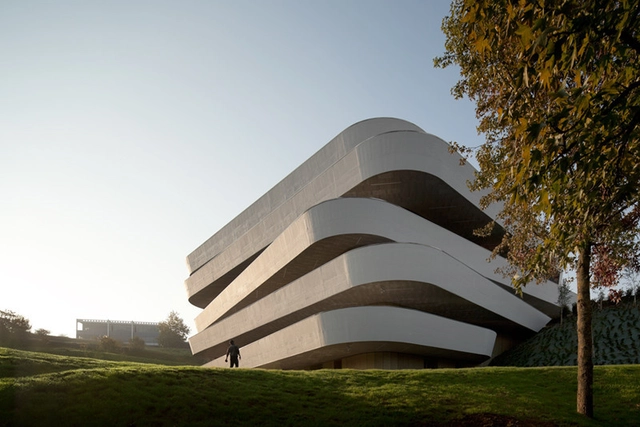
Last year, the Basque Culinary Center announced the creation of the GOe: Gastronomy Open Ecosystem. A project that seeks to generate a gastronomic ecosystem focused on research, innovation and entrepreneurship. It will have its own building in San Sebastian, Spain, becoming the new headquarters complementary to the previous BCC building designed by VAUMM in 2011.

With the aim of selecting the best proposals for the construction of the GOe building, an international architectural competition was launched in December 2021. After receiving and analysing different proposals, five finalists were selected to move on to the next phase of the award process: 3xn (Denmark), BIG - Bjarke Ingels Group (Denmark), OMA - Office of Metropolitan Architecture (Netherlands), Snøhetta (Norway) and Toyo Ito & Associates, Architects (Japan).

"I Am Always Inside the Architecture that I Design": In Conversation with Toyo Ito

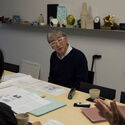
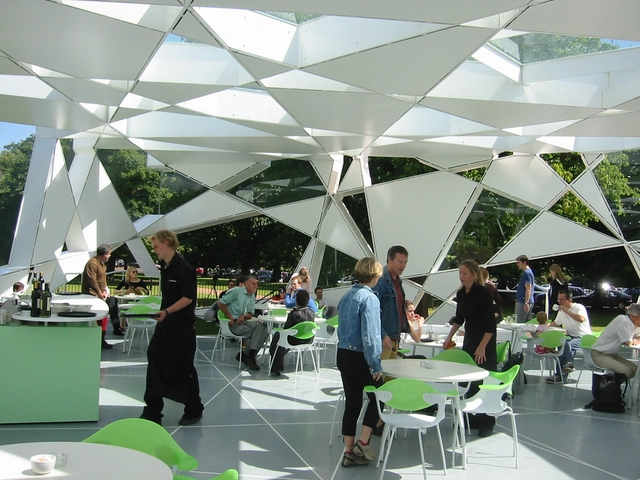
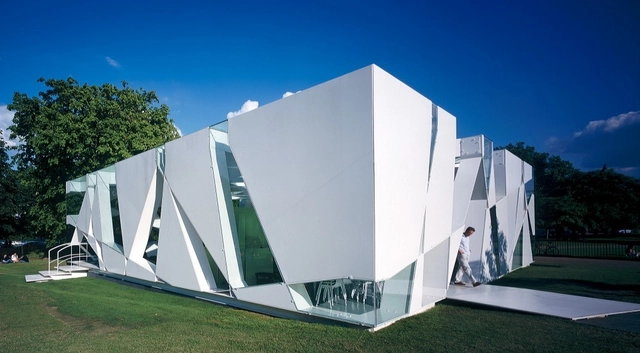
Examining the work of Tokyo architect Toyo Ito (b. 1941) – particularly his now seminal Sendai Mediatheque (1995-2001), Serpentine Gallery (London, 2002, with Cecil Balmond), TOD's Omotesando Building (Tokyo, 2004), Tama Art University Library (Tokyo, 2007), and National Taichung Theater (2009-16) – will immediately become apparent these buildings’ structural innovations and spatial, non-hierarchical organizations. Although these structures all seem to be quite diverse, there is one unifying theme – the architect’s consistent commitment to erasing fixed boundaries between inside and outside and relaxing spatial divisions between various programs within. There is continuity in how these buildings are explored. They are conceived as systems rather than objects and they never really end; one could imagine their formations and patterns to continue to evolve and expand pretty much endlessly.

"I Am Always Inside the Architecture that I Design": In Conversation with Toyo Ito - Image 1 of 4"I Am Always Inside the Architecture that I Design": In Conversation with Toyo Ito - Image 2 of 4"I Am Always Inside the Architecture that I Design": In Conversation with Toyo Ito - Image 3 of 4"I Am Always Inside the Architecture that I Design": In Conversation with Toyo Ito - Image 4 of 4I Am Always Inside the Architecture that I Design: In Conversation with Toyo Ito - More Images+ 8

Selected Projects of Pritzker Laureates’ in 2020

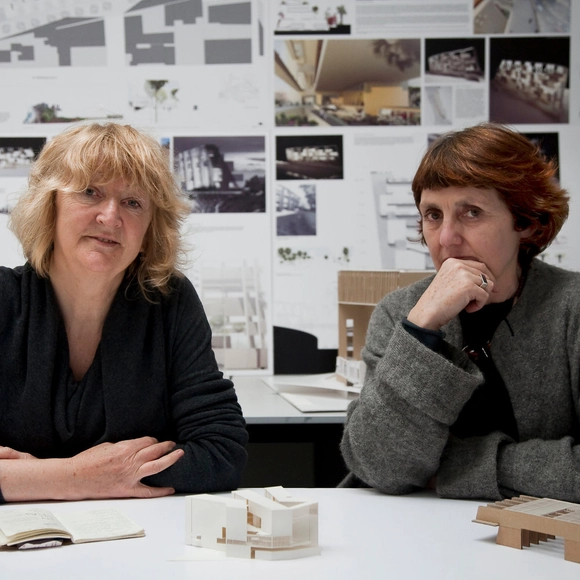
This year, architecture’s highest honor, the Pritzker Prize, has been granted to Grafton Architects, a Dublin-based architectural firm mainly ran by female partners Yvonne Farrell and Shelley McNamara. For the first time ever in its 42-year history, due to the constraints set by Covid-19 global pandemic, the organizers of the Pritzker Prize decided to use Livestream the award ceremony. Having reached the end of 2020, ArchDaily has summed up what current and previous Pritzker Prize winners have accomplished during this turbulent year.

Spotlight: Toyo Ito

As one of the leading architects of Japan's increasingly highly-regarded architecture culture, 2013 Pritzker Laureate Toyo Ito (born June 1, 1941) has defined his career by combining elements of minimalism with an embrace of technology, in a way that merges both traditional and contemporary elements of Japanese culture.

Spotlight: Toyo Ito - Image 1 of 4Spotlight: Toyo Ito - Image 10 of 4Spotlight: Toyo Ito - Image 9 of 4Spotlight: Toyo Ito - Image 7 of 4Spotlight: Toyo Ito - More Images+ 7

The Complex Yet Simple Geometry of Toyo Ito's Tama Art University Library

Subscriber Access | 

In his latest video, filmmaker Vincent Hecht takes us inside Toyo Ito's Tama Art University Library. The project is notable for its effortless geometry, with the entire building comprising a series of simple concrete arches which, when combined, create a complex "emergent grid" which allowed for great flexibility in the building's plan. Hecht's video shows how this geometry works in practice, as the elements of the library snake through the building's light, open interior.

Layers and Lighting: How Top Architects Design Fashion Stores to Turn Heads by Day and Night

Flagship stores excite both fashion shoppers and designers alike due to their role as visionary laboratories for the latest trends and stimulating retail experiences. Architects have developed various ways to dress haute couture stores, from distinctive icons in the day to seductive night-time images. The images accompanying this article, created by the Portuguese architect and illustrator André Chiote, help to explore the graphic potential of famous brands like Dior, Prada and Tod's. The illustrations clearly reveal the various techniques of playing with diaphanous layers, intimate views inside or the contrast of light and shadow.

How Toyo Ito is Embarking on a "New Career Epoch" With Small-Scale Community Architecture

Subscriber Access | 

This article was originally published on Autodesk's Redshift publication as "Toyo Ito’s Next Architectural Feat: Revitalizing Omishima Island in Japan."

Last year, as construction at his National Taichung Theater in Taiwan was winding down, Toyo Ito found himself at a crossroads.

A 10-year project in the making, the gargantuan cultural beacon is made of biomorphically curved concrete walls that wind together like a knot of arteries, creating an otherworldly experience for arts patrons. It’s every bit the landmark project you’d expect from 2013’s Pritzker Prize Laureate, but its rapidly approaching completion triggered a vital question: Where to go from here?

Toyo Ito's National Taichung Theater Photographed by Lucas K Doolan

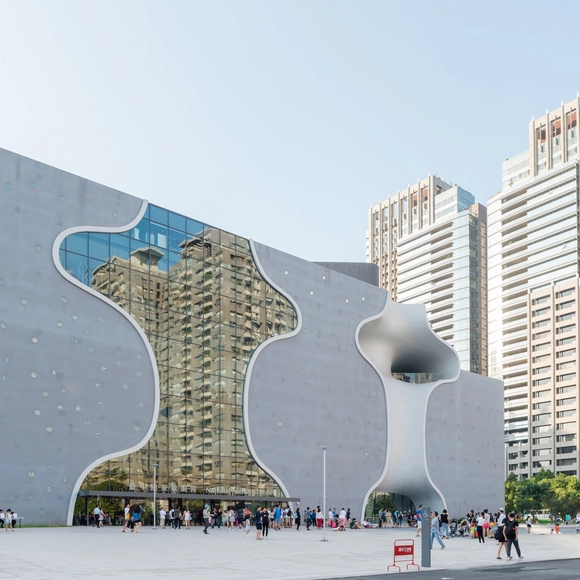
Designed in 2006, and under construction since 2009, Toyo Ito & Associates, Architects much anticipated National Taichung Theater has finally officially opened. The design is notable for its cavernous, curved and folded interior forms, which produce a dramatic and complex section that is neatly resolved into a rectilinear exterior form. Taiwan-based photographer Lucas K Doolan visited the new Opera House to study its impressive internal spaces and its presence in the surrounding urban environment.

Toyo Ito's National Taichung Theater Photographed by Lucas K Doolan - Image 1 of 4Toyo Ito's National Taichung Theater Photographed by Lucas K Doolan - Image 2 of 4Toyo Ito's National Taichung Theater Photographed by Lucas K Doolan - Image 3 of 4Toyo Ito's National Taichung Theater Photographed by Lucas K Doolan - Image 4 of 4Toyo Ito's National Taichung Theater Photographed by Lucas K Doolan - More Images+ 46