
-
Architects: Steven Fong Architect
- Area: 330 ft²
- Year: 2016
-
Professionals: Blackwell, Grilled Cheese and Ketchup, Qube



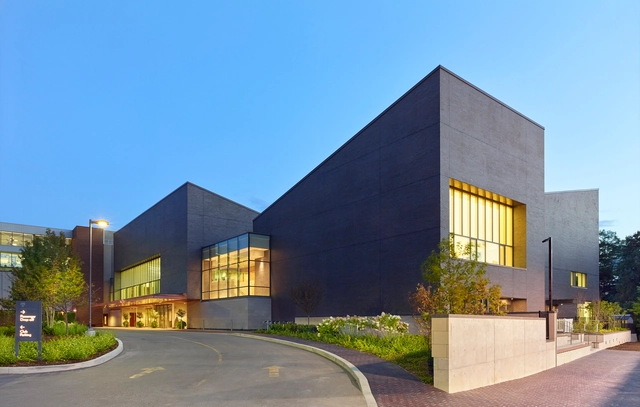
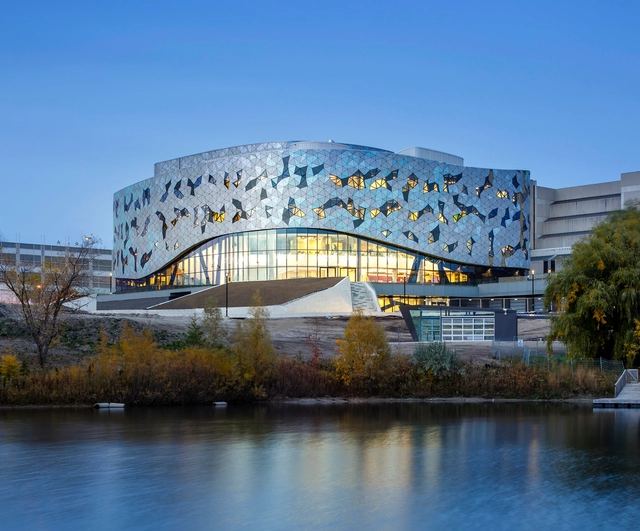
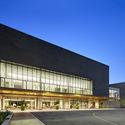
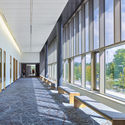
Toronto-based MacLennan Jaunkalns Miller Architects (MJMA) has been selected to receive the Royal Architectural Institute of Canada's (RAIC) 2016 Architectural Firm Award. Known for their work in community recreation and sports buildings, the more than 50-person practice was chosen by the jury for their "wellness approach" to design and contribution to the "broader communities in which the projects are located."
“MJMA has consistently achieved a very high quality of architecture and bold clarity throughout its large body of work,” said the five-member jury. “In addition to the spectacular spatial qualities, the architecture exhibits a clear problem-solving approach.
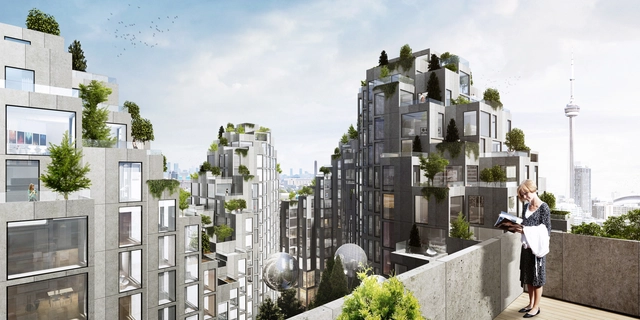
BIG has unveiled plans for a new residential development on downtown Toronto's King Street West. A "ziggurat" designed to "create communities," as The Globe and Mail says, "Toronto 2.0" features two "pixilated" towers likened to Moshe Safdie's Habitat 67.
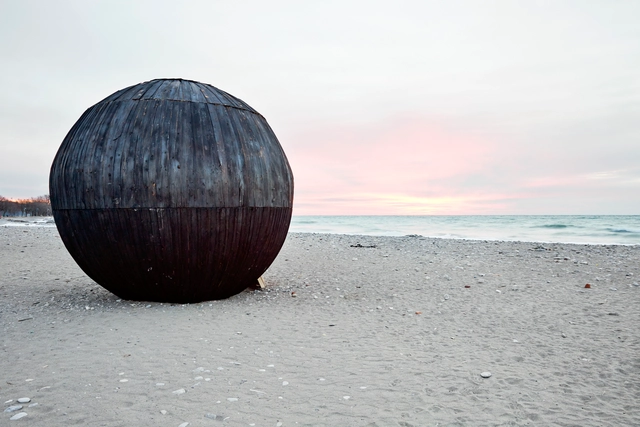
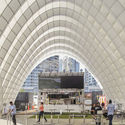
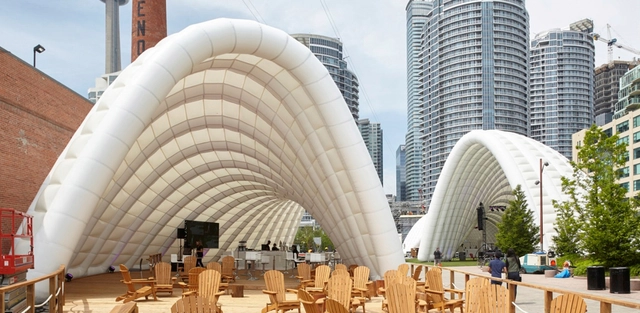
Seven winter stations have been erected along Toronto’s beaches adding color and refuge to the shoreline during the winter months. Part of the annual Winter Stations design competition, this year’s theme was “Freeze/Thaw,” which asked participants to respond to “the changing climactic conditions and transitions of the Toronto winter.”
Four professional designs and three student designs were built this year, transforming existing lifeguard stations into vibrant installations. A community fire place was also designed and implemented by Canadian architect Douglas Cardinal. The installations will stay open until March 19, 2016. View images of each winter station after the break.
.jpg?1454674729&format=webp&width=640&height=580)
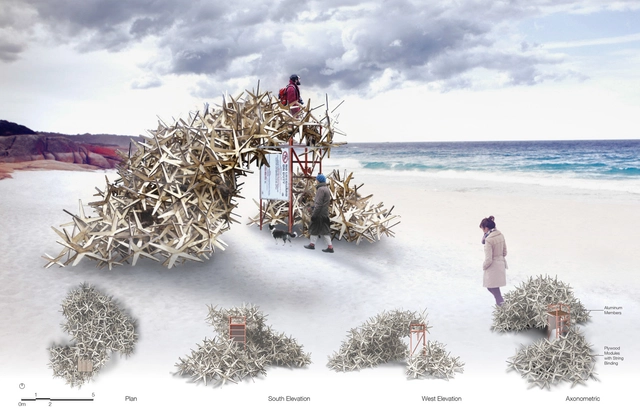
Now in its second year, Toronto’s annual Winter Stations design competition has revealed its four winning designs, and three student designs that will add art to Toronto’s beaches. Receiving almost 400 submissions from local and international designers, this year’s theme “Freeze/Thaw” challenged participants to respond to the changing climate of winter. Founded by RAW Design, Ferris + Associates, and Curio, the Winter Stations Design Competition uses design to inspire Torontonians back outside.
“The public participation in Winter's Station's inaugural year proves that even the most overlooked winterscapes can be injected with vibrancy and life," says Ted Merrick, lead designer at landscape architecture firm Ferris + Associates. "Our ultimate goal for year two remains the same - to encourage the community out of hibernation and back to the beach."
The winning designs will be built along different beaches in Toronto, adding to existing lifeguard towers. See the winners after the break.
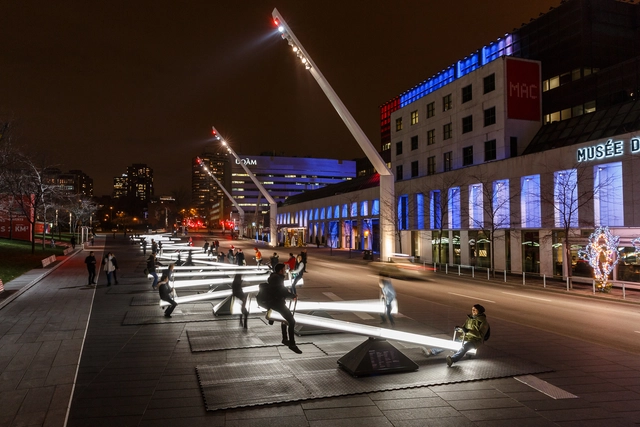
The product of Toronto-based Lateral Office and Montreal-based CS Design, in collaboration with EGP Group, Mitchell Akiyama, Maotik and Iregular, “Impulse” is a winter installation in the city of Montreal. Thirty giant seesaws and a series of video-projections on surrounding building facades, all with accompanying music, transform the Place des Festivals into an “illuminated playground.” The project was selected as the winner of an open competition this past summer, for the sixth annual Luminothérapie event. Read more about this interactive installation after the break.

Digifest explores the future of design—how is technology changing the way we create, and what this means for our future.
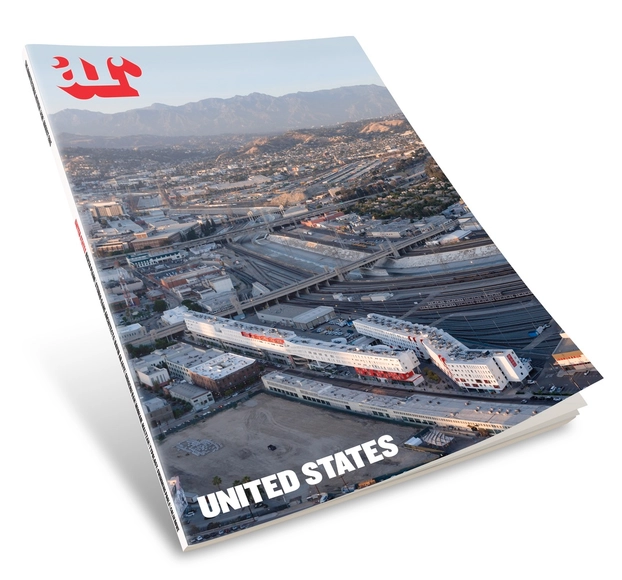
ArchDaily is continuing our partnership with The Architectural Review, bringing you short introductions to the themes of the magazine’s monthly editions. In this introduction to the August 2015 issue, AR editor Christine Murray takes on the disheartening architectural scene in North American cities from New York to Toronto, arguing that "NYC is not where we found a new American architecture" and asking: "Why not give the young guns a tower or a Whitney, let them stretch their legs?"
The latest New York towers are more billboard than building. Like celebrity-endorsed perfume - fancy box, smelly water - the architecture matters less than the artist and his (yes, they are all men) pen’s effluent black-ink concept scrawl.
This is the nation that gave birth to the skyscraper, yet tycoons are commissioning foreign architects for its next generation of towers. New York’s recent acquisitions include a Siza and an Ando, to display alongside a collection of Nouvel, Viñoly and Gehry. Michael Sorkin takes on the towers in this edition, accusing starchitects of putting lipstick on pigs.

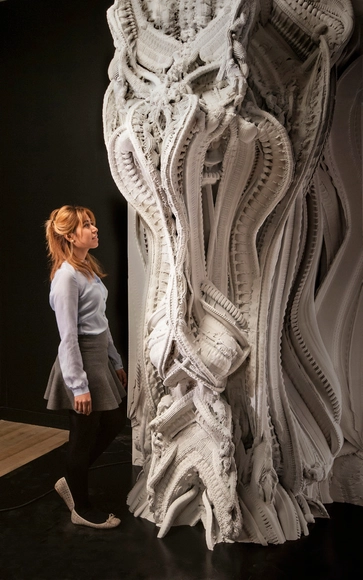
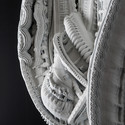
Standing 3 meters (10 feet) tall, Benjamin Dillenburger and Michael Hansmeyer's Arabesque Wall is an object of intimidating intricacy. 3D printed over the course of four days from a 50 Gigabyte file, the piece is a demonstration of the incredible forms achievable with algorithmic design and 3D printing - however with its overwhelming complexity it is also a test of human perception.
"Architecture should surprise, excite, and irritate," explain Dillenburger and Hansmeyer. "As both an intellectual and a phenomenological endeavor, it should address not only the mind, but all the senses - viscerally. It must be judged by the experiences it generates."

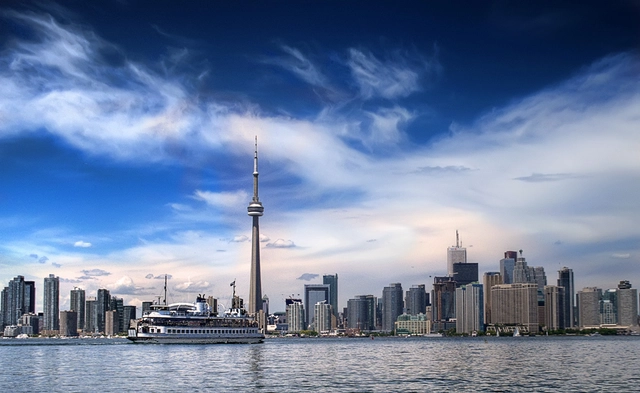
How do you compare cities? It's difficult to collapse millions of individual subjective experiences into a single method of comparison, but one popular technique used in recent years has been to judge a city's "livability." But what does this word actually mean? In their 2015 ranking of the world's most livable cities, Metropolis Magazine has gathered together a group of experts on city planning, urban life, tourism and architecture to break down "livability" into the categories they think matter and draw upon Metropolis' considerable urban coverage to produce one of the most thorough attempts to rank world series yet attempted. Find out the results after the break.





.jpg?1454674637 "© Andrew Rowat")
.jpg?1454674590 "© Andrew Rowat")
.jpg?1454674652 "© Andrew Rowat")
.jpg?1454674480 "© Andrew Rowat")
.jpg?1454674729)