1. ArchDaily
  2. Temporary Architecture

Temporary Architecture: The Latest Architecture and News

Time Space Existence 2023 Envisions New Sustainable Ways Forward

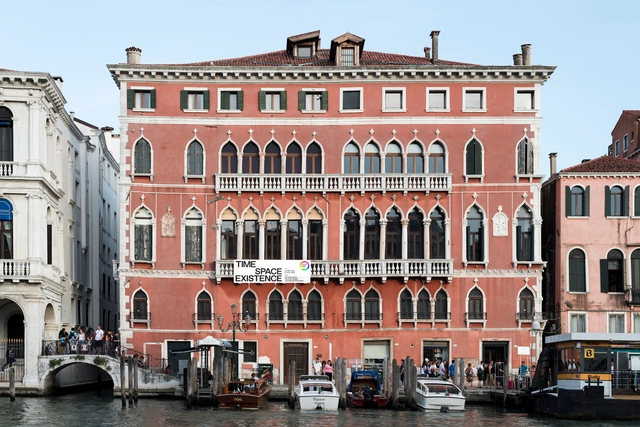
Organized and hosted by the European Cultural Centre (ECC), a non-profit organization committed to promoting culture through international exchanges, the sixth edition of the Time Space Existence exhibition "will draw attention to the emerging expressions of sustainability in its numerous forms, ranging from a focus on the environment and urban landscape to the unfolding conversations on innovation, reuse, community, and inclusion.".

Architects, designers, artists, academics, and photographers, from 52 different countries will come together to explore and contemplate the philosophical concepts of Time, Space, and Existence, through different mediums and from diverse perspectives. Highlighting a total of 217 projects, the exhibition will run from the 20th of May until the 26th of November, 2023, at Palazzo Bembo, Palazzo Mora, and the Marinaressa Gardens, in Venice, during the 2023 Venice Architecture Biennale. Throughout the six months of opening, the show will be complemented by a program of talks, conferences, and workshops.
Time Space Existence 2023 Envisions New Sustainable Ways Forward  - Image 1 of 4Time Space Existence 2023 Envisions New Sustainable Ways Forward  - Image 2 of 4Time Space Existence 2023 Envisions New Sustainable Ways Forward  - Image 3 of 4Time Space Existence 2023 Envisions New Sustainable Ways Forward  - Image 4 of 4Time Space Existence 2023 Envisions New Sustainable Ways Forward  - More Images+ 19

Afterlife of Pavilions: Exploring Reuse in Temporary Architecture

Temporary pavilions and installations, such as those used in events, exhibitions, or festivals, present themselves as a great challenge when addressing the circular economy in architecture due to their ephemeral condition. It seems contradictory to address resource management and try to extract the maximum value from the materials and minimize waste and pollution while designing a structure that is meant to be used for a limited period of time. However, there are several strategies to rethink the way we are designing these structures in order to promote circularity.

Afterlife of Pavilions: Exploring Reuse in Temporary Architecture - Image 1 of 4Afterlife of Pavilions: Exploring Reuse in Temporary Architecture - Image 2 of 4Afterlife of Pavilions: Exploring Reuse in Temporary Architecture - Image 3 of 4Afterlife of Pavilions: Exploring Reuse in Temporary Architecture - Image 4 of 4Afterlife of Pavilions: Exploring Reuse in Temporary Architecture - More Images+ 8

Tadao Ando Selected to Design the 10th MPavilion in Melbourne, Australia

The Naomi Milgrom Foundation announced Tadao Ando as the winner of the commission to design the MPavilion 10 in Queen Victoria Gardens in Melbourne. This will be Ando’s first project in Australia, as he will be taking part in the country’s foremost annual architecture commission and design festival. Now in its 10th edition, the MPavilion gives complete freedom to the designers to create their concepts and realize their vision, hoping to encourage new and unique design languages to further develop this vital site in the cultural and community life of Melbourne. Details of Tadao Ando’s design will be revealed in May, and the pavilion is scheduled to open to the public on November 16, 2023.

Tadao Ando Selected to Design the 10th MPavilion in Melbourne, Australia - Image 1 of 4Tadao Ando Selected to Design the 10th MPavilion in Melbourne, Australia - Image 2 of 4Tadao Ando Selected to Design the 10th MPavilion in Melbourne, Australia - Image 3 of 4Tadao Ando Selected to Design the 10th MPavilion in Melbourne, Australia - Image 4 of 4Tadao Ando Selected to Design the 10th MPavilion in Melbourne, Australia - More Images+ 15

Meanwhile Spaces: Temporary Interventions for Lasting Urban Development

Subscriber Access | 

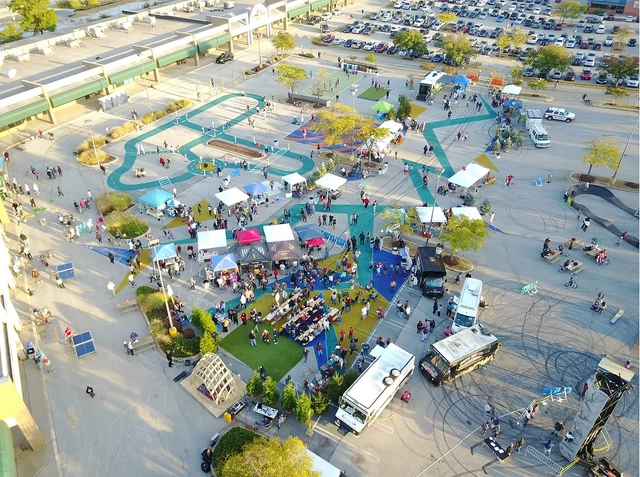
When streets lay empty, sidewalks untouched, and shutters hung heavy, the city seems lost of life. When businesses close, offices go remote and economic activity declines, the mechanisms that operate a city are idle. Vacant space and land are often perceived as “failed”, reflecting urban decline and economic blight. Emptiness, however, holds hope for possibilities and change. When urban voids are at the brink of transformation, what happens in the meanwhile?

Meanwhile Spaces: Temporary Interventions for Lasting Urban Development  - Image 1 of 4Meanwhile Spaces: Temporary Interventions for Lasting Urban Development  - Image 2 of 4Meanwhile Spaces: Temporary Interventions for Lasting Urban Development  - Image 3 of 4Meanwhile Spaces: Temporary Interventions for Lasting Urban Development  - Image 4 of 4Meanwhile Spaces: Temporary Interventions for Lasting Urban Development  - More Images+ 1

Temporary, but with Long-Lasting Effects: 6 Ways in Which Architecture Festivals Can Revitalize a City

Subscriber Access | 

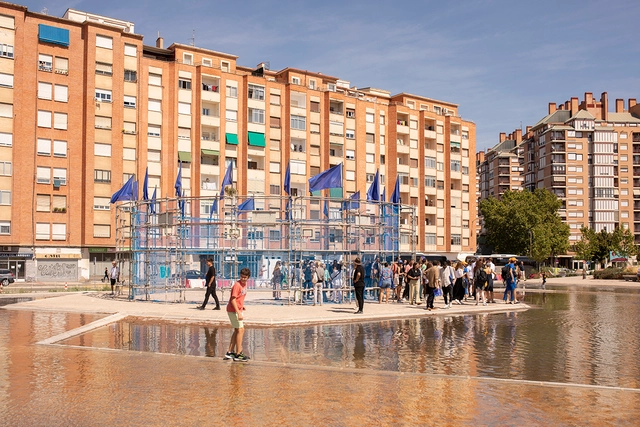
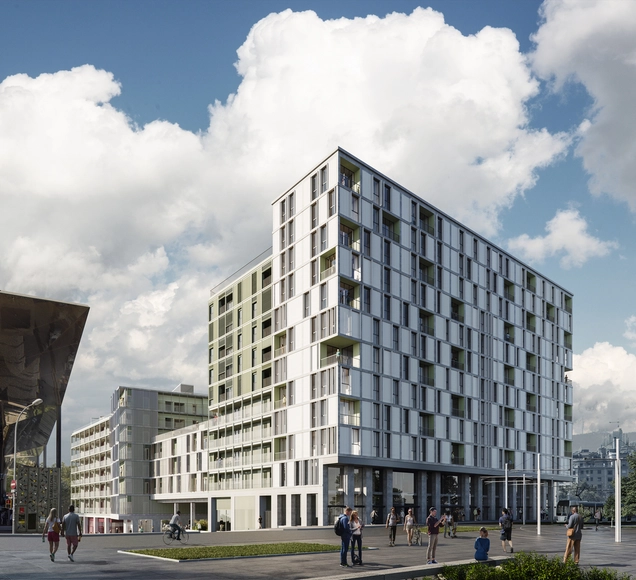
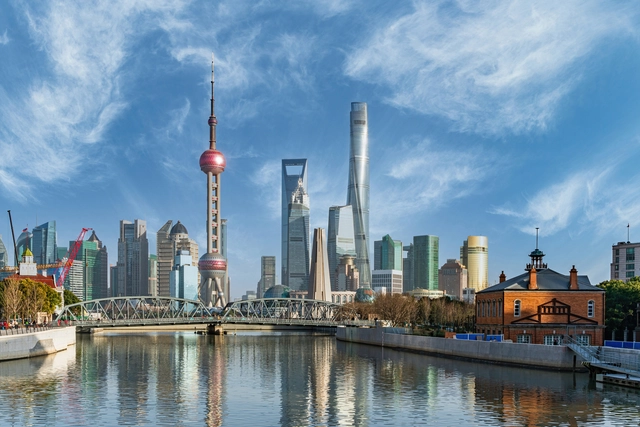
Biennales, exhibitions, and architecture focused festivals provide a platform for opening debates, conducting research, and driving innovation, but they can also contribute to the incremental changes that shape the image and the character of a city. Through temporary installations and experiments, this type of events have the opportunity to open lines on inquiry into the quality of urban spaces, inviting visitors and residents to slow down, break away from their daily routine and interrogate their local environments. The effects might not be immediate, but by cumulating these impressions and moments of contemplation, architecture and design festivals can have a long-lasting impact on the cities that welcome them.
Temporary, but with Long-Lasting Effects: 6 Ways in Which Architecture Festivals Can Revitalize a City - Image 1 of 4Temporary, but with Long-Lasting Effects: 6 Ways in Which Architecture Festivals Can Revitalize a City - Image 2 of 4Temporary, but with Long-Lasting Effects: 6 Ways in Which Architecture Festivals Can Revitalize a City - Image 3 of 4Temporary, but with Long-Lasting Effects: 6 Ways in Which Architecture Festivals Can Revitalize a City - Image 7 of 4Temporary, but with Long-Lasting Effects: 6 Ways in Which Architecture Festivals Can Revitalize a City - More Images+ 6

Workers Begin Dismantling Qatar’s Stadium 974, the First Temporary World Cup Stadium

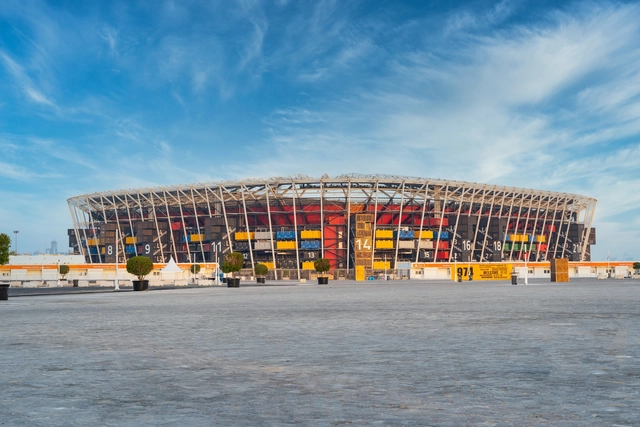
Reports show that authorities have begun dismantling Stadium 974 after it hosted seven matches during FIFA World Cup, with six group games and one Round of 16 knockout matches. It was also the only stadium built for the World Cup without air conditioning, so it only hosted evening matches. According to the BBC, construction workers moved on the site on 9 December to “take the stadium out of tournament mode.” The structure was designed to be the first FIFA-compliant stadium that can be fully dismantled and re-purposed after the tournament ends. While Qatar called this a “beacon of sustainability,” experts warn that the real sustainability of the scheme depends on several factors, including when and where the stadium will be reused.

Workers Begin Dismantling Qatar’s Stadium 974, the First Temporary World Cup Stadium - Image 1 of 4Workers Begin Dismantling Qatar’s Stadium 974, the First Temporary World Cup Stadium - Image 2 of 4Workers Begin Dismantling Qatar’s Stadium 974, the First Temporary World Cup Stadium - Image 3 of 4Workers Begin Dismantling Qatar’s Stadium 974, the First Temporary World Cup Stadium - Image 4 of 4Workers Begin Dismantling Qatar’s Stadium 974, the First Temporary World Cup Stadium - More Images+ 1

Equal Saree: Architecture and Urbanism With a Feminist Perspective in Barcelona

Subscriber Access | 

Equal Saree is an architecture studio based in Barcelona, led by three young architects: Helena Cardona Tamayo, Julia Goula Mejón, and Dafne Saldaña Blasco. All three studied at the Escuela Técnica Superior de Arquitectura de Barcelona (ETSAB), Universidad Politécnica de Cataluña, where they met while taking the subject "Architecture and Politics", taught by Zaida Muxí and Josep María Montaner. The studio is composed of 15 other women architects, in addition to the founding partners.

OKRA Receives the European Urban Public Space Award 2022

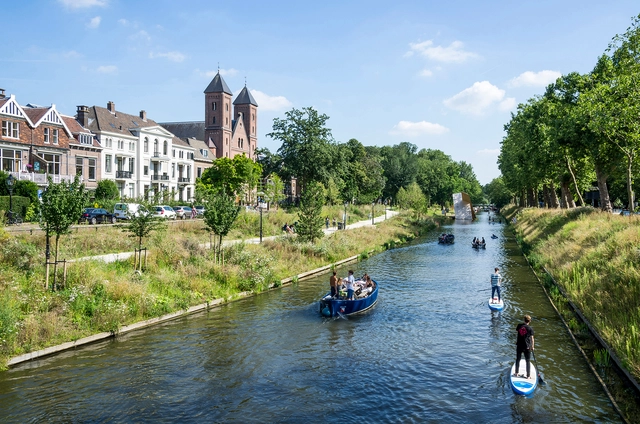
The Dutch firm OKRA landschapsarchitecten has been awarded the European Prize for Urban Public Space 2022 for its project to restore the Catharijnesingel canal in the city of Utrecht in the Netherlands. Being an initiative of the Center of Contemporary Culture of Barcelona (CCCB), this eleventh edition received 326 projects from 35 different countries showing those problems that European cities must face and proposing some solutions in the framework of a post-pandemic context focused on climate change and how to make cities more livable.

CIERTO ESTUDIO: 6 Women Architects Innovating Urban Planning and Collective Housing in Barcelona

Subscriber Access | 

CIERTO ESTUDIO was founded by six young architects in 2014. Since then, the team has not stopped growing and thus consolidating its professional practice in Barcelona. These six women architects are: Marta Benedicto, Ivet Gasol, Carlota de Gispert, Anna Llonch, Lucia Millet, and Clara Vidal.

The studio was born from plurality, therefore its thinking is inevitably diverse and this is reflected in its collaborative work methodology, always looking for the maximum architectural claim and its own character. 

Urban October 2022: 31 Days to Promote a Sustainable Urban Future

Urban October is an initiative that was born with the aim of raising awareness, promoting participation, generating knowledge, and engaging the international community in creating a better urban future. Each year, UN-Habitat and its partners organize a month of activities, events, and debates around urban sustainability.

CCCB Announces the 5 Finalists for the European Prize for Urban Public Space 2022

The European Prize for Urban Public Space is a biennial, honorary competition organised by the Centre of Contemporary Culture of Barcelona (CCCB), which, following its exhibition "The Reconquest of Europe" in 1999, decided to create a permanent observatory of European cities. The prize has been awarded since 2000, recognising the best interventions for the creation, transformation and recovery of public spaces in Europe.

The School of Architecture Develops Design-Build Learning Program at Arcosanti in Arizona, USA

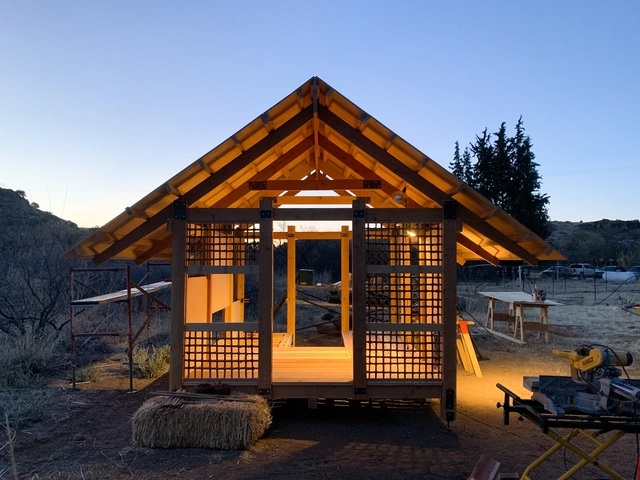
The School of Architecture, founded by Frank Lloyd Wright as the Taliesin Fellowship in 1932, is undergoing significant transformations. Two years after separating from the Frank Lloyd Wright Foundation, TSOA landed at Arcosanti, an experimental desert community in Arizona owned and operated by The Cosanti Foundation. In line with the school’s values, the program at Arcosanti seeks to provide students with a contemporary design education based on immersive, experimental, and experiential learning. The curriculum offers 2 and 3+ year NAAB-accredited Master of Architecture degrees and a 1.5-year Master of Science in Design-Build.

The School of Architecture Develops Design-Build Learning Program at Arcosanti in Arizona, USA - Image 1 of 4The School of Architecture Develops Design-Build Learning Program at Arcosanti in Arizona, USA - Image 2 of 4The School of Architecture Develops Design-Build Learning Program at Arcosanti in Arizona, USA - Image 3 of 4The School of Architecture Develops Design-Build Learning Program at Arcosanti in Arizona, USA - Image 4 of 4The School of Architecture Develops Design-Build Learning Program at Arcosanti in Arizona, USA - More Images+ 1

How Are Jan Kattein Architects Working to Regenerate Urban Spaces?

Subscriber Access | 

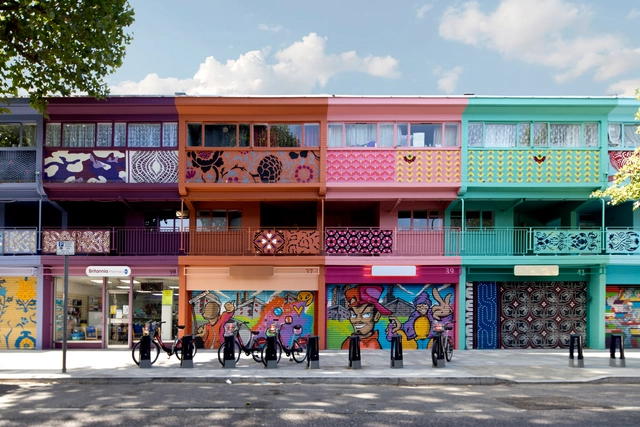
The award-winning firm based in London, England, Jan Kattein Architects, works to realize the civic and spatial opportunities that architecture presents’ with their projects establishing a social and physical legacy, achieved by embracing an open, interactive design process that responds positively to the needs and aspirations of the clients.

Allowing the process to drive each individual project, their method stimulates innovative design, seeking to add benefits through education, economic growth, cultural activity, and greater community coherence.

How Are Jan Kattein Architects Working to Regenerate Urban Spaces? - Image 1 of 4How Are Jan Kattein Architects Working to Regenerate Urban Spaces? - Image 2 of 4How Are Jan Kattein Architects Working to Regenerate Urban Spaces? - Image 3 of 4How Are Jan Kattein Architects Working to Regenerate Urban Spaces? - Image 4 of 4How Are Jan Kattein Architects Working to Regenerate Urban Spaces? - More Images+ 28

Designed to Disassemble: How Architecture Informs Exhibition Design and Temporary Installations

Subscriber Access | 

Architecture in its broadest sense concerns itself with the uprooting of structures that are permanent, cementing themselves within the greater cultural context and history of its humanity, however, where do we place the creation of structures that are designed with the intention to be disassembled. How much meaning and value can these structures hold, knowing they were never designed to last, but to simply take up space for a moment?

Designed to Disassemble: How Architecture Informs Exhibition Design and Temporary Installations - Image 1 of 4Designed to Disassemble: How Architecture Informs Exhibition Design and Temporary Installations - Image 2 of 4Designed to Disassemble: How Architecture Informs Exhibition Design and Temporary Installations - Image 3 of 4Designed to Disassemble: How Architecture Informs Exhibition Design and Temporary Installations - Image 4 of 4Designed to Disassemble: How Architecture Informs Exhibition Design and Temporary Installations - More Images+ 28

Built to Not Last: The Japanese Trend of Replacing Homes Every 30 Years

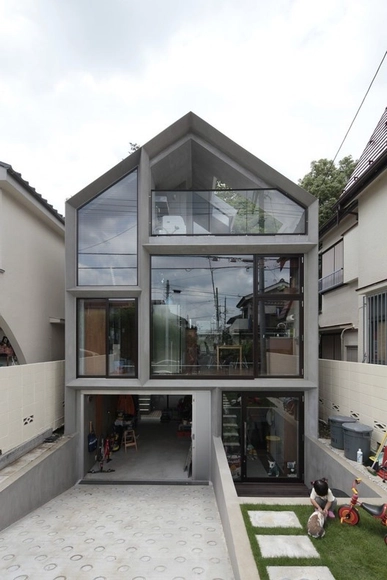
In most countries around the world, value is placed on older buildings. There’s something about the history, originality, and charm of an older home that causes their value to sometimes be higher than newly constructed projects. But in Japan, the opposite is almost always the preference. Newly-built homes are the crux of a housing market where homes are almost never sold and the obsession with razing and rebuilding is as much a cultural thing as it is a safety concern, bringing 30-year-old homes to a valueless market.

Overland Partners to Design a 6.3-mile Park On the US-Mexico Border

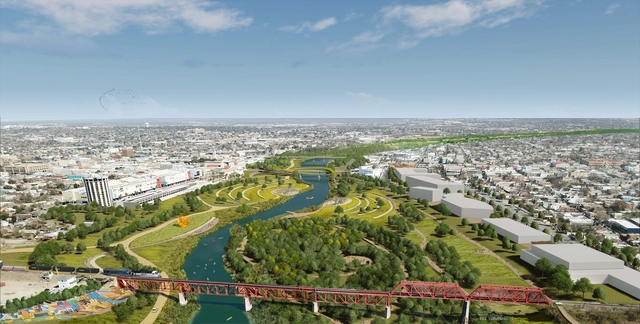
As part of a strategy developed in late 2021 by Ken Salazar (US Ambassador to Mexico), Deanna Kim (US Consul General in Nuevo Laredo), and Esteban Moctezuma (Mexico Ambassador) in collaboration with leaders politicians, and businessmen from the southern region of Texas and the Mexican state of Tamaulipas, Overland Partners has been announced in conjunction with Able City as the creators of the new 6.3-mile "Binational River Park" that will extend along the Rio Grande - Rio Grande between Laredo, Texas and Nuevo Laredo, Mexico. This new space aims to restore and revitalize the ecosystem as well as attract tourism and celebrate the multiculturalism that takes place in this border territory.

MVRDV Highlights Once Again the Potential of Rooftops with Temporary Intervention in Rotterdam

MVRDV Highlights Once Again the Potential of Rooftops with Temporary Intervention in Rotterdam - Featured Image
Rotterdam Rooftop Walk . Image Courtesy of MVRDV

MVRDV revealed its design for a temporary intervention that takes tourists and city dwellers on a walk across several rooftops in Rotterdam, highlighting an untapped potential for expanding the public realm. Created in collaboration with Rotterdam Rooftop Days, the project will feature an aerial bridge from the roof of The Bijenkorf department store to the top of the World Trade Centre plinth and will be available to the public from May 26 to June 24 2022, during Rotterdam Architecture Month.

MVRDV Highlights Once Again the Potential of Rooftops with Temporary Intervention in Rotterdam - Image 1 of 4MVRDV Highlights Once Again the Potential of Rooftops with Temporary Intervention in Rotterdam - Image 2 of 4MVRDV Highlights Once Again the Potential of Rooftops with Temporary Intervention in Rotterdam - Image 3 of 4MVRDV Highlights Once Again the Potential of Rooftops with Temporary Intervention in Rotterdam - Image 4 of 4MVRDV Highlights Once Again the Potential of Rooftops with Temporary Intervention in Rotterdam - More Images

A Display of Ideas and Visions: The Temporary Architecture of Biennales, Festivals and World Expos

Subscriber Access | 
A Display of Ideas and Visions: The Temporary Architecture of Biennales, Festivals and World Expos - Featured Image
Helsinki Biennial Pavilion by Verstas Architects. Image © Tuomas Uusheimo

Architectural events like biennales, urban festivals or the World Expo provide a framework for research and experimentation, allowing architects to showcase their visions on an international stage, with the aim of advancing the practice and driving innovation. World Expos, in particular, allow for these lines of inquiry to unfold at an architectural scale rather than that of an installation. Within these platforms for discourse and knowledge exchange, temporary architecture becomes a medium for communicating ideas about architecture and the city, its challenges and possible lines of development.

A Display of Ideas and Visions: The Temporary Architecture of Biennales, Festivals and World Expos - Image 1 of 4A Display of Ideas and Visions: The Temporary Architecture of Biennales, Festivals and World Expos - Image 2 of 4A Display of Ideas and Visions: The Temporary Architecture of Biennales, Festivals and World Expos - Image 3 of 4A Display of Ideas and Visions: The Temporary Architecture of Biennales, Festivals and World Expos - Image 4 of 4A Display of Ideas and Visions: The Temporary Architecture of Biennales, Festivals and World Expos - More Images+ 2