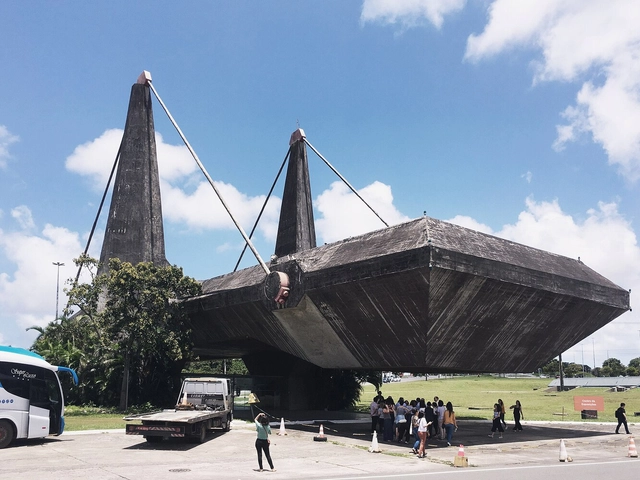
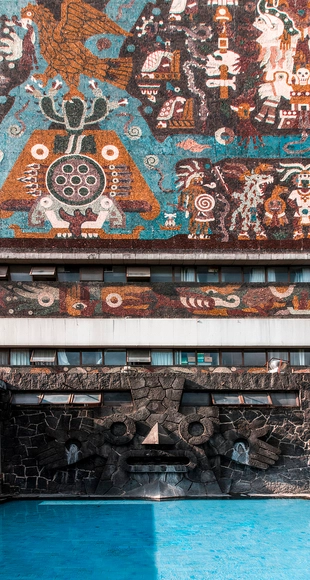
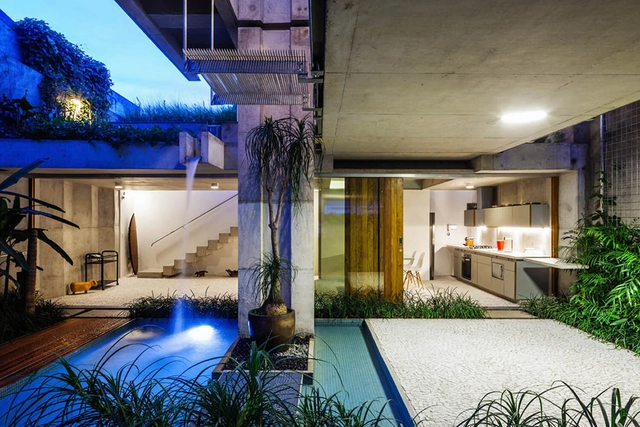
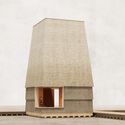
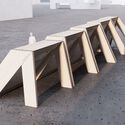
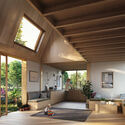
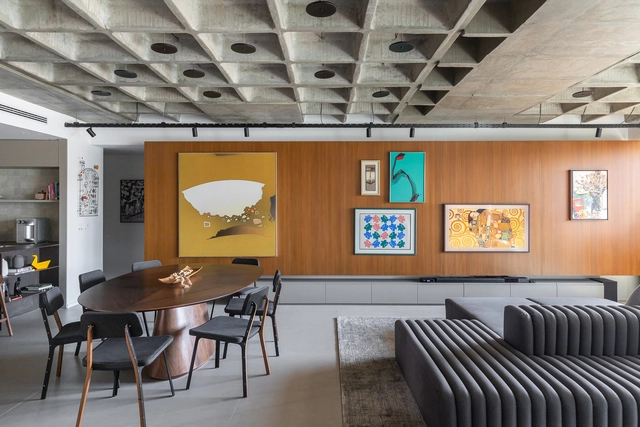
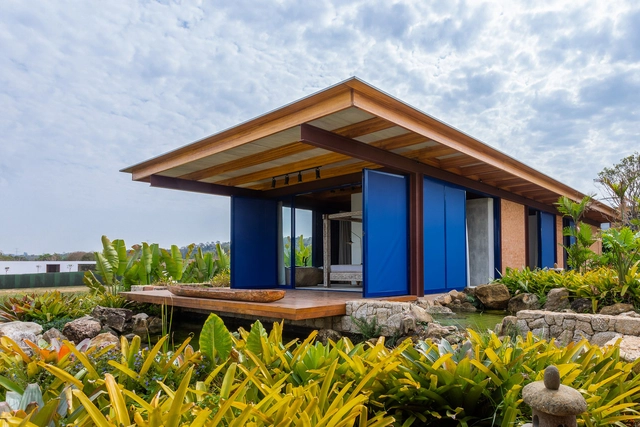
Exhibition Center of the Administrative Center of Bahia / João Filgueiras Lima (Lelé). Image: Gabriel Fernandes from São Paulo, Brasil, CC BY-SA 2.0 , via Wikimedia Commons
Tie rods are integral in structural engineering, primarily for transmitting traffic loads and alleviating compression forces within a structure. These slender components, resembling cables or metal bars, offer seamless integration into a space, lending themselves to visually appealing designs through repetition. They have applications ranging from furniture design to large-scale urban infrastructure projects, including suspension and cable-stayed bridges.
San José De Nueva Venecia School School refurbishment enabling flexible community use in Sitio Nuevo, Colombia, by FP Arquitectura. Image Courtesy of Holcim Foundation for Sustainable Construction
The Holcim Foundation for Sustainable Construction has unveiled the list of 20 finalists for the Holcim Awards 2023 competition. The jury, composed of five independent expert panels worldwide, has selected the projects to showcase contextual and practicable approaches to sustainable construction, exemplifying a diverse range of scales, budgets, geographies, and forms. The ranking of the nominees will be announced at the Holcim Awards 2023 Ceremony scheduled for November 18 in Venice, Italy during the final weeks of the Biennale Architettura 2023 - 18th International Architecture Exhibition.
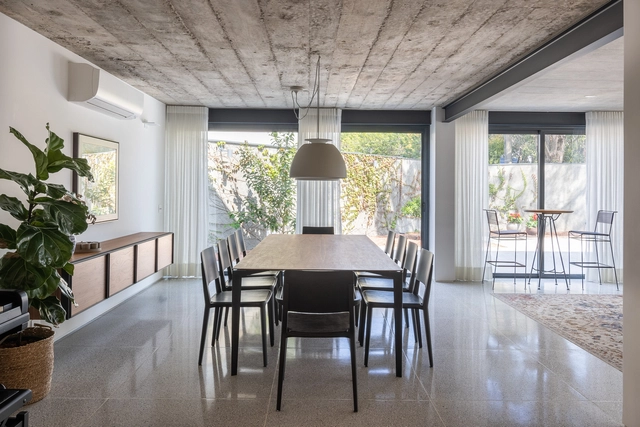
In many cases, when working on a renovation project within an old building, architects often encounter segmented floor plans, spaces without natural light, and complex layouts that hinder the seamless flow required in modern living. Consequently, architects typically opt for targeted demolition, removing specific walls during renovations. This solution can address several of the problems encountered but demands meticulous planning to ensure the structural integrity of the building. When it comes to scenarios like these, structural reinforcement is one of the most commonly employed methods.
Seratech's technology, developed by Sam Draper and Barney Shanks, eliminates the CO₂ footprint of concrete and reduces carbon emissions in construction. This innovative process uses silica, a waste product from flue gases, as a carbon-negative cement replacement in concrete. By incorporating silica, the required amount of Portland cement is reduced by 40%, resulting in the production of carbon-negative concrete. This groundbreaking technology won the 2022 Obel Award for its focus on embodied emissions.
The Obel Award is an international award that promotes architecture in the service of both people and the planet. Seratech was the fourth winner of this new international prize for architectural achievement, preceding this year's 'Living Breakwaters' by SCAPE Landscape Architecture. ArchDaily had the chance to interview Sam Draper, CEO of Seratech, about the company's role in building a sustainable construction industry and their plans for scaling their innovative process.
By the time I was 17 years old, I had moved 11 times. Because of my own experience relocating from one place to another, I’ve spent the better part of the last several decades focused on making sure that everyone has a place to call home, that everyone enjoys the human right to housing. But it was not until my time at Enterprise Community Partners, a nonprofit focused on community development and affordable housing, that I realized the methods and materials we employ to realize that human right matter.
From the pre-Columbian period of the Americas –during which cultures such as the Olmec, Maya, Purepecha, and Mexica (Aztec) thrived– to the modern era where architecture has been influenced by social movements and even natural disasters, Mexican architecture showcases a valuable architectural expression, with its own unique voice and distinctive characteristics. Nobel Literature Laureate Octavio Paz argued that architecture is an incorruptible witness to history. Likewise, the materials used to shape it have acted as protagonists of that history, enduring in many cases over time and evolving thanks to the generations of architects who have contributed to it, from different perspectives.
To trace a timeline, it is possible to take as a starting point pre-Hispanic architecture, which exhibited a diversity of nuances due to Mexico's vast territorial extension. This allowed diverse cultures to find their niche and develop their characteristic architectural styles. Subsequently, the era of Spanish colonization, which itself drew influence from Islamic architecture, represented a noteworthy turning point in architectural development. This phase endured until the advent of Mexican Independence in the 19th century. In turn, this marked the initiation of social and cultural movements, both during and after the Mexican Revolution in the early 20th century.
https://www.archdaily.com/1005554/materials-that-define-the-contemporary-mexican-architectural-aestheticEnrique Tovar
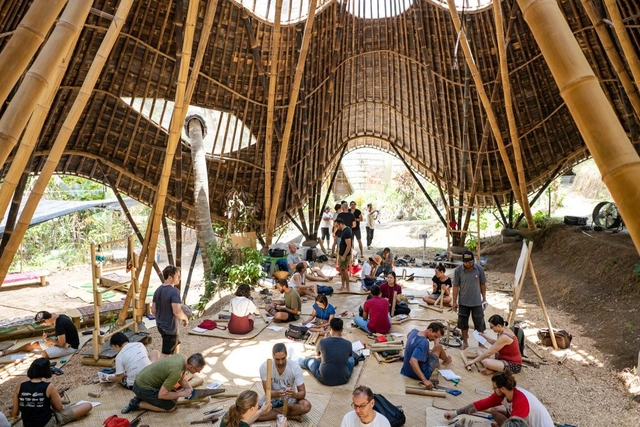
As the world increasingly recognizes the importance of adopting sustainable construction practices, bamboo’s versatility, strength, and renewable qualities are generating significant momentum in the transition toward a circular material economy. From initial idea to completion, this article will provide you with valuable insights to begin your bamboo building project, from the perspective of Bamboo U.
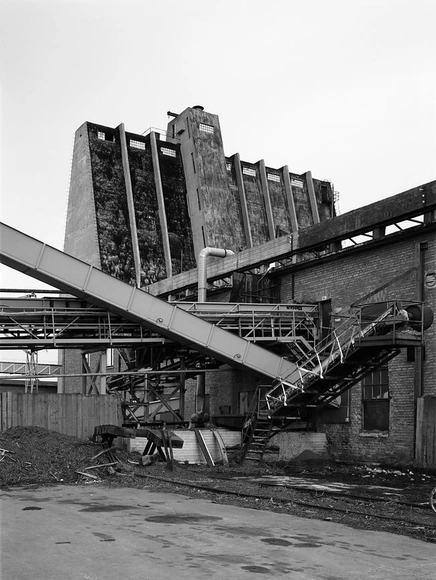
Oulu City Council has approved the AALTOSIILO restoration proposal by Skene Catling de la Peña. The concrete structure will be restored and reimagined as a multi-media performance, exhibition space, and “Tar Bar.” The 525 sqm Silo used to be used for storing woodchips and will now become a digitized communication point to connect the building with its surroundings. Now nearing its 100th anniversary, the proposal aims to at least double its lifespan.
Videos
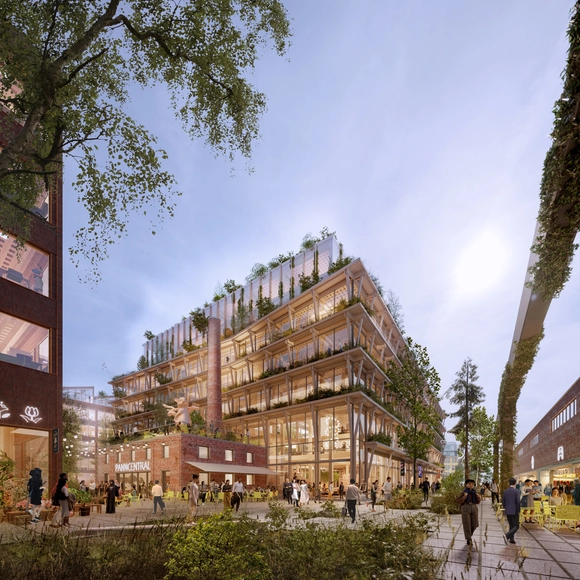
Courtesy of Atrium Ljungberg | White Arkitekter
Atrium Ljungberg has just revealed Stockholm Wood City – the world's largest urban construction project in wood. Construction on the project is expected to begin in 2025, and the first buildings are expected to be completed in 2027. The initiative is a demonstration of Swedish sustainability.
The largest wood-building project in the world is now in progress, covering an impressive 250,000 square meters. The project sets a sustainable example for the real estate market, which is essential because built structures contribute a sizeable 40% of the world's CO2 emissions. Furthermore, Stockholm Wood City is set to become a turning point in sustainable architecture and urban planning. Situated in Sickla, southern Stockholm, this innovative neighborhood will offer an additional 2,000 houses and 7,000 business spaces. By merging workplaces, homes, neighborhoods, dining establishments, and retail spaces, it aims to create a vibrant and dynamic urban environment.
As awareness of water scarcity, water stress and environmental sustainability grows around the world, the concept of "water footprint" is becoming increasingly relevant. Unlike its more popular cousin, "carbon footprint", which focuses on greenhouse gas emissions, the water footprint (WF) provides a holistic view of water used throughout the life cycle of a product, process, or activity. It measures the amount of water consumed (directly and indirectly) and polluted –taking into account different types of water resources– and serves as a valuable tool for companies, policymakers, and individuals to understand and address their water-related impacts. There are even online calculators that measure our individual footprints through simple questions about our homes, appliances and even eating habits.
Timber is a natural, renewable material, easy to fabricate, and with low-carbon emissions. As a construction material, however, when put under enough directional force along its grain, sawn timber is structurally unstable, so deemed unsuitable under higher loads. In comparison, the manufacture of cross-laminated timber (CLT) involves simply gluing multiple layers of timber together at right angles. By crossing the direction of the grains, CLT achieves a far higher level of structural rigidity along both axes. CLT boards start with a minimum of three layers but can be strengthened further with the addition of more. Simply put, due to the complex physics involved in the perpendicular lamination, the strength of CLT board is similar to that of reinforced concrete, and has proven performance under seismic forces.
So what’s new? Wood’s been around for long enough now, and we’ve been using it as a building material for centuries. Surely this isn’t the first time someone’s realized it gets stronger the more you use it? Well… as you’d expect, the changing popularity of cross-laminated timber in construction does coincide with a greater understanding and focus on environmental causes, but the relationship hasn’t always been positive.
Housing is one of the primary aspects of the architecture profession. There are many ways to explore it, from a subordinate program such as a religious cloister to the splendor of a single-family home. Luis Fernández-Galiano is torn between the "waste" of a low-density area in this type of housing and its seductive formal charm. He reminds us that high-density collective housing, such as apartments, makes more sense in an urban context.
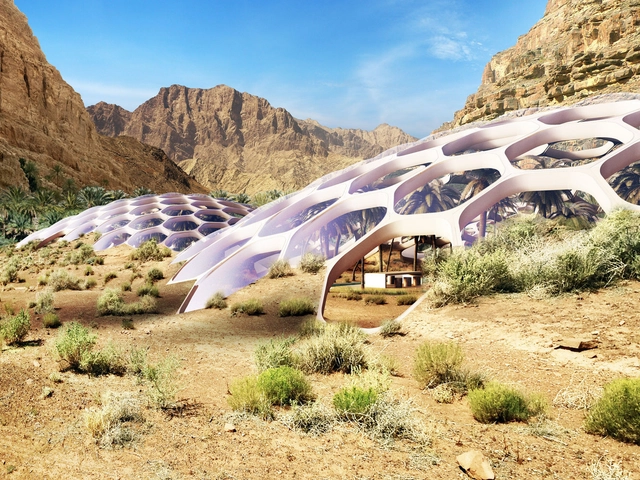
"Biodomes" in the mountains of the United Arab Emirates seek to promote ecotourism. Courtesy of Baharash Architecture
Buckminster Fuller's obsession with geodesic shapes placed them in architectural history. The spherical appearance and the complex structural framework gained different appropriations and scales over the years, one of the most iconic works being the Montreal Biosphere, the US pavilion for the 1967 World Expo, designed by him. These structures emerged from his interests in material efficiency, structural integrity and modularity. Back in the 60s, he understood these features as essential for a sustainable and easily replicable intervention
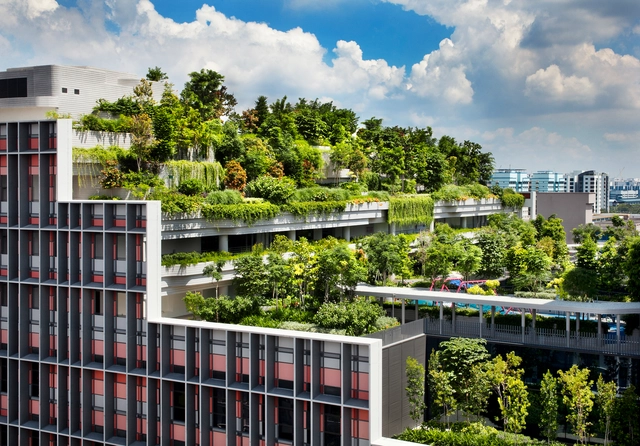
Kampung Admiralty / Ramboll Studio Dreiseitl and WOHA. Image Courtesy of WOHA
A heavily cited fact within the architecture industry is that the built environment accounts for 40% of global carbon emissions. The concerning statistic puts immense responsibility on construction professionals. The idea of sustainability in architecture urgently emerged as a way of bandaging environmental damage. A wide range of sustainability practices aims no higher than making buildings “less bad”, serving as inadequate measures for current and future architecture. The problem with sustainable architecture is that it stops with ‘sustaining’.
In order to maintain the current state of the environment, the architecture community has been working towards greener means of production. Conventionally, a green building employs active or passive features as a tool for reduction and conservation. Most sustainable designs view buildings as a vessel of their own rather than integrated parts of their ecosystem. With the planet’s current needs, this approach is not enough. It is not enough to sustain the natural environment, but also restore its processes.
There are several constructive technologies to configure the structural system of a building. From the 1960s onwards, the adoption of techniques that enabled the interaction between different materials became increasingly common, diversifying the design language and seeking the main advantages each element has to face certain situations. Over the years, some mix concrete, wood, stones or steel.
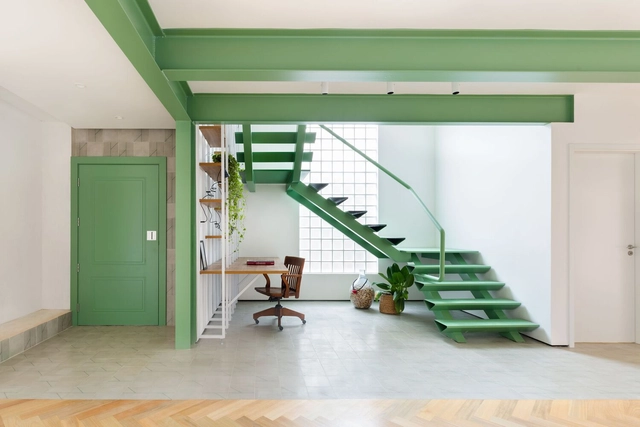
When organizing the elements, materials and colors of an architectural layout, architects can successfully guide users through a room and its different spaces, therefore creating an easy and seamless trajectory for those inhabiting it. By exploring innovative strategies to create new ways of arranging a space, architecture can use color to boost certain aspects of a project’s scheme. The use of color in architectural design combines different factors beyond aesthetic preferences by also affecting the user’s emotions and behavior. Before launching into the color selection, the design process entails certain decision making, such as which architectural elements to highlight, if there is a zonification or division of spaces within the use of colors, the creation of focal points, and the consideration of how each color is associated with a determined mood.
With a breakdown of five architecture projects, the following article analyzes how color is applied as a design strategy to define spaces through three categories: structure, elements and objects, and definition of spaces.
'Color in certain places has the great value of making the outlines and structural planes seem more energetic' - Antoni Gaudí
St. Marks Square (Piazza San Marco) during flood (acqua alta). Image via Shutterstock | Ihor Serdyukov
The Italian city installed glass barriers around the 900-year-old church to keep the waters out. The decision was made after near-record flooding in December 2022, preventing a repeat of the November 2019 near-catastrophe that aged parts of the building “20 years in a day,” according to Basilica’s Procuratoria governing body. The temporary structure is fixed until the MOSE system fully works by the end of 2025, protecting the city of Venice, Italy, and the Venetian Lagoon from flooding.