1. ArchDaily
  2. Superblock

Superblock: The Latest Architecture and News

After Le Corbusier: How Southeast Asia Turned the Satellite City Into a Transit Megaproject

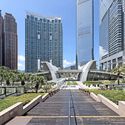
Southeast Asia is often narrated as a kind of architectural playground—an arena where modern and contemporary ideals have been tested at full scale through singular, iconic buildings. One can trace an easy lineage through names that have helped shape the region's skyline imagination: Paul Rudolph's Lippo Centre in Hong Kong and The Concourse in Singapore, I.M. Pei's OCBC Centre and Hong Kong's Bank of China Tower, Norman Foster's Supreme Court of Singapore and the HSBC Main Building in Hong Kong, Ron Phillips' Hong Kong City Hall, Moshe Safdie's Marina Bay Sands. Yet this familiar history—told through objects, colonialism, authorship, and signature forms—risks missing a deeper, more consequential layer of influence: the planning logics and infrastructural frameworks that have quietly structured how these cities expand, densify, and distribute everyday life.
After Le Corbusier: How Southeast Asia Turned the Satellite City Into a Transit Megaproject - Image 1 of 4After Le Corbusier: How Southeast Asia Turned the Satellite City Into a Transit Megaproject - Image 2 of 4After Le Corbusier: How Southeast Asia Turned the Satellite City Into a Transit Megaproject - Image 3 of 4After Le Corbusier: How Southeast Asia Turned the Satellite City Into a Transit Megaproject - Image 4 of 4After Le Corbusier: How Southeast Asia Turned the Satellite City Into a Transit Megaproject - More Images+ 12

Podium–Tower Urbanism in Southeast Asia: Density, Management, and the Disappearing Street

Subscriber Access | 

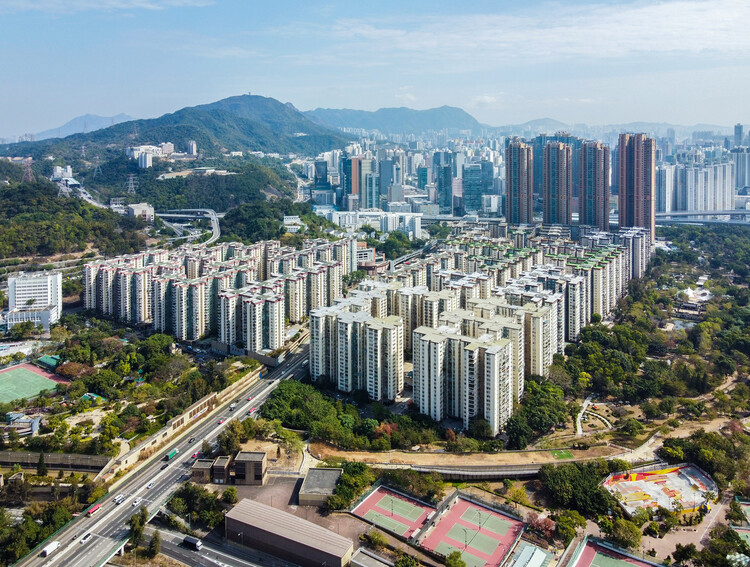
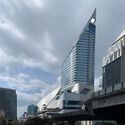
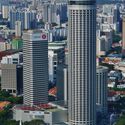
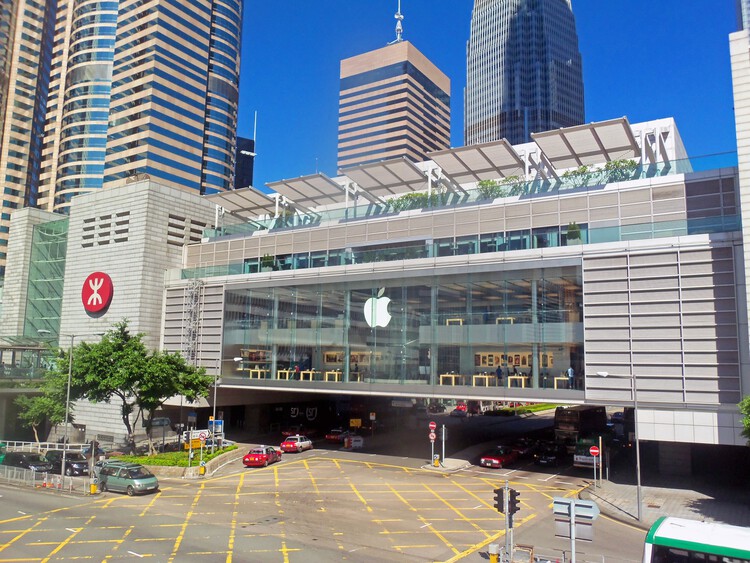
If elevated networks reveal a city that increasingly walks above the street, the podium–tower is the typology that often makes that condition feel inevitable. Across Southeast Asia, podium–tower projects have become one of the dominant languages of metropolitan growth: a system that concentrates housing, jobs, retail, and transit connections into highly legible and managed parcels. From an urban planning perspective, the model can be remarkably effective—absorbing congestion, formalizing circulation, and delivering density quickly. Yet as it spreads, the typology also raises a quieter question: what does it optimize for, and what does it erode—especially at the level of the street, where urban life is meant to be negotiated rather than curated?

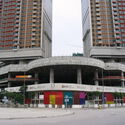
At its simplest, the podium–tower is a hybrid structure consisting of a high-coverage, low-rise podium supporting one or more slender vertical towers. The podium typically carries the logistical and commercial weight of the development—retail, parking, loading, drop-offs, back-of-house services, and often amenity decks—while the tower stacks private programs above, whether residential, office, hotel, or mixed use. The promise is twofold: maximize urban density while maintaining a "human-scaled" street wall, and separate the messy logistics of city life from the quieter domain of living and work.

Podium–Tower Urbanism in Southeast Asia: Density, Management, and the Disappearing Street - Image 1 of 4Podium–Tower Urbanism in Southeast Asia: Density, Management, and the Disappearing Street - Image 2 of 4Podium–Tower Urbanism in Southeast Asia: Density, Management, and the Disappearing Street - Image 3 of 4Podium–Tower Urbanism in Southeast Asia: Density, Management, and the Disappearing Street - Image 4 of 4Podium–Tower Urbanism in Southeast Asia: Density, Management, and the Disappearing Street - More Images+ 14

Environmental Noise: Improving Urban Soundscapes for Well-Being

According to several recent studies, noise in cities has become an increasing hazard to health. Environmental noise, that is, noise from traffic, industrial activities, or amplified music, which reaches internal spaces, is not merely an annoyance. It has been linked to cardiovascular disease, diabetes, dementia, and mental health. As the world urbanizes, more people are exposed to excessive levels of noise. How can urban design and architectural strategies help to prevent this?

Environmental Noise: Improving Urban Soundscapes for Well-Being - Image 1 of 4Environmental Noise: Improving Urban Soundscapes for Well-Being - Image 2 of 4Environmental Noise: Improving Urban Soundscapes for Well-Being - Image 3 of 4Environmental Noise: Improving Urban Soundscapes for Well-Being - Image 4 of 4Environmental Noise: Improving Urban Soundscapes for Well-Being - More Images+ 11

Los Angeles Plans to Implement the Park Block Pilot, a Car-Free Grid Inspired by Barcelona's Superblock Model

Los Angeles officials have voted on a motion to implement the first Park Block, a pilot project that creates a car-free grid of city streets to open up public space for pedestrians and cyclists, as reported by NBC Los Angeles. The plan takes inspiration from Barcelona’s Superblock program, which creates groups of nine blocks in the district of Eixample and restricts the traffic to the outside streets, freeing up the rest of the streets for pedestrian and local transit only. Implemented in 2016, the plan has led to reduced levels of air pollution, urban noise, and traffic fatalities. A similar program is now planned for Los Angeles, United States.

Los Angeles Plans to Implement the Park Block Pilot, a Car-Free Grid Inspired by Barcelona's Superblock Model - Image 1 of 4Los Angeles Plans to Implement the Park Block Pilot, a Car-Free Grid Inspired by Barcelona's Superblock Model - Image 2 of 4Los Angeles Plans to Implement the Park Block Pilot, a Car-Free Grid Inspired by Barcelona's Superblock Model - Image 3 of 4Los Angeles Plans to Implement the Park Block Pilot, a Car-Free Grid Inspired by Barcelona's Superblock Model - Image 4 of 4Los Angeles Plans to Implement the Park Block Pilot, a Car-Free Grid Inspired by Barcelona's Superblock Model - More Images

Urban Acupuncture: Regenerating Public Space Through Hyper-Local Interventions

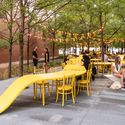
Urban acupuncture is a design tactic promoting urban regeneration at a local level, supporting the idea that interventions in public space don’t need to be ample and expensive to have a transformative impact. An alternative to conventional development processes, urban acupuncture represents an adaptable framework for urban renewal, where highly focused and targeted initiatives help regenerate neglected spaces, incrementally deploy urban strategies, or consolidate the social infrastructure of a city. 

Urban Acupuncture: Regenerating Public Space Through Hyper-Local Interventions - Films & ArchitectureUrban Acupuncture: Regenerating Public Space Through Hyper-Local Interventions - Films & ArchitectureUrban Acupuncture: Regenerating Public Space Through Hyper-Local Interventions - Films & ArchitectureUrban Acupuncture: Regenerating Public Space Through Hyper-Local Interventions - Films & ArchitectureUrban Acupuncture: Regenerating Public Space Through Hyper-Local Interventions - More Images+ 6

CRA Reveals BIOTIC, a 1-Million Square Meter Extension of Brasilia's Historical Master Plan

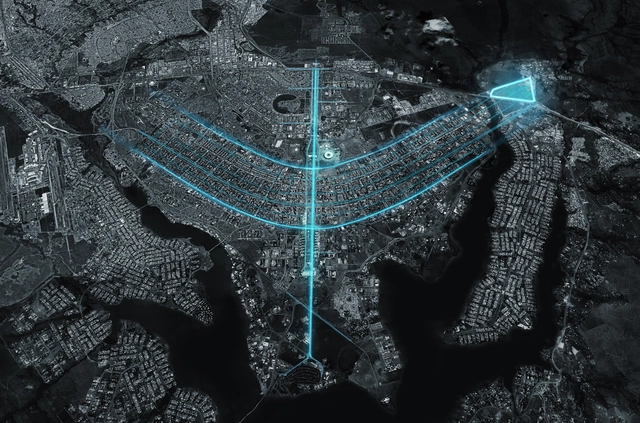
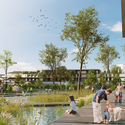
CRA - Carlo Ratti Associati has unveiled a major extension for Brazilia, reinterpreting “Lúcio Costa and Oscar Niemeyer’s modernist master plan for Biotic - a high-tech innovation district immersed in nature”. Developed in collaboration with Ernst&Young, the project that started in 2018 reimagines primarily the superblocks.

CRA Reveals BIOTIC, a 1-Million Square Meter Extension of Brasilia's Historical Master Plan - Image 1 of 4CRA Reveals BIOTIC, a 1-Million Square Meter Extension of Brasilia's Historical Master Plan - Image 2 of 4CRA Reveals BIOTIC, a 1-Million Square Meter Extension of Brasilia's Historical Master Plan - Image 3 of 4CRA Reveals BIOTIC, a 1-Million Square Meter Extension of Brasilia's Historical Master Plan - Image 4 of 4CRA Reveals BIOTIC, a 1-Million Square Meter Extension of Brasilia's Historical Master Plan - More Images+ 1

Reinventing a Superblock in Central Seoul - Without the Gentrification

This article was originally published by Metropolis Magazine as "A Once-Maligned Concrete Megastructure in Seoul is Revitalized - Sans Gentrification".

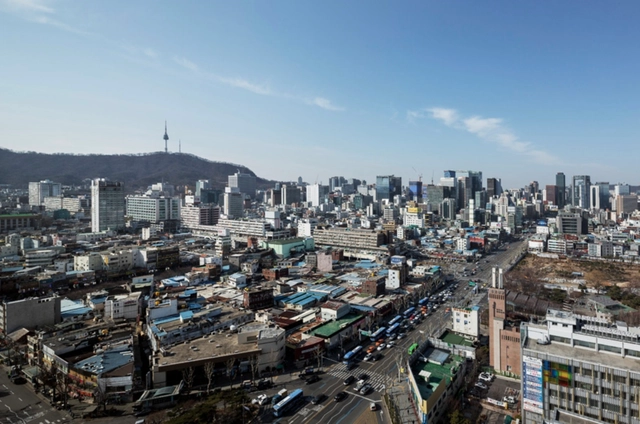
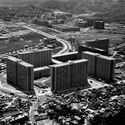
Upon its completion in 1966, Sewoon Sangga, designed by prominent South Korean architect Kim Swoo-geun, was a groundbreaking residential and commercial megastructure consisting of eight multistory buildings covering a full kilometer in the heart of Seoul. Like other futuristic projects of the decade, it was conceived as a self-contained city, complete with amenities that included a park, an atrium, and a pedestrian deck. But construction realities crippled Kim’s utopian vision, compromising those features. By the late 1970s, Sewoon Sangga had shed residents and anchor retail outlets to newer, shinier developments in the wealthy Gangnam district across the river. Between Sewoon’s central location and plunging rents, the building became a hub for light industry—as well as illicit activity.