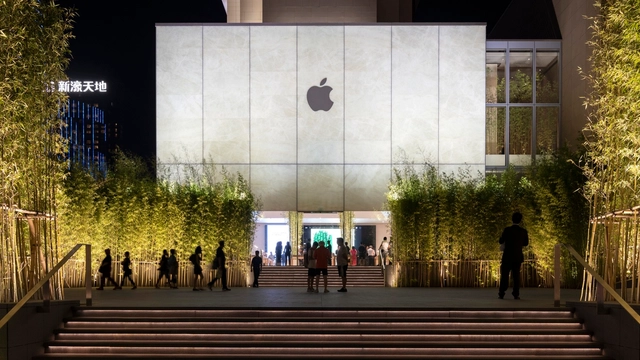
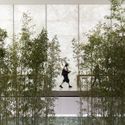
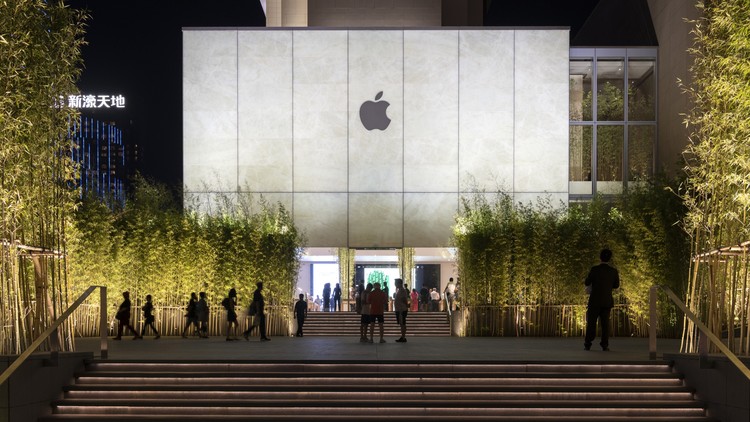
Apple Store, Sands Cotai Central, Macau - exterior at night with the cube illuminated and bamboo planting framing the entrance with people. Image Courtesy of Nigel Young, Foster + Partners
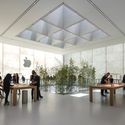
Foster + Partners has published photographs of their recently-opened Apple Store in Macau, intended as a “new oasis of calm” against the city’s buzz and excitement. The store, opened on June 29th, was designed in response to a brief calling for “an inviting, contemplative space, where technology, entertainment, and arts come together to make a positive contribution to the city.”
Architecture requires patience. Seeing a building through from initial sketches to the first occupant is a process that in most cases takes years, sometimes decades. The various details required throughout the building process at times can be stressful, but the end result is nearly always worth the struggle. The finished form reflects the decisions made throughout the process, and thus becomes a contributing member to the surrounding environment.
If you are at the point in the process where you need a quick destresser, take a moment and watch land artist Pontus Jansson work his magic. The Swedish artist uses boulders and the surrounding nature to create balancing works of art.
Travel seven hours by car in a Southwest direction from Shanghai and you will arrive in Songyang County. The name is unfamiliar to many Chinese people, and even more foreign to those living abroad. The county consists of about 400 villages, from Shicang to Damushan.
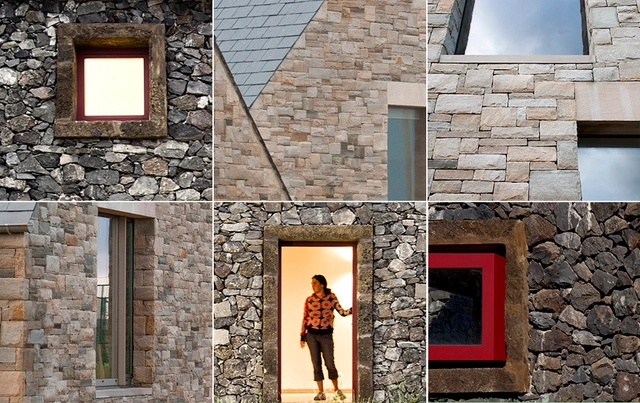
Here, undulating lush green terraces hug the sides of Songyin river valley, itself the one serpentine movement uniting the lands. Follow the river and you will see: here, a Brown Sugar Factory; there, a Bamboo Theatre; and on the other side, a stone Hakka Museum built recently but laid by methods so old, even the town masons had to learn these ways for the first time, as if they were modern methods, as if they were revolutionary.
And maybe they are. Songyang County, otherwise known as the “Last Hidden Land in Jiangnan,” may look like a traditional Chinese painting with craggy rock faces, rice fields and tea plantations, but it has also become a model example of rural renaissance. Beijing architect Xu Tiantian, of the firm DnA_Design and Architecture, has spent years surveying the villages of Songyang, talking to local County officials and residents, and coming up with what she calls “architectural acupunctures.”
Often as architects we neglect how the buildings we design will develop once we hand them over to the elements. We spend so much time understanding how people will use the building that we may forget how it will be used and battered by the weather. It is an inevitable and uncertain process that raises the question of when is a building actually complete; when the final piece of furniture is moved in, when the final roof tile is placed or when it has spent years out in the open letting nature take its course?
Rather than detracting from the building, natural forces can add to the material’s integrity, softening its stark, characterless initial appearance. This continuation of the building process is an important one to consider in order to create a structure that will only grow in beauty over time. To help you achieve an ever-growing building, we have collated six different materials below that age with grace.
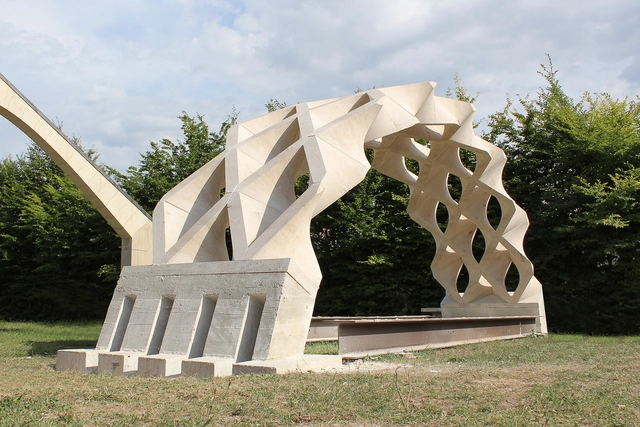
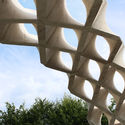
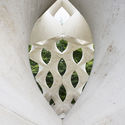
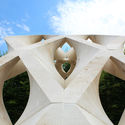
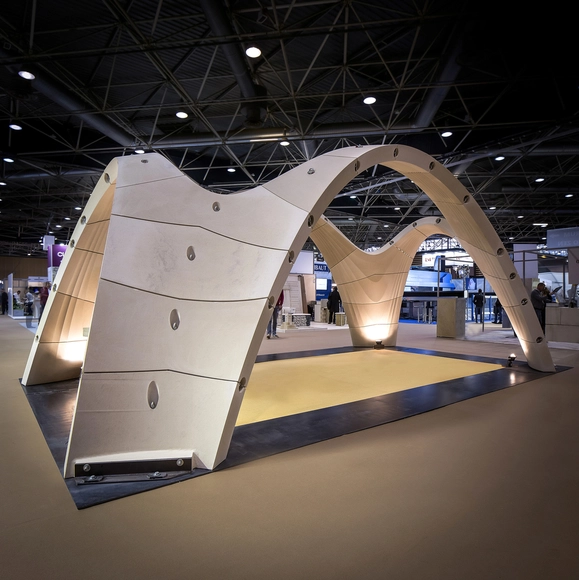
New Fundamentals Research Group, in partnership with S.N.B.R., designed and fabricated a stone vaulted pavilion for Rocalia, a natural stone fair held in Lyon last month. At a total area of 36 square meters and 3.20 meters in height, Flux reconnects the past to the present by combining traditional sculptural design with contemporary fabrication processes.
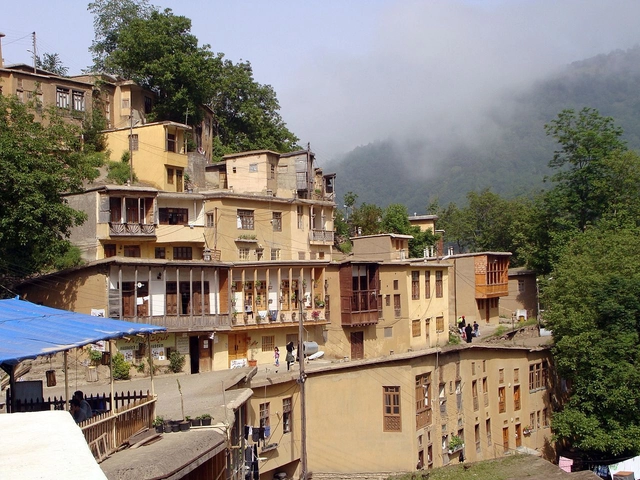
More than a thousand meters above sea level on the slopes of the Alborz mountain range in Gilan, northern Iran, a remarkable village dating back to 1006 AD bustles with life. The unique ochre-brown structures of Masuleh follow the slope of the mountain that the village nestles on—or rather, grows from—giving the village its most unusual quality: the roofs of many of the houses connect directly to, or even form a part of, the street serving the houses above.
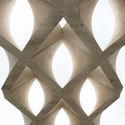
Italy-based New Fundamentals Research Group recently designed and built a full-scale prototype of an experimental barrel-vaulted stone structure for SNBR, a French company that specializes in cutting-edge stone construction. The structure is named Hypar Vault in a reference to the geometry of its constituent blocks; it uses two types of prefabricated stone modules—one type is the mirror image of the other—whose designs are based on the hypar (hyperbolic paraboloid), one of the only "doubly-ruled" surfaces in geometry. The use of these configurations allowed the vault to be constructed with almost zero wasted stone.
Stone is elemental to our built world. It is one of the oldest (if not the oldest) materials used in man-made habitats. The sense of timelessness in stone is attributed to its long and varied history alongside architecture. From ancient monoliths to cities to houses, the diversity of stone means that it can be used to convey a variety of expressions. Carved, polished, sedimented, stacked, preserved - the list can go on and on. The feeling stone conveys in contemporary projects usually brings with it a sense of place – a raw materiality when paired with timber or other natural materials. With that in mind, check out these 6 details of projects that stand out for their use of stone:
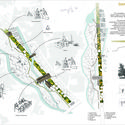
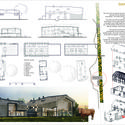
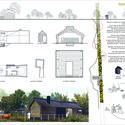
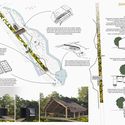
Bee Breeders have selected winners of the Stone Barn Meditation Camp competition, seeking to create a place of refuge for individuals amidst the pristine natural beauty of one of Latvia’s most remote regions. In announcing the competition results, the jury applauded the respect and regard shown to the environment by submitted schemes, commenting that the most successful projects stood out for their simplicity, elegance, and balance with nature.
The competition winners, including noted ‘Green’ and ‘Student’ schemes, are set out below.
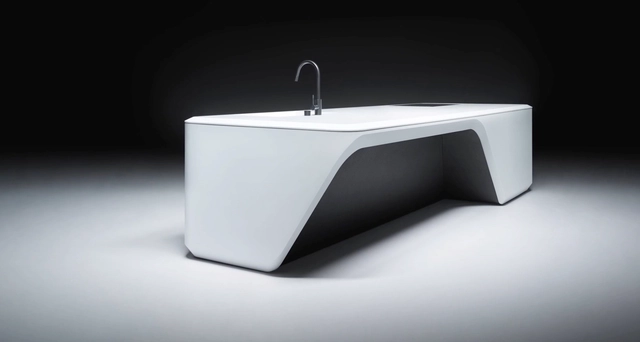
“Boffi_code offers customization to the highest standards, tailoring individual solutions with selected materials, finishes and cabinetry,” explains Zaha Hadid Design. “The Boffi_Code Kitchen by Zaha Hadid Design marries exceptional detailing and design with functionality, carefully chosen materials, and traditional craftsmanship.”
https://www.archdaily.com/871147/zaha-hadid-design-unveils-corian-dominated-custom-kitchen-islandOsman Bari
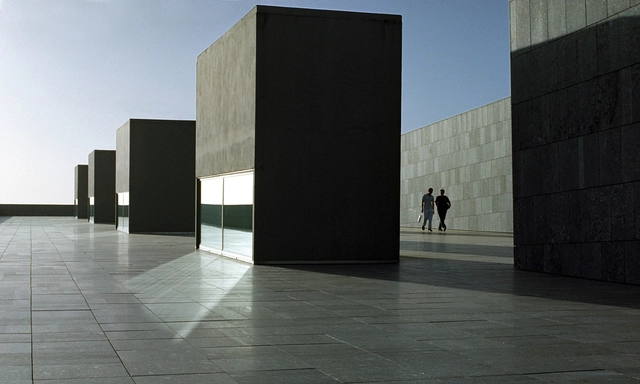
University Library of Vigo Alberto Noguerol & Pilar Diez Architects. Image Courtesy of Cluster del Granito
Rediscover a natural, unique and original material, with multiple applications for current architecture and design immovable over time, granite is a jewel of nature capable of providing exclusivity to any contemporary construction or finish. Its wide range of varieties and the incorporation of new cutting technologies and those giving a surface finish, provide us with infinite design possibilities.
Its character, beauty, high strength and excellent durability make it quite a unique material. It is undoubtedly the most advantageous architectural option in contrast to other types of products:
Rendered Interior View. Image Courtesy of Kéré Architecture
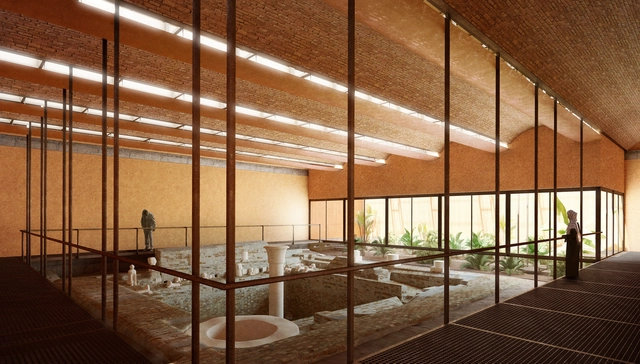
Kéré Architecture has placed first in a competition to design a protective shelter on the UNESCO-protected Meroe Royal Baths in Sudan, North Africa. Believed to have served nearby palaces from the great African Kingdom of Kush (now modern-day Sudan), the Meroe Royal Baths were listed as a UNESCO World Heritage Site in 2011 and is the focus of joint research by the German Archaeological Institute and the National Corporation for Antiques and Museums. Still marked by temples, palaces and over two hundred pyramids, the ruins of Meroe are a testimony to the exchanges of culture between the Mediterranean and Africa. Find out more about the proposal after the break.
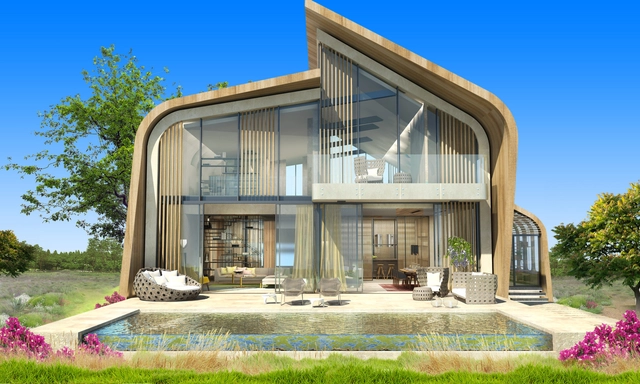
The AHK Kundu Villas, a collection of homes by GAD Architecture, has recently been shortlisted for the World Architecture Festival (WAF) for Future Residential projects. The project, comprising 17 large, 56 medium and 50 small housing units, is sited next to a tourism zone in Antalaya on the Mediterranean coast of southwestern Turkey. Designed with sustainability in mind, the project makes use of resources available on the site.
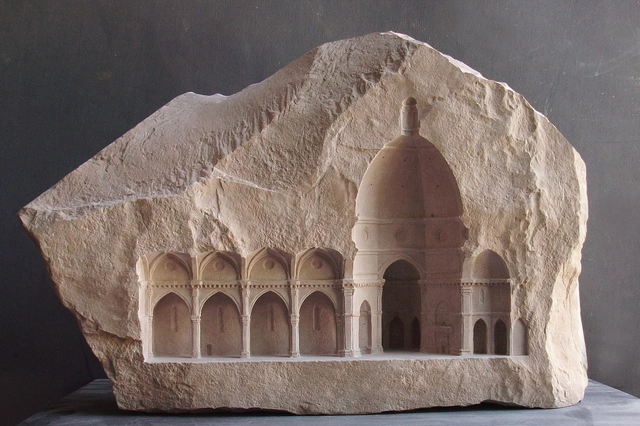
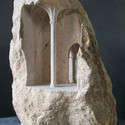
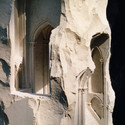
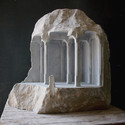
Matthew Simmonds, an art historian and architectural stone carver based in Italy, has created a collection of exceptionally beautiful miniature spaces carved from stone. Having worked on a number of restoration projects in the UK - from Westminster Abbey to Ely Cathedral - his skills have been transferred into work of a much smaller, if not more intricate, scale. Hewn from large stone blocks (some of marble), the level of intricacy Simmonds has achieved in the architectural detailing is almost incredible. Capitals, vaults and surfaces all distort and reflect light in a very beguiling way.
Material Minds, presented by ArchDaily Materials, is our new series of short interviews with architects, designers, scientists, and others who use architectural materials in innovative ways. Enjoy!
Arthur Andersson of Andersson-Wise Architects wants to build ruins. He wants things to be timeless - to look good now and 2000 years from now. He wants buildings to fit within a place and time. To do that he has a various set of philosophies, processes and some great influences. Read our full in-depth interview with Mr. Andersson, another revolutionary "Material Mind," after the break.



.jpg?1524158077)
.jpg?1524158077&format=webp&width=640&height=580)
.jpg?1524158612 "Brown Sugar Factory. Image © Wang Ziling")
.jpg?1524163466 "Teahouse, Damushan Tea Valley. Image © Chen Hao")
.jpg?1524164629 "Teahouse, Damushan Tea Valley. Image © Jiang Xiaodong")
.jpg?1524158127 "Bamboo Pavilion. Image © Zhou Ruogo")
.jpg?1524158212 "Bamboo Pavilion. Image © Zhou Ruogo")
.jpg?1524163398 "Bridge at Shimen Village. Image © Han Dan")
.jpg?1524163448 "Bridge at Shimen Village. Image © Wang Ziling")
.jpg?1524163483 "Bridge at Shimen Village. Image © Wang Ziling")
.jpg?1524163637 "Wang Jing Memorial Hall. Image © Wang Ziling")
.jpg?1524158077)
_(1).jpg?1506588062 "© <a href='http://www.panoramio.com/photo/106899133'>Panoramio user alireza javaheri</a> licensed under <a href='https://creativecommons.org/licenses/by/3.0/deed.en'>CC BY 3.0</a>")