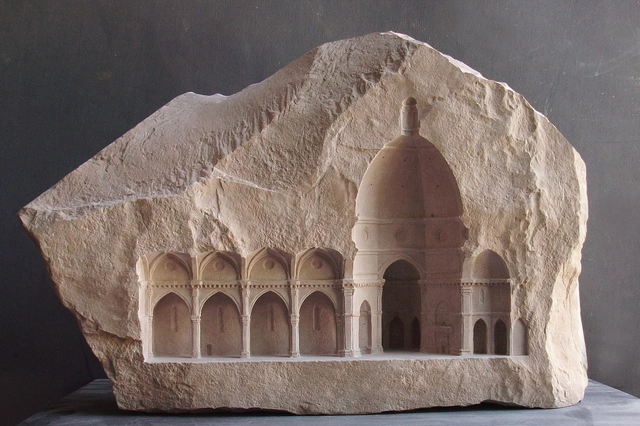
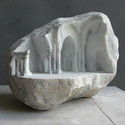
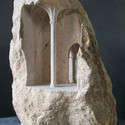
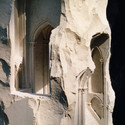
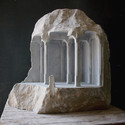
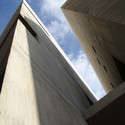
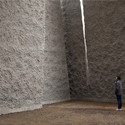
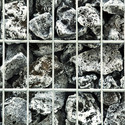
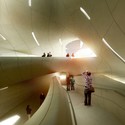
Matthew Simmonds, an art historian and architectural stone carver based in Italy, has created a collection of exceptionally beautiful miniature spaces carved from stone. Having worked on a number of restoration projects in the UK - from Westminster Abbey to Ely Cathedral - his skills have been transferred into work of a much smaller, if not more intricate, scale. Hewn from large stone blocks (some of marble), the level of intricacy Simmonds has achieved in the architectural detailing is almost incredible. Capitals, vaults and surfaces all distort and reflect light in a very beguiling way.
Material Minds, presented by ArchDaily Materials, is our new series of short interviews with architects, designers, scientists, and others who use architectural materials in innovative ways. Enjoy!
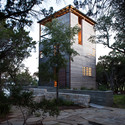
Arthur Andersson of Andersson-Wise Architects wants to build ruins. He wants things to be timeless - to look good now and 2000 years from now. He wants buildings to fit within a place and time. To do that he has a various set of philosophies, processes and some great influences. Read our full in-depth interview with Mr. Andersson, another revolutionary "Material Mind," after the break.
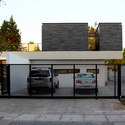
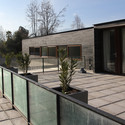
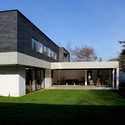
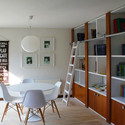
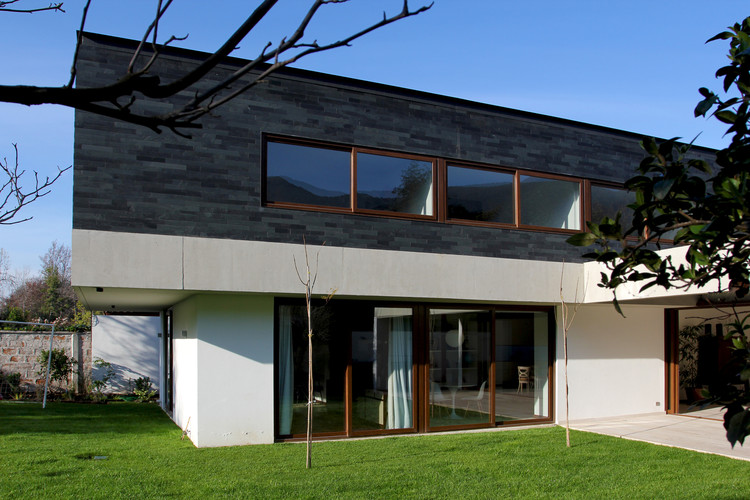
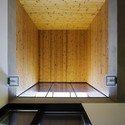
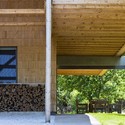
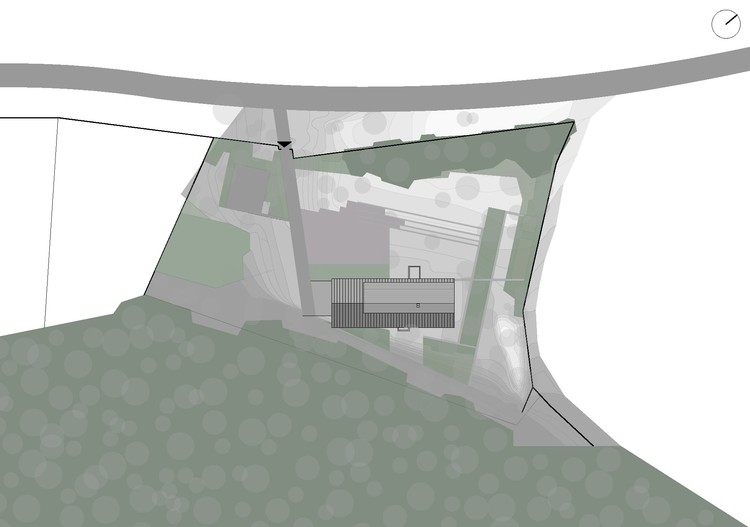
Architects: Budapesti Műhely Location: Sóskút, Hungary Architect In Charge: Tamás Dévényi, Budapesti Műhely Associate Architects: István Kovács, Eszter Mihály, Orsolya Takács, Viktor Vadász Project Year: 2011 Photographs: Tamas Bujnovszky
Soon to be Shenzhen’s tallest tower at 660 meters, the Ping An Finance Center by KPF will anchor the city’s new Central Business District. Positioned at the southwest corner of the intersection of Yi Tian Road and Fu Hua Road in the Futian District, the tower will connect with neighboring properties in addition to Shenzhen Line 1 Gou Wu Gong Yuan metro station. More details after the break.
The Louisiana State Museum and Sports Hall of Fame (LSMSHOF) celebrates two seemly disconnected subjects within one contemporary venue, combining North Louisiana’s profound history with its influential world of sports. Designed by Trahan Architects, in coordination with Method Design and CASE, the new $12.6 million venue will house donated memorabilia that embodies “the contributions of the diverse cultures that have shaped the state and are crucial to understanding the unique traditions and legacy of Louisiana and the Gulf South.” A complex design, generated with the help of BIM technology, reflects the disparate subjects in one fluid structure encased within a locally inspired facade.
The proposal for the Wimmer Medien Business Center and Urban Development in Linz, Austria by Atelier Thomas Pucher recently won the third prize in the international invited competition. Their main concept is the creation of a 33,600 m2 gross floor area central public space that recovers the mystical feeling of the Italian piazzas, offering flexibility to host the most variety of events and activities, like ice-skating, Christmas market or outdoors cinema. This piazza is also a central point for the social life of the building, providing outdoors spaces for the offices, significant synergies for the commercial area and a feeling of the life of the city to the apartments. More images and architects’ description after the break.
NEW YORK–Although the American Folk Art Museum has avoided dissolution thanks to a cash infusion from trustees and the Ford Foundation, the institution’s ongoing financial troubles raise difficult questions about the relationship between signature architecture and cultural capital.
The key concept of this project was to create not only a building but also a new meaningful city space connecting the people, the place, its history and their music. The building delimits the boundaries of the plot, enclosing an expanse of green at its core: a garden that is urban yet isolated from the hubbub of the city.
https://www.archdaily.com/149451/tallinn-music-high-school-ballet-school-and-georg-ots-music-school-atelier-thomas-pucherChristopher Henry
Once again, Vítor Gabriel shared with us this beautiful video of the Musealization of the Archaeological Site of Praça Nova of São Jorge Castle designed by portuguese architect João Luís Carrilho da Graça to preserve some archaeological discoveries – Iron Age settlement, Mediaeval Muslim occupation and a Fifteenth Century Palace – found in 1996. You can check the complete project material on our previous article, over here.
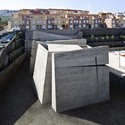
To start this week’s Round Up, we bring your our second part of previously featured stone houses. And of course, remember to check the first part right here.