Selecting a material during the design process involves more than defining an appearance. Its behavior in response to light, sound, touch, and the passage of time can transform how a space is perceived and used. At the same time, factors such as durability, strength, recyclability, and the environmental impact associated with its production introduce new variables into architectural decision-making. For Stephanie Forsythe and Todd MacAllen, cofounders of Vancouver-based design and production studio molo, these considerations have led to an exploration of paper and its potential to shape flexible, sensory spaces.
Concept : Living and Working on the Moon. Image Courtesy of NASA
After Artemis II's return to Earth, NASA unveiled a new phased plan to establish a Moon Base. Although most of the media's attention went to rockets, budgets, and geopolitical competition, a quieter question was lingering for architects in the background: How can a human being actually live on the surface of the Moon, and for how long? The establishment of a permanent human presence on the Moon marks a fundamental shift in space exploration that requires a new architectural paradigm. In their presentation, NASA officials suggested the strategy would drift away from highly constrained, vehicle-dependent environments toward autonomous, site-adaptive, and eventually permanently habitable structures.
What defines the atmosphere of a home? Beyond material palettes and natural light, sound plays a defining role in how spaces are perceived and inhabited. The reverberation of footsteps across stone, the muted calm of a textile-lined room, or the way music carries through an open-plan interior all shape the sensory identity of domestic space. Architecture is experienced not only visually, but acoustically.
The concept of the "soundscape" describes this relationship between people, sound, and the built environment. In residential architecture, sound is more than background noise or technical performance; it influences privacy, concentration, rest, and emotional comfort. Geometry and materiality act as the primary acoustic conductors: while concrete, glass, and stone reflect and amplify, timber and upholstery soften and absorb. Ceiling heights, circulation paths, and room proportions further shape how sound travels and settles across a space.
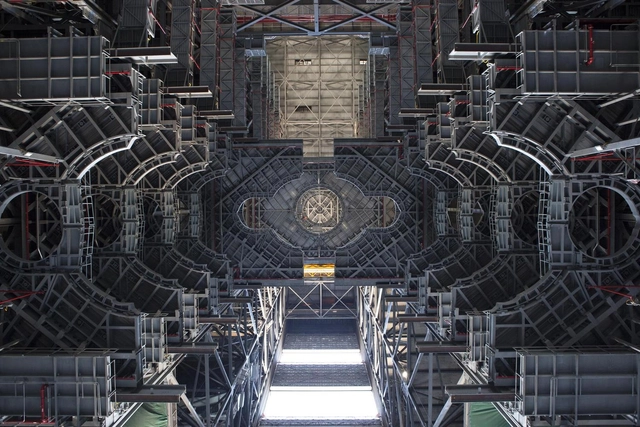
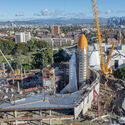
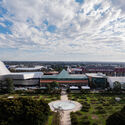
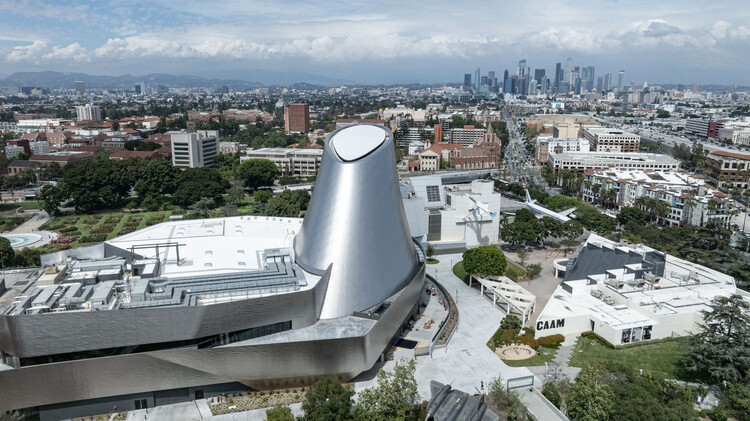
The California Science Center is a dynamic destination where visitors of all ages can explore the wonders of science through hands-on exhibits, live demonstrations, innovative programs, and large-format films. The Center and IMAX Theater are located in the historic Los Angeles Exposition Park, where an expansion has been under construction since June 2022. The new Samuel Oschin Air and Space Center, designed by ZGF Architects, is a 200,000-square-foot addition that will nearly double the Science Center's educational exhibit space. The building was completed on April 13, 2026. Its centerpiece is the retired NASA spacecraft Space Shuttle Endeavour, used for missions from 1992 until its 25th and final mission in 2011.
Rendering of the Gateway via Flickr under license CC BY-NC-ND 2.0. Image Courtesy of NASA
The concept of the technosphere provides a framework for understanding the scale of human impact on Earth. The term was coined by Peter K. Haff, and it is defined as the global network of human-made artifacts: a physical layer of infrastructure, buildings, vehicles, and machinery that functions alongside the biosphere and atmosphere. Currently estimated at 30 trillion tons, this human-constructed mass is dominated by the built environment. In this context, architecture serves as the primary interface, shaping how technology interacts with local ecologies. However, it seems that soon, the Technosphere will no longer be confined to the terrestrial surface. Through NASA's Artemis program, this network of human-made mass is expanding beyond Earth's atmosphere and is looking to establish new orbital infrastructure that represents the first permanent off-world extension of this man-made system.
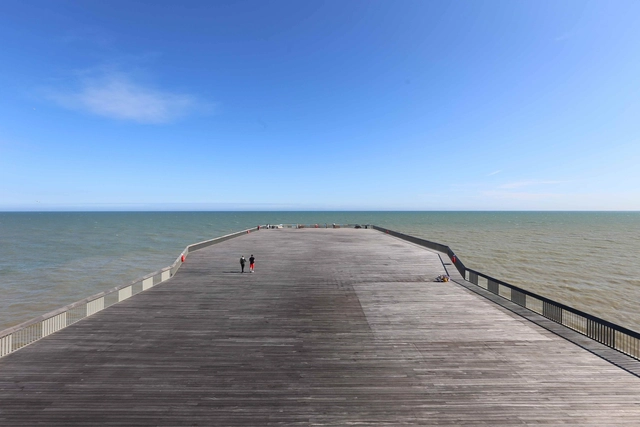
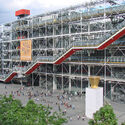
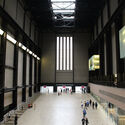
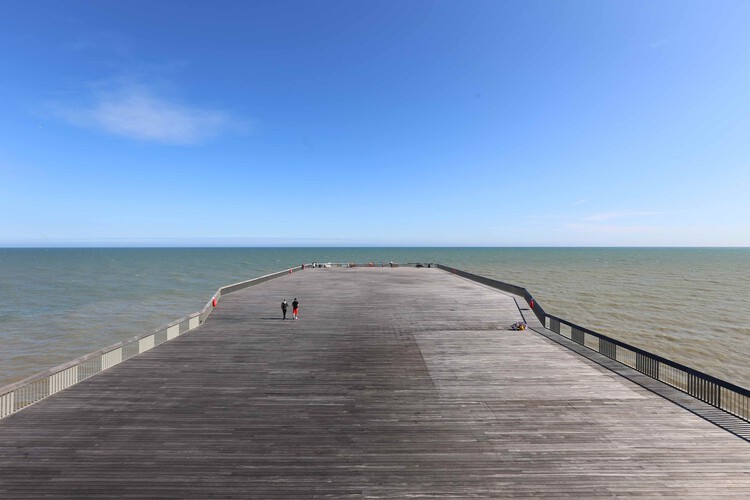
Whether for design competitions or architectural awards, buildings are often judged for what they offer–the programmed functions, the form, or the visual delight. In a minority of cases, it is the absence or the reduction of intervention that made a project successful. In 1971, a high-profile architectural competition in Paris was won by a proposal that only utilized half the available site, giving the rest as an urban space to the city. In London, a proposal to convert a disused power station with minimal additions, leaving large spaces untouched, won a design competition in 1994. The Stirling Prize, the UK's most prestigious architectural award, in 2017 was won by a proposal that was little more than an empty platform. These examples of cultural buildings from Northwestern Europe illustrate how the absence of intervention can provide more.
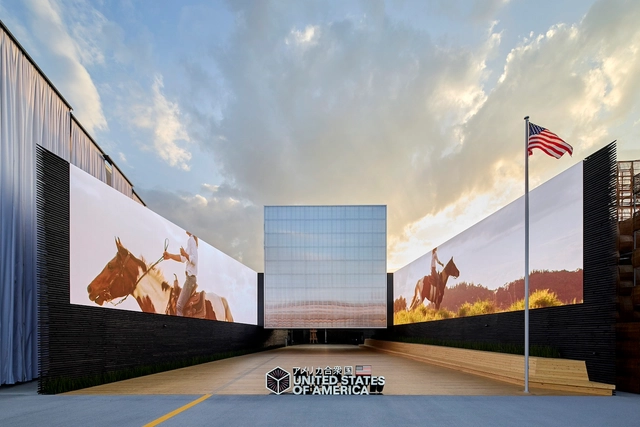
Trahan Architects has just completed the USA Pavilion for Expo 2025 Osaka-Kansai in Japan. As the public opening date, April 13, approaches, the USA Pavilion is finalizing preparations to host visitors. During the six-month expo, the proposal aims to showcase American architecture, innovation, culture, and industry. The display will be focused on celebrating contemporary American achievements in various fields, featuring exhibitions focused on sustainability, space exploration, education, and entrepreneurship.
Humanity's fascination with the unknown is a timeless impulse, rooted in curiosity and the desire to push boundaries, uncover mysteries, and open doors to new frontiers. What were once represented by voyages and the discovery of new islands and continents are now pursued in the vastness of the Universe. As we seek answers, provoke new questions, and open doors to endless possibilities, this drive continues to inspire. It has shaped countless literary and cinematic works, transforming interstellar exploration from a science fiction concept into a vision increasingly grounded in reality.
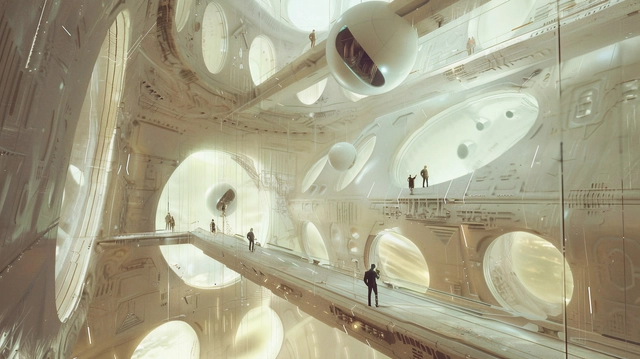
One such visionary project is Project Hyperion, spearheaded by the Initiative for Interstellar Studies (i4is), which challenges humanity to develop practical solutions for interstellar travel through a design competition. By envisioning generation ships—vast, self-sustaining habitats capable of supporting multigenerational societies on journeys spanning centuries—the project not only pushes the boundaries of technology but also sparks social innovation, stretching the limits of our collective imagination. There is still time to submit your design by March 9th, with Phase 2 starting on May 4th.
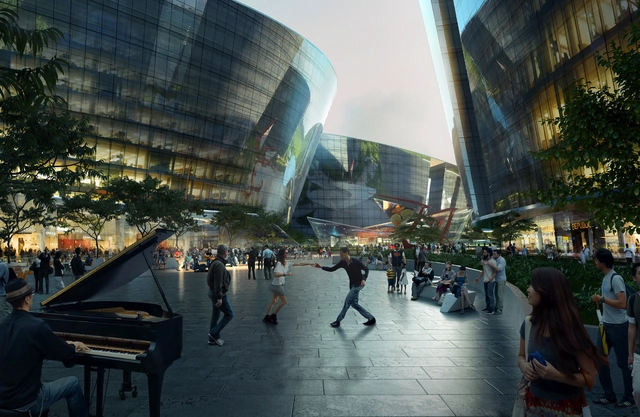
Project by Form4 Architecture investigating the opportunities for unsolicited participatory interaction in space, like street dancing, something that could be replicated in the Metaverse if its spatial quality had similar depth. Image Courtesy of Form4 Architecture
This article is the second in a series focusing on the Architecture of the Metaverse. ArchDaily has collaborated with John Marx, AIA, the founding design principal and Chief Artistic Officer of Form4 Architecture, to bring you monthly articles that seek to define the Metaverse, convey the potential of this new realm as well as understand its constraints.
For architects, one of the most captivating aspects of AI and the Metaverse is that of placemaking. How do we create compelling places that bring people to this new world and enable them to enjoy their experience there, getting them to return once the novelty has worn off? How much of this digital world needs to connect back with our day-to-day physical environs for it to feel meaningful and how do these artificial cities, towns, and neighborhoods come to life?
This article is the third in a series focusing on the Architecture of the Metaverse. ArchDaily has collaborated with John Marx, AIA, the founding design principal and Chief Artistic Officer of Form4 Architecture, to bring you monthly articles that seek to define the Metaverse, convey the potential of this new realm as well as understand its constraints.
"I had lunch on the moon, took a swim in a shadowy lake on Mars, played croquet with the clouds, and chased rainbows under the sea, all in one glorious afternoon" ... how real and meaningful these experiences felt will be greatly influenced by how and where you interact with a Metaverse opening near you soon. While in a fundamental sense, the Metaverse can be seen as a series of overlapping economic intentions, there is a unique and important opportunity for architects and designers of space and place to influence the outcome of these efforts and to create a more humane and vibrant future.
Minimaforms Presents The Order of Time at the Architectural Association School of Architecture Gallery. It is an immersive installation aimed to connect the preoccupations of physics, art, and architecture by revealing the ordering of spaces and constructed relationships through direct experience.
Three Sculptural installations are the highlight of the exhibition. Spherical organizations deployed through mathematical logic and designed to extend space within reflective light boxes, gifting its viewer a new immersive moment at every turn. ArchDaily had the chance to engage in a conversation with Theodore Spyropoulos; Artist & Architect at Minimaforms and Director of the Architectural Association’s Design Research Lab, on issues that tackled the interdisciplinary nature of architecture, the creative process of the installation, and how it influences the creation of spaces, buildings & cities.
As the world spins deeper into the third year of a global pandemic with no sign of abating, a new space race is forming over our heads. Entry is open to all, and the tickets are literal. The Architect's Newspaper's Jonathan Hilburg explores how the world's richest men are charting new paths for the human species, and how the public are reacting to the future of private space tourism.
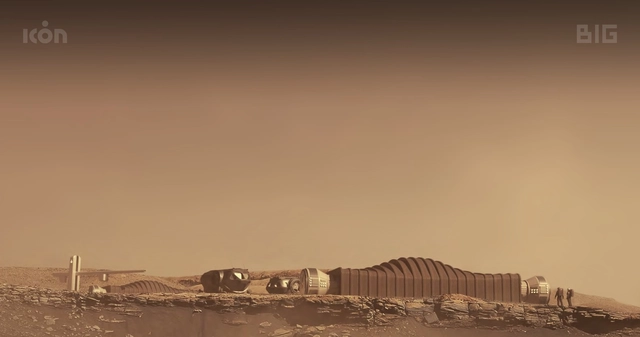
Bjarke Ingels Group has collaborated with NASA and ICON to create Mars Dune Alpha, a 3D-printed research habitat that will provide long duration habitation for astronauts on missions to Mars. The 1,700 sq.ft. structure, which is currently located at the Johnson Space Center in Houston, Texas, is designed by the award-winning architecture firm, 3D printed by construction developers ICON, and will soon be home to NASA's future crew.
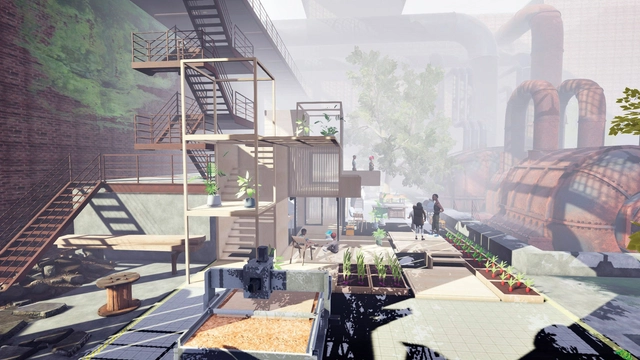
BIG has partnered up with ICON, a developer of advanced construction technologies, and with SEArch+ (Space Exploration Architecture) to imagine humanity’s home in another world. Working with NASA, the collaboration seeks to develop a “space-based construction system that could support future exploration of the Moon”.
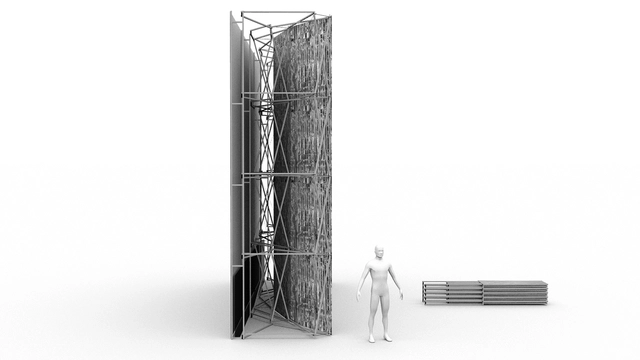
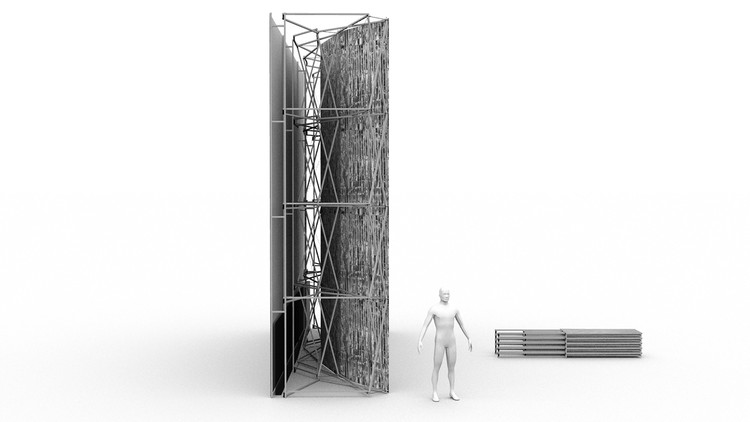
Skidmore, Owings & Merrill (SOM) has signed a Memorandum of Collaboration with the European Space Agency (ESA) in order to further develop their existing research for Moon Village. Signed in Paris, by Colin Koop, Design Partner at SOM, and Johann-Dietrich Wörner, Director General of ESA, the announcement was made earlier this month.
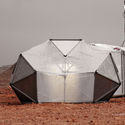
In the Negev Desert of Israel, SAGA Space Architects are collaborating with D-MARS to build a Mars Lab Habitat that will simulate the conditions of living in a confined space on the hazardous surface of the red planet. The laboratory structure they’ve designed is an addition to D-MARS' existing Mars simulation habitat and will be part of a larger experiment. This habitat will serve as a prototype for a longer mission scheduled for 2020.
Architects often look for inspiration in anything and everything around them: forms, volumes, artwork, music, nature… But some sources (and projects) are just out of this world. Literally.
NASA has created an online library of 140,000 high-resolution photos, videos, and sound clips, all free and available for download. Here is a selection of images for your dose of interstellar inspiration.




































.jpg?1580136024 "© SOM / Slashcube GmbH")