1. ArchDaily
  2. Social Activism

Social Activism: The Latest Architecture and News

Designing With, Not For: CatalyticAction’s Participatory Practice

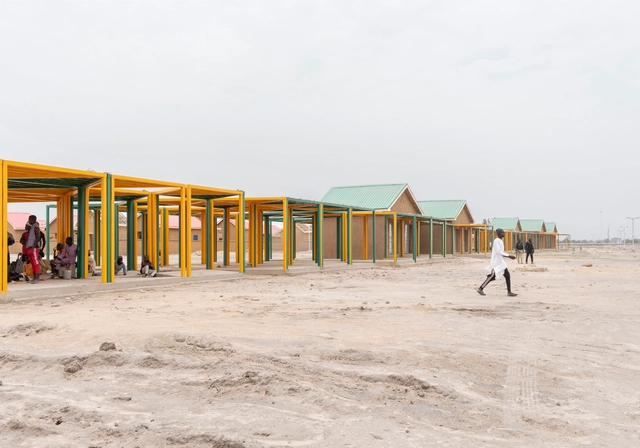
Architecture is often evaluated through finished forms, yet some practices operate in a different register, one where design unfolds through relationships, time, and use rather than through a single outcome. For CatalyticAction, participation is not a parallel social activity, but the means through which spaces are conceived, constructed, and sustained over time.

Based between Beirut and London, the practice has worked across the Middle East and Europe, developing public spaces, schools, playgrounds, and everyday urban infrastructures through long-term collaboration with local communities. Grounded in participatory research and collective decision-making, this approach was recognized through ArchDaily's 2025 Next Practices Awards, highlighting a mode of practice where architecture is understood as a shared, evolving process rather than a fixed object. In this context, architectural value is measured through continuity, use, and collective ownership, rather than through form alone.


Designing With, Not For: CatalyticAction’s Participatory Practice - Image 1 of 4Designing With, Not For: CatalyticAction’s Participatory Practice - Image 2 of 4Designing With, Not For: CatalyticAction’s Participatory Practice - Image 3 of 4Designing With, Not For: CatalyticAction’s Participatory Practice - Image 4 of 4Designing With, Not For: CatalyticAction’s Participatory Practice - More Images+ 21

September Editorial Topic: Architecture Without Limits

Architects today work across many worlds: from designing furniture, landscapes, and urban blocks to creating film sets, photographs, and videos. They restore and retrofit old buildings rather than build anew, while also writing, researching, and publishing. Some design virtual spaces for video games or speculate on habitats in outer space and underwater. Others engage directly with society through politics, activism, or community projects. Many experiment with biology, test new materials, and step into the role of scientist. Architects are decolonizing old narratives and decarbonizing the construction industry, and by weaving together personal passions with pressing social and environmental challenges, they are pushing the limits of the profession and expanding its scope.

With so many changes in the profession, especially in recent years, one may ask: How is the role of the architect evolving in response to global crises and shifting societal needs? In what ways can interdisciplinarity expand the scope and impact of architectural practice? And what skills beyond traditional design are becoming essential for architects in today's world?

How Amsterdam Uses the Doughnut Economics Model to Create a Balanced Strategy for Both the People and the Environment

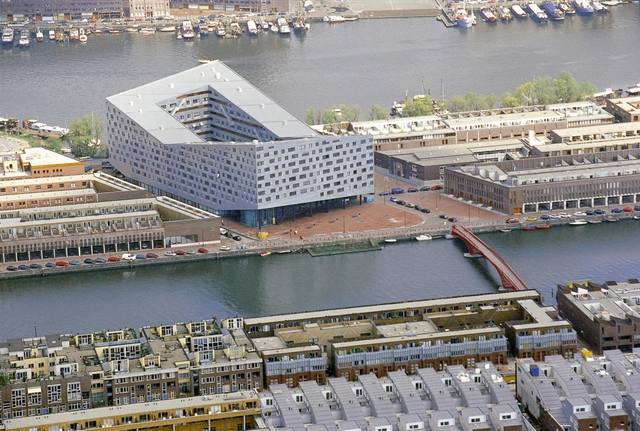
In 2020, in the midst of the first wave of lockdowns due to the pandemic, the municipality of Amsterdam announced its strategy for recovering from this crisis by embracing the concept of the “Doughnut Economy.” The model is developed by British economist Kate Raworth and popularized through her book, “Doughnut Economics: Seven Ways to Think Like a 21st-Century Economist”, released in 2017. Here, she argues that the true purpose of economics does not have to equal growth. Instead, the aim is to find a sweet spot, a way to balance the need to provide everyone with what they need to live a good life, a “social foundation” while limiting our impact on the environment, “the environmental ceiling.” With the help of Raworth, Amsterdam has downscaled this approach to the size of a city. The model is now used to inform city-wide strategies and developments in support of this overarching idea: providing a good quality of life for all without putting additional pressure on the planet. Other cities are following this example.

How Amsterdam Uses the Doughnut Economics Model to Create a Balanced Strategy for Both the People and the Environment - Image 1 of 4How Amsterdam Uses the Doughnut Economics Model to Create a Balanced Strategy for Both the People and the Environment - Image 2 of 4How Amsterdam Uses the Doughnut Economics Model to Create a Balanced Strategy for Both the People and the Environment - Image 3 of 4How Amsterdam Uses the Doughnut Economics Model to Create a Balanced Strategy for Both the People and the Environment - Image 4 of 4How Amsterdam Uses the Doughnut Economics Model to Create a Balanced Strategy for Both the People and the Environment - More Images+ 5

The European Citizens’ Initiative HouseEurope! Receives the 2025 OBEL Award

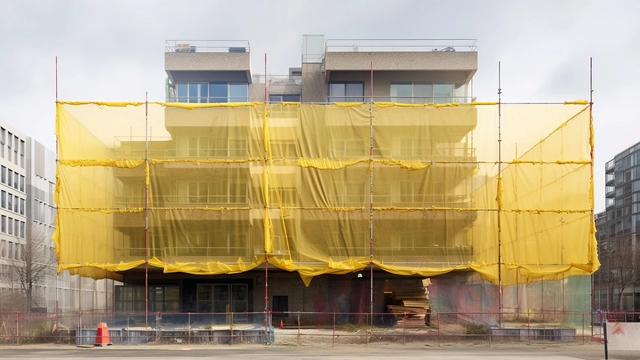
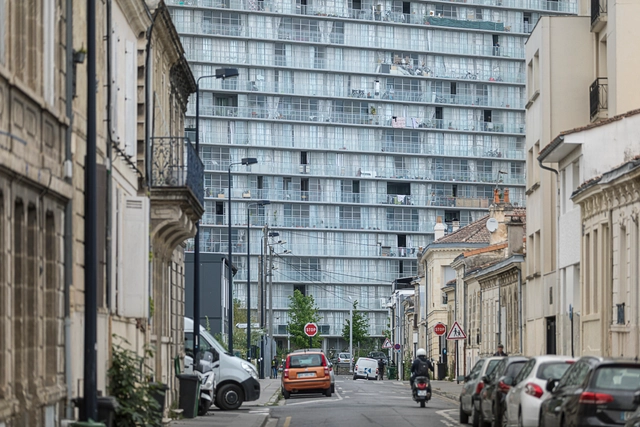
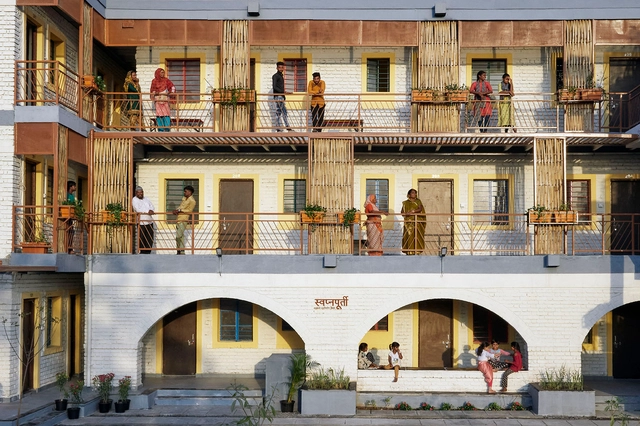
HouseEurope!, a registered non-profit organization focused on promoting the social and ecological transformation of Europe's built environment, has received the 2025 OBEL Award. Presented annually by the Henrik Frode Obel Foundation, the award recognizes architectural contributions with the potential to drive meaningful change. Aligned with this year's theme, "Ready Made," the OBEL Award Jury selected HouseEurope! for its efforts in raising awareness and fostering public engagement around the need for a shift in construction and housing practices across Europe.

The European Citizens’ Initiative HouseEurope! Receives the 2025 OBEL Award - Image 1 of 4The European Citizens’ Initiative HouseEurope! Receives the 2025 OBEL Award - Image 2 of 4The European Citizens’ Initiative HouseEurope! Receives the 2025 OBEL Award - Image 3 of 4The European Citizens’ Initiative HouseEurope! Receives the 2025 OBEL Award - Image 4 of 4The European Citizens’ Initiative HouseEurope! Receives the 2025 OBEL Award - More Images+ 4

The European Citizens' Initiative on Building Reuse Opens for Signatures

HouseEurope! is the European Citizens' Initiative advocating for EU legislation to simplify, reduce the cost of, and make more socially equitable the renovation and reuse of existing buildings, has officially begun its signature gathering period. The initiative aims to curb demolition driven by speculation and foster a construction industry that prioritizes the potential of existing public and private buildings. As a tool of direct democracy, European Citizens' Initiatives allow citizens to propose legislation at the EU level. For the legislation to be officially considered and implemented by the European Commission and EU member states, it requires the support of 1 million European citizens from at least seven EU countries. The initiative opened for signatures on February 1st, 2025 and will remain open until January 31st, 2026.

The European Citizens' Initiative on Building Reuse Opens for Signatures - Image 1 of 4The European Citizens' Initiative on Building Reuse Opens for Signatures - Image 2 of 4The European Citizens' Initiative on Building Reuse Opens for Signatures - Image 3 of 4The European Citizens' Initiative on Building Reuse Opens for Signatures - Image 4 of 4The European Citizens' Initiative on Building Reuse Opens for Signatures - More Images+ 1

MVRDV Transforms Shipping Containers into Sports and Community Hubs for Refugees

MVRDV has partnered with KLABU, a social enterprise based in Amsterdam, to design a modular, multi-functional clubhouse aimed at supporting refugees. This collaboration, which began in 2022, is founded on the belief that sports can play a pivotal role in helping individuals rebuild their lives, fostering joy, pride, and hope. KLABU's initiative involves constructing clubhouses within refugee camps, settlements, and urban areas, where they serve as community hubs offering access to sports equipment, activities, and connectivity through Wi-Fi and TV broadcasts.

MVRDV Transforms Shipping Containers into Sports and Community Hubs for Refugees - Image 1 of 4MVRDV Transforms Shipping Containers into Sports and Community Hubs for Refugees - Image 2 of 4MVRDV Transforms Shipping Containers into Sports and Community Hubs for Refugees - Image 3 of 4MVRDV Transforms Shipping Containers into Sports and Community Hubs for Refugees - Image 4 of 4MVRDV Transforms Shipping Containers into Sports and Community Hubs for Refugees - More Images+ 15

The Loeb Fellowship at Harvard GSD Announces the Selection for the Class of 2025

The Harvard Graduate School of Design (Harvard GSD) has announced the Class of 2025 Loeb Fellows. Ten practitioners and activists from around the world have been selected to join the Loeb Fellowship program to expand their careers and advance their programs and initiatives focused on equity, resilience, and collective action.

The ten selected practitioners are mid-career professionals coming from diverse backgrounds. Each one has been recognized for initiating practices that are transforming public spaces and urban infrastructures, addressing public health concerns and environmental injustices, as well as housing needs and efforts to preserve the cultural, natural, and architectural heritage of diverse regions from all continents.

The Loeb Fellowship at Harvard GSD Announces the Selection for the Class of 2025 - Image 1 of 4The Loeb Fellowship at Harvard GSD Announces the Selection for the Class of 2025 - Image 2 of 4The Loeb Fellowship at Harvard GSD Announces the Selection for the Class of 2025 - Image 3 of 4The Loeb Fellowship at Harvard GSD Announces the Selection for the Class of 2025 - Image 4 of 4The Loeb Fellowship at Harvard GSD Announces the Selection for the Class of 2025 - More Images+ 7

The Curb Cut Effect: How Accessible Architecture is Benefiting Everybody

Subscriber Access | 

The fabric of our cities is shaped by millions of small decisions and adaptations, many of which have become integral to our experience. Nowadays taken for granted, some of these elements were revolutionary at the time of their implementation. One such element is the curb cut, the small ramp grading down the sidewalk to connect it to the adjoining street, allowing wheelchair users and people with motor disabilities to easily move onto and off the sidewalk. This seemingly small adaptation has proven to be unexpectedly useful for a wider range of people, including parents with strollers, cyclists, delivery workers, etc. Consequently, it lends its name to a wider phenomenon, the “curb cut effect”, where accommodations and improvements made for a minority end up benefiting a much larger population in expected and unexpected ways.

The Curb Cut Effect: How Accessible Architecture is Benefiting Everybody - Image 1 of 4The Curb Cut Effect: How Accessible Architecture is Benefiting Everybody - Image 2 of 4The Curb Cut Effect: How Accessible Architecture is Benefiting Everybody - Image 3 of 4The Curb Cut Effect: How Accessible Architecture is Benefiting Everybody - Image 4 of 4The Curb Cut Effect: How Accessible Architecture is Benefiting Everybody - More Images+ 5

World Architecture Day 2023: Fostering Resilient Communities through Architecture

Subscriber Access | 

As has become customary in recent years, on the first Monday of October, we celebrate both World Architecture Day and World Habitat Day, serving as a reminder to the global community of its collective responsibility for the well-being of the built environment. This edition, like its predecessors, sheds light on the realm of architecture and the challenges faced by our cities, introducing new themes, contemplating the state of our urban areas, and proposing constructive strategies.

Since urban economies have encountered significant difficulties this year, the UN's World Habitat Day focuses on "Resilient Urban Economies: cities as drivers of growth and recovery." Launching Urban October, this event seeks to bring together diverse urban stakeholders to deliberate on policies to help cities recover after the dual economic impacts caused by the COVID-19 pandemic and conflicts worldwide. Aligned with this concept, World Architecture Day, created by the UIA in 1985, has chosen to concentrate on "Architecture for Resilient Communities," emphasizing the role and duty of architecture in fostering thriving community existence while initiating a global dialogue regarding the interconnectedness of urban and rural regions within every nation.

World Architecture Day 2023: Fostering Resilient Communities through Architecture - Image 1 of 4World Architecture Day 2023: Fostering Resilient Communities through Architecture - Image 2 of 4World Architecture Day 2023: Fostering Resilient Communities through Architecture - Image 3 of 4World Architecture Day 2023: Fostering Resilient Communities through Architecture - Image 4 of 4World Architecture Day 2023: Fostering Resilient Communities through Architecture - More Images+ 1

Barefoot Social Architecture: 10 Projects by Yasmeen Lari, the 2023 RIBA Royal Gold Medal Winner

Subscriber Access | 

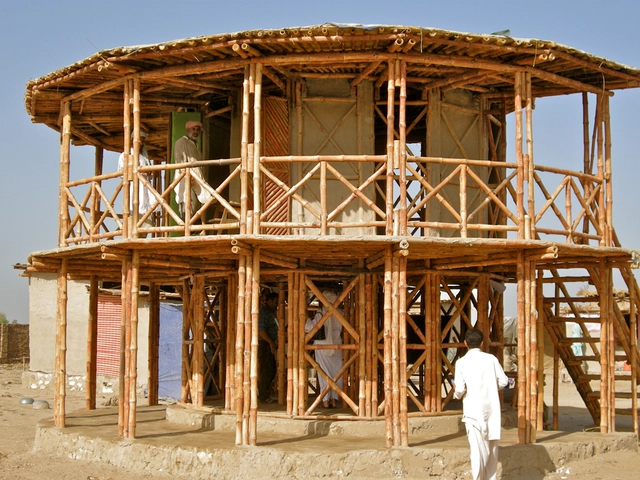
Yasmeen Lari, recognized as the first female architect in Pakistan, has had a significant impact both in her home country and internationally due to her innovative and socially conscious approach to architecture. Through a systemic approach, Lari’s work takes into consideration local culture, site-specific opportunities, and challenges. Born in Pakistan in 1941, Yasmeen Lari moved to London with her family at the age of 15. After graduating from Oxford Brooks School of Architecture, she returned to Pakistan at the age of 23 to establish Lari Associates with her husband, Suhail Zaheer Lari. The couple settled in Karachi. Here, she began to study Pakistan’s ancient towns and the vernacular architecture of earth buildings, igniting her interest in the architectural heritage and traditional techniques of her country. In 1980, she co-founded the Heritage Foundation of Pakistan with her husband, becoming instrumental in the preservation of her country’s rich cultural heritage.

Barefoot Social Architecture: 10 Projects by Yasmeen Lari, the 2023 RIBA Royal Gold Medal Winner - Image 1 of 4Barefoot Social Architecture: 10 Projects by Yasmeen Lari, the 2023 RIBA Royal Gold Medal Winner - Image 2 of 4Barefoot Social Architecture: 10 Projects by Yasmeen Lari, the 2023 RIBA Royal Gold Medal Winner - Image 3 of 4Barefoot Social Architecture: 10 Projects by Yasmeen Lari, the 2023 RIBA Royal Gold Medal Winner - Image 4 of 4Barefoot Social Architecture: 10 Projects by Yasmeen Lari, the 2023 RIBA Royal Gold Medal Winner - More Images+ 14

The Political Dimension of Architecture: Activism Through Design

The inertia of politics and governance in a time when major societal changes occur at an increasingly faster pace and the dissatisfaction with the decision process makes room for bottom-up actions, activism and bold endeavours. In the light of so many examples of social activism, do architects have the tools to make their own stand? Does architecture have the power to disrupt the status quo?

This Street Art Foundation Is Transforming India's Urban Landscape—With the Government's Support

Subscriber Access | 
This Street Art Foundation Is Transforming India's Urban Landscape—With the Government's Support - Featured Image
The Origin of the World by Borondo, Lodhi Colony, Delhi. Image © Naman Saraiya

Last month, ArchDaily had an opportunity to speak with Akshat Nauriyal, Content Director at Delhi-based non-profit St+Art India Foundation which aims to do exactly what its name suggests—to embed art in streets. The organization’s recent work in the Indian metropolises of Delhi, Mumbai, Hyderabad, and Bengaluru, has resulted in a popular reclamation of the cities’ civic spaces and a simultaneous transformation of their urban fabric. Primarily working within residential neighborhoods—they are touted with the creation of the country’s first public art district in Lodhi Colony, Delhi—the foundation has also collaborated with metro-rail corporations to enliven transit-spaces. While St+Art India’s experiments are evidently rooted in social activism and urban design, they mark a significant moment in the historic timeline of the application of street art in cities: the initiative involves what it believes to be a first-of-its-kind engagement between street artists and the government.

This Street Art Foundation Is Transforming India's Urban Landscape—With the Government's Support - Image 1 of 4This Street Art Foundation Is Transforming India's Urban Landscape—With the Government's Support - Image 2 of 4This Street Art Foundation Is Transforming India's Urban Landscape—With the Government's Support - Image 3 of 4This Street Art Foundation Is Transforming India's Urban Landscape—With the Government's Support - Image 4 of 4This Street Art Foundation Is Transforming India's Urban Landscape—With the Government's Support - More Images+ 42