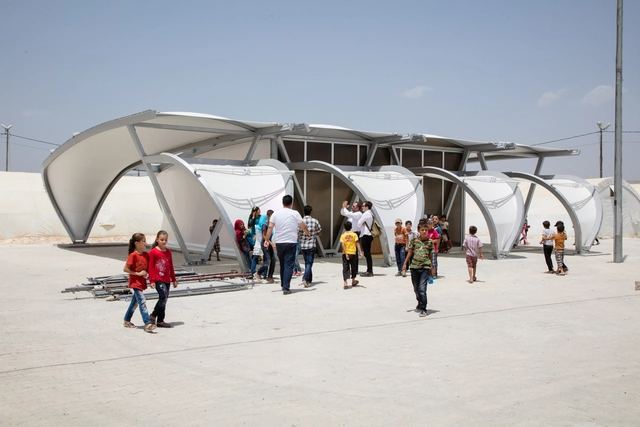
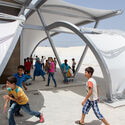
The International Organization of Migration (IOM) and the Qatar Red Crescent are set to receive 27 tents designed by Zaha Hadid Architects (ZHA) to serve and support displaced populations. The donation is made by the Education Above All (EAA) Foundation, the Supreme Committee for Delivery & Legacy, and its human and social legacy program, Generation Amazing Foundation. The news was announced during the opening of a ZHA-EAA tent inside the FIFA Fan Festival in Doha, and it represents part of the country’s effort to ensure that the World Cup has a positive lasting effect after the closing of the tournament.
Climate change has been one of the most pressing topics of this year, and for a good reason. Its effects are visible not only in natural habitats but also in urban environments. The construction industry has an important role to play in this dynamic. Throughout the year, events such as COP27 emphasized the importance of striving to achieve net carbon zero and the challenges faced by developing countries affected by increasingly devastating natural disasters. Possible directions for development include actions at varying stages and scales, from optimizing green spaces for urban heat control to employing local and innovative building materials to minimize the carbon footprint or passing laws that help create more sustainable urban and natural environments.
This article represents a roundup of articles published on ArchDaily during the course of 2022 with themes related to climate change and architecture’s potential to make a difference. It breaks down the topic into four main questions: What Are Cities Doing to Mitigate Urban Heat? How to Tackle Rising Sea Levels? What Was COP27 and Why Does It Matter? Can Building Materials Play a Role in Achieving These Goals? The last section presents an overview of new legislation approved during 2022 as a way of understanding how state and local governments are imposing this need for change.
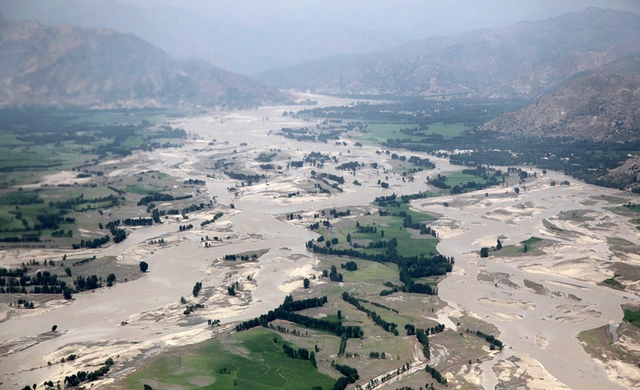
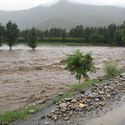
Record monsoon rains, in part due to melting glaciers in Pakistan’s northern mountains, have brought devastating floods that have covered over a third of the country’s surface. According to BBC and UN estimates, around 33 million Pakistani, one in seven people, have been affected by the floods, as more than 500,000 houses have been destroyed or severely damaged. Flood waters have also swept away an estimated 700,000 heads of livestock and damaged over 3.6 million acres of crops. The Sindh province is the hardest hit, receiving 464% more rain than the 30-year average.
Cities across the Northern Hemisphere are preparing for the upcoming summer months, which are expected to be warmer and drier than average. The European Center for Medium-Range Weather Forecasts warns about temperatures rising above the norm in central and southern Europe this summer. Similarly, the forecast for the Unites States predicts hotter weather and below-average rainfall likely to fuel a megadrought. This poses threats for citizens, especially in larger cities, where heat-absorbing asphalt and waste heat generated by energy use create a “heat-island” effect. It translates to temperatures being up to 10°F (5.6°C) warmer in cities compared to the surrounding natural areas.
The inertia of politics and governance in a time when major societal changes occur at an increasingly faster pace and the dissatisfaction with the decision process makes room for bottom-up actions, activism and bold endeavours. In the light of so many examples of social activism, do architects have the tools to make their own stand? Does architecture have the power to disrupt the status quo?
While damage control and preparation is an ever increasing factor in how we plan our cities, certain extraordinary circumstances, like natural disasters, remain outside of our ability to plan and demand quick architectural responses that offer instant aid to the people affected, often being the difference between life and death. Natural, unpredictable events like earthquakes, tsunamis, hurricanes, floods, armed conflicts, territory disputes, or global crises--such as climate change or pandemics--require immediate action in order to mitigate ensuing damage and chaos. Emergency architecture is the immediate answer to the humanitarian side of a conflict, covering everything from housing to medical facilities for the affected.
Throughout human history, the movement of populations–in search of food, shelter, or better economic opportunities–has been the norm rather than the exception. Today, however, the world is witnessing unprecedented levels of displacement. The United Nations reports that 68.5 million people are currently displaced from their homes; this includes nearly 25.4 million refugees, over half of whom are under the age of eighteen. With conflicts raging on in countries like Syria and Myanmar, and climate change set to lead to increased sea levels and crop failures, the crisis is increasingly being recognised as one of the foundational challenges of the twenty-first century.
While emergency housing has dominated the discourse surrounding displacement in the architecture industry, it is critical for architects and planners to study and respond to the socio-cultural ramifications of population movements. How do we build cities that are adaptive to the holistic needs of fluid populations? How do we ensure that our communities absorb refugees and migrants into their local social fabric?
This World Refugee Day, let’s take a look at 5 shining examples of social infrastructure from around the world–schools, hospitals, and community spaces–that are specifically directed at serving displaced populations.
7.2%... is the number of Europeans that won’t be in contact, not even once a year, with friends or loved ones. This percentage is even greater in France, 12%. Human beings are meant to interact with one another and that is why there are so many examples of communities throughout our different societies and throughout history.
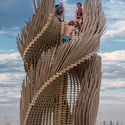
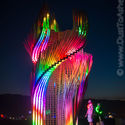
Every year in August, a temporary metropolis is erected in Black Rock City, Nevada. This is Burning Man, an annual event of art and architecture that attracts some 70,000 participants. The people who come to Burning Man come from all walks of life. What is incredible is that they come together to construct an ephemeral city that lasts for 7 days. These people assume the role of architects and construction workers and use the desert to build all sorts of shelters in a fast, sustainable way. The desert is so remote, and everything built in Black Rock City is packed and taken home at the end of the event, and some of the art is burned on site. This poses a unique architectural challenge. The people who have come to build these structures have to plan them way in advance to accommodate all the challenges of working in the desert, but the result is worth it - a striking, unique city, democratically built, set against a desert landscape, and for only one week.
We had the chance to interview Kim Cook at the World Architecture Festival in Berlin. Kim Cook is Director of Art and Civic Engagement at Burning Man. Kim Cook and her team are tasked with increasing the impact of Burning Man’s arts and civic initiatives. As part of her role, Kim engages with artists and community leaders to increase opportunities for funding, collaboration and learning.
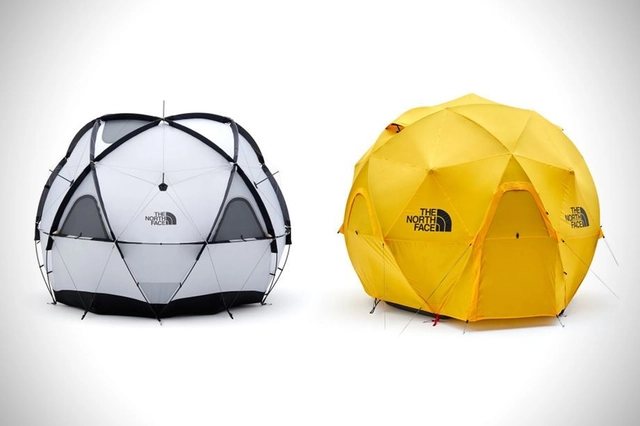
Reinterpreting the teachings of Buckminster Fuller, North Face have announced the latest tent in their collection; a geodesic dome tent. Thanks to the most spatially efficient shape in architecture, it can withstand winds of up to 60 mph as the force is spread evenly across the structure whilst even providing enough height for a six-foot person to stand comfortably inside.
The extremely efficient design has allowed the tent to weigh not much more than 11kg and comprise of 5 main poles and the equator for fast and easy assembly and storage. The outdoor gear company has also considered a water-resistant dual-layered exterior skin for their incredibly strong and sturdy tent to endure whatever mother nature has to throw at it.
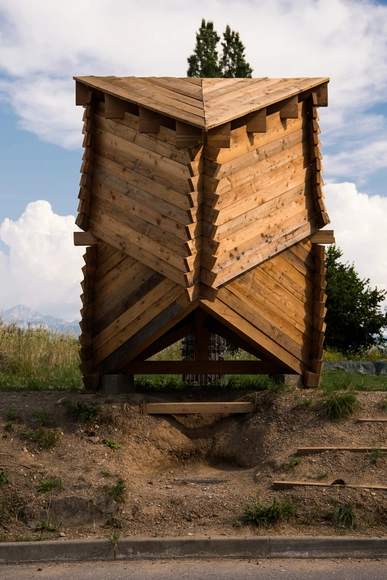
At an altitude of 2735m, architecture students at the École Polytechnique Fédérale de Lausanne (EPFL) in Switzerland have built The Bonatti Bivouac, a temporary refuge for the A Neuve’s glacier. The shelter uses the envelope as a structural object, eradicating the need for metal, screws, or nails. Informed by theoretical architect Semper, their design uses the joints to form a piece of architecture.
Christian Weber, a 20-plus year veteran of the Burning Man festival has learned a few tricks on the Playa. Shelter from the harsh Black Rock Desert winds, heat, dust and cold nights are attributes of an experienced camp. “Every year we unload our camp out of the container and use our container as our kitchen. It literally has fold-down tables [and] air conditioning… and when we’re all done, we throw it back in the container and it’s ready to go for next year.”
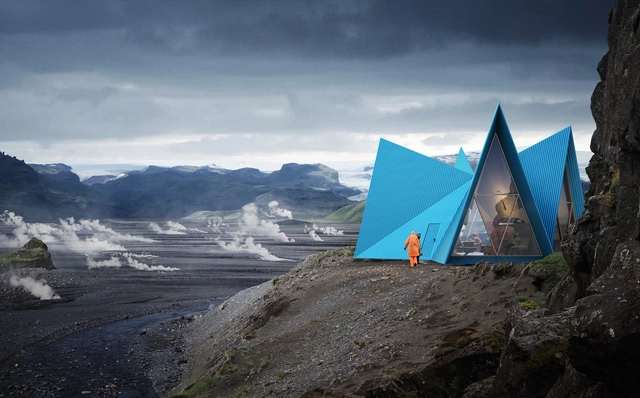
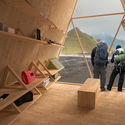
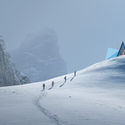
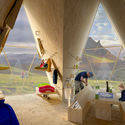
Stockholm-based architecture firm Utopia Arkitekter has designed Skýli, they are bright blue cabins that are popping up in one of the world's most beautiful landscape. The idea came from a desire to develop a structure which could be easily placed along some of the most famous trekking trails in Iceland. Not only are the lodges striking and beautiful in itself, they can be easily constructed and are built to withstand the harshest weather conditions.
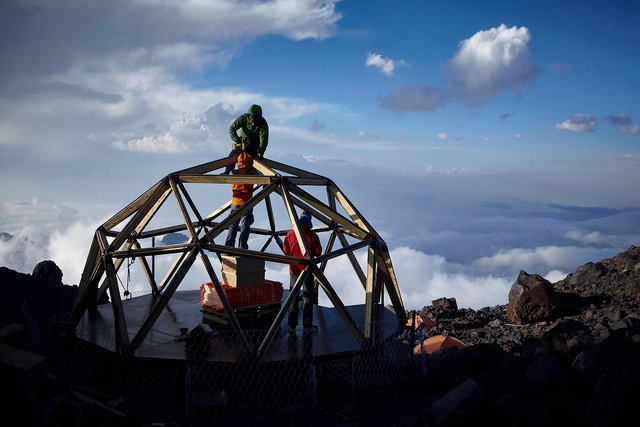
At an altitude of 3,800 meters, Ice-Age architects have designed and produced a compact and lightweight shelter as the last base before climbers venture up Mount Elbrus, the highest point in Europe. Inspired by Buckminster Fuller's 2V geodesic dome, it can sleep up to 16 people as they acclimatize to the altitude and wait for the appropriate weather for the climb.
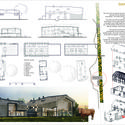
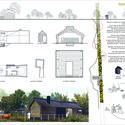
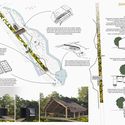
Bee Breeders have selected winners of the Stone Barn Meditation Camp competition, seeking to create a place of refuge for individuals amidst the pristine natural beauty of one of Latvia’s most remote regions. In announcing the competition results, the jury applauded the respect and regard shown to the environment by submitted schemes, commenting that the most successful projects stood out for their simplicity, elegance, and balance with nature.
The competition winners, including noted ‘Green’ and ‘Student’ schemes, are set out below.
Costa Rican architect César Oreamuno has designed a modular capsule that accommodates to the basic needs of a community after a state of emergency or disaster. The units are adaptable and easily assembled in order to account for a variety of situations and respond to a series of unique functions, although the main theme of the project is focused on improving the quality of attention towards the basic needs of crisis victims, as well as encouraging the development of the community.
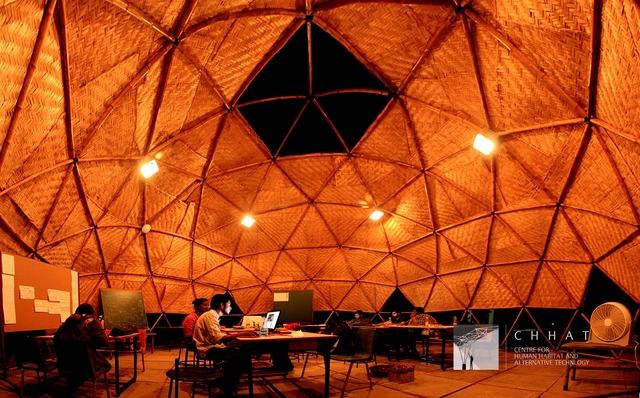
Launched in 2007, The Buckminster Fuller Challenge has quickly gained a reputation for being what Metropolis Magazine once called “Socially-Responsible Design’s Highest Award.” This year, for the first time, a Student Category was reviewed separately from the general applications, however still based upon the same criteria: comprehensiveness, feasibility, replicability, ecological responsibility, and how verifiable and anticipatory the project is. Students from the Centre for Human Habitat and Alternative Technology (CHHAT) claimed the prize with their adaptable and lightweight modular domes, made from natural, local or recycled materials.
In light of recent refugee crises, Belgium-based architecture and engineering firm DMOA has become involved with The Maggie Program, an initiative to improve refugee shelter, education, and health through a new building concept.
Because most countries only allow for temporary settlements for refugees, the project centers around the Maggie Shelter, a temporary tent-like structure, that functions as a more substantial, fixed building.






.jpg?1561029678&format=webp&width=640&height=580)
.jpg?1561029668 "© Y. Meiri")
_(1).jpg?1561029646 "Courtesy of CatalyticAction")

.jpg?1561029689 "© Shidhulai Swanirvar Sangstha")
.jpg?1561029678)






.jpg?1510247252)