1. ArchDaily
  2. Schools

Schools: The Latest Architecture and News

ArchDaily Curator’s Picks 2025: A Look Back at 12 Key Project Reviews

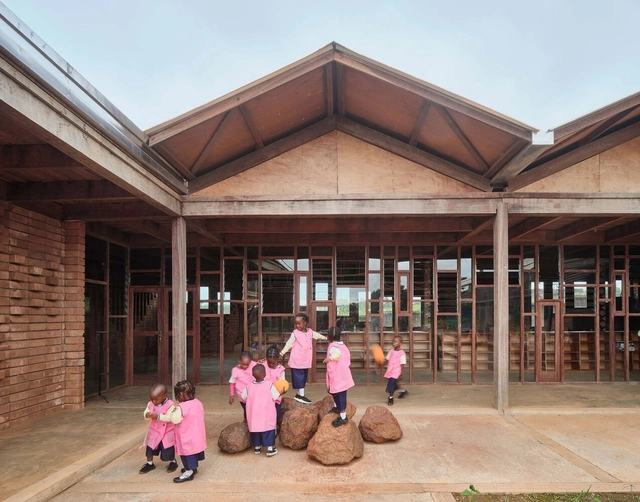
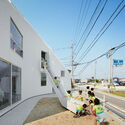
For the past couple of years, the project curators at ArchDaily have been revisiting architectural works they believe deserve a deeper look. Through an Instagram post called "Project Review", the curators describe what they consider to be the work's main attribute(s). Delving into the project's stories and the elements that make them truly inspiring, they underline what might otherwise be overlooked initiatives and study them closely, with attention to locality and context. The result is an array of diverse works, often from rural or suburban areas that have a public function or historic significance.

While a couple of houses are listed, the majority of the reviews veer towards cultural centers, libraries, workspaces, or commercial settings. Another thing to note is the fact that many of these works ended up coming in from Asia, with a few key projects from rural China. The picks are quite diverse in materiality and design language; however, they all suggest innovative architectural solutions and captivating narratives.

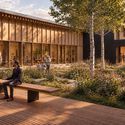
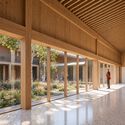
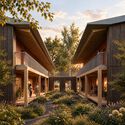
ArchDaily Curator’s Picks 2025: A Look Back at 12 Key Project Reviews - Image 1 of 4ArchDaily Curator’s Picks 2025: A Look Back at 12 Key Project Reviews - Image 2 of 4ArchDaily Curator’s Picks 2025: A Look Back at 12 Key Project Reviews - Image 3 of 4ArchDaily Curator’s Picks 2025: A Look Back at 12 Key Project Reviews - Image 4 of 4ArchDaily Curator’s Picks 2025: A Look Back at 12 Key Project Reviews - More Images+ 12

An Expansive Modular Sofa System: Reimagining Comfort Beyond Sitting On

 | Sponsored Content

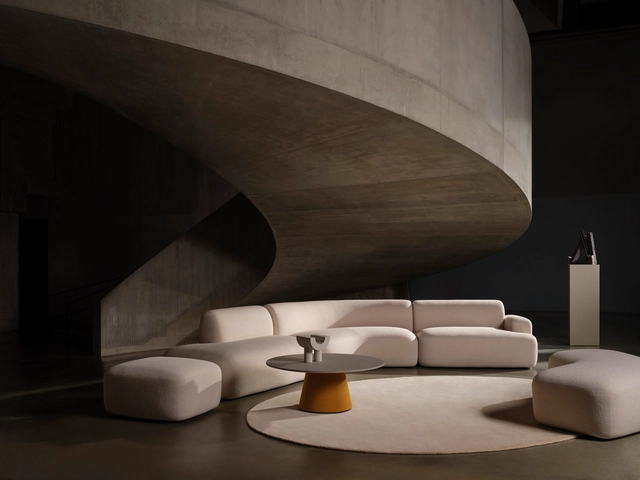
Does architecture alone define how we inhabit a space? It's becoming increasingly clear that it does not. The objects within a space—particularly furniture and other design pieces—not only serve functional purposes but actively shape the spatial and human experience. As schools, homes, and offices evolve to accommodate new ways of working, living, and socializing, furniture accompanies these transitions, prompting conversations that extend beyond functionality and engage the corporeal dimension implied in its use.

Several decades ago, British architects Alison and Peter Smithson were already exploring the relationship between the body, everyday experience, and space at an architectural scale. Since then, contemporary concepts of flexibility and comfort have expanded this framework to include other scales, such as furniture. These transformations have fostered the consolidation of modular seating systems whose flexibility and adaptability respond to diverse ways of living and relating to space. Emerging from this context are forward-thinking proposals, such as Beau's comprehensive range of seating and table units—an expansive modular seating system designed for multiple possibilities, with a significant emphasis on comfort and sensory appeal.

Learning Circles: 12 Educational Projects with Elliptical Plans

Subscriber Access | 

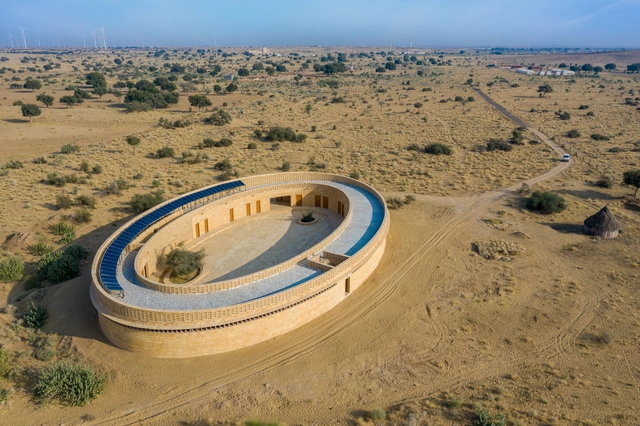
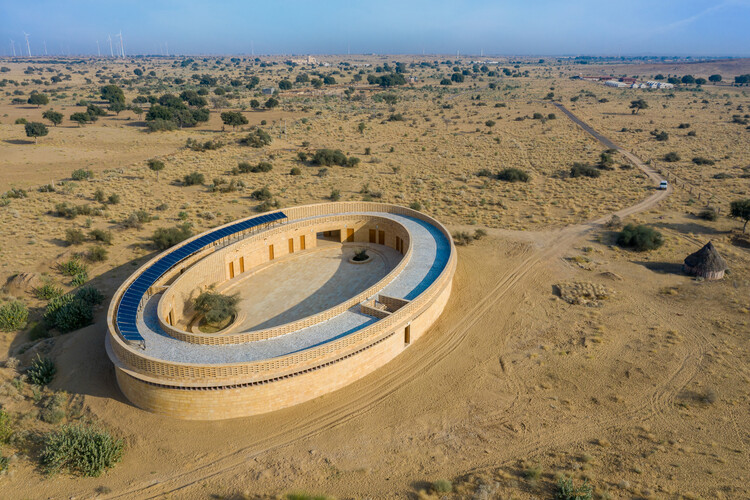
Creating an educational setting is a specific and sensitive task. Merging children's safety and learning optimization requirements with an aesthetic appeal and solid concept can birth some of the most beautiful, unique projects around. One common configuration is the elliptical or circular school. A circular, more specifically ringlike educational setting can suggest a sense of protectiveness and safety with the construction of the embracing surrounding membrane. It is also a practical setup that envelopes multiple functions while linking them, consequently allowing interactive instances through the central courtyard.

Learning Circles: 12 Educational Projects with Elliptical Plans - Image 1 of 4Learning Circles: 12 Educational Projects with Elliptical Plans - Image 2 of 4Learning Circles: 12 Educational Projects with Elliptical Plans - Image 3 of 4Learning Circles: 12 Educational Projects with Elliptical Plans - Image 4 of 4Learning Circles: 12 Educational Projects with Elliptical Plans - More Images+ 42

More than a Classroom: The Multifunctionality of Educational Spaces in Global South Communities

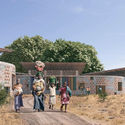
Educational infrastructure is key to any community. The better the quality of these spaces, the better the learning experience for those who use them. However, these facilities often serve a much broader purpose than just education. In Global South communities, in countries like Peru or Vietnam, where a significant portion of the population lives in rural areas far from urban centers, there are few educational spaces and a lack of places where the entire community—not just the students—can come together.

More than a Classroom: The Multifunctionality of Educational Spaces in Global South Communities - Image 1 of 4More than a Classroom: The Multifunctionality of Educational Spaces in Global South Communities - Image 2 of 4More than a Classroom: The Multifunctionality of Educational Spaces in Global South Communities - Image 3 of 4More than a Classroom: The Multifunctionality of Educational Spaces in Global South Communities - Image 4 of 4More than a Classroom: The Multifunctionality of Educational Spaces in Global South Communities - More Images+ 23

Learning Through Play: Architecture for Kids in Educational Spaces and Playgrounds

Subscriber Access | 

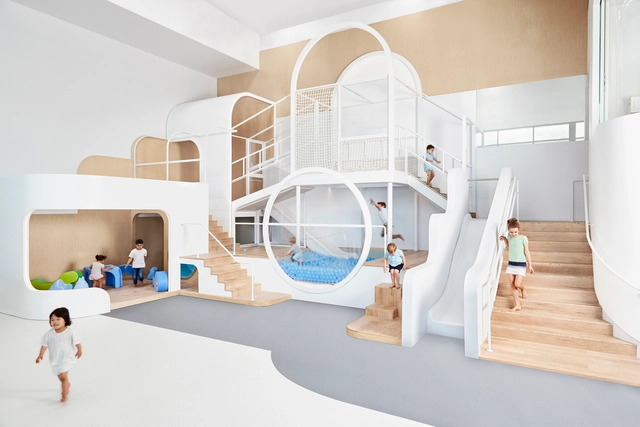
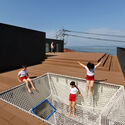
Designing for children is certainly not child's play. While adults lead the design process, the end-users are often children, as seen in kindergartens, schools, and parks. Architects have the responsibility to create built environments that provide children with opportunities to play, explore, and learn, even in today's digital age.

Learning Through Play: Architecture for Kids in Educational Spaces and Playgrounds - Image 1 of 4Learning Through Play: Architecture for Kids in Educational Spaces and Playgrounds - Image 2 of 4Learning Through Play: Architecture for Kids in Educational Spaces and Playgrounds - Image 3 of 4Learning Through Play: Architecture for Kids in Educational Spaces and Playgrounds - Image 4 of 4Learning Through Play: Architecture for Kids in Educational Spaces and Playgrounds - More Images+ 13

International Architecture Awards 2023 Announces Winners in Chicago, Illinois

For the 18th year, the International Architecture Awards has returned to celebrate outstanding architectural achievements globally. Based in Chicago, these awards feature exceptional new buildings, urban planning projects, and landscape architecture of 2023. Additionally, this month, the Chicago Architecture Biennial (CAB 5) is currently taking place in the city. Both the awards and the Biennial attempt to shed light on each country’s architectural, design, cultural, and social trends.

Since the inception of the International Architecture Awards in 2005, this annual program has served as a platform for celebrating contemporary architecture. Moreover, the awards institution believes in architecture’s potential to enhance the quality of life for individuals globally. This year, the selected winners span 48 countries, from Ethiopia to Tokyo and New York to Nova Scotia.

International Architecture Awards 2023 Announces Winners in Chicago, Illinois  - Image 1 of 4International Architecture Awards 2023 Announces Winners in Chicago, Illinois  - Image 2 of 4International Architecture Awards 2023 Announces Winners in Chicago, Illinois  - Image 3 of 4International Architecture Awards 2023 Announces Winners in Chicago, Illinois  - Image 4 of 4International Architecture Awards 2023 Announces Winners in Chicago, Illinois  - More Images+ 14

How to Design Sports Arenas

Subscriber Access | 

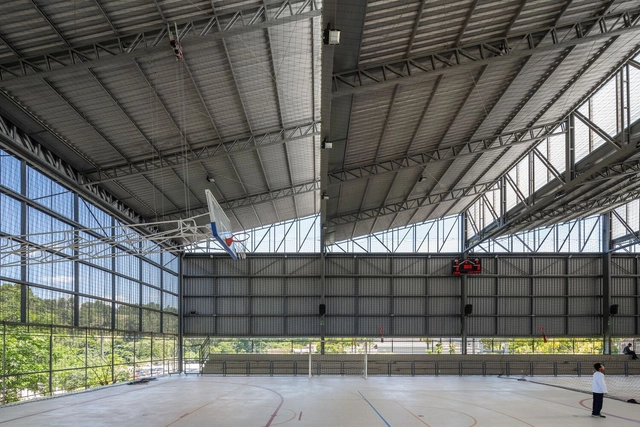
Sports arenas hold significant relevance in society as they serve as vital meeting places for sports and cultural activities. They play a role in enhancing overall well-being, encouraging an active lifestyle, and fostering social inclusion. Within these projects, architects assume the responsibility of designing spaces that seamlessly accommodate athletes and the community. Moreover, architects must actively engage with the surroundings to create a harmonious dialogue and establish a distinct identity for the arena.

How to Design Sports Arenas - Image 1 of 4How to Design Sports Arenas - Image 2 of 4How to Design Sports Arenas - Image 3 of 4How to Design Sports Arenas - Image 4 of 4How to Design Sports Arenas - More Images+ 9

Biophilic Landscaping in Educational Spaces: Stimulating Learning, Well-Being and Creativity

Subscriber Access | 

Environments that inspire, promote well-being and stimulate a connection with nature. Biophilic landscaping in education spaces recognizes the importance of this bond for student development, as it benefits well-being, academic performance, and people's health. We have selected eight projects that bring natural elements to the classroom or that place students directly in nature to illustrate the qualities in these spaces.

Biophilic Landscaping in Educational Spaces: Stimulating Learning, Well-Being and Creativity  - Image 1 of 4Biophilic Landscaping in Educational Spaces: Stimulating Learning, Well-Being and Creativity  - Image 2 of 4Biophilic Landscaping in Educational Spaces: Stimulating Learning, Well-Being and Creativity  - Image 3 of 4Biophilic Landscaping in Educational Spaces: Stimulating Learning, Well-Being and Creativity  - Image 4 of 4Biophilic Landscaping in Educational Spaces: Stimulating Learning, Well-Being and Creativity  - More Images+ 22

Inner-City Schools Solving the Problems of Inner-City Architecture

Subscriber Access | 

I always consider myself fortunate to have grown up outside the city, where my ‘cross-country’ lessons, for example –national right of hardship for 11-16-year-olds– were through the actual countryside rather than the high street. For many children, however, modern school life is not so close to nature.

Already over-populated cities are continuing to expand, meaning more schools are suffering from the limitations presented by inner-city architecture including noise, air, and light pollution; a lack of space, especially green space; restrictive budgets and building regulations resistant to change.

With innovative and considered design solutions, however, these four inner-city schools show the rest of the class how to work through their architectural answers and provide quality, green spaces for all.

Investing in People, Prioritizing Education: Architecture for Learning in Latin America

Subscriber Access | 

On January 24th, the fifth edition of the 'International Education Day' was celebrated under the slogan "Invest in people, prioritize education". Proclaimed by the United Nations General Assembly, it promotes a strong political mobilization seeking to chart the way and accelerate progress towards the 4th Sustainable Development Goal: Quality Education.

Investing in People, Prioritizing Education: Architecture for Learning in Latin America - Image 1 of 4Investing in People, Prioritizing Education: Architecture for Learning in Latin America - Image 2 of 4Investing in People, Prioritizing Education: Architecture for Learning in Latin America - Image 3 of 4Investing in People, Prioritizing Education: Architecture for Learning in Latin America - Image 4 of 4Investing in People, Prioritizing Education: Architecture for Learning in Latin America - More Images+ 16

OMA / David Gianotten and Circlewood Develop a Modular Wood System to Create Flexible Schools for the City of Amsterdam

As part of the Circlewood consortium, OMA’s David Gianotten and Michel den Otter have developed a modular system to build schools that can adapt and transform throughout their lifecycle. The system was selected by the City of Amsterdam to be employed to build multiple schools in the coming ten years, as part of the Innovation Partnership School Buildings program. The citywide initiative aims to build nine to thirty “high-quality, flexible, and sustainable” schools as a way to contribute to the city’s goal of becoming fully circular by 2050.

OMA / David Gianotten and Circlewood Develop a Modular Wood System to Create Flexible Schools for the City of Amsterdam - Image 1 of 4OMA / David Gianotten and Circlewood Develop a Modular Wood System to Create Flexible Schools for the City of Amsterdam - Image 2 of 4OMA / David Gianotten and Circlewood Develop a Modular Wood System to Create Flexible Schools for the City of Amsterdam - Image 3 of 4OMA / David Gianotten and Circlewood Develop a Modular Wood System to Create Flexible Schools for the City of Amsterdam - Image 4 of 4OMA / David Gianotten and Circlewood Develop a Modular Wood System to Create Flexible Schools for the City of Amsterdam - More Images+ 1

“Education Is the Movement From Darkness to Light:” the Bulgarian Pavilion at the 2023 Venice Architecture Biennale Explores School Abandonment in the Country

For the 18th International Architecture Exhibition of La Biennale di Venezia, the Bulgarian Pavilion will present the exhibition titled “Education is the movement from darkness to light.” Curators Boris Tikvarski, Bojidara Valkova, and Mariya Gyaurova, joined by Belgian photographer Alexander Dumarey, have chosen to focus the exhibition on the subject of depopulation, urban decline, and rural flight, expressed through the image of abandoned schools present in the country. The project was selected following a national competition organized by The Ministry of Culture, The Chamber of Architects in Bulgaria, and the Union of Architects.

“Education Is the Movement From Darkness to Light:” the Bulgarian Pavilion at the 2023 Venice Architecture Biennale Explores School Abandonment in the Country - Image 1 of 4“Education Is the Movement From Darkness to Light:” the Bulgarian Pavilion at the 2023 Venice Architecture Biennale Explores School Abandonment in the Country - Image 2 of 4“Education Is the Movement From Darkness to Light:” the Bulgarian Pavilion at the 2023 Venice Architecture Biennale Explores School Abandonment in the Country - Image 3 of 4“Education Is the Movement From Darkness to Light:” the Bulgarian Pavilion at the 2023 Venice Architecture Biennale Explores School Abandonment in the Country - Image 4 of 4“Education Is the Movement From Darkness to Light:” the Bulgarian Pavilion at the 2023 Venice Architecture Biennale Explores School Abandonment in the Country - More Images+ 3

What is a Waffle Ceiling? 47 Interiors That Live Life Under the Grid

Subscriber Access | 

Hidden in plain sight, ceilings are often the final surface interior designers and architects think about, but the expansive plane of unobstructed plaster or concrete offers mar more creative freedom than we realize. Modern design rules demand that the ceiling is kept clean. Not with a telescopic mop attachment, but by stripping off the popcorn spray, wood-chip wallpaper, or plaster patterning that haunt my own memories of ceilings-past.

While many clients greet this contemporary need for clean lines with acquiescence, choosing smooth, skimmed plaster finishes with unobtrusive yet forgetful recessed spots, other bolder clients recognize the ceiling’s potential for the creative outlet it is.

What is a Waffle Ceiling? 47 Interiors That Live Life Under the Grid - Image 1 of 4What is a Waffle Ceiling? 47 Interiors That Live Life Under the Grid - Image 2 of 4What is a Waffle Ceiling? 47 Interiors That Live Life Under the Grid - Image 3 of 4What is a Waffle Ceiling? 47 Interiors That Live Life Under the Grid - Image 4 of 4What is a Waffle Ceiling? 47 Interiors That Live Life Under the Grid - More Images+ 91

Pantone Reveals Viva Magenta: a "Brave and Fearless Red" as 2023 Color of the Year

Pantone has revealed its Color of the Year for 2023, 18-1750 Viva Magenta, a brand-new color "brave and fearless, whose exuberance promotes a joyous and optimistic celebration." The shade falls under the red family and is inspired by the tone of cochineal extract, one of the most precious dyes historically used to color textiles, cosmetics, and food.

In Times of Need: Architects Stepping Up in Humanitarian Crisis

Subscriber Access | 

Hard times bring people together. In recent years we have seen how collective work can be a driving force to help those affected by natural or man-made disasters. After a disaster or displacement, a safe physical environment is often essential. Therefore, the need for coordination becomes a key factor in assisting people in times of need.

Architects, as "Shelter Specialists", play an important role in creating safe and adequate environments, whether it is individual housing, public buildings, schools, or emergency tent camps. But as architect Diébédo Francis Kéré says, "When you have nothing and you want to convince your community to believe in an idea, it may happen that everybody starts working with you, but you need to keep fighting to convince them."

In Times of Need: Architects Stepping Up in Humanitarian Crisis - Image 1 of 4In Times of Need: Architects Stepping Up in Humanitarian Crisis - Image 2 of 4In Times of Need: Architects Stepping Up in Humanitarian Crisis - Image 3 of 4In Times of Need: Architects Stepping Up in Humanitarian Crisis - Image 4 of 4In Times of Need: Architects Stepping Up in Humanitarian Crisis - More Images+ 25

New York City Bans the Construction of New Schools Near Highways

New York City Bans the Construction of New Schools Near Highways - Featured Image
New York CIty. Image © Sean Pavone via Shutterstock

The New York City Senate and Assembly have passed the SIGH act, prohibiting the construction of new schools near major roadways. The act, named The Schools Impact by Gross Highways Act, aims to protect school-age children from air pollution. Under this law, the commissioner of education for the city will not be able to approve the plans for the construction of any new schoolhouse within 500 feet (150 meters) of a controlled-access highway unless the commissioner determines that space limitations are so severe that there is no other site to erect such new schoolhouse.

New York City Bans the Construction of New Schools Near Highways - Image 1 of 4New York City Bans the Construction of New Schools Near Highways - Image 2 of 4New York City Bans the Construction of New Schools Near Highways - Image 3 of 4New York City Bans the Construction of New Schools Near Highways - Image 4 of 4New York City Bans the Construction of New Schools Near Highways - More Images

IGC Tay Ninh School / KIENTRUC O

IGC Tay Ninh School / KIENTRUC O - Interior Photography, Schools , FacadeIGC Tay Ninh School / KIENTRUC O - Interior Photography, Schools , FacadeIGC Tay Ninh School / KIENTRUC O - Interior Photography, Schools , FacadeIGC Tay Ninh School / KIENTRUC O - Exterior Photography, Schools IGC Tay Ninh School / KIENTRUC O - More Images+ 42

Thành phố Tây Ninh, Vietnam
  • Architects: KIENTRUC O
  • Area Area of this architecture project Area:  16519
  • Year Completion year of this architecture project Year:  2020
  • Manufacturers Brands with products used in this architecture project
    Manufacturers:  Dongnai Brick, Dulux ICI Paint, Xingfa
  • Professionals: KIENTRUC O

An Environmental Youth Center in Mount Lebanon and a Modular School in Ukraine: 8 Educational Facilities Submitted to ArchDaily

Subscriber Access | 

This week’s curated selection of Best Unbuilt Architecture highlights educational facilities submitted by the ArchDaily community. From a contextual Earth school in Senegal, to a borderless, collaborative school in Vietnam, this round up of unbuilt projects showcases how architects infused nature with architecture, offering students the chance to engage with the landscape and learn more about their surroundings from their academic institutes. The article also features projects from Lebanon, Switzerland, Armenia, Ukraine, and Greece.
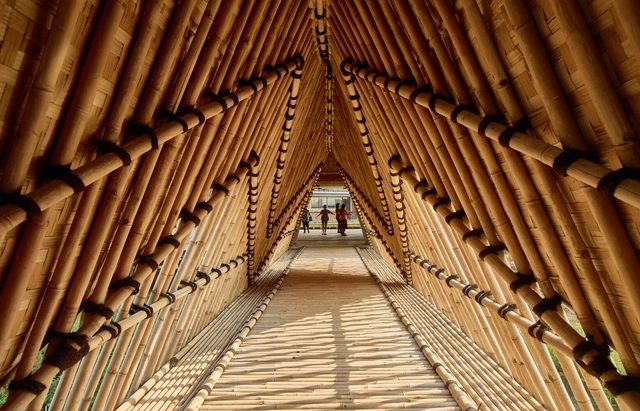
An Environmental Youth Center in Mount Lebanon and a Modular School in Ukraine: 8 Educational Facilities Submitted to ArchDaily - Image 9 of 4An Environmental Youth Center in Mount Lebanon and a Modular School in Ukraine: 8 Educational Facilities Submitted to ArchDaily - Image 25 of 4An Environmental Youth Center in Mount Lebanon and a Modular School in Ukraine: 8 Educational Facilities Submitted to ArchDaily - Image 32 of 4An Environmental Youth Center in Mount Lebanon and a Modular School in Ukraine: 8 Educational Facilities Submitted to ArchDaily - Image 52 of 4An Environmental Youth Center in Mount Lebanon and a Modular School in Ukraine: 8 Educational Facilities Submitted to ArchDaily - More Images+ 65