1. ArchDaily
  2. Restoration

Restoration: The Latest Architecture and News

UNESCO Culminates the Restoration Program of the City of Mosul, Iraq

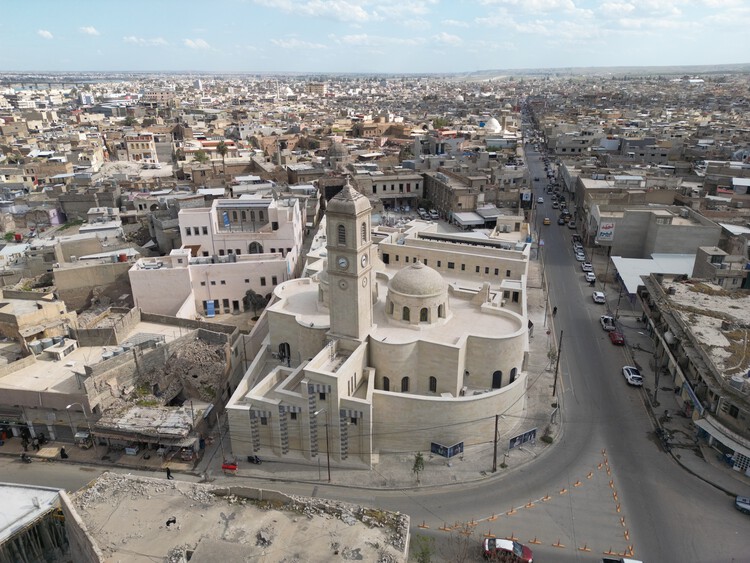
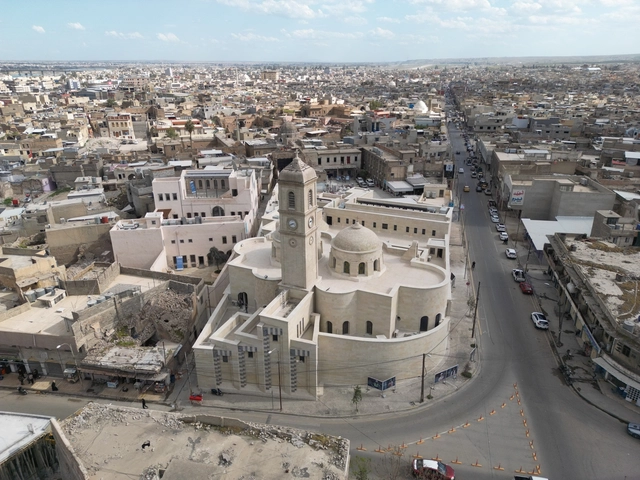
From 2014 to 2019, Daesh (ISIS) occupied and controlled territory in Iraq and Syria, including the northern city of Mosul. UNESCO estimates that 80% of Mosul's historic town was destroyed during this period, which led to one of the most ambitious reconstruction campaigns in recent decades: "Revive the Spirit of Mosul." Since 2019, UNESCO has carried out large-scale efforts to rebuild the city's landscapes and monuments, reconstructing three religious and cultural landmarks and 124 heritage houses, along with other buildings located in the Old City. The program was structured around three pillars: restoring significant heritage, promoting the return of cultural life, and strengthening spaces for education. On September 1, 2025, Iraq's Prime Minister inaugurated three major landmarks: the Al-Nouri Mosque complex, Al-Saa'a Convent, and Al-Tahera Church, marking the completion of the restoration project.
UNESCO Culminates the Restoration Program of the City of Mosul, Iraq - Image 1 of 4UNESCO Culminates the Restoration Program of the City of Mosul, Iraq - Image 2 of 4UNESCO Culminates the Restoration Program of the City of Mosul, Iraq - Image 3 of 4UNESCO Culminates the Restoration Program of the City of Mosul, Iraq - Image 4 of 4UNESCO Culminates the Restoration Program of the City of Mosul, Iraq - More Images+ 27

Uzbekistan’s Inaugural Bukhara Biennial 2025 Opens Across Restored Historic Landmarks

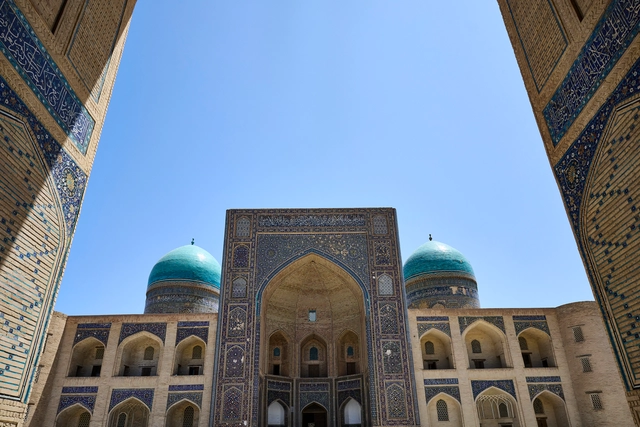
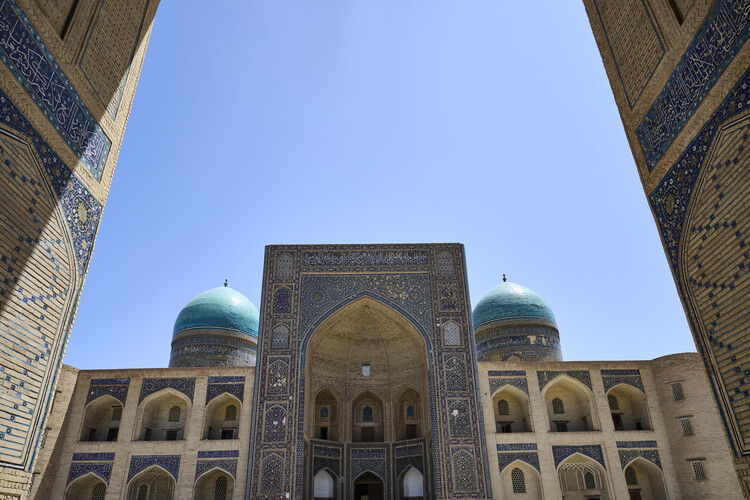
The inaugural edition of the Bukhara Biennial opened on September 5, 2025, bringing over 70 site-specific commissions by more than 200 participants from 39 countries to the historic core of the Uzbek city. Commissioned by the Uzbekistan Art and Culture Development Foundation (ACDF) and Commissioner Gayane Umerova, the Biennial is described as the largest and most diverse cultural event in Central Asia to date. Curated by Diana Campbell under the theme Recipes for Broken Hearts, the ten-week event is staged across a constellation of newly restored sites, including madrassas, caravanserais, and mosques, all part of Bukhara's UNESCO World Heritage listing. Beyond an exhibition platform, the biennial is framed as part of a broader master plan, positioning culture as a catalyst for urban transformation and heritage renewal.

Uzbekistan’s Inaugural Bukhara Biennial 2025 Opens Across Restored Historic Landmarks - Image 1 of 4Uzbekistan’s Inaugural Bukhara Biennial 2025 Opens Across Restored Historic Landmarks - Image 2 of 4Uzbekistan’s Inaugural Bukhara Biennial 2025 Opens Across Restored Historic Landmarks - Image 3 of 4Uzbekistan’s Inaugural Bukhara Biennial 2025 Opens Across Restored Historic Landmarks - Image 4 of 4Uzbekistan’s Inaugural Bukhara Biennial 2025 Opens Across Restored Historic Landmarks - More Images+ 8

September Editorial Topic: Architecture Without Limits

Architects today work across many worlds: from designing furniture, landscapes, and urban blocks to creating film sets, photographs, and videos. They restore and retrofit old buildings rather than build anew, while also writing, researching, and publishing. Some design virtual spaces for video games or speculate on habitats in outer space and underwater. Others engage directly with society through politics, activism, or community projects. Many experiment with biology, test new materials, and step into the role of scientist. Architects are decolonizing old narratives and decarbonizing the construction industry, and by weaving together personal passions with pressing social and environmental challenges, they are pushing the limits of the profession and expanding its scope.

With so many changes in the profession, especially in recent years, one may ask: How is the role of the architect evolving in response to global crises and shifting societal needs? In what ways can interdisciplinarity expand the scope and impact of architectural practice? And what skills beyond traditional design are becoming essential for architects in today's world?

A Dialogue with the Past: Preservation Techniques of Historic Villas in Italy

Subscriber Access | 

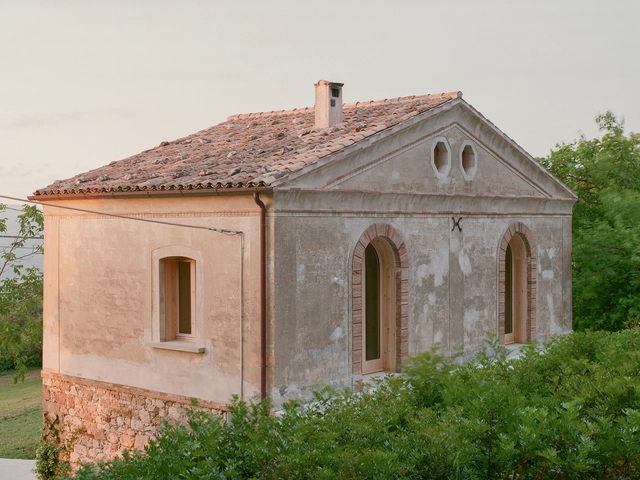
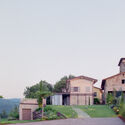
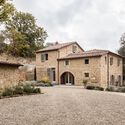
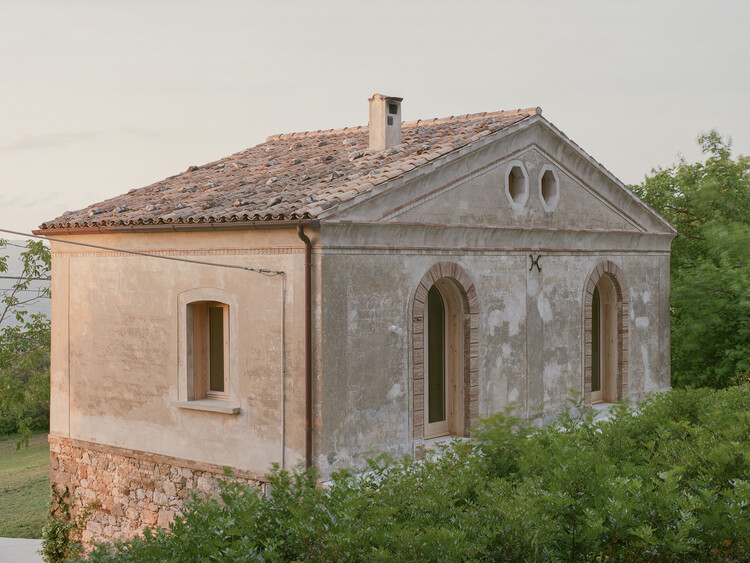
Italy's rich history, evident in its monuments and cities, has created a unique context for architectural renovation. Italian architects often embrace this heritage by engaging in a dialogue between old and new, rather than aiming for a complete transformation. This approach intentionally avoids an imitative style, instead using contemporary materials like steel, glass, and new wood to frame and highlight the existing historic stone and brickwork. This juxtaposition turns the original materials from simple structural elements into featured decorative and narrative ones. The result is a layered experience where the history of the space remains visible, ensuring it is preserved rather than erased by the renovation.

A Dialogue with the Past: Preservation Techniques of Historic Villas in Italy - Image 1 of 4A Dialogue with the Past: Preservation Techniques of Historic Villas in Italy - Image 2 of 4A Dialogue with the Past: Preservation Techniques of Historic Villas in Italy - Image 3 of 4A Dialogue with the Past: Preservation Techniques of Historic Villas in Italy - Image 4 of 4A Dialogue with the Past: Preservation Techniques of Historic Villas in Italy - More Images+ 2

SPPARC Studio Unveils Design for Residential Conversion of Former Ravenscourt Park Hospital in London

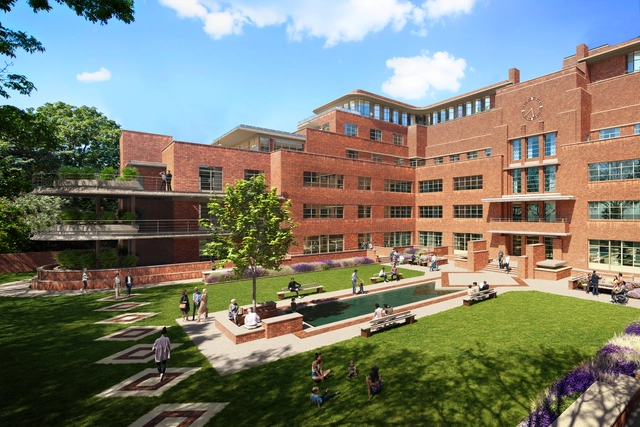
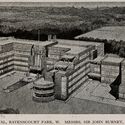
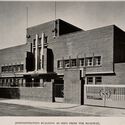
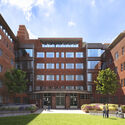
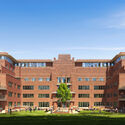
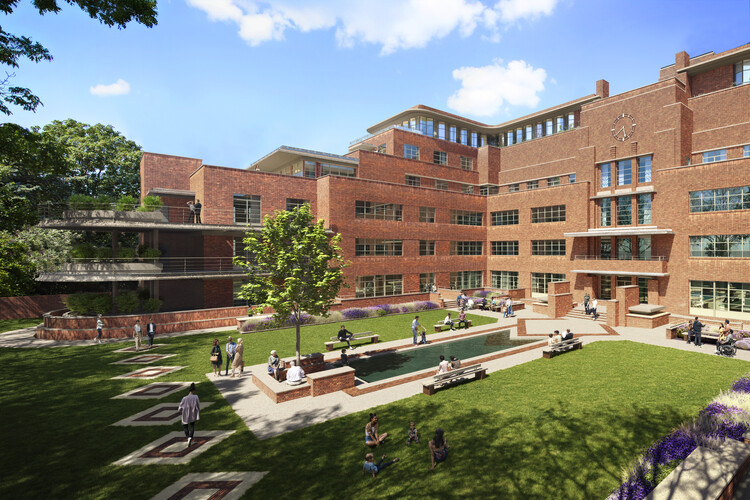
SPPARC architecture and design studio has revealed plans to renovate the former Ravenscourt Park Hospital in Hammersmith, London, which has stood vacant for two decades. The building, originally named the Royal Masonic Hospital and designed by Thomas S. Tait, is regarded as one of the first major modern buildings in the UK and was Europe's largest independent acute hospital when it was opened by King George V in 1933. Built to provide low-cost treatment for Freemasons and their families, the 260-bed facility operated until 1994, reopened as an NHS hospital in 2002, and was permanently closed in 2004. According to the recent announcement, the Grade II listed landmark, currently on Historic England's Heritage at Risk register, is intended to be repurposed as 140 new homes, a 65-bed care home, and spaces available for public hire.

SPPARC Studio Unveils Design for Residential Conversion of Former Ravenscourt Park Hospital in London - Image 1 of 4SPPARC Studio Unveils Design for Residential Conversion of Former Ravenscourt Park Hospital in London - Image 2 of 4SPPARC Studio Unveils Design for Residential Conversion of Former Ravenscourt Park Hospital in London - Image 3 of 4SPPARC Studio Unveils Design for Residential Conversion of Former Ravenscourt Park Hospital in London - Image 4 of 4SPPARC Studio Unveils Design for Residential Conversion of Former Ravenscourt Park Hospital in London - More Images+ 2

The Finnish Pavilion at the 2025 Venice Architecture Biennale Explores Architecture as a Collaborative Endeavour

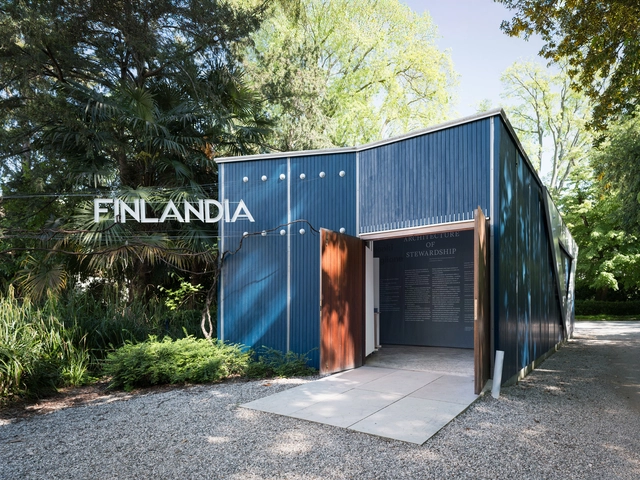
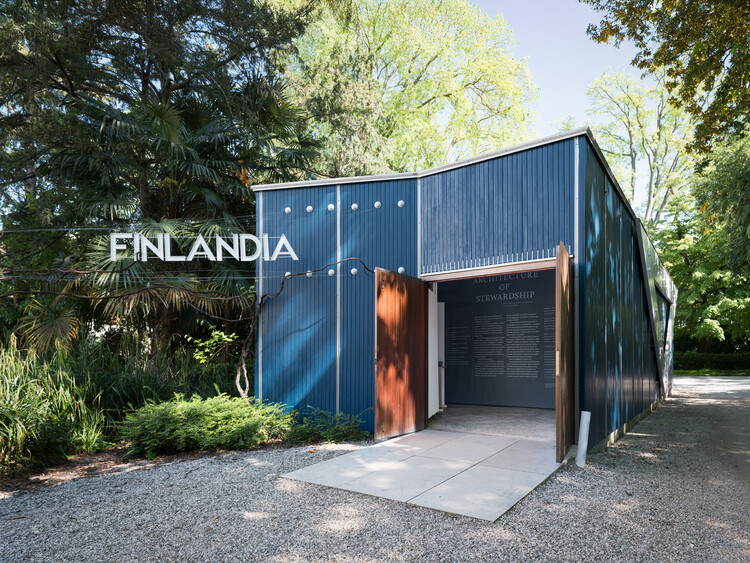
Archinfo, the Information Centre for Finnish Architecture, has announced the theme, curator, and exhibition team for the Pavilion of Finland at the 19th International Architecture Exhibition of La Biennale di Venezia. The exhibition, titled "The Pavilion – Architecture of Stewardship", will focus on the diverse labor involved in constructing and maintaining architecture, from design contributions by architectural workers and engineers to the efforts of construction workers, restoration architects, maintenance staff, and cleaners, all of whom play vital roles in the creation and upkeep of the built environment. Curated by Ella Kaira and Matti Jänkälä from the Helsinki-based architecture practice Vokal, it will use Alvar and Elissa Aalto's Pavilion of Finland to explore architecture as a collaborative endeavor.

The Finnish Pavilion at the 2025 Venice Architecture Biennale Explores Architecture as a Collaborative Endeavour - Image 1 of 4The Finnish Pavilion at the 2025 Venice Architecture Biennale Explores Architecture as a Collaborative Endeavour - Image 2 of 4The Finnish Pavilion at the 2025 Venice Architecture Biennale Explores Architecture as a Collaborative Endeavour - Image 3 of 4The Finnish Pavilion at the 2025 Venice Architecture Biennale Explores Architecture as a Collaborative Endeavour - Image 4 of 4The Finnish Pavilion at the 2025 Venice Architecture Biennale Explores Architecture as a Collaborative Endeavour - More Images+ 21

Eames House Reopens With Expanded Public Access Following Restoration

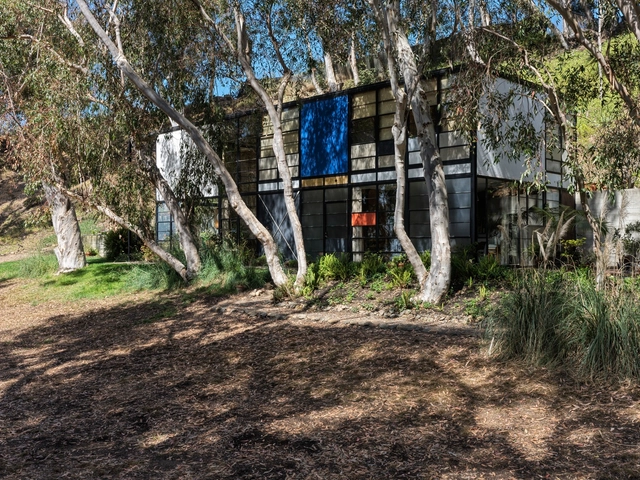
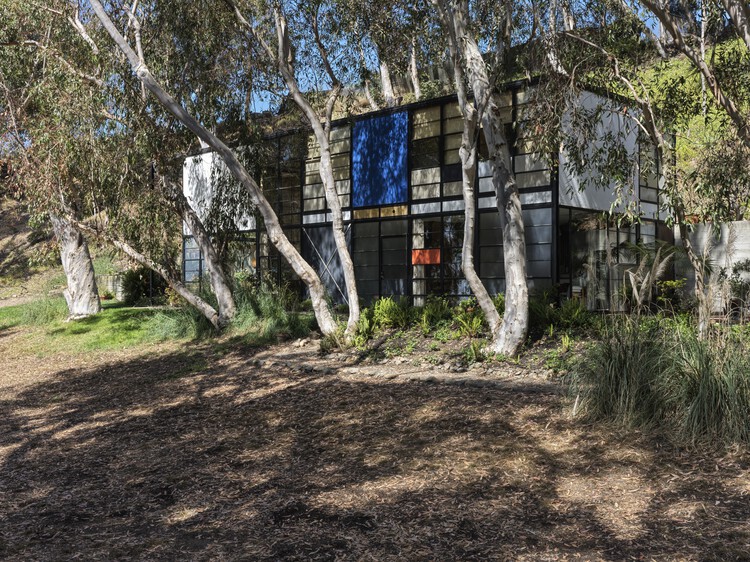
Following an extensive conservation process, the Eames House, Case Study House No. 8, has reopened to visitors after a five-month closure due to smoke damage from the Palisades Wildfire earlier this year. Although the iconic structure, designed by Charles and Ray Eames in 1949 as part of the Case Study House Program, was not directly damaged by flames, it required comprehensive cleaning and restoration to address the effects of smoke infiltration. As part of the reopening, the adjacent Eames Studio, previously closed to the public, will now be accessible for the first time. Designed and used by Charles and Ray as a working space, the studio will serve as a venue for rotating exhibitions, workshops, and public programs, offering an expanded architectural experience.

Eames House Reopens With Expanded Public Access Following Restoration - Image 1 of 4Eames House Reopens With Expanded Public Access Following Restoration - Image 2 of 4Eames House Reopens With Expanded Public Access Following Restoration - Image 3 of 4Eames House Reopens With Expanded Public Access Following Restoration - Image 4 of 4Eames House Reopens With Expanded Public Access Following Restoration - More Images+ 3

Studio Libeskind Unveils New Images of the Art Deco Tower Transformation in Antwerp, Belgium

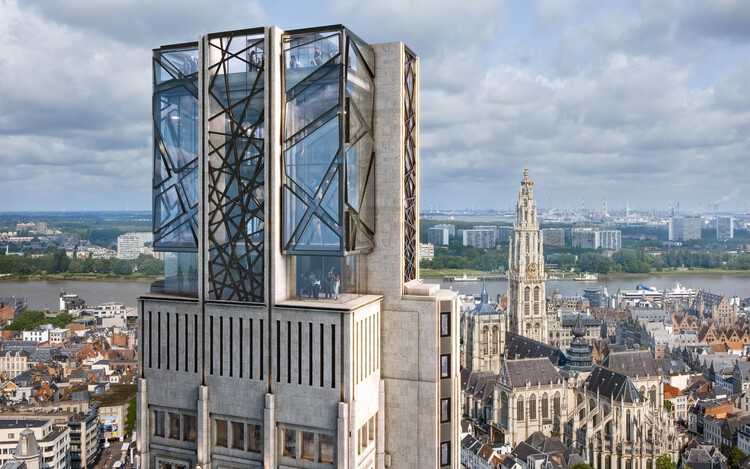
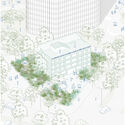
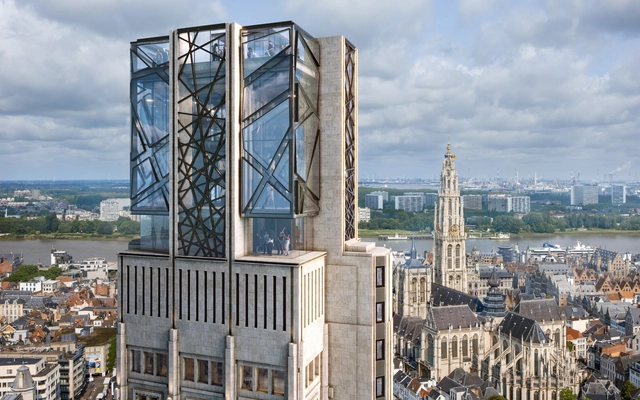
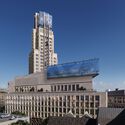
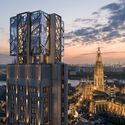
Studio Libeskind has released new images of the design for the transformation of the Boerentoren tower, one of Europe's earliest skyscrapers, located in the heart of Antwerp, Belgium. Developed in collaboration with Belgian architecture firm ELD, the project reimagines the 1932 Art Deco landmark as a new public cultural hub that will house The Phoebus Foundation's art collection. The design includes the addition of exhibition spaces, a panoramic viewing platform, a rooftop sculpture garden, and new restaurants and bars. According to the architects, the original architectural features will be preserved while introducing a new architectural feature, which they are calling the "Reimagined Crown." Initially announced in 2022, the project has now received preliminary approval from the Flemish Heritage Agency and the City of Antwerp.

Studio Libeskind Unveils New Images of the Art Deco Tower Transformation in Antwerp, Belgium - Image 1 of 4Studio Libeskind Unveils New Images of the Art Deco Tower Transformation in Antwerp, Belgium - Image 2 of 4Studio Libeskind Unveils New Images of the Art Deco Tower Transformation in Antwerp, Belgium - Image 3 of 4Studio Libeskind Unveils New Images of the Art Deco Tower Transformation in Antwerp, Belgium - Image 4 of 4Studio Libeskind Unveils New Images of the Art Deco Tower Transformation in Antwerp, Belgium - More Images+ 15

Grand Palais in Paris Reopens Following the Restoration by Chatillon Architectes

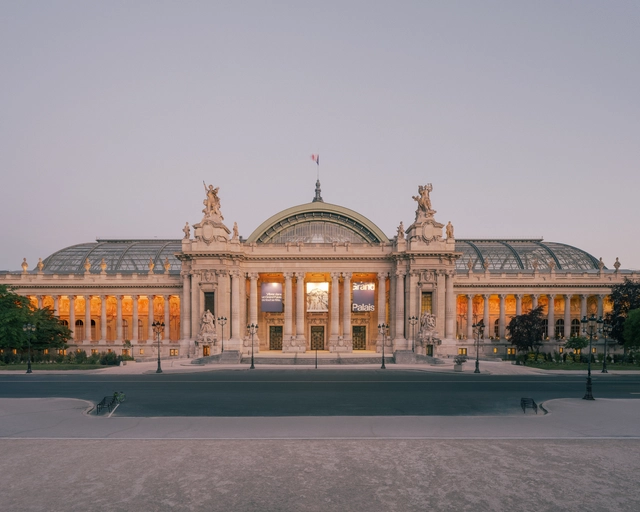
The Grand Palais in Paris has reopened to the public after the most comprehensive renovation in its 120-year history, led by Paris-based Chatillon Architectes. Originally built for the 1900 Universal Exhibition, the Grand Palais has long stood as a symbol of French cultural excellence, technical ingenuity, and architectural ambition. Following the reveal of the restored Nave for the 2024 Paris Olympics, the entire 77,000-square-meter building has now been renewed to enhance spatial clarity, restore original volumes, and transform the visitor experience. The project introduces expanded public access, new exhibition spaces, restaurants, and improved circulation, while remaining rooted in the building's architectural legacy.

Grand Palais in Paris Reopens Following the Restoration by Chatillon Architectes - Image 1 of 4Grand Palais in Paris Reopens Following the Restoration by Chatillon Architectes - Image 2 of 4Grand Palais in Paris Reopens Following the Restoration by Chatillon Architectes - Image 3 of 4Grand Palais in Paris Reopens Following the Restoration by Chatillon Architectes - Image 4 of 4Grand Palais in Paris Reopens Following the Restoration by Chatillon Architectes - More Images+ 13

From Churches to Homes: Conversions and Contemporary Renovations That Fuse Past and Present

Subscriber Access | 

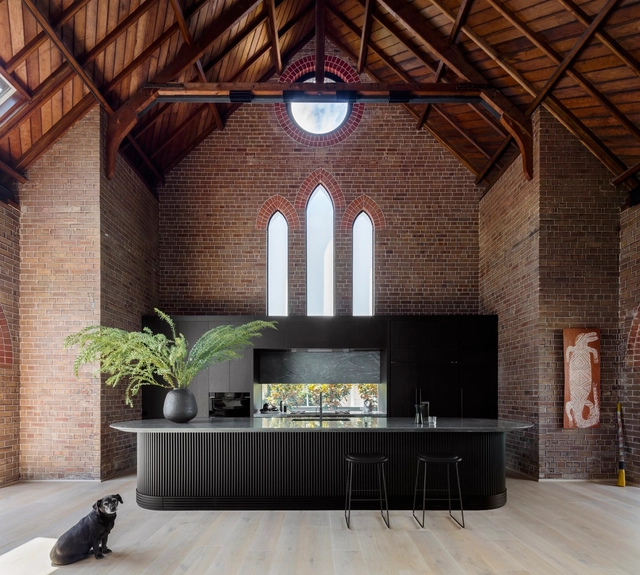
What does a change in use and/or scale in buildings imply? How can a church or chapel be transformed into a home? While the architecture of many contemporary sacred spaces shows a remarkable capacity for adaptation and evolution, the creative boundaries of many professionals extend beyond their conception as structures of spirituality or worship. Globally, the conversion of large churches and small chapels into private residences reveals a wide field for intervention and exploration, one that can preserve, restore, adapt, and/or renew the character of spaces originally conceived for other uses and scales, which for various reasons have been abandoned, become obsolete, or now require transformation.

From Churches to Homes: Conversions and Contemporary Renovations That Fuse Past and Present - Image 1 of 4From Churches to Homes: Conversions and Contemporary Renovations That Fuse Past and Present - Image 2 of 4From Churches to Homes: Conversions and Contemporary Renovations That Fuse Past and Present - Image 3 of 4From Churches to Homes: Conversions and Contemporary Renovations That Fuse Past and Present - Image 4 of 4From Churches to Homes: Conversions and Contemporary Renovations That Fuse Past and Present - More Images+ 25

UMWELT and Plan Común to Transform Partially Demolished Housing Block Into a Museum in Villa San Luis, Chile

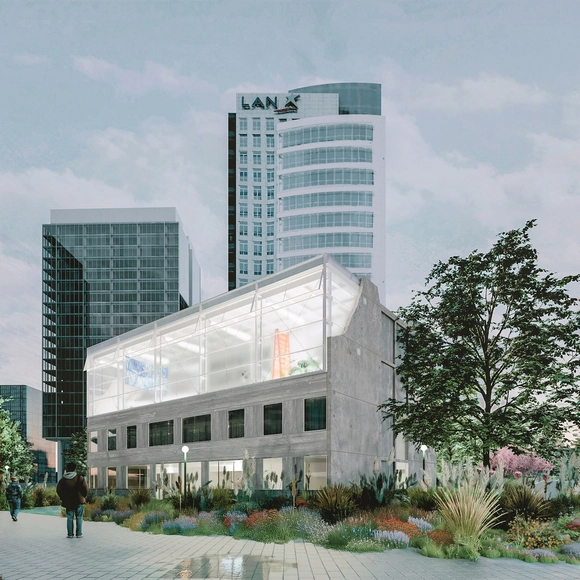
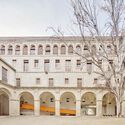
The residential project Villa San Luis, originally named Villa Compañero Ministro Carlos Cortés, was built between 1971 and 1972 on land that today lies in one of the highest-income areas of Santiago, Chile. Initially designed as an urban center for 60,000 middle-income residents, with staggered buildings and a civic center covering 3.4 of its 50 hectares, the project was redefined in the 1970s to accommodate the unhoused population in the eastern sector of the Chilean capital. The process was not without conflict. During the dictatorship, the new residents of the complex were evicted, and the land was acquired by the military. From then on, the complex entered a process of reappropriation and resignification that now appears to be reaching a new milestone: the conversion of one of its buildings into a memorial site and museum, through a project by UMWELT and Plan Común.
UMWELT and Plan Común to Transform Partially Demolished Housing Block Into a Museum in Villa San Luis, Chile - Image 1 of 4UMWELT and Plan Común to Transform Partially Demolished Housing Block Into a Museum in Villa San Luis, Chile - Image 2 of 4UMWELT and Plan Común to Transform Partially Demolished Housing Block Into a Museum in Villa San Luis, Chile - Image 3 of 4UMWELT and Plan Común to Transform Partially Demolished Housing Block Into a Museum in Villa San Luis, Chile - Image 4 of 4UMWELT and Plan Común to Transform Partially Demolished Housing Block Into a Museum in Villa San Luis, Chile - More Images+ 5

How Breathable Should Facades Be? Exploring Permeability and Impermeability in Building Envelopes

The main role of architecture is to create structures that protect us from the environment and create spaces that are safe and comfortable for all types of needs and activities. By providing shelter, architecture also shapes the way people interact with their surroundings. Building technologies of the past rarely managed, however, to create a complete separation between us and the outside world.

While impermeability was a desired outcome, the porous building materials available always allowed some water, wind, or outside particles to leak into the interior spaces. In contrast, modern technologies now allow for almost completely impermeable building envelopes, allowing for complete separation between indoors and outdoors, thus relying on engineered systems to regulate temperature, airflow, or humidity. This article explores the differences between these two contrasting approaches, exploring how building facades are equipped to regulate indoor comfort and its environmental impact.
How Breathable Should Facades Be? Exploring Permeability and Impermeability in Building Envelopes - Image 1 of 4How Breathable Should Facades Be? Exploring Permeability and Impermeability in Building Envelopes - Image 2 of 4How Breathable Should Facades Be? Exploring Permeability and Impermeability in Building Envelopes - Image 3 of 4How Breathable Should Facades Be? Exploring Permeability and Impermeability in Building Envelopes - Image 4 of 4How Breathable Should Facades Be? Exploring Permeability and Impermeability in Building Envelopes - More Images+ 5

David Chipperfield Architects Presents Plan to Restore and Enhance a Roman Theater in Brescia, Italy

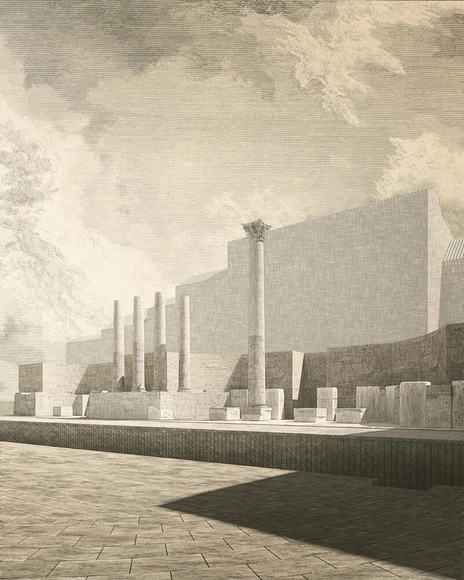
The preliminary design for the architectural restoration and functional redevelopment of the Roman Theatre was presented on Tuesday, April 8, 2025, at the Auditorium of the Santa Giulia Museum in Brescia. The project was developed by the Milan office of David Chipperfield Architects, commissioned by the Fondazione Brescia Musei in collaboration with the Municipality of Brescia and the Brescia Chamber of Commerce, Industry, Handicraft, and Agriculture. Chipperfield was tasked with identifying the essential architectural elements to guide future design phases, leading to the drafting of the Technical-Economic Feasibility Project (PFTE) and the final project, including the necessary authorizations. This initiative is financially supported by the Italian Chamber of Commerce under a 2019 ministerial decree prioritizing cultural heritage, especially where it enhances tourism.
David Chipperfield Architects Presents Plan to Restore and Enhance a Roman Theater in Brescia, Italy - Image 1 of 4David Chipperfield Architects Presents Plan to Restore and Enhance a Roman Theater in Brescia, Italy - Image 2 of 4David Chipperfield Architects Presents Plan to Restore and Enhance a Roman Theater in Brescia, Italy - Image 3 of 4David Chipperfield Architects Presents Plan to Restore and Enhance a Roman Theater in Brescia, Italy - Image 4 of 4David Chipperfield Architects Presents Plan to Restore and Enhance a Roman Theater in Brescia, Italy - More Images+ 5

The Holy See Pavilion Presents a Living Practice of Restoration at the Venice Architecture Biennale 2025

At the 19th International Architecture Exhibition, La Biennale di Venezia, the Dicastery for Culture and Education presents "Opera Aperta", a project that positions architecture as a practice of collective care and responsibility. Curated by Marina Otero Verzier and Giovanna Zabotti, Opera Aperta is set within the Santa Maria Ausiliatrice Complex in Venice's Castello district. Designed by Tatiana Bilbao ESTUDIO and MAIO Architects, the project transforms the 500-square-meter site into a space for collaborative restoration and public engagement. Conceived as a work in progress rather than a finished installation, Opera Aperta functions as a platform for ongoing exchange, participation, and engagement rooted in the local context. This open and process-oriented approach was recognized during the opening events, where the Holy See Pavilion received the Golden Lion's Special Mention for National Participation.
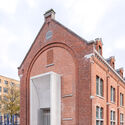
The Holy See Pavilion Presents a Living Practice of Restoration at the Venice Architecture Biennale 2025 - Image 1 of 4The Holy See Pavilion Presents a Living Practice of Restoration at the Venice Architecture Biennale 2025 - Image 2 of 4The Holy See Pavilion Presents a Living Practice of Restoration at the Venice Architecture Biennale 2025 - Image 3 of 4The Holy See Pavilion Presents a Living Practice of Restoration at the Venice Architecture Biennale 2025 - Image 4 of 4The Holy See Pavilion Presents a Living Practice of Restoration at the Venice Architecture Biennale 2025 - More Images+ 6

Third Nature Presents a Regenerative Masterplan for Greater Copenhagen

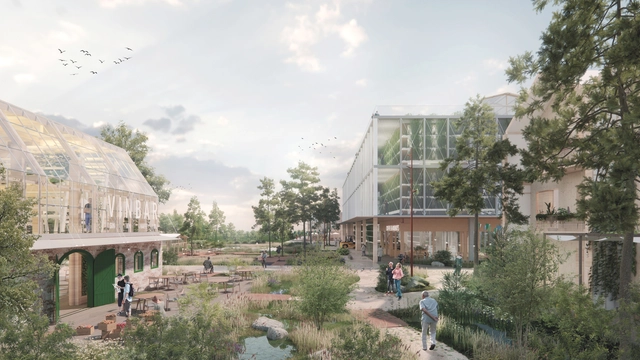
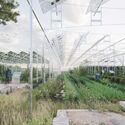
Danish architecture firm Third Nature, together with Sophie Sahlqvist Landskab, Arkaia, ILC, and Artelia, recently shared images of Øhjem, their proposed strategic vision for the re-naturalization of Denmark's Greater Copenhagen region toward 2050. The regenerative plan is part of the Water's Ways program under the Agenda Earth initiative, an interdisciplinary project run by the Danish Association of Architects in collaboration with the Dreyers Foundation and the Danish Bar Association. Led by urbanist Boris Brorman Jensen, the program calls for long-term solutions to restore 15% of Danish agricultural land while also protecting 600,000 homes from water-related threats. Third Nature's Øhjem masterplan reimagines the 25 km Ramsø Dale as a step toward implementing the land management objectives outlined in the Danish Green Tripartite Agreement (Grøn Trepart), signed in June 2024.

Third Nature Presents a Regenerative Masterplan for Greater Copenhagen - Image 1 of 4Third Nature Presents a Regenerative Masterplan for Greater Copenhagen - Image 2 of 4Third Nature Presents a Regenerative Masterplan for Greater Copenhagen - Image 3 of 4Third Nature Presents a Regenerative Masterplan for Greater Copenhagen - Image 4 of 4Third Nature Presents a Regenerative Masterplan for Greater Copenhagen - More Images+ 13

“Recycle!” Exhibition at the Danish Architecture Center Explores Creative Approaches to Material Reuse

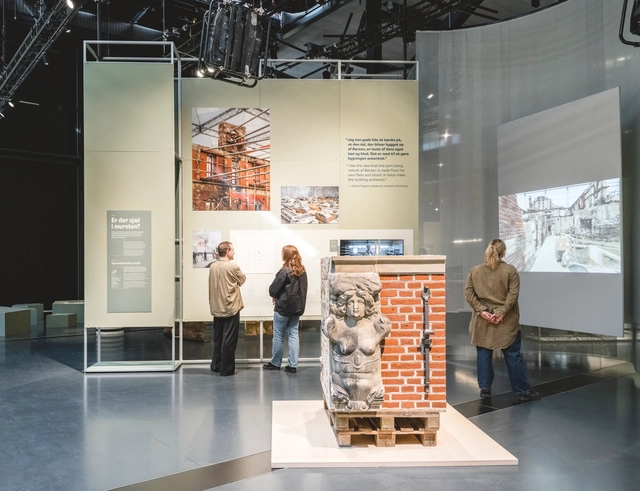
A new architecture and design exhibition opened on April 11, 2025, at the Danish Architecture Center in Copenhagen. Titled Recycle!, it explores recycling and reuse as a new way of creating, living, and building within the urgent context of the current climate crisis. The exhibition goes beyond presenting recycling and reuse as necessities; instead, it frames them as positive cultural shifts taking root in the construction industry and society at large. One of the exhibition's goals is to highlight the importance of resource awareness by posing the question: How can we increase the conservation, reuse, and transformation of what we already have?

“Recycle!” Exhibition at the Danish Architecture Center Explores Creative Approaches to Material Reuse - Image 1 of 4“Recycle!” Exhibition at the Danish Architecture Center Explores Creative Approaches to Material Reuse - Image 2 of 4“Recycle!” Exhibition at the Danish Architecture Center Explores Creative Approaches to Material Reuse - Image 3 of 4“Recycle!” Exhibition at the Danish Architecture Center Explores Creative Approaches to Material Reuse - Image 4 of 4“Recycle!” Exhibition at the Danish Architecture Center Explores Creative Approaches to Material Reuse - More Images+ 18

MAD Architects’ Fenix Museum of Migration Opens in Rotterdam’s City Harbor

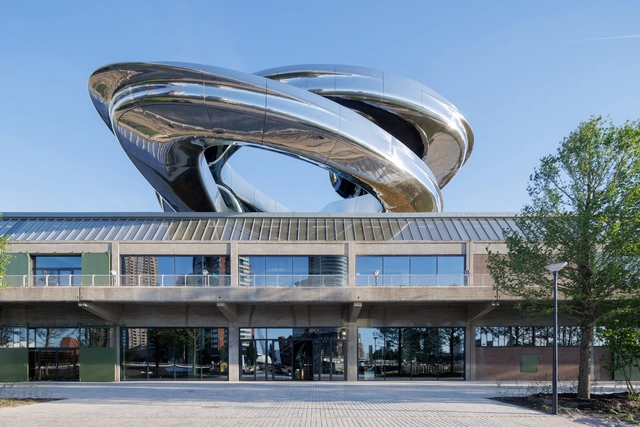
Fenix is a new museum in Rotterdam's City Harbour, dedicated to the collection of historic and contemporary objects that explore migration through art. It is located on the Katendrecht peninsula on the south bank of the River Maas, in a 100-year-old former warehouse recently renovated by MAD Architects and Bureau Polderman. This marks MAD Architects' first commission for a public cultural building in Europe. Recently completed, the building is set to open this Friday, May 16, showcasing three exhibitions: All Directions, featuring over 150 artworks and objects from the Fenix collections; The Family of Migrants, a photographic exhibition by Edward Steichen; and The Suitcase Labyrinth, an interactive installation made up of 2,000 donated suitcases.

MAD Architects’ Fenix Museum of Migration Opens in Rotterdam’s City Harbor - Image 1 of 4MAD Architects’ Fenix Museum of Migration Opens in Rotterdam’s City Harbor - Image 2 of 4MAD Architects’ Fenix Museum of Migration Opens in Rotterdam’s City Harbor - Image 3 of 4MAD Architects’ Fenix Museum of Migration Opens in Rotterdam’s City Harbor - Image 4 of 4MAD Architects’ Fenix Museum of Migration Opens in Rotterdam’s City Harbor - More Images+ 11

A Culture of Reuse: 5 European Museums Embedded into Their Historical Contexts

Subscriber Access | 

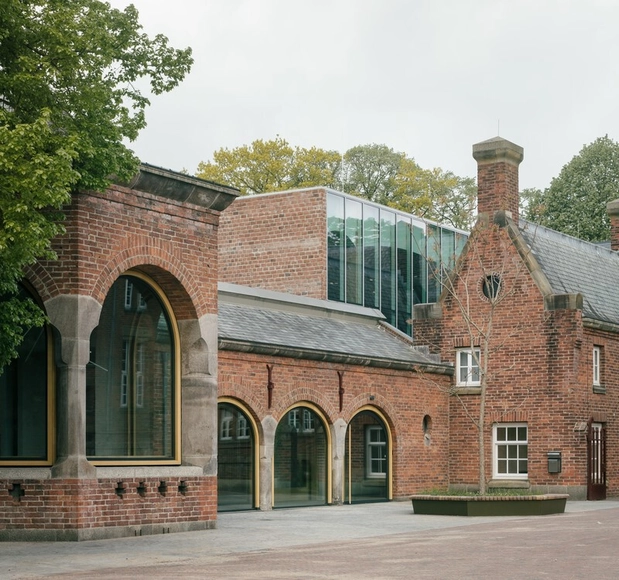
Throughout their relatively recent history, museums have evolved to condense particular aspects of a culture and present them in a coherent and unified manner. This makes the connection between the architecture and the exhibit a crucial matter, as the architect is tasked with designing not only the framework and background of the exhibited arts or artifacts but also taking charge of the journey undertaken by the visitor, harmonizing the cultural gain with the lived spatial experience of walking the exhibition halls. However, not all museums have been purposely built for this task.

Across Europe, museums are being organized within or expanding upon historical monuments and buildings that have lost their original purpose. Then in a state of decay, this decision to reorganize them as cultural venues stops the decay and preserves the historical material, adding a new layer of complexity to the intended exhibits. The architect's role becomes that of introducing order and a system that can balance the heritage of the place with the needs of modern functionality, ensuring that the essence of the original structure is preserved while meeting the needs of contemporary exhibitions and public engagement.

A Culture of Reuse: 5 European Museums Embedded into Their Historical Contexts - Image 1 of 4A Culture of Reuse: 5 European Museums Embedded into Their Historical Contexts - Image 2 of 4A Culture of Reuse: 5 European Museums Embedded into Their Historical Contexts - Image 3 of 4A Culture of Reuse: 5 European Museums Embedded into Their Historical Contexts - Image 4 of 4A Culture of Reuse: 5 European Museums Embedded into Their Historical Contexts - More Images+ 23