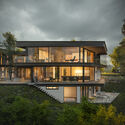
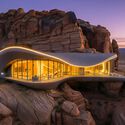
Architectural schools usually leave lasting marks on their students, shaping their style and critical inquiry long after formal education has ended. For example, SCI-Arc, founded in 1972 and based in downtown Los Angeles, is an institution recognized for its culture of experimentation, critical investigation, and creative independence, building a reputation based on the idea that architecture should be understood as a field open to dialogue with art, technology, design, and contemporary culture. The diversity of trajectories of its alumni demonstrates how this environment can generate distinct professional approaches, but united by the same willingness to explore new possibilities.
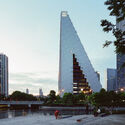
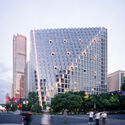
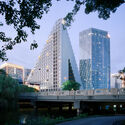
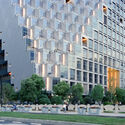
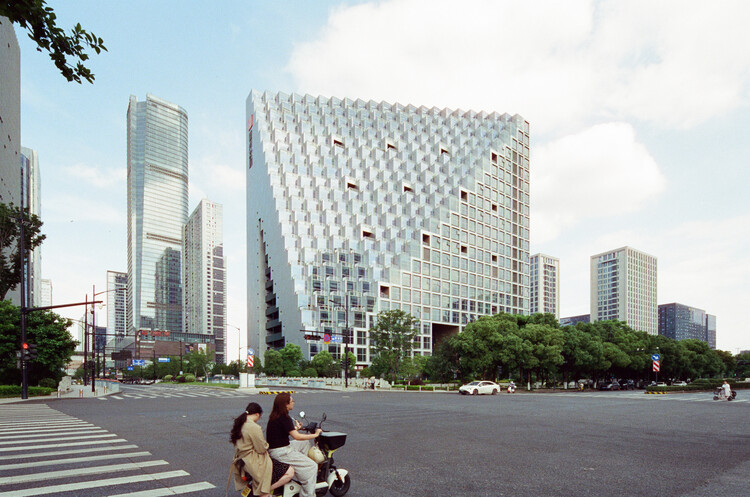
OMA has completed the Hangzhou Prism, a large-scale mixed-use development in Hangzhou's Future Tech City district, China, following a design and development process that began in 2016. Commissioned by Xinhu Real Estate Group and led by OMA Partner Chris van Duijn, with Michael Hadjistyllis serving as project architect, the project combines residential units, a hotel, offices, commercial spaces, and public amenities within a single building volume. Marking OMA's first completed project in Hangzhou, the development occupies a central site within one of the city's emerging innovation and business districts.
Dornbracht's Coya series designed by Sieger Design. Image Courtesy of Dornbracht
When is a form still circular or rectangular? In twentieth-century modernism, this question was largely absent. Architecture was built on clarity, reduction, and formal purity. Influenced by architects such as Le Corbusier and Ludwig Mies van der Rohe, modernist design established a visual order based on rational geometry, industrial materials, and the rejection of ornament. Circle and square, function and expression, were kept strictly apart—a logic that dictated the rigid, modular layouts of traditional bathrooms for decades.
Most people rarely remember a passage. They remember the classroom, the apartment, the gallery, or the plaza at the end of it. Passages are usually designed to disappear into the background, guiding movement from one destination to the next. Yet some of architecture's most memorable experiences happen while moving through a place rather than arriving at it.
Circulation is often treated as one of architecture's most practical elements. Corridors connect rooms, galleries provide access, and walkways organize movement through a building. Their purpose seems straightforward: to help people get from one point to another. Because of this, circulation spaces have long been considered secondary to the programs they serve. Attention tends to focus on destinations, while the spaces in between remain largely unnoticed.
How can the most structured elements in architecture give rise to unplanned forms of everyday life? "Spontaneous order" describes how structured systems can generate unplanned but coherent patterns of behavior. In urban discourse, it is often used to describe cities: frameworks of streets, plots, and buildings that are designed, while everyday life is not. Movement, encounters, routines, and informal uses emerge from simple spatial rules rather than explicit programming. In cities, this is visible in how sidewalks, stations, and thresholds operate. The structure is fixed, but the social order is fluid, setting conditions for behavior rather than defining it.
A similar logic can be observed in architectural micro-infrastructures such as locker systems. Like cities, lockers rely on structured frameworks that do not prescribe how life unfolds within them. A locker system is highly controlled in architectural terms: repetitive modules, strict grids, standardized dimensions, controlled access. Yet once in use, it produces spontaneous behaviors. People pause in corridors, return at irregular times, linger near locker zones, or briefly interact with others doing the same. What appears to be a strictly infrastructural storage system begins to generate informal social and spatial behavior.
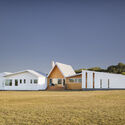
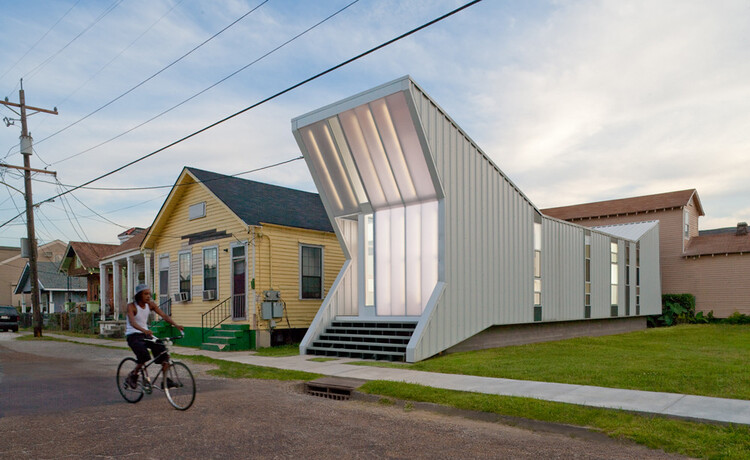
Emerging in port cities and working-class neighborhoods throughout the nineteenth century, the shotgun house became a durable response to density, climate, and constrained urban parcels, becoming one of the defining domestic forms of the Southern United States. Its narrow footprint, sequential plan, and deeply shaded porches produced a spatial logic that was economical and environmentally responsive before either term became central to architectural discourse. From New Orleans and Mobile to Houston and Louisville, shotgun houses formed the physical fabric of neighborhoods shaped by migration, labor, community, and cultural life. Though often dismissed as ordinary, vernacular construction, the housing typology has long embodied sophisticated ideas about climate adaptation, social adjacency, and incremental urban growth, making it one of the most influential domestic forms in the history of the American city.
What defines the atmosphere of a home? Beyond material palettes and natural light, sound plays a defining role in how spaces are perceived and inhabited. The reverberation of footsteps across stone, the muted calm of a textile-lined room, or the way music carries through an open-plan interior all shape the sensory identity of domestic space. Architecture is experienced not only visually, but acoustically.
The concept of the "soundscape" describes this relationship between people, sound, and the built environment. In residential architecture, sound is more than background noise or technical performance; it influences privacy, concentration, rest, and emotional comfort. Geometry and materiality act as the primary acoustic conductors: while concrete, glass, and stone reflect and amplify, timber and upholstery soften and absorb. Ceiling heights, circulation paths, and room proportions further shape how sound travels and settles across a space.
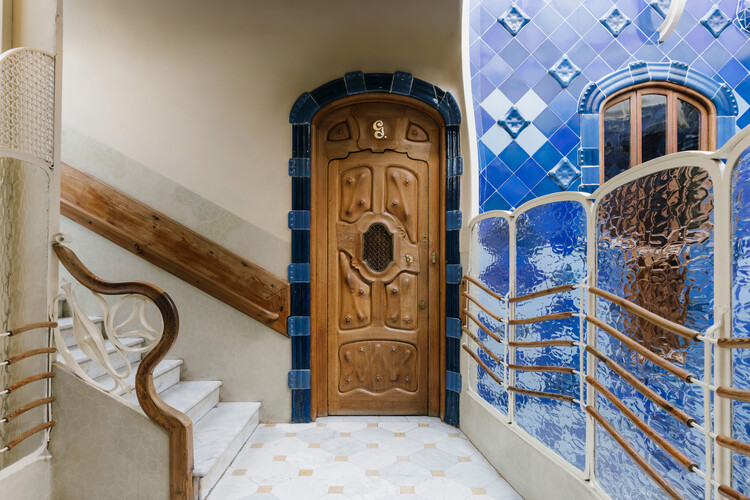
Casa Batlló in Barcelona has unveiled the restored Third Floor of the building, opening the last original residence preserved from Antoni Gaudí's 1904-1906 transformation of the property to the public for the first time. Led by restoration architect Xavier Villanueva and developed over three years through an archaeological-style conservation process, the intervention recovers a largely intact domestic environment that had remained inhabited by descendants of the Batlló family for more than a century. Adapted into a series of private rooms for gatherings, cultural events, and experiences, the restored apartment combines heritage preservation with a contemporary interior design intervention by Paola Navone – OTTO Studio, establishing a new program for one of Barcelona's most recognized architectural landmarks.
Architectural drawings operate through abstraction. Plans, sections, and elevations condense spatial, constructive, and dimensional information into a set of codes that make sense within the discipline, but are not always immediately legible to those unfamiliar with this language. In some projects, this condition can create a recurring tension between what is designed and what can be understood. This intensifies when the tools used do not correspond to the scale and complexity of the design. In contexts such as single-family homes, renovations, or additions, overly complex software can introduce noise, delays, and unnecessary dependencies, making proposals harder to develop and convey.
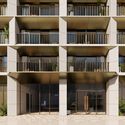
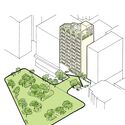
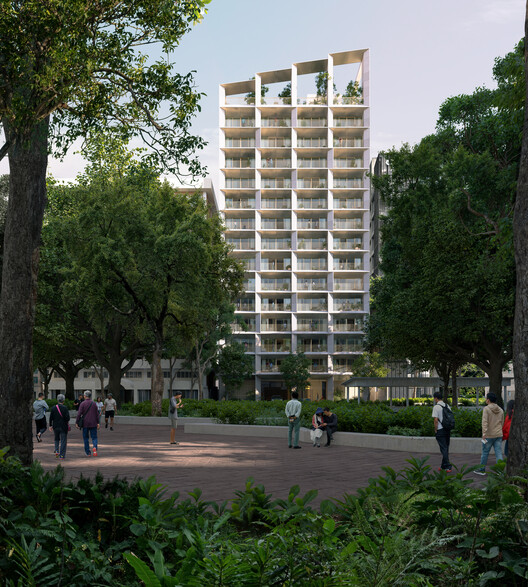
Henning Larsen, in collaboration with KHL Architects & Planners, Arup, and Flaviano Capriotti Architetti, has proposed the design for a 14-story residential building in Taipei for Continental Development Corporation. The project, titled Northern Lights, has a gross floor area of 3,464 square meters and is scheduled for completion in 2029. Situated adjacent to Daan Park, the development includes 46 residences and is positioned within a dense urban environment while maintaining proximity to one of the city's primary green spaces, which is described as a key contextual reference in the design.
Scientifically, glass is defined as an amorphous solid, meaning its atoms are not arranged in a regular crystalline structure. This is why the material is often described as a "liquid frozen in time." This structural configuration explains one of its most distinctive qualities: transparency. Without a crystalline lattice capable of scattering light, radiation passes through the material with relatively little interference. Although it often appears delicate, this same structure also allows glass to achieve significant mechanical performance. With industrial processes such as tempering, lamination, and specialized coatings, the material can reach high levels of strength, safety, and environmental performance.
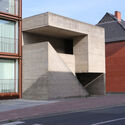
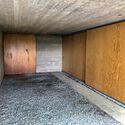
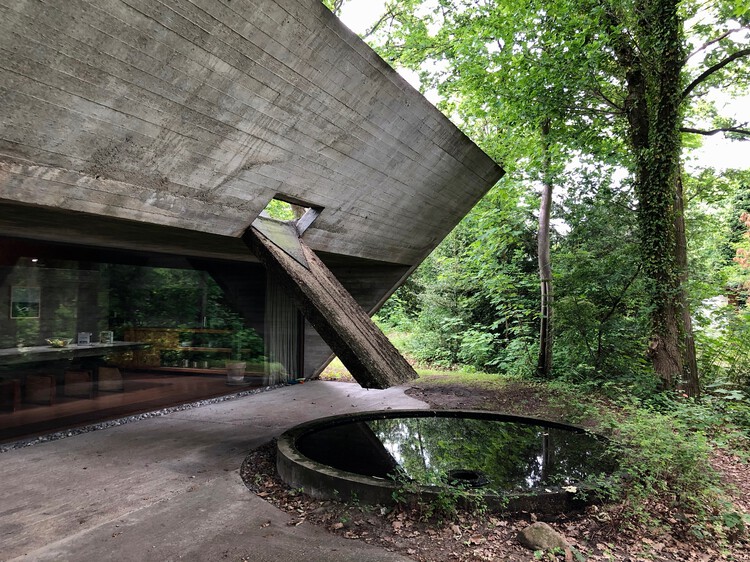
Architectural history often advances through iconic gestures or technological breakthroughs, yet some works remain influential precisely because they resist spectacle. Built between 1972 and 1974 in Sint-Martens-Latem, Belgium, the Van Wassenhove Residence stands as one of those quiet but decisive projects. Conceived as a single, continuous concrete volume set within a wooded landscape, the house challenges conventional ideas of domestic comfort, privacy, and spatial hierarchy. Its presence is direct and uncompromising, yet it avoids monumentality, positioning itself instead as a lived structure shaped by everyday rituals and long-term inhabitation.
The house was designed by Juliaan Lampens, a figure who operated largely outside the dominant architectural narratives of his time. Working mostly in Flanders and often on private commissions, Lampens developed a body of work centered on radical spatial reduction, material honesty, and an almost ethical approach to construction. The Van Wassenhove Residence is frequently described as his most complete work, not because it introduces new ideas, but because it consolidates many of the principles that run consistently through his career.
Residential architecture continues to offer a productive ground for unbuilt exploration, revealing how architects respond to site, climate, and constraint at the scale of the domestic. In this Unbuilt edition, submitted by the ArchDaily community, the selected projects bring together a range of proposals that reconsider the house not as an isolated object, but as a spatial system shaped by its environment. These works position architecture as a framework that negotiates between ground, material, and inhabitation, often emerging directly from the conditions of the site.
Across varied geographies, from Kerala and Cartagena to Amman, Tromsø, and Zwolle, the projects demonstrate diverse responses to domestic architecture. They include compact urban dwellings organized through vertical layering, courtyard houses partially embedded within the ground, residences adapted to sloping terrains, and typological transformations shaped by regulatory constraints. Some projects explore linear spatial sequences rooted in traditional proportions, while others organize domestic life around atria or excavated voids that mediate light, ventilation, and privacy. Together, these proposals examine how the house can be structured through section, material, and environmental performance rather than formal expression.
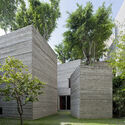
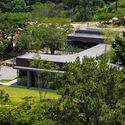
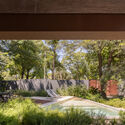
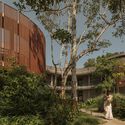
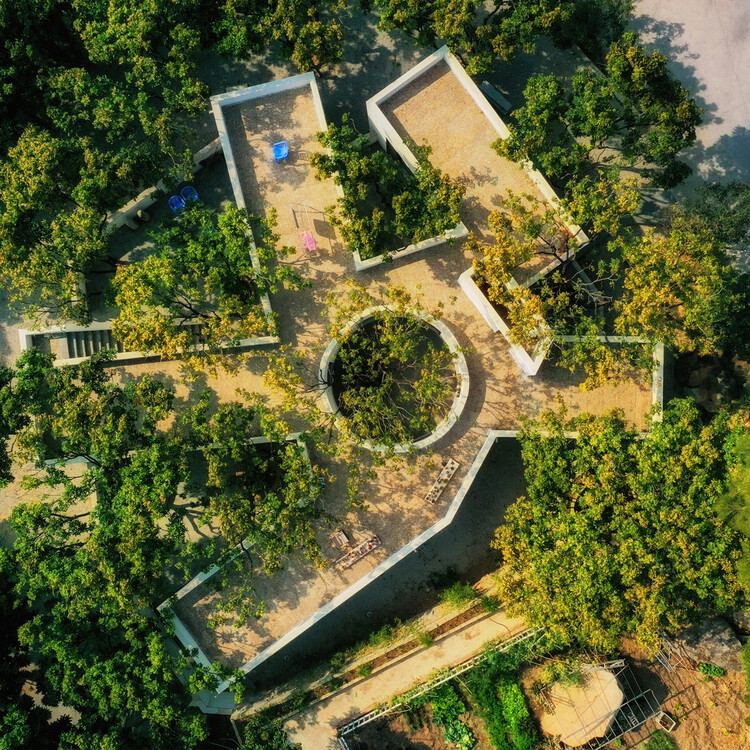
Trees are often the first things to vanish when construction starts. Clearing a site has long been one of architecture's most immediate acts, removing what already exists to make room for something new. When vegetation is preserved, it is typically treated as a secondary layer, added back as landscape rather than shaping the project itself.
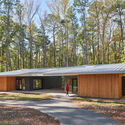
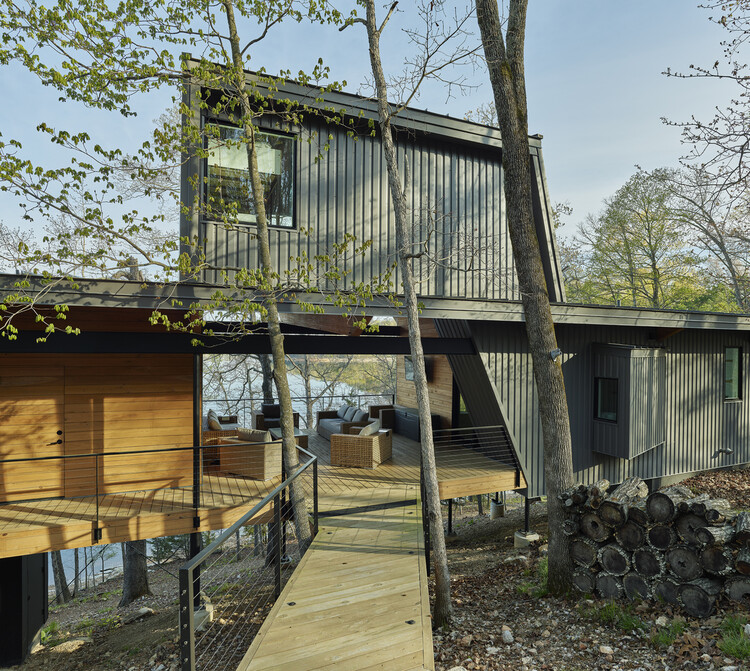
However, some projects begin elsewhere. Instead of starting from a blank site, they work with what is already there. Trees remain in place, not as elements to frame, but as conditions that influence how space is organized, how light enters, and how architecture takes form.
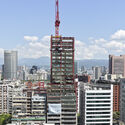
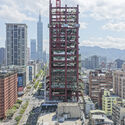
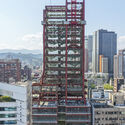
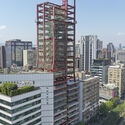
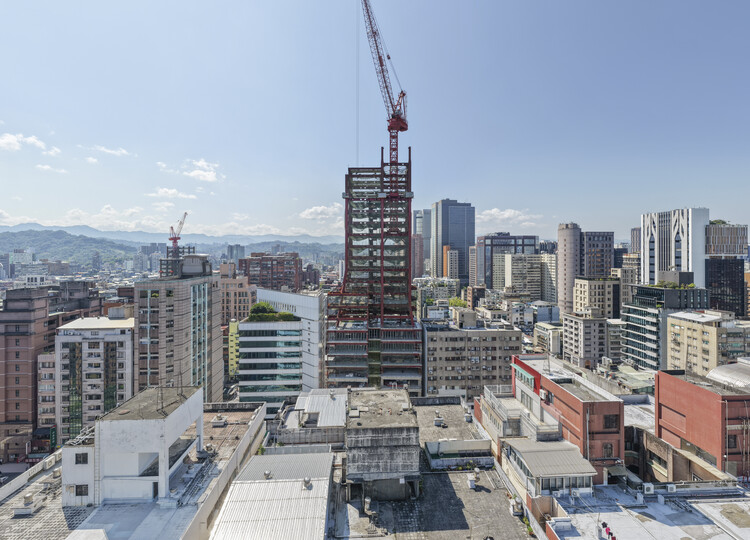
OMA's Metropolitan Village, also known as Taipei Xinyi–Wenchang Residence, is a new high-rise residential tower located in Taipei's Xinyi Central Business District. The project, led by David Gianotten and Chiaju Lin, with HCCH & Associates Architects Planners & Engineers as local collaborator, provides 11,961 m² of residential floor area on a 736 m² site. The 95 m, 23-storey building follows the concept of a "vertical village," reflecting the increasingly fluid boundary between living and working identified by the architects in post-pandemic Taipei. Commissioned by Continental Development Corporation, the project broke ground in 2024 and is scheduled for completion in 2027. Recent images show construction progress, with the highest structural element now being installed.
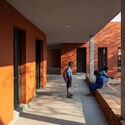
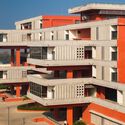
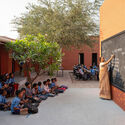
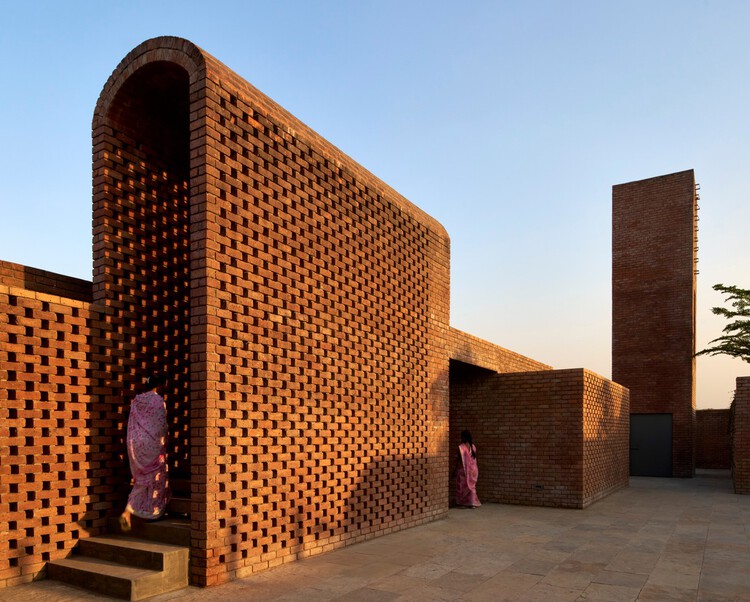
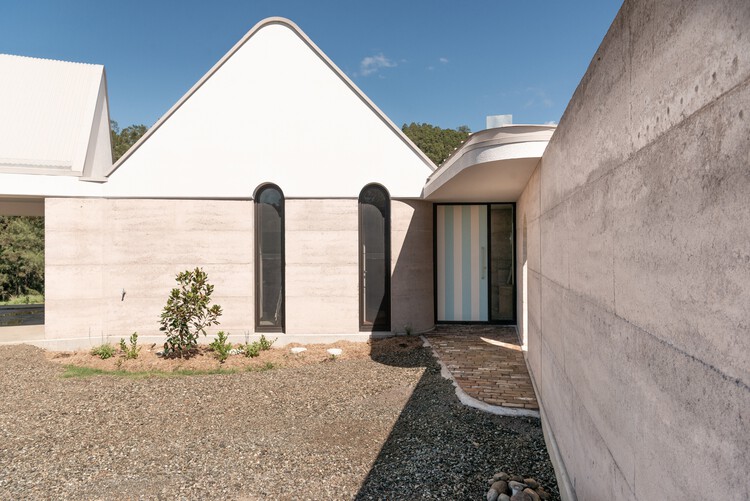
In recent years, earthen construction has gained renewed attention in architecture. Materials such as adobe, rammed earth, and compressed earth blocks, once mainly associated with vernacular traditions, are increasingly being explored by contemporary architects. Rather than representing a simple return to the past, this renewed interest reflects a broader reconsideration of how architecture engages with materials, local resources, and environmental conditions.
For centuries, building with earth was part of everyday construction across many regions of the world. Techniques such as adobe, rammed earth, cob, and other soil-based systems developed gradually through adaptation to climate, available resources, and local construction practices. These methods responded directly to environmental conditions while shaping cultural ways of building. This knowledge circulated through collective practices rather than formal architectural education, allowing techniques to evolve through continuous experimentation.