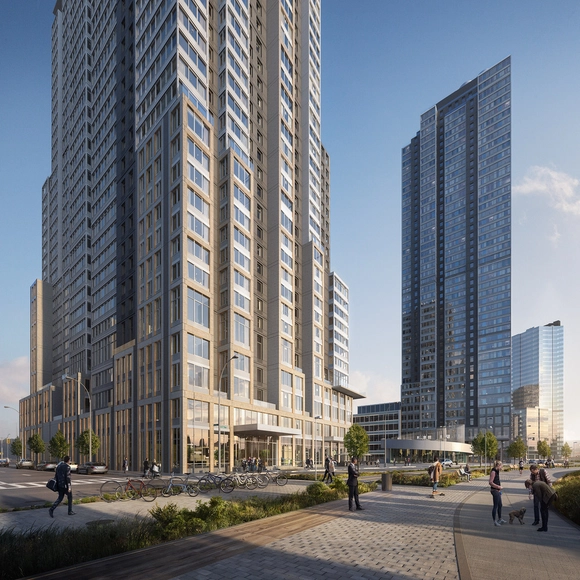
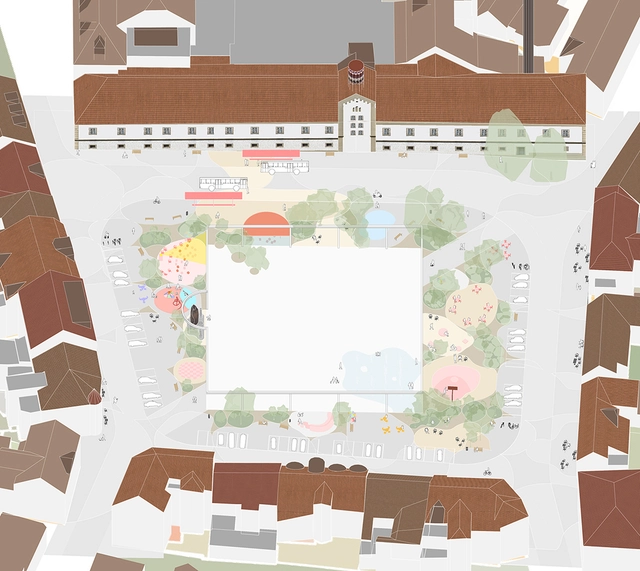
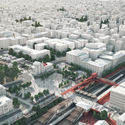
Zbraslav Square . Image Courtesy of Architects for Urbanity
Recognizing the importance of international contests in pushing forward inventive concepts and design, ArchDaily has put together a curated selection of Best Unbuilt Architecture featuring competition entries from around the globe. Submitted by our readers, these projects include winning proposals, honorable mentions, and recognized admissions.
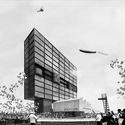
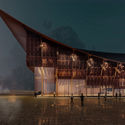
In this week’s article, urban interventions take the lead with multiple square designs and infrastructural elements. On the cultural level, projects underlined include Museums in Iran and Norway, a National Concert hall in Lithuania, and a Mosque in Turkey. For the civic category, the functions highlighted comprise a new city hall for a South Korean district and an Indian community development center for at-risk women. Finally, other programs involve a rural school in Haiti, a tourist center in China, and a housing complex in Prague.
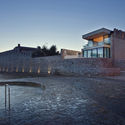
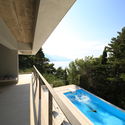
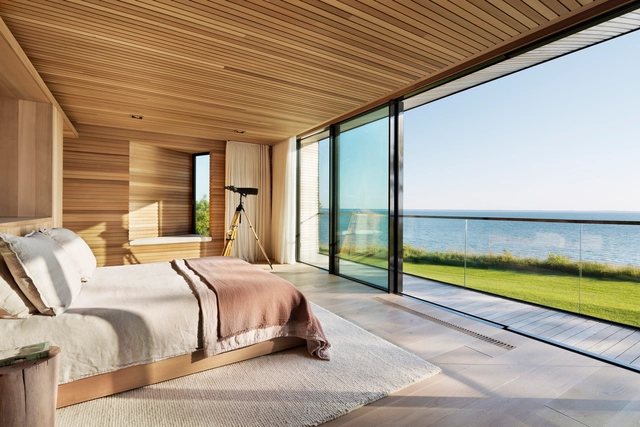
The Hamptons are defined by a storied past. As wealthy New Yorkers were drawn to this part of Long Island’s South Fork for the last century and a half, they increasingly built a series of exclusive and luxurious homes. Today, new residences along the coastline are some of the most expensive properties in the United States. As summer homes and vacation getaways, many of these residences are designed as private retreats surrounded by nature.
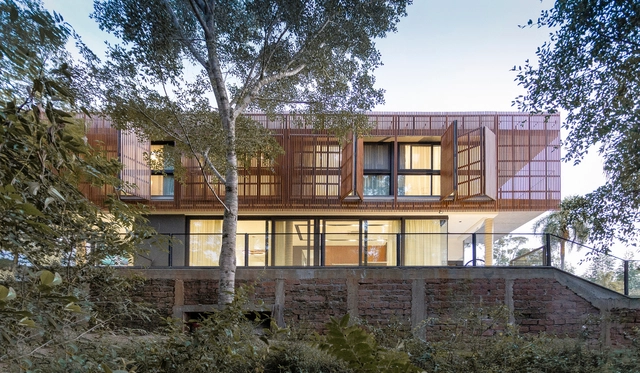
The Cerrado is a vast tropical savanna ecoregion of Brazil, a biome consisting of low trees, sparse shrubs, and grass, occupying an area of more than 2 million km² – about 23% of the national territory – covering most of the eastern, southern, and central portions of the country, particularly in the states of Mato Grosso, Mato Grosso do Sul, Goiás, Minas Gerais, Piauí, the Federal District, Tocantins and part of the states of Bahia, Ceará, Maranhão, São Paulo, Paraná, and Rondônia.
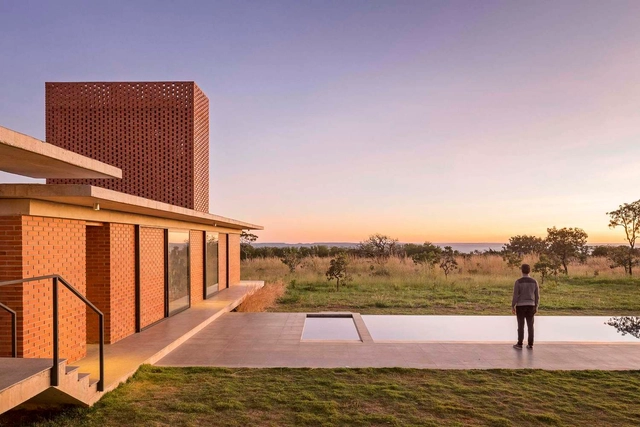
We invite you to discover the landscapes of the Cerrado through architecture. Check out the following 10 projects located in various areas of the second largest biome in South America.
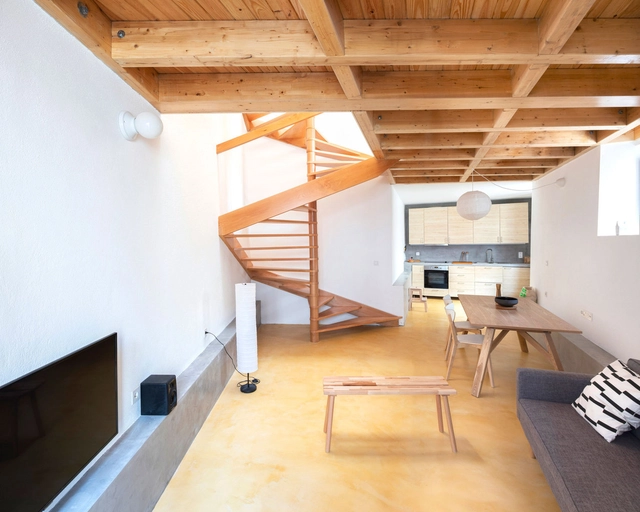
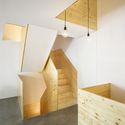
The presence of different ground levels requires solutions to connect them, either because of a need to adapt to the terrain or any other factor that leads to the verticalization of a building. Staircases serve the purpose of connecting the various floors and creating the building's dynamics through many different shapes, designs, and materials. When made of wood, they can also add a variety of colors and textures that contribute to the uniqueness of this element.
For decades, companies have relied on disposable plastic packaging to bag and contain products worldwide. Today, the staggering detrimental effects of this plastic dependence are well-known: since the 1950’s, over 9 billion tons of plastic have been produced, only 9% of which was recycled; around the world, one million plastic bottles are bought every minute and two million plastic bags are used every minute; and per the Plastic Pollution Coalition, by 2050, the oceans will contain more plastic than fish by weight. Moreover, plastic is a petroleum product, and its production only further contributes to the devastating climate effects of mass fossil fuel use.
https://www.archdaily.com/950213/is-it-possible-to-turn-plastic-waste-into-affordable-housingLilly Cao
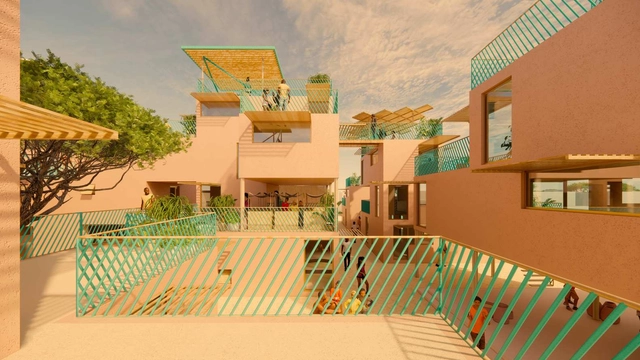
While Buenos Aires' architecture is known for its heterogenous and constantly-changing nature, within the city's low density residential sectors, it's possible to detect forms and patterns that have remained constant under the city's many transformations. One of these is the HP, or Horizontal Property, a legal concept that allows for multiple constructions on one lot, resulting in a handful of low-rise structures congregated together in a high-density layout.
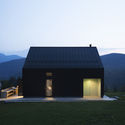
Croatia has long been a crossroads of culture. Located along the Adriatic Sea, it borders five countries and has some of the richest biodiversity in Europe. The built environment reflects influences from Central Europe and the Mediterranean, as well as both the Roman and Byzantine Empires. Today, a series of new housing projects are reinterpreting the country's past as architects and designers look to reimagine what the future holds.
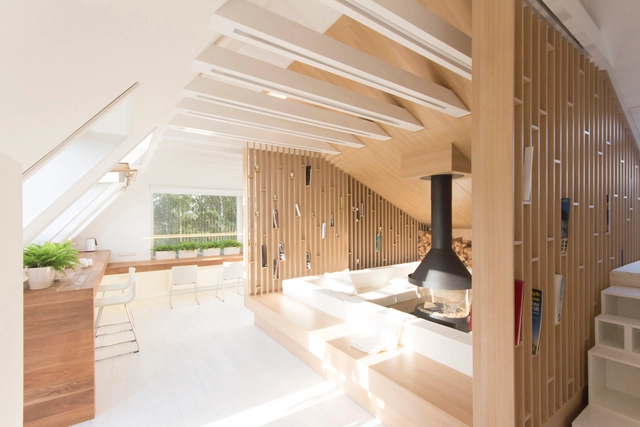
When it comes to attics, we often imagine underused spaces in homes and buildings, such as warehouses or rooms that are exclusively used to shelter infrastructure systems. However, reflecting on the reuse of traditional attics in 19th-century Parisian buildings as housing, which is happening nowadays, one realizes that these spaces can be reinvented and, with a little creativity, they can provide impressive living spaces.
ODA-Designed Hunter’s Point South, the newest development by TF Cornerstone, and the largest affordable housing project in NYC has launched its housing lottery. The master-planned, mixed-use and mixed-income community, park, school, and playground, situated along the East River in Long Island City, Queens, the first of its kind to hit the market since COVID-19, brings 1,194 rental units and a new park to Long Island City waterfront.
In order to assist the city of London and encourage constructions after Covid-19, the Mayor of London, with tech-led design practice Bryden Wood and leading residential consultancy Cast, have launched a new version of the housing design app PRiSM. Using the latest digital technology and data to help design and build manufactured homes, the freely available application will allow users to share expertise and use technology to transform the design process and get the city building the homes Londoners need.
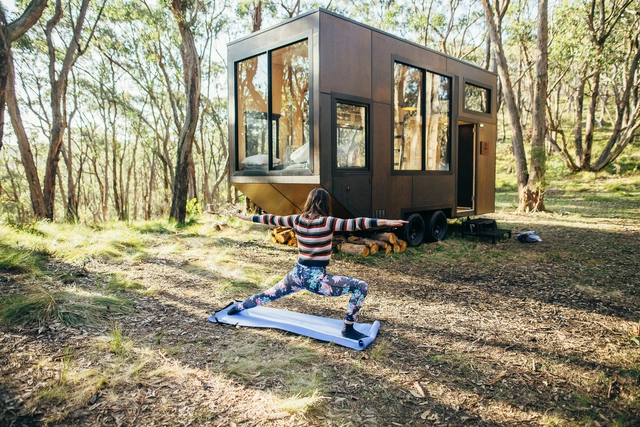
It is not clear where and when the wheel was invented, but according to American anthropologist David Anthony, author of a book on the history of the wheel, there is a series of archaeological evidence of wheeled vehicles dating from 3400 BC in Eurasia and the Middle East. Since its creation, the wheel has revolutionized the way human beings handle many activities, especially moving around.
In architecture, a field closely related to occupying spaces with strong and mostly permanent constructions, wheels may at first seem to be somewhat out of place. However, due to the increased popularity of small scale houses, which concentrate the many functions of a residence in minimal spaces, a new possibility for architecture is emerging: locomotion.
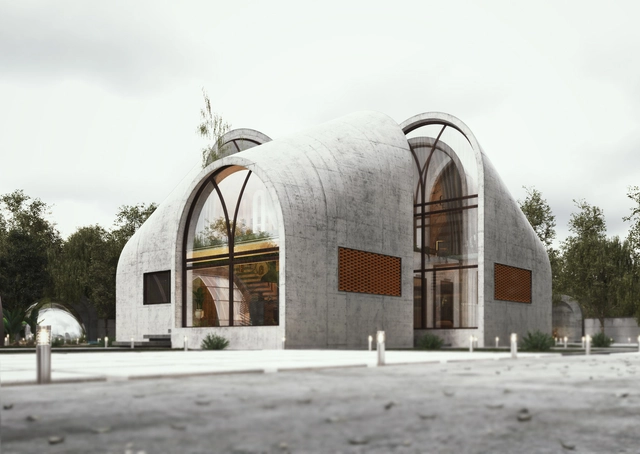
ARC House. Image Courtesy of M.E architecture studio
Houses and Villas are the most researched topics on ArchDaily. Putting together a curated selection of conceptual interventions, this week’s Best Unbuilt Architecture focuses on the residential sector. From all over the world, this group presents proposals submitted by our readers.
This article highlights a floating terraces project from India, a lodge in Ethiopia, a seasonal home for an Iranian family in Germany, and a residential compound in Saudi Arabia. Beach houses in Greece, Croatia, and the U.S. are also featured, showcasing different approaches for the same program. Moreover, more futuristic interventions include the Mountain House on the rocky cliffs of British Columbia, and the blue house, an aquarium-like type of home.
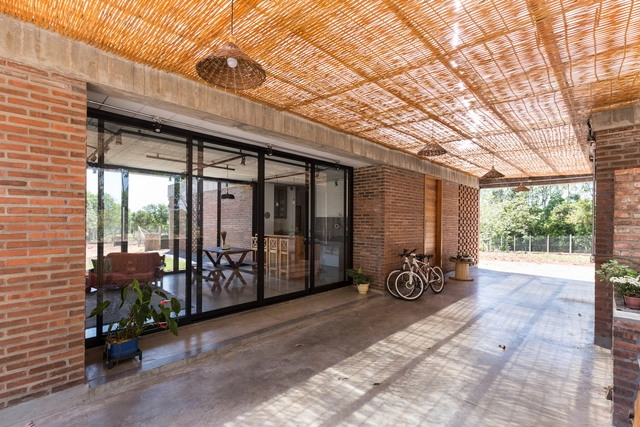
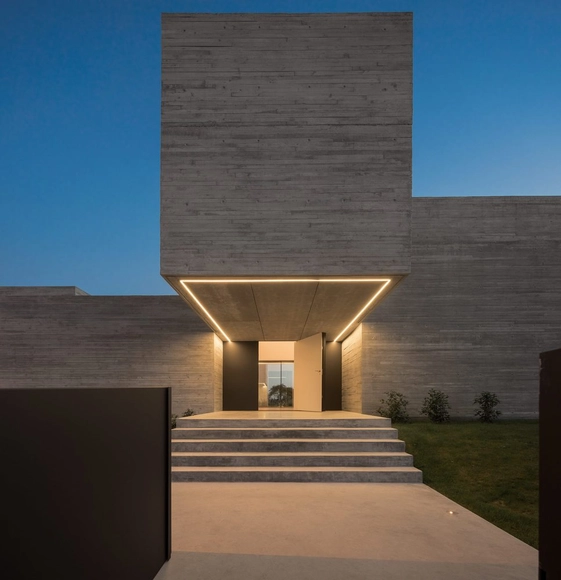
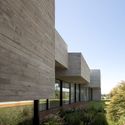
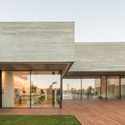
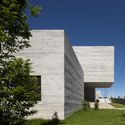
The polished concrete technique is not only suitable for many different environments, but also harmonizes well with various building materials, and has been the material of choice for many Brazilian architects in housing designs in recent years.
The mixture of sand, cement, and water is prepared on-site and the result is a cost-effective and long-lasting alternative when properly and regularly maintained. This finish has become so popular that you can find porcelain tiles and coatings with a similar texture.






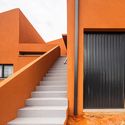
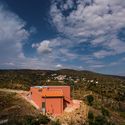

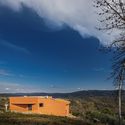


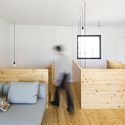








.jpg?1593672566 "© Fran Parente")
.jpg?1593672763 "© Fran Parente")
.jpg?1593672714 "© Fran Parente")