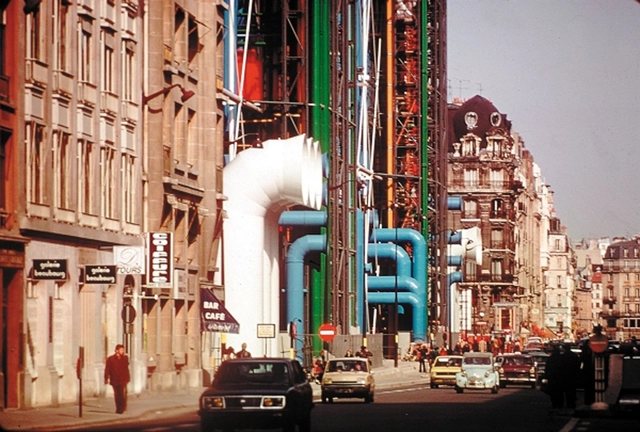
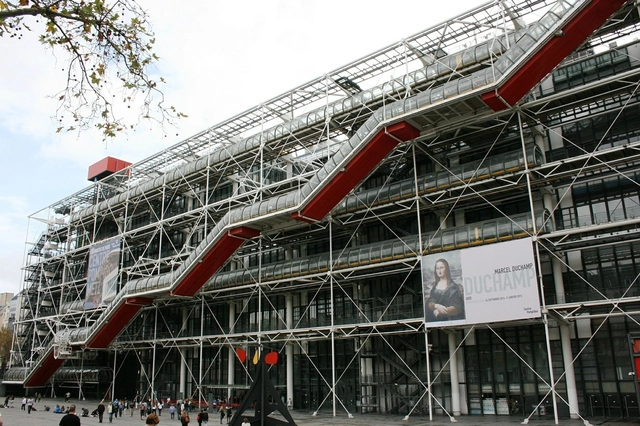
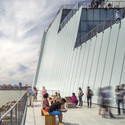
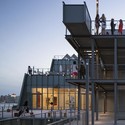
Centre Pompidou (1970s). Image via Rogers Stirk Harbour + Partners
The following is an extract from A Place for All People, a new semi-autobiographical manifesto by Lord Rogers. It is a mosaic of life, projects and ideas for a better society, ranging backwards and forwards over a long and creative life, integrating relationships, projects, stories, collaborations and polemics, with case studies, drawings and photographs.
https://www.archdaily.com/881986/richard-rogers-architecture-is-a-place-for-all-people-bookBaron Rogers of Riverside
Through his sketches, Renzo Piano communicates the true intentions of his projects, pointing to the specific concepts that will become the protagonists of his works, including concern for the human scale and comfort, solar studies, and dialogue with the immediate environment. We compile here ten projects by the architect accompanied by their sketches, through which it is possible to see how the 1998 Pritzker Prize winner takes his designs from paper to reality.
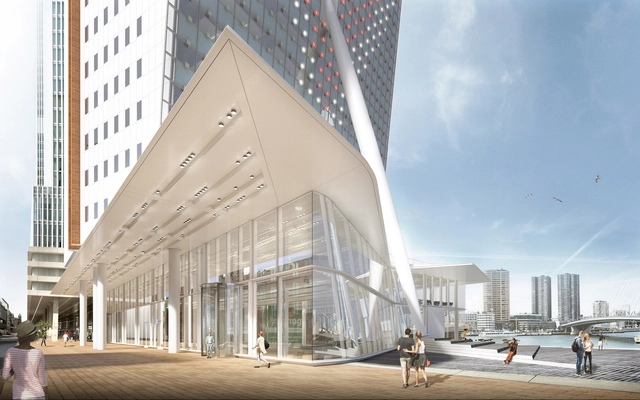
A year ago, Dutch telecom company KPN announced the move from its former headquarters in The Hague, to the famously leaning tower designed by Renzo Piano, at the foot of Rotterdam’s Erasmus Bridge. Completed in 2000, the tower is now set to undergo extensive renovation and expansion as part of the company’s relocation, to be headed by local firm V8 Architects with the intention of creating a new distinctive entry of the Wilhelminapier.
Piano himself was consulted in the design process, with the final proposal receiving his approval. "As a Rotterdam office, we are proud to have been asked to bring this characteristic building—and the first tower on the Wilhelminapier—to new life," said Michiel Raaphorst of V8." And we are honored our intervention is welcomed by Renzo Piano."
https://www.archdaily.com/874799/v8-architects-to-expand-renzo-pianos-tilted-kpn-tower-in-rotterdamOsman Bari
Construction is an exercise in frugality and compromise. To see their work realized, architects have to juggle the demands of developers, contractors, clients, engineers—sometimes even governments. The resulting concessions often leave designers with a bruised ego and a dissatisfying architectural result. While these architects always do their best to rectify any problems, some disputes get so heated that the architect feels they have no choice but to walk away from their own work. Here are 6 of the most notable examples:
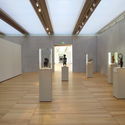
Louis Kahn’s Kimbell Art Museum is a masterclass in natural lighting, with thin-shelled concrete vaults that feature subtle openings to reflect light into the galleries below. While Kahn’s wing of the Fort Worth Museum opened in 1972, in 2013 a second Renzo Piano-designed pavilion was added to the complex. Piano was selected to design the addition because he had worked for Kahn as a budding architect, and the homage to his former mentor is evident in the building’s similar layout and use of translucent glass panels. In this video, architect-photographer Songkai Liu takes viewers on a serene stroll through the museum’s campus. Time-lapses and pans of Kahn’s concrete are juxtaposed with the clean details of Piano’s glass in a soothing exploration of the two complementary projects.
Within the framework of the recent election of Malta to the Presidency of the Council of the European Union—a position that will be held through June 2017—architectural photographer Danica O. Kus has created a photo series detailing Renzo Piano Building Workshop’s Valletta City Gate in Malta.
Completed in 2014, the project is composed of four parts: the Valletta City Gate and site, an open-air theater “machine,” a Parliament building, and landscaped space. Experience the project in beautiful detail though the photo series, after the break.
Reviled by Parisians for its shocking inside-out appearance when it first opened in 1977, the Centre Pompidou has reached its 40th birthday, and as a gift, is set to receive to 2-year, $110 million renovation that will preserve the unique structure for years to come.
The world of architecture can be a serious place. Though the rest of the world holds quite a few stereotypes about architects, unfortunately none of them include us having a sense of humor—and perhaps that seriousness explains why one of the most popular memes involving architects isn't exactly favorable to the profession. Here at ArchDaily we thought we'd do just a little to correct that with some memes riffing on some of the profession's most beloved names—as our gift to the entire architectural profession. Read on to see what we've come up with, and don't forget to get involved with your own architecture funnies.
https://www.archdaily.com/802255/a-selection-of-name-based-architecture-memesAD Editorial Team
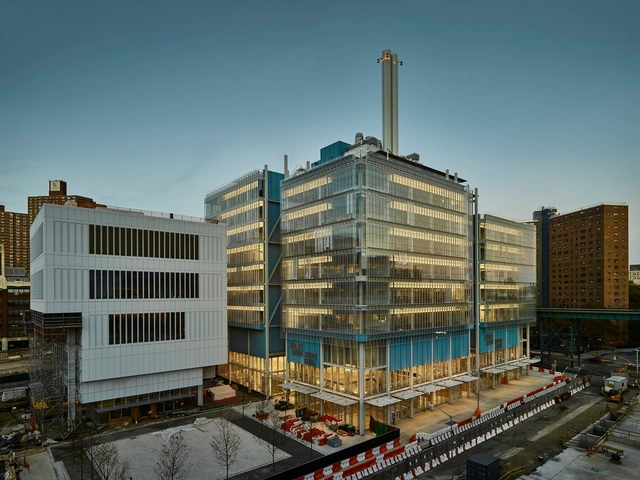
The first stage of Columbia University’s new Manhattanville Campus, consisting of two buildings by Renzo Piano Building Workshop, is nearly complete, with a move-in and grand opening slated for spring 2017.
The Piano-designed Jerome L Greene Science Center and Lenfest Center for the Arts are the first two buildings to be completed within the larger campus masterplan, conceived by Piano in collaboration with SOM, that will eventually encompass nearly 19-acres between 125th and 133rd streets in northwestern Manhattan.
Andy Klemmer has had a front-seat view of the making of some of the most important pieces of architecture of our time. The president and founder of the consulting firm Paratus Group, Klemmer was an essential part of the team that helped develop the iconic Guggenheim Bilbao. Since then, he’s gone on to consult on the California Academy of Science, the Perez Art Museum Miami, the Kimbell Art Museum expansion, working with architects like Renzo Piano, Herzog & de Meuron, and SANAA (to name a few). By liaising between institutions and their chosen architects, he has unique insight into architecture, its practice, and that essential part of the architecture puzzle: the client.
Italian Prime Minister Matteo Renzi has asked architect Renzo Piano to lead in the reconstruction of the central Italian towns devastated by last week’s magnitude 6.2 earthquake that claimed the lives of at least 290 people. Renzi announced a national action plan for recovery and risk prevention on Monday after meeting with Piano to discuss strategies for housing the over 3,000 displaced survivors and rebuilding the historic towns in a manner that would mitigate damage caused by future seismic activity.
“We have to act quickly, with the utmost urgency,” said Piano in a telephone interview with The Guardian. “Anti-seismic requirements must be inserted in the laws of the country to make our homes safe, just as it’s compulsory for a car to have brakes that work.”
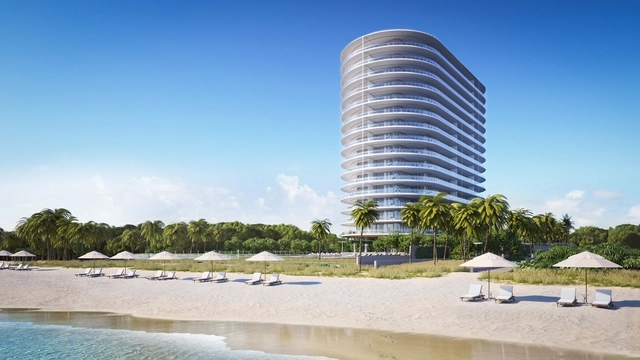
Located in North Beach in Miami, Florida, Eighty Seven Park will be a luxury condominium, and Renzo Piano’s first residential project in the western hemisphere. Set to be completed in 2018, the project seeks to seamlessly blend sky, sea and ground, addressing both the ocean and nearby 35-acre park. Seventy apartments ranging in size from 1400 to 7000 square feet sit atop two lush parks with uninterrupted ocean views. Read more after the break.
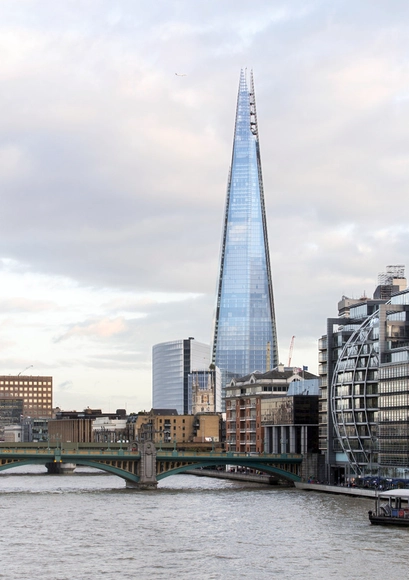
"Cities face a choice of building up or building out," says Renzo Piano, according to a recent article on the Daily Mail. Responding to backlash led by the Skyline Campaign, a campaign spearheaded by architect Barbara Weiss that "aims to stop the devastation of London by badly designed and poorly placed tall buildings," Piano is defending London's controversial skyscraper boom by saying it's giving the one thing the city needs most: "space on the ground."
Surpassing the limitations of static imagery, filmmaker Daniele Marucci creates videos that bridge the filmic and architectonic for a richer and more immersive understanding of buildings and their environments. Marucci works with photographer Enrico Cano to share intimate portraits of buildings that slow down our experience by drawing attention to their subtleties. In such practice, we are given the freedom to survey the architecture but also to let our mind wander, to daydream. Often working in remote locations, the frenetic speed of the city is forgotten when a new intensity takes hold.
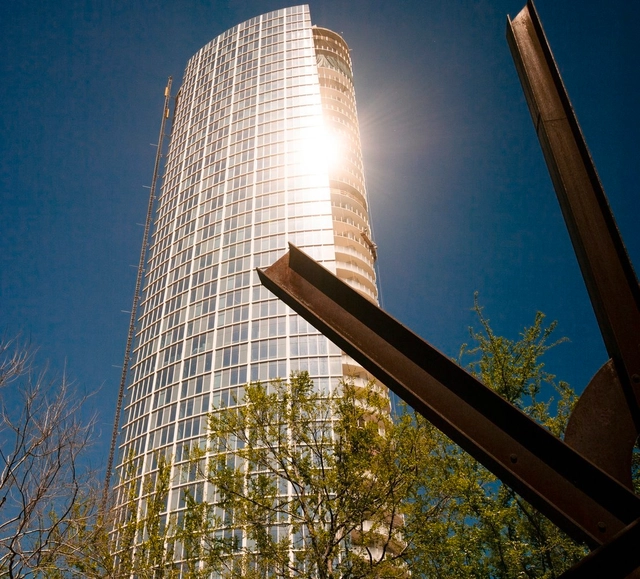
Photograph from 2012 showing the glare from the Museum Tower
Back in 2012, a dispute arose between the Renzo Piano-designed Nasher Sculpture Center in Dallas and the adjacent Museum Tower, a 42-story residential building which was accused of reflecting so much glare through the museum's glass roof that it risked damaging the art inside, and made the museum's garden areas so warm they were unusable. Last week, that 3-year long dispute appears to have been brought to a close - with nothing happening, as the owners of the Museum Tower, the Dallas Police and Fire Pension System (DPFP), voted nearly unanimously that it is no longer their responsibility to find a solution.
From November 11th, 2015, to February 29th, 2016, the Cité de l’architecture & du patrimoine in Paris (FR) presents Renzo Piano Building Workshop. The Piano Method, an exhibition dedicated to the work of the Italian architect Renzo Piano.
The exhibition intends to reflect the collective approach of the architectural firm Renzo Piano Building Workshop, by showing the collaborative and experimental dimension of its projects, in term of technical innovation and design solutions on the urban scale. Exploiting the potential of different materials by pushing the limits of construction techniques is the idea.
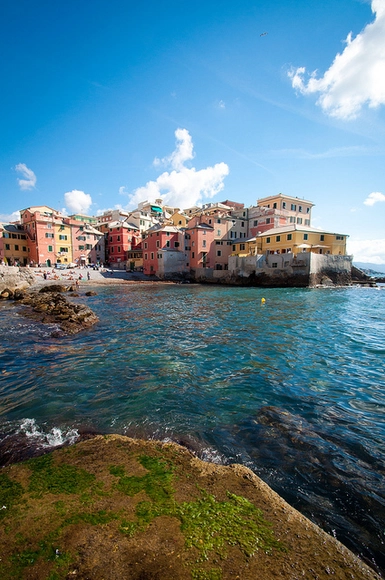
In a recent article published by The Guardian, Renzo Piano encourages architects to make sandcastles. "There is no age limit," he says, "... it helps you think like a child." The Italian architect credits the start of his career to the first sandcastle he ever made on the Genoa shoreline. "Making things has always been a pleasure for me – happy hands, happy mind – and making sandcastles was my training in fantasy."
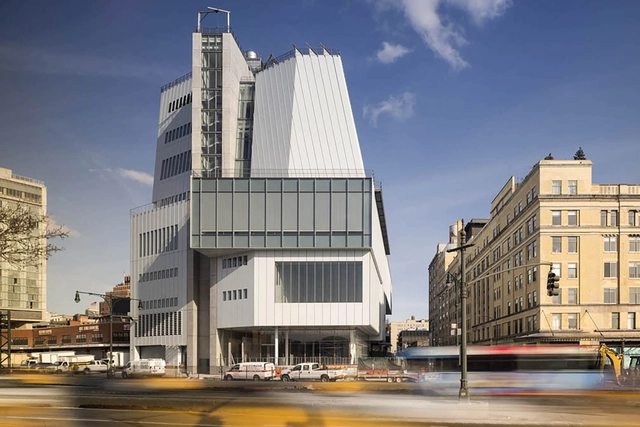
Throughout his career, Renzo Piano has designed dozens of museum buildings becoming the most prolific museum designer of our time. Yet, it has been some time since one of his designs has been as widely discussed and analyzed as his latest, the Whitney Museum in New York. In this interview, originally published on The Value of Architecture as "A House for Freedom: an Interview with Renzo Piano," David Plick speaks with Piano about the many inspirations of the Whitney Museum, from the previous Whitney Museum by Marcel Breuer to the neighboring High Line, the city on one side and the river on the other.
Renzo Piano is the great champion of public space. Whether the visitors and citizens of the city are aware of it or not, he improves their quality of life by sharing with them a living space designed specifically for the cultivation and dispersion of ideas and the enrichment of civic life. He’s the architect who cares about the individual’s experience of a building, who cares about how people interact with the space, and how the space then interacts with the world. At the Whitney Museum of American Art, much like the Centre Pompidou, or Beaubourg as he would say, he showed this by including a large area in front—a “piazza” he calls it—for people to meet, congregate, chat, and even loiter. He’s somehow simultaneously innovative and selfless. And because of this, he can masterfully fuse form and function, creating beauty for himself because he loves it and thinks it will save people, yet it all means nothing to him if he can’t share in this emotion with others.