1. ArchDaily
  2. Centre Pompidou

Centre Pompidou: The Latest Architecture and News

A New Centre Pompidou in Seoul and the UN House of No Waste (HØW) Competition Winners: This Week’s Review

Observed annually on April 22, International Mother Earth Day frames this week's architectural discourse through an urgent call to rethink the relationship between the built environment and natural systems, foregrounding themes such as urban rewilding, the restoration of aquatic ecosystems, and the integration of ancestral knowledge into contemporary design practices. On another note, the opening of Salone del Mobile.Milano 2026 and Milan Design Week 2026 seek to reinforce the global relevance of design as a platform for exchange and experimentation, activating the city of Milan through a network of exhibitions and installations that engage both industry and public audiences. Among the announcements of award-winning architectural projects this week, the United Nations' House of No Waste (HØW) Competition highlights emerging architectural responses to climate and resource challenges. The awarded projects demonstrate scalable strategies for reducing material waste and embodied carbon while promoting adaptable, socially responsive, and resource-conscious public infrastructure.
A New Centre Pompidou in Seoul and the UN House of No Waste (HØW) Competition Winners: This Week’s Review - Image 1 of 4A New Centre Pompidou in Seoul and the UN House of No Waste (HØW) Competition Winners: This Week’s Review - Image 2 of 4A New Centre Pompidou in Seoul and the UN House of No Waste (HØW) Competition Winners: This Week’s Review - Image 3 of 4A New Centre Pompidou in Seoul and the UN House of No Waste (HØW) Competition Winners: This Week’s Review - Image 4 of 4A New Centre Pompidou in Seoul and the UN House of No Waste (HØW) Competition Winners: This Week’s Review - More Images+ 36

Centre Pompidou Expands to Seoul with the New Hanwha Center Designed by Wilmotte & Associés

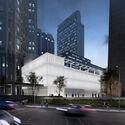
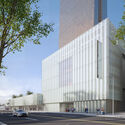
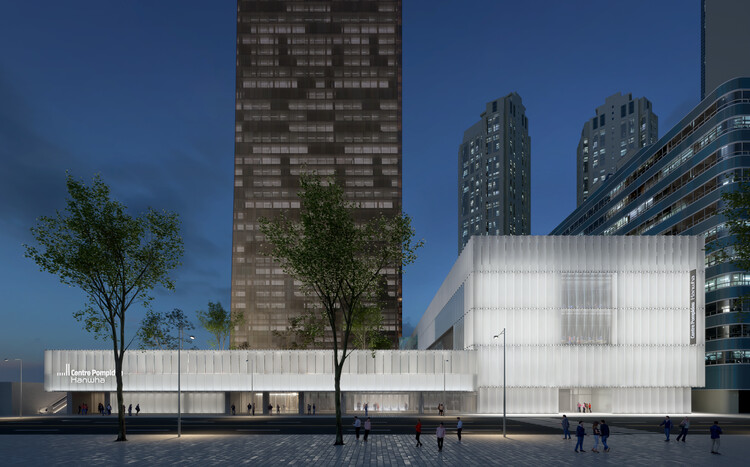
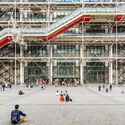
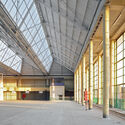
The French museum and cultural institution Centre Pompidou is opening a new Korean branch in collaboration with the local Hanwha Foundation of Culture. Well known in the architectural field for its French headquarters, designed by Renzo Piano and Richard Rogers and recently closed for renovations, the Centre Pompidou is expanding its international presence with a new venue, adding to its sites in Spain, Belgium, China, and the United Arab Emirates. The Korean building is a 12,000 m² renovation project at the base of the 63 Tower skyscraper, led by Wilmotte & Associés. Located on Yeouido Island, along the banks of the Han River, and at the heart of Seoul's financial district, the Hanwha Seoul Pompidou Center is conceived as both an exhibition venue and a meeting point where education and art converge, offering adaptable spaces to host a broad range of activities.

Centre Pompidou Expands to Seoul with the New Hanwha Center Designed by Wilmotte & Associés - Image 1 of 4Centre Pompidou Expands to Seoul with the New Hanwha Center Designed by Wilmotte & Associés - Image 2 of 4Centre Pompidou Expands to Seoul with the New Hanwha Center Designed by Wilmotte & Associés - Image 3 of 4Centre Pompidou Expands to Seoul with the New Hanwha Center Designed by Wilmotte & Associés - Image 4 of 4Centre Pompidou Expands to Seoul with the New Hanwha Center Designed by Wilmotte & Associés - More Images+ 11

La Sagrada Familia’s Milestone and New Housing Futures: This Week’s Review

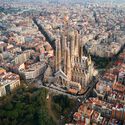
This week began with the World Day of Social Justice, foregrounding urgent questions of labor rights, spatial equity, and resource governance, and framing architecture as both a product of and a response to the social systems that shape access to land, housing, and opportunity. The announcement of the 15 winning projects of the 2026 ArchDaily Building of the Year Awards highlighted a global cross-section of built works recognized for their architectural quality, innovation, and social impact, offering a snapshot of contemporary practice across scales and geographies. This week's news prompts a broader reflection on architecture's civic responsibility, with heritage and community-building through cultural architecture emerging as central themes. Housing, meanwhile, anchors another critical strand of the discussion with three highlighted initiatives: a manifesto reframing housing not as a market commodity but as a civic right and collective project grounded in care; a large-scale waterfront regeneration masterplan responding to regional housing demand through coastal transformation; and a timber residential project that explores the potential of wood in medium-density housing.

La Sagrada Familia’s Milestone and New Housing Futures: This Week’s Review - Image 1 of 4La Sagrada Familia’s Milestone and New Housing Futures: This Week’s Review - Image 2 of 4La Sagrada Familia’s Milestone and New Housing Futures: This Week’s Review - Image 3 of 4La Sagrada Familia’s Milestone and New Housing Futures: This Week’s Review - Image 4 of 4La Sagrada Familia’s Milestone and New Housing Futures: This Week’s Review - More Images+ 18

Unbuilt Visions for the Centre Pompidou Presented at “Concours Beaubourg 1971” Exhibition in Paris

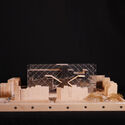
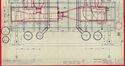
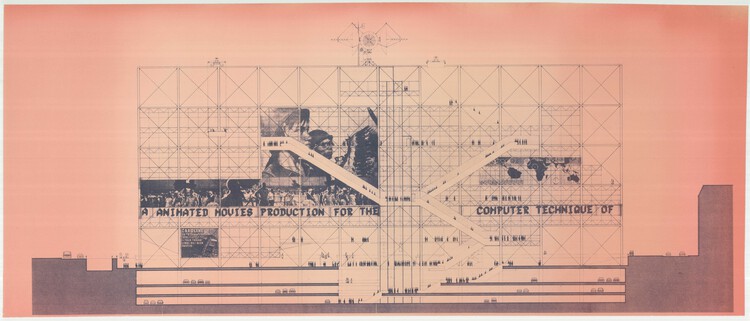
On January 30, an exhibition entitled "Concours Beaubourg 1971: Une mutation de l'architecture" opened in Paris, showcasing archival material from the competition that resulted in the selection of the current Centre Pompidou, designed by Renzo Piano and Richard Rogers between 1969 and 1974. In view of the building's recent closure for renovation, approximately 100 archival documents, including some never before exhibited from the Centre Pompidou's collections (plans, drawings, photographs, models, etc.), are on display at the Académie d'Architecture at Place des Vosges until February 22, 2026. Co-produced by the Académie d'Architecture and the Centre Pompidou, with support from the École nationale supérieure d'architecture de Saint-Étienne, the exhibition presents alternative, imaginative, and sometimes unbuildable proposals for the building. It offers a review of a fertile period in architectural history, highlighting the lasting effects of the "Beaubourg competition" on the discipline and profession.

Unbuilt Visions for the Centre Pompidou Presented at “Concours Beaubourg 1971” Exhibition in Paris - Image 1 of 4Unbuilt Visions for the Centre Pompidou Presented at “Concours Beaubourg 1971” Exhibition in Paris - Image 2 of 4Unbuilt Visions for the Centre Pompidou Presented at “Concours Beaubourg 1971” Exhibition in Paris - Image 3 of 4Unbuilt Visions for the Centre Pompidou Presented at “Concours Beaubourg 1971” Exhibition in Paris - Image 4 of 4Unbuilt Visions for the Centre Pompidou Presented at “Concours Beaubourg 1971” Exhibition in Paris - More Images+ 3

Forum, Depot, Maze: Toward a Plural Ecology of Museums

Subscriber Access | 

This article is part of our new Opinion section, a format for argument-driven essays on critical questions shaping our field.

Traditionally, a museum visit is a calendared occasion with a clearly scripted sequence. Arrival is ceremonially marked—by grand stairs or thresholds, by ticketing and information desks, by an audio guide and a concise institutional preface about mission and history. That deliberate "special occasion" quality extends from how museums were long conceived: deliberately exceptional, tightly curated, and organized around a specific narrative arc. In this model, the museum assumes an authoritative voice—its knowledge deep, vetted, and to be respected rather than contested—while architecture and choreography reinforce a rather singular way of entering, learning, and remembering.

Forum, Depot, Maze: Toward a Plural Ecology of Museums - Image 1 of 4Forum, Depot, Maze: Toward a Plural Ecology of Museums - Image 2 of 4Forum, Depot, Maze: Toward a Plural Ecology of Museums - Image 3 of 4Forum, Depot, Maze: Toward a Plural Ecology of Museums - Image 4 of 4Forum, Depot, Maze: Toward a Plural Ecology of Museums - More Images+ 17

Louvres Around the World: The Export of Museums and Architecture as a Global Brand

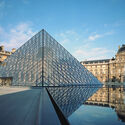
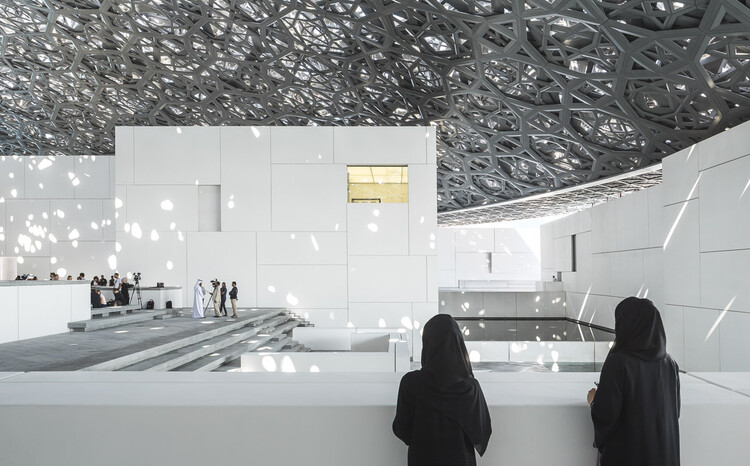
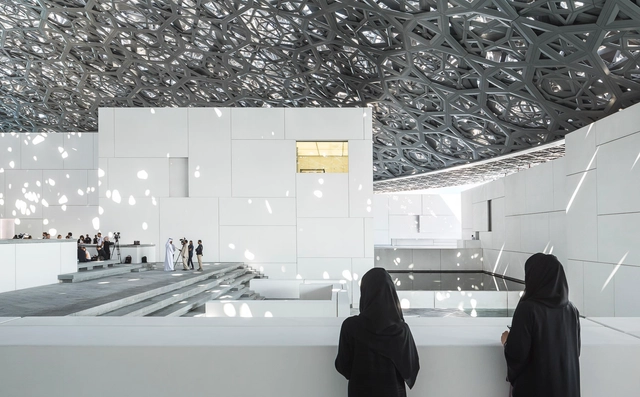
It is undeniable that, at first glance, the idea of a Louvre in Abu Dhabi or a Centre Pompidou in Brazil may seem somewhat disconcerting. The image of these museums, internationally renowned, appears in many ways inseparable from their original cultural contexts. And to some extent, it truly is. The Louvre, deeply rooted in the history of France as a former fortress and later royal residence, embodies a set of invaluable heritage values, further amplified by I. M. Pei’s iconic glass pyramid intervention in 1989. The Pompidou, meanwhile, is remembered as a historic turning point: by redefining the concept of public infrastructure through radically unconventional architecture, it marked the first time culture drew in mass audiences.

Louvres Around the World: The Export of Museums and Architecture as a Global Brand - Image 1 of 4Louvres Around the World: The Export of Museums and Architecture as a Global Brand - Image 2 of 4Louvres Around the World: The Export of Museums and Architecture as a Global Brand - Image 3 of 4Louvres Around the World: The Export of Museums and Architecture as a Global Brand - Image 4 of 4Louvres Around the World: The Export of Museums and Architecture as a Global Brand - More Images+ 8

Democratizing Access to Culture: The Past, Present, and Future of Cultural Centers

The cultural center is an architectural typology that has fascinated architects and urban planners for decades. Whether due to its multifaceted program, its often emblematic scale, or its potential to transform the urban context in which it is inserted, it is a building type that carries strong symbolic and conceptual value. The wide circulation of international references—many designed by renowned architects—reinforces the aura of prestige associated with this program, frequently seen as a privileged ground for formal and conceptual experimentation. Not by chance, cultural center designs are among the most recurring themes in competitions, exhibitions, and academic studios.

Yet behind this contemporary fascination lies a complex history in which the notion of space dedicated to culture has been redefined over time, gradually taking the form we recognize today. This ongoing evolution invites us to reflect not only on the historical path of these spaces but also on the possibilities that will shape their future.

Democratizing Access to Culture: The Past, Present, and Future of Cultural Centers - Image 1 of 4Democratizing Access to Culture: The Past, Present, and Future of Cultural Centers - Image 2 of 4Democratizing Access to Culture: The Past, Present, and Future of Cultural Centers - Image 3 of 4Democratizing Access to Culture: The Past, Present, and Future of Cultural Centers - Image 4 of 4Democratizing Access to Culture: The Past, Present, and Future of Cultural Centers - More Images+ 8

Next Practices Awards and Baghdad’s Forested Master Plan: The Week’s Review

This week, architectural developments around the world highlighted the balance between continuity and change in the built environment. Conversations around sustainability, heritage, and resilience highlight how architecture adapts to shifting cultural, social, and environmental conditions, reimagining the role of design in shaping future communities. Across different contexts, projects, and initiatives, ongoing efforts to address environmental challenges, preserve cultural landmarks, and prepare new infrastructures reflecting the diverse scales and directions shaping architectural practice today.

Next Practices Awards and Baghdad’s Forested Master Plan: The Week’s Review - Image 1 of 4Next Practices Awards and Baghdad’s Forested Master Plan: The Week’s Review - Image 2 of 4Next Practices Awards and Baghdad’s Forested Master Plan: The Week’s Review - Image 3 of 4Next Practices Awards and Baghdad’s Forested Master Plan: The Week’s Review - Image 4 of 4Next Practices Awards and Baghdad’s Forested Master Plan: The Week’s Review - More Images+ 2

Centre Pompidou to Close for Five-Year Renovation Led by Moreau Kusunoki

The Centre Pompidou in Paris, designed in 1971 by Renzo Piano and Richard Rogers, is closing for a major transformation that will take five years. Following an international competition, the renovation has been entrusted to Moreau Kusunoki, in association with Frida Escobedo Studio, alongside AIA Life Designers for the technical components. Initiated in 2020 with the support of France's Ministry of Culture, the project addresses urgent needs, including the removal of asbestos from facades, improved fire safety, enhanced accessibility, and significant upgrades in energy efficiency. The works will require a full closure of the Beaubourg site, with a planned reopening in 2030.

Centre Pompidou to Close for Five-Year Renovation Led by Moreau Kusunoki - Image 7 of 4Centre Pompidou to Close for Five-Year Renovation Led by Moreau Kusunoki - Image 14 of 4Centre Pompidou to Close for Five-Year Renovation Led by Moreau Kusunoki - Image 11 of 4Centre Pompidou to Close for Five-Year Renovation Led by Moreau Kusunoki - Image 9 of 4Centre Pompidou to Close for Five-Year Renovation Led by Moreau Kusunoki - More Images+ 12

How Not to Build: Architecture by the Absence of Intervention

Subscriber Access | 

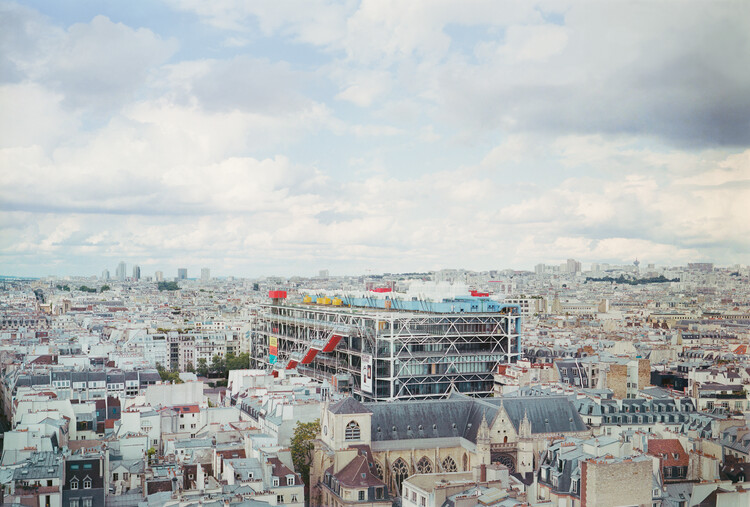
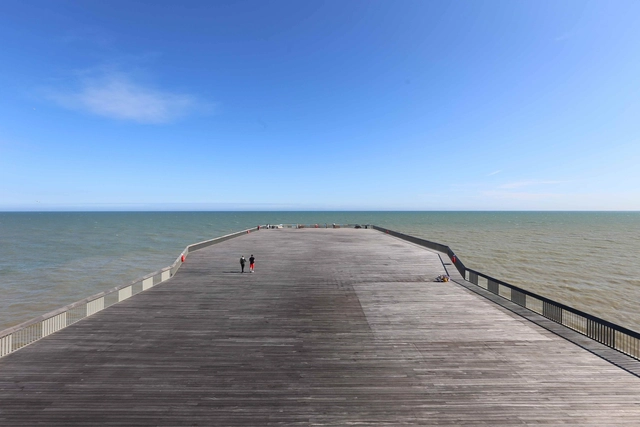
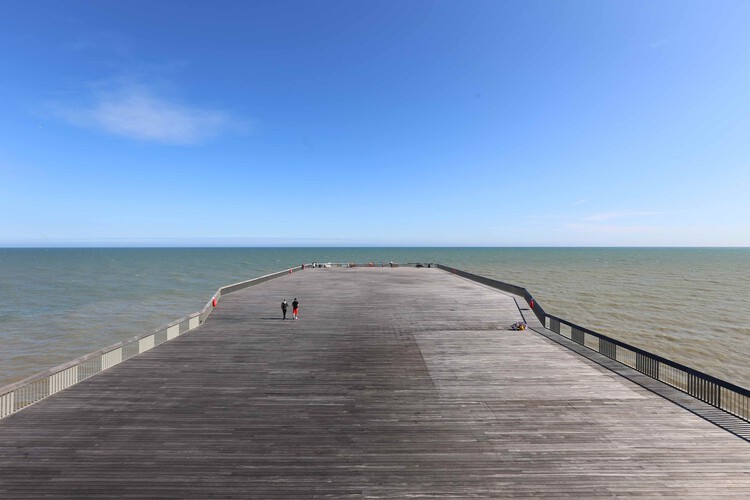
Whether for design competitions or architectural awards, buildings are often judged for what they offer–the programmed functions, the form, or the visual delight. In a minority of cases, it is the absence or the reduction of intervention that made a project successful. In 1971, a high-profile architectural competition in Paris was won by a proposal that only utilized half the available site, giving the rest as an urban space to the city. In London, a proposal to convert a disused power station with minimal additions, leaving large spaces untouched, won a design competition in 1994. The Stirling Prize, the UK's most prestigious architectural award, in 2017 was won by a proposal that was little more than an empty platform. These examples of cultural buildings from Northwestern Europe illustrate how the absence of intervention can provide more.

How Not to Build: Architecture by the Absence of Intervention - Image 1 of 4How Not to Build: Architecture by the Absence of Intervention - Image 2 of 4How Not to Build: Architecture by the Absence of Intervention - Image 3 of 4How Not to Build: Architecture by the Absence of Intervention - Image 4 of 4How Not to Build: Architecture by the Absence of Intervention - More Images+ 14

Beyond the Dropped Ceiling: 10 Interior Projects for Making Services and Conduits Part of the Architecture

Subscriber Access | 

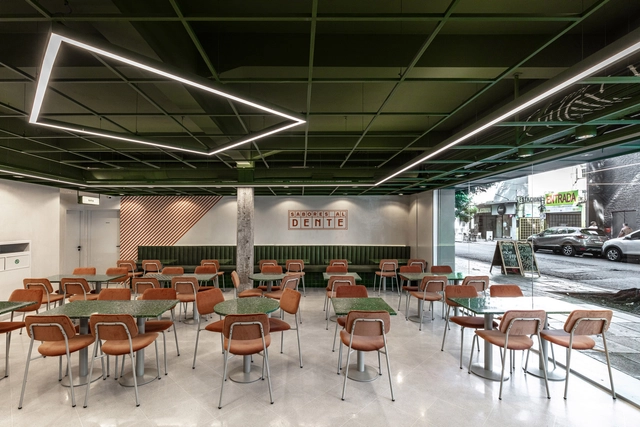
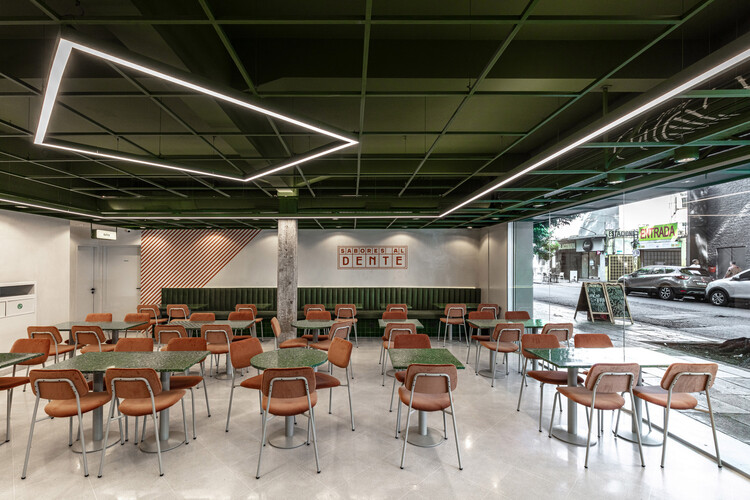
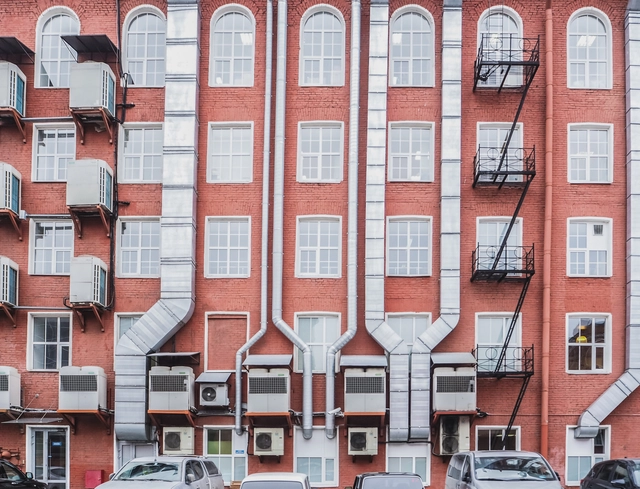
In contemporary interior architecture, service provisionsmechanical, electrical, HVAC, plumbing—are almost always treated as elements to be concealed. Thickened wall cavities, extensive dropped ceilings, and, in regions where solid construction such as brick or concrete prevails, furred-out walls are routinely employed to hide these systems. This approach has become so normalized that it often forms the starting assumption for spatial planning, inherently constraining imagination and reducing the range of spatial possibilities. The priority shifts towards covering-up, rather than exploring how these systems might coexist visibly within a design language.

Beyond the Dropped Ceiling: 10 Interior Projects for Making Services and Conduits Part of the Architecture - Image 1 of 4Beyond the Dropped Ceiling: 10 Interior Projects for Making Services and Conduits Part of the Architecture - Image 2 of 4Beyond the Dropped Ceiling: 10 Interior Projects for Making Services and Conduits Part of the Architecture - Image 3 of 4Beyond the Dropped Ceiling: 10 Interior Projects for Making Services and Conduits Part of the Architecture - Image 4 of 4Beyond the Dropped Ceiling: 10 Interior Projects for Making Services and Conduits Part of the Architecture - More Images+ 35

YSL and Louis Vuitton at Paris Fashion Week Feature Tadao Ando’s Bourse de Commerce and Bijoy Jain’s Set Design

Paris Fashion Week Men's Spring/Summer 2026 has just concluded, featuring a series of shows that highlight the relationship between architecture and fashion as creative disciplines. Through carefully curated architectural environments, these shows engage viewers on multiple sensory levels, weaving together visual impact with spatial and material stories that echo the themes and philosophies behind each collection. This intersection between fashion and architecture opens up new possibilities for storytelling, inviting audiences to explore how fashion design and spaces can resonate together to create immersive experiences.

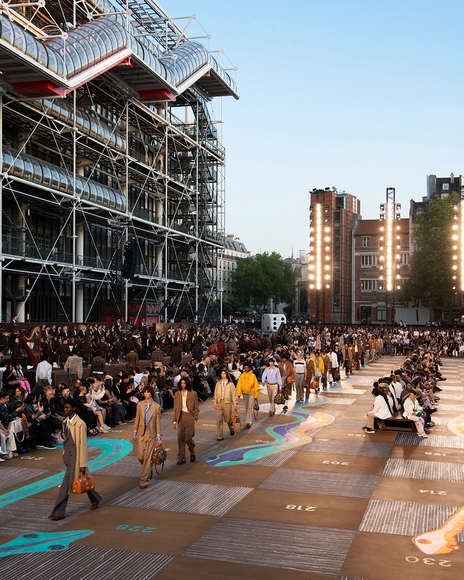
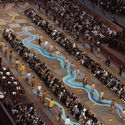
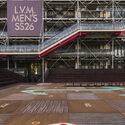
Saint Laurent presented its menswear collection at Tadao Ando's Bourse de Commerce, where the building's cylindrical concrete form and filtered natural light provided a minimal and contemplative backdrop. Louis Vuitton, by contrast, staged its show in the plaza of the Centre Pompidou, where Studio Mumbai's intervention introduced a large-scale, hand-painted installation inspired by Snakes and Ladders. These site-specific choices reflected distinct approaches to engage with architectural context, illustrating how contemporary fashion presentations can extend beyond the runway to enter into dialogue with their surroundings.

YSL and Louis Vuitton at Paris Fashion Week Feature Tadao Ando’s Bourse de Commerce and Bijoy Jain’s Set Design - Image 1 of 4YSL and Louis Vuitton at Paris Fashion Week Feature Tadao Ando’s Bourse de Commerce and Bijoy Jain’s Set Design - Image 2 of 4YSL and Louis Vuitton at Paris Fashion Week Feature Tadao Ando’s Bourse de Commerce and Bijoy Jain’s Set Design - Image 3 of 4YSL and Louis Vuitton at Paris Fashion Week Feature Tadao Ando’s Bourse de Commerce and Bijoy Jain’s Set Design - Image 4 of 4YSL and Louis Vuitton at Paris Fashion Week Feature Tadao Ando’s Bourse de Commerce and Bijoy Jain’s Set Design - More Images+ 7

Moreau Kusunoki and Frida Escobedo Studio Undertake Major Renovation of Centre Pompidou in Paris

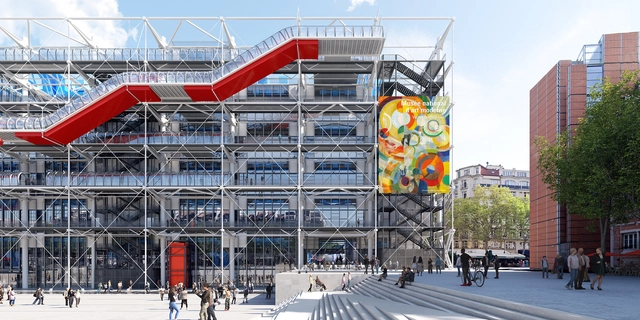
In 2020, the French Minister of Culture approved an extensive renovation program for the Centre Pompidou with the purpose of resolving the building's technical issues and ensuring the long-term viability of the iconic structure. Designed by Renzo Piano and Richard Rogers in 1971, the museum was conceived as a "living cultural machine," sparking controversy due to its unusual architecture. To ensure an efficient renovation process, the building will be fully closed for a period of 5 years, from September 2025 until 2030. French architecture studio Moreau Kusunoki has been commissioned to lead the renovation project, collaborating with Frida Escobedo Studio and AIA Life Designers, who are entrusted with the technical component of the project. The architects have been selected following an international competition, with Renzo Piano as one of the jury members.

Moreau Kusunoki and Frida Escobedo Studio Undertake Major Renovation of Centre Pompidou in Paris - Image 1 of 4Moreau Kusunoki and Frida Escobedo Studio Undertake Major Renovation of Centre Pompidou in Paris - Image 2 of 4Moreau Kusunoki and Frida Escobedo Studio Undertake Major Renovation of Centre Pompidou in Paris - Image 3 of 4Moreau Kusunoki and Frida Escobedo Studio Undertake Major Renovation of Centre Pompidou in Paris - Image 4 of 4Moreau Kusunoki and Frida Escobedo Studio Undertake Major Renovation of Centre Pompidou in Paris - More Images+ 16

Leveraging Building Services as a Framework for the Evolution of Building Envelopes

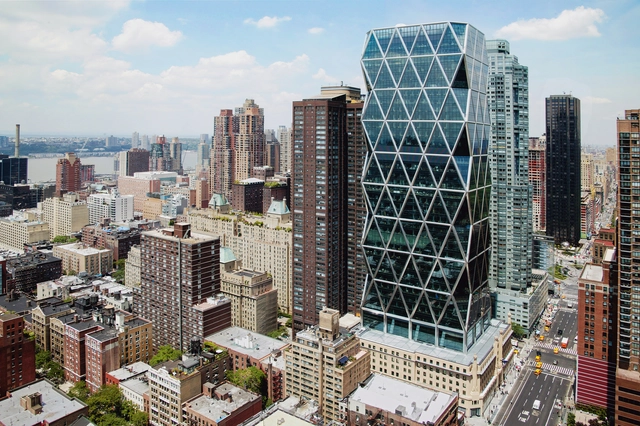
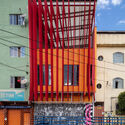
Rising demands for energy efficiency, technical functionality, and interior comfort in buildings necessitate the development of more efficient building envelope constructions. The building envelope serves as a mediator between a building's exterior and interior. In today's architectural landscape, it performs a multitude of functions to enhance the building's performance. These functions include building control systems, energy supply (such as gas and electricity), and heating, ventilation, and air conditioning (HVAC), among others. These elements primarily determine the functionality, efficiency, and safety of building spaces. Given that the nature of building envelopes heavily depends on these services, how can they serve as primary frameworks for building design development?
Leveraging Building Services as a Framework for the Evolution of Building Envelopes - Image 1 of 4Leveraging Building Services as a Framework for the Evolution of Building Envelopes - Image 2 of 4Leveraging Building Services as a Framework for the Evolution of Building Envelopes - Image 3 of 4Leveraging Building Services as a Framework for the Evolution of Building Envelopes - Image 4 of 4Leveraging Building Services as a Framework for the Evolution of Building Envelopes - More Images+ 5

Paris 20th-Century Architecture City Guide: From Le Corbusier’s Modern Villas to Brutalist Estates

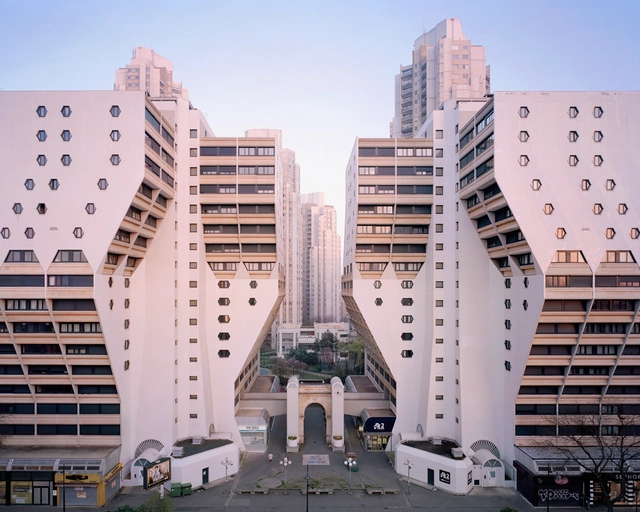
The 20th century saw a period of experimentation and innovation at an unprecedented pace, a direction that also marked the architectural expressions of the time. Paris, as one of Europe’s leading centers for artistic and cultural expression, was also the epicenter for the formation of new architectural styles, from Le Corbusier’s modern architecture revolution to expressions of the High-Tech style as seen in the design of Renzo Piano and Richard Rogers’ Centre Pompidou. The social transformation found its expression through Brutalist public institutions or residential ensembles, like the ones designed by Renée Gailhoustet and Jean Renaudie at Irvy-Sur-Seine, while political movements attracted architects from across the ocean, including Oscar Niemeyer, who created his first European building in the French capital.

Paris 20th-Century Architecture City Guide: From Le Corbusier’s Modern Villas to Brutalist Estates - Image 1 of 4Paris 20th-Century Architecture City Guide: From Le Corbusier’s Modern Villas to Brutalist Estates - Image 2 of 4Paris 20th-Century Architecture City Guide: From Le Corbusier’s Modern Villas to Brutalist Estates - Image 3 of 4Paris 20th-Century Architecture City Guide: From Le Corbusier’s Modern Villas to Brutalist Estates - Image 5 of 4Paris 20th-Century Architecture City Guide: From Le Corbusier’s Modern Villas to Brutalist Estates - More Images+ 19

“As an Architect You Design for the Present, with an Awareness of the Past, for a Future which Is Essentially Unknown" : On Foster's Body of Work and Evolution

Subscriber Access | 

This is an edited excerpt by Philip Jodidio from TASCHEN’s upcoming title Norman Foster.

In a 2007 conference, Norman Foster stated: “As an architect you design for the present, with an awareness of the past, for a future which is essentially unknown." That talk was about the green agenda, which he termed the most important issue of the day, affirming that it is “not about fashion but about survival.” Admittedly, the rise in public interest in contemporary architecture that followed the creation of the Pritzker Prize in 1979 (Foster was the 1999 winner) has been focused on forms and personalities more than on substance. Philip Johnson, the first winner of the shiny award, made his view clear: “Architecture is art, nothing else.” Essays, magazines, and books have delighted in the foibles, verbal and sartorial, of celebrated architects, the hats, and eyeglasses of genius. Of course, figures like Frank Lloyd Wright and Le Corbusier did not wait for a prize to be famous, and it seems fitting that Wright’s literary alter-ego, Howard Roarke, would say: “Art is a selective re-creation of reality according to an artist’s metaphysical value judgments." The modern architect/artist as demiurge, responsible for fashioning and maintaining the universe: “…how like an Angel in apprehension, how like a God?”

“As an Architect You Design for the Present, with an Awareness of the Past, for a Future which Is Essentially Unknown" : On Foster's Body of Work and Evolution - Image 6 of 4“As an Architect You Design for the Present, with an Awareness of the Past, for a Future which Is Essentially Unknown" : On Foster's Body of Work and Evolution - Image 5 of 4“As an Architect You Design for the Present, with an Awareness of the Past, for a Future which Is Essentially Unknown" : On Foster's Body of Work and Evolution - Image 4 of 4“As an Architect You Design for the Present, with an Awareness of the Past, for a Future which Is Essentially Unknown" : On Foster's Body of Work and Evolution - Image 2 of 4“As an Architect You Design for the Present, with an Awareness of the Past, for a Future which Is Essentially Unknown : On Foster's Body of Work and Evolution - More Images+ 5

Norman Foster Designs Display Cases for Retrospective at the Centre Pompidou

 | Sponsored Content

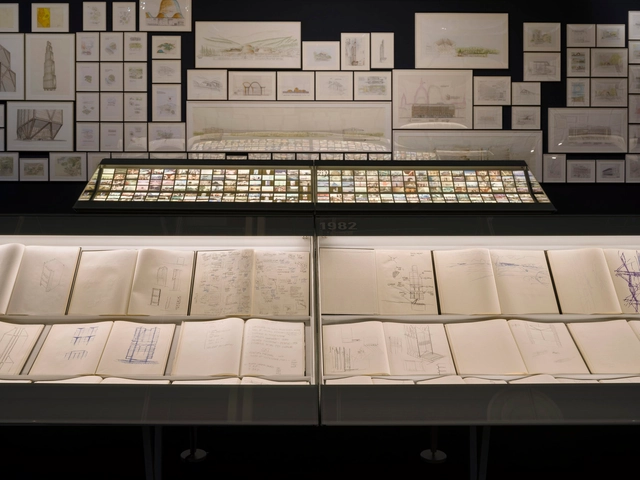
The largest exhibition of Norman Foster’s work to date, hosted by the Centre Pompidou, explores six decades of the architect’s illustrious career through a host of revealing sketchbooks, drawings, images, original models, and videos. The exhibition was designed by Norman Foster and executed with Foster + Partners and the Norman Foster Foundation. A custom-made series of modular display cases was designed by Norman Foster and a team from the Norman Foster Foundation and engineered by Goppion, world leader in the manufacture and installation of museum display cases, to display the architect’s sketchbooks and transparencies.

The Centre Pompidou Signs a Partnership Agreement to Develop a Contemporary Art Museum in Saudi Arabia and South Korea

The Centre Pompidou is an arts and culture institution that has been present in Paris since the late 1970s. It houses the Public Information Library, the largest museum for modern art in Europe, and a center for musical research. This month, the institution signed a partnership agreement to create a museum of contemporary art in Saudi Arabia with the Royal Commission of AlUla (RCU). Additionally, the establishment signed a similar partnership agreement to develop a modern and contemporary museum in Seoul, South Korea, with the Hanwha Culture Foundation.