1. ArchDaily
  2. HVAC

HVAC: The Latest Architecture and News

Beyond the Dropped Ceiling: 10 Interior Projects for Making Services and Conduits Part of the Architecture

Subscriber Access | 

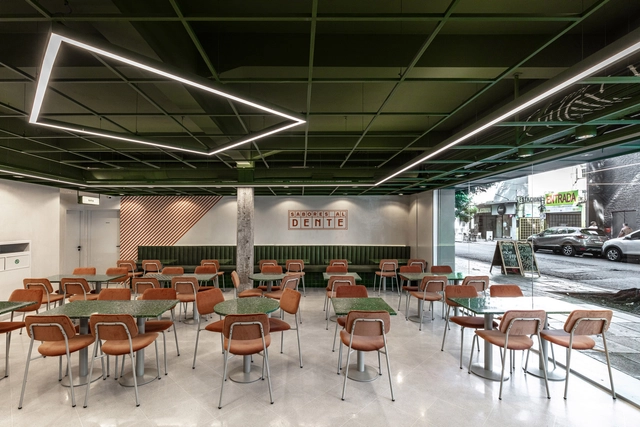
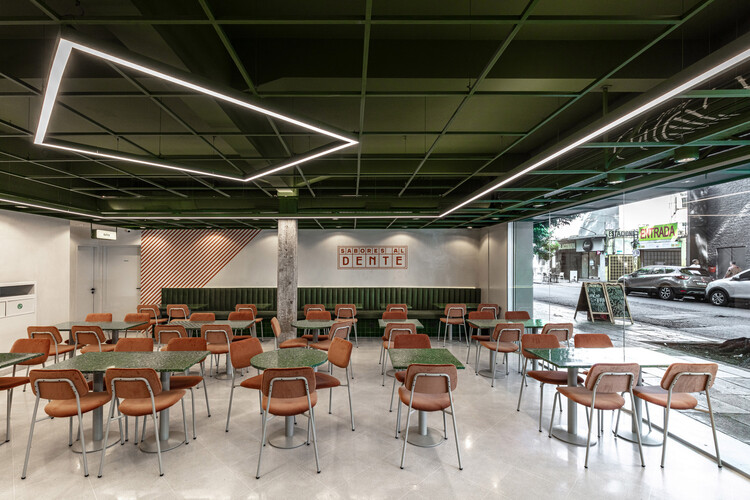
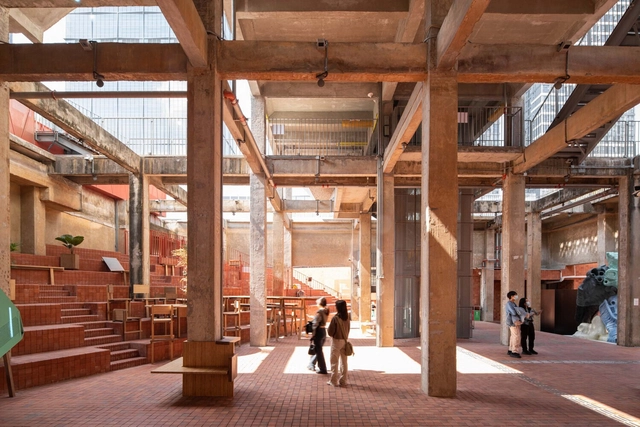
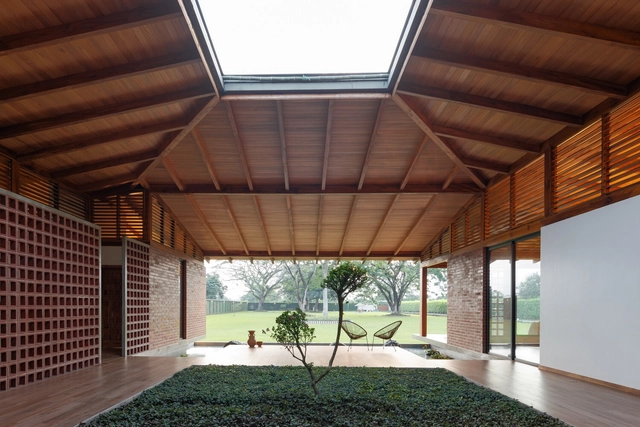
In contemporary interior architecture, service provisionsmechanical, electrical, HVAC, plumbing—are almost always treated as elements to be concealed. Thickened wall cavities, extensive dropped ceilings, and, in regions where solid construction such as brick or concrete prevails, furred-out walls are routinely employed to hide these systems. This approach has become so normalized that it often forms the starting assumption for spatial planning, inherently constraining imagination and reducing the range of spatial possibilities. The priority shifts towards covering-up, rather than exploring how these systems might coexist visibly within a design language.
Beyond the Dropped Ceiling: 10 Interior Projects for Making Services and Conduits Part of the Architecture - Image 1 of 4Beyond the Dropped Ceiling: 10 Interior Projects for Making Services and Conduits Part of the Architecture - Image 2 of 4Beyond the Dropped Ceiling: 10 Interior Projects for Making Services and Conduits Part of the Architecture - Image 3 of 4Beyond the Dropped Ceiling: 10 Interior Projects for Making Services and Conduits Part of the Architecture - Image 4 of 4Beyond the Dropped Ceiling: 10 Interior Projects for Making Services and Conduits Part of the Architecture - More Images+ 35

Building Methods in Focus: The Solid vs Hollow Partitioning Debate

Subscriber Access | 

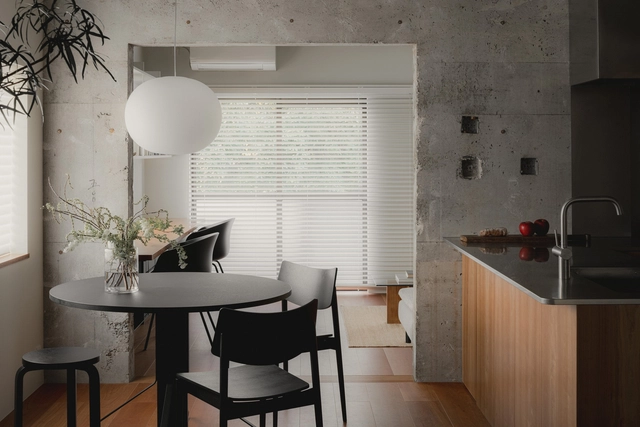
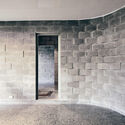
Two primary building approaches are commonly identified in architecture and design: solid versus hollow construction. These methods vary significantly across different cultures and regions, specifically for interior partitioning systems, when they appear interchangeable. Each has its own established practices influenced by local materials, labor preferences, climatic conditions, and cultural traditions. When architects and designers focus on their local context, it is easy to overlook the broader construction assumptions, limiting design flexibility and methodology. This raises an important question: How do these two building approaches differ?

Focusing mainly on interior systems, the distinctions between solid and hollow construction largely stem from the availability of materials and workforce preferences. For example, in the United States and Japan, stud walls, both wood and metal, are frequently used for partitioning. Conversely, brick remains the predominant material for partition walls in regions such as Hong Kong and southern China. Why do we build differently, and what are the benefits and challenges of each building methodology?

Building Methods in Focus: The Solid vs Hollow Partitioning Debate - Image 1 of 4Building Methods in Focus: The Solid vs Hollow Partitioning Debate - Image 2 of 4Building Methods in Focus: The Solid vs Hollow Partitioning Debate - Image 3 of 4Building Methods in Focus: The Solid vs Hollow Partitioning Debate - Image 4 of 4Building Methods in Focus: The Solid vs Hollow Partitioning Debate - More Images+ 14

What is Over-Providing? A Strategy for Resilient Architecture

Subscriber Access | 

Over-providing traditionally implies offering more than is necessary, often carrying a negative connotation due to the potential for excess and waste. However, could there be scenarios within the built environment where over-providing proves advantageous? The question critically examines how overprovisioning might enhance a building's flexibility and adaptability to diverse and evolving conditions.

The underlying assumption of accurately providing what is needed for a building is that stakeholders—including owners, architects, and designers—can accurately predict and cater to a structure's current and future needs. This assumption, however, is challenging to realize, as societal, economic, and cultural shifts frequently occur in unpredictable ways. In this context, over-providing emerges as a counterintuitive yet potentially beneficial strategy. As buildings and structures inevitably transform, those designed with inherent adaptability reduce the need for costly renovations or complete rebuilds.

What is Over-Providing?  A Strategy for Resilient Architecture - Image 1 of 4What is Over-Providing?  A Strategy for Resilient Architecture - Image 2 of 4What is Over-Providing?  A Strategy for Resilient Architecture - Image 3 of 4What is Over-Providing?  A Strategy for Resilient Architecture - Image 4 of 4What is Over-Providing?  A Strategy for Resilient Architecture - More Images+ 7

Bringing the Outside In: Life-Size Terrariums and Other Ways to Exhibit Nature in European Apartment Buildings

Subscriber Access | 

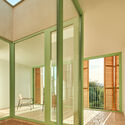
As the temperature drops in the Northern Hemisphere, cold outdoor spaces are overcome with frost, ice, and snow, and we find ourselves rushing from one heated indoor environment to the next, less willing or less able to stop and appreciate the natural world around us.

Apart from dragging a spruce or fir tree inside and dressing it up in yuletide costume, we tend to leave the real natural world to its own seasonal devices until it reemerges in Spring. However, by inviting the positive effects of plant life into our homes, we can improve both our mental health and the air we breathe by filling them with peace and joy all year round, not just at Christmas.

Bringing the Outside In: Life-Size Terrariums and Other Ways to Exhibit Nature in European Apartment Buildings - Image 1 of 4Bringing the Outside In: Life-Size Terrariums and Other Ways to Exhibit Nature in European Apartment Buildings - Image 2 of 4Bringing the Outside In: Life-Size Terrariums and Other Ways to Exhibit Nature in European Apartment Buildings - Image 3 of 4Bringing the Outside In: Life-Size Terrariums and Other Ways to Exhibit Nature in European Apartment Buildings - Image 4 of 4Bringing the Outside In: Life-Size Terrariums and Other Ways to Exhibit Nature in European Apartment Buildings - More Images+ 13

Cooling and Energy Efficiency: A New Era in Building Design

The world has just witnessed the hottest months in recorded history, and the outlook is far from optimistic. Rising temperatures are driving greater cooling demands, threatening to trigger a vicious cycle of higher electricity use and carbon emissions. In a planet simultaneously facing unprecedented urbanization and a climate crisis, the intersection of building energy efficiency and cooling technologies has never been more crucial.

What Are Clerestory Windows and Their Spatial Advantages in 24 Projects

Subscriber Access | 

Not nearly as complex an architectural typology as the word suggests, a ‘clerestory’ is a simple – if lexically loose – a portmanteau of ‘clear’ and ‘story’. Denoting a section of the wall that contains windows or cavities above eye level. The word is often assumed to have a religious context. Clerestories historically appeared at the upper levels of Roman churches, Hebrew temples, and early Christian architecture after all. And the earliest references we have to the feature come from religious texts.

Today, religious structures are often typified by the light their high windows allow to stream in, both figuratively and literally, from a higher source. At the CES Chapel in Taiwan, for example, ‘light diffuses through the glass clerestory and brightens the apse throughout the day,’ explains JJP Architects & Planners, about an interior design concept driven by natural lighting, ‘the chapel is filled with a spiritual aura, with a bright cross projected deep into the space.’

What Are Clerestory Windows and Their Spatial Advantages in 24 Projects - Image 1 of 4What Are Clerestory Windows and Their Spatial Advantages in 24 Projects - Image 2 of 4What Are Clerestory Windows and Their Spatial Advantages in 24 Projects - Image 3 of 4What Are Clerestory Windows and Their Spatial Advantages in 24 Projects - Image 4 of 4What Are Clerestory Windows and Their Spatial Advantages in 24 Projects - More Images+ 30

Empowering Thermal Comfort Through Smartphone Technology in HVAC Systems

 | Sponsored Content

Heating and cooling buildings have always been two of the most important challenges in ensuring indoor user comfort. At a biological level, our bodies generate heat through metabolism, a physicochemical process. And although the human body has temperature regulation mechanisms, such as sweating and vasodilation, sometimes we need additional help to achieve thermal comfort. Therefore, since ancient times, traditional strategies have been sought to help achieve this, and many have been adapted to their historical and material contexts.

Back to Basics: Natural Ventilation and its Use in Different Contexts

Automation is everywhere around us - our homes, furniture, offices, cars, and even our clothing; we have become so accustomed to being surrounded by automated systems that we have forgotten what life was like without them. And while automation has noticeably improved the quality of interior spaces with solutions like purified air and temperature control, nothing compares to the natural cool breeze of mother nature.

But just like everything else in architecture, there is no one size fits all; what works in Tanzania cannot work in Switzerland or Colombia. This is due to several reasons, such as the difference in wind direction, average temperature, spatial needs, and environmental restrictions (or lack thereof). In this article, we take a look at natural ventilation in all its forms, and how architects have employed this passive solution in different contexts. 

Back to Basics: Natural Ventilation and its Use in Different Contexts  - Image 1 of 4Back to Basics: Natural Ventilation and its Use in Different Contexts  - Image 2 of 4Back to Basics: Natural Ventilation and its Use in Different Contexts  - Image 3 of 4Back to Basics: Natural Ventilation and its Use in Different Contexts  - Image 4 of 4Back to Basics: Natural Ventilation and its Use in Different Contexts  - More Images+ 25