Pritzker Prize winning architect Renzo Piano has been named a senator for life by Italian President Giorgio Napolitano, giving him the right to vote in the Parliament’s Upper House. Napolitano also appointed three others to the position, including Claudio Abbado (an accomplished conductor), Elena Cattaneo (a biologist specializing in stem cell research), and Carlo Rubbia (a Nobel Prize winning particle physicist).
In a statement, the president said that he is sure that all four "will make a special contribution to their extremely significant fields," noting that the positions were allocated "in absolute independence of any party political considerations" in wake of the Senate’s current tension surrounding former President Silvio Berlusconi.
https://www.archdaily.com/423913/renzo-piano-named-italian-senatorAD Editorial Team
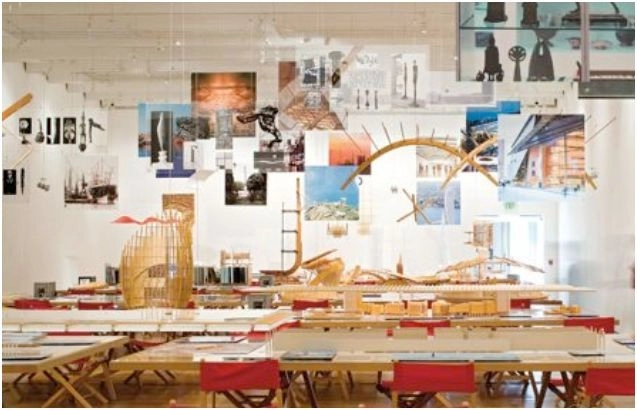
Taking place June 27 - August 2, Gagosian Gallery, in collaboration with Renzo Piano Foundation and generously supported by the Stavros Niarchos Foundation, 'Fragments' is an exhibition of more than thirty years of architectural projects by the Renzo Piano Building Workshop.Equal parts library reading room, school classroom, and natural history gallery, the exhibition consists of twenty-four tabletop displays of scale models, drawings, photographs, and video. Each tells the involved, inspiring story of the design process of a single building, from museums, libraries, and airports to private residences. More information on the exhibition after the break.
Thanks to the courtesy of our friends from Beka & Partners, we are giving you the chance to win one of the five DVD-Books of the Living Architectures collection.
"Living Architectures” is a series of films that seeks to develop a way of looking at architecture which turns away from the current trend of idealizing the representation of our architectural heritage.
"Which architect would you like to see next in the Living Architectures series and why?"
You have until June 24 to submit your answer. Winners will be announced and contacted during the same day.
For more information about the DVD-Books you can check the trailers after the break, or go to www.living-architectures.com for more details. Good luck!
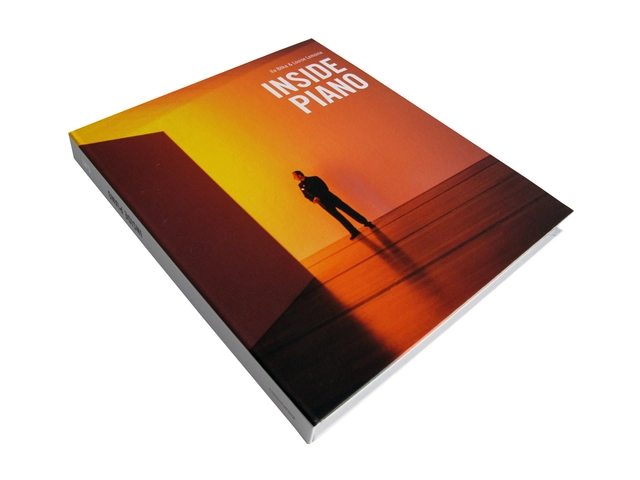
Fifth project of the Living Architectures series, Inside Piano is composed of three films on three symbolic buildings of Renzo Piano's career. A visit throughout the prototype-building of the Centre Pompidou. An immersion in the soundproof world of a submarine floating in the depths of the Parisian underground. A journey aboard a luminous magic carpet of a highly sophisticated architectural machine. A humorous, caustic and quirky point of view.
The Architectural League of New York announced early this month the award of its 2013 President’s Medal to Renzo Piano of the Renzo Piano Building Workshop.The President’s Medal is the Architectural League’s highest honor and is bestowed, at the discretion of the League’s President and Board of Directors, on individuals to recognize an extraordinary body of work in architecture, urbanism, or design. This award also exemplifies the Architectural League’s 130-year history of encouraging and honoring excellence in architecture, urbanism, and design. The medal was presented to Renzo Piano, one of the world's most admired architects, by Architectural League President Annabelle Selldorf on April 9th at a dinner with over 350 guests in Manhattan. For more information, please visit here.
It's surprising to think that Los Angeles - the home of the U.S film industry - doesn't have a museum solely dedicated to its homegrown artform. However, all that is about to change should the Academy of Motion Pictures have their way.
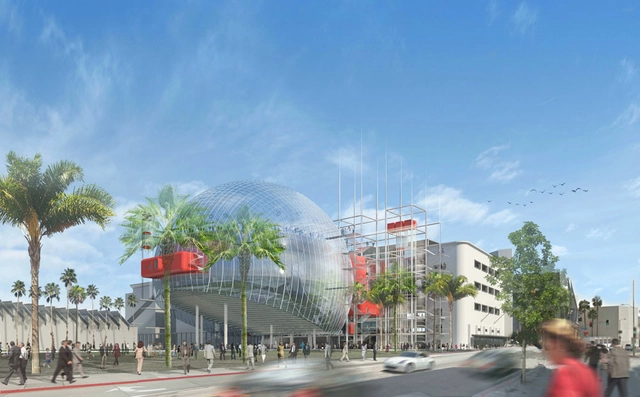
Last Thursday, plans were unveiled for the long-touted Academy Museum of Motion Pictures, a new museum designed by Renzo Piano and native Los Angeleno architect Zoltan Pali, which will be located in the streamline-moderne Wiltshire May Company building at Wilshire Boulevard and Fairfax Avenue, on the campus of the Los Angeles County Museum of Art (LACMA). Although the designs are at an early stage, the released drawings propose to convert the historic building into a museum, while marrying it with a 140-foot-diameter glass dome.
Peter Rice has been described as both one of the best engineers and architects of the twentieth century. Unhappy with the role that engineers play in designing buildings, Rice dedicated his life to championing brave innovation and poetry through structure in a way that helped bridge the gap between engineering and architecture. His desire to work in tandem with architects, towards a shared vision, made him one of the most in-demand engineers of the twentieth century.
BBC’s Sarah Montague interviews Renzo Piano, the mastermind behind London’s most controversial and newest skyscraper: The Shard. Prior to the interview, Montague spotted Piano blending into the crowd during the opening of the 310-meter skyscraper “spying” on the onlookers. When asked about this moment, Piano revealed the great advice he received from the prominent Italian film director Roberto Rossellini upon the completion of the Pompidou Center in Paris: “You do not look at the building, you look at the people looking at the building.” It was during this moment that Piano observed “surprise” and “wonder, but not fear” amongst the onlookers - a reaction he seemed to be content with.
Despite Piano’s attempt to refrain from controversy, it is hard to avoid when your design intends to celebrate a “shift in society.” Change tends to stir mixed emotions and spark debate. However, being part of the “human adventure” as an architect is what Piano finds most rewarding. He states: “You don’t change the world as an architect, but you celebrate the change of the world.”
Today, six months after the laser light extravaganza that marked the completion of The Shard in London, the controversial glass tower celebrated its official opening to the public. Architecture enthusiasts and residents were welcomed to join the mayor of London 244 meters above the capital on the 72 floor observation deck for the official ribbon cutting.
Designed by Italian architect Renzo Piano, the 310 meter needle-point structure is currently the tallest in Western Europe. The two million square meter mixed-use development offers ample office space, restaurants, a five-star shangri-la hotel and residences.
The Menil Collection Houston, designed by architect Renzo Piano, has been selected for the 2013 AIATwenty-five Year Award. Recognizing architectural design of enduring significance, the Twenty-five Year Award is conferred on a building that has stood the test of time for 25 to 35 years as an embodiment of architectural excellence. Projects must demonstrate excellence in function, in the distinguished execution of its original program, and in the creative aspects of its statement by today’s standards. The award will be presented this June at the AIA National Convention in Denver.
Well, according to the UK’s Architects Registration Board (ARB) he isn’t.
Last week, BDOnline received an email from the ARB asking them to refrain from calling Renzo Piano and Daniel Libeskind an architect, since “they are not registered with the ARB they are not entitled to be described as such”.
The statement said: “BD referred to two eminent individuals as architects – neither of whom are on the UK register. This is one of a number of peripheral areas, and architects often contact us when they are concerned about the use of the title ‘architect’ in the press although no breach of the legislation in fact occurs.”
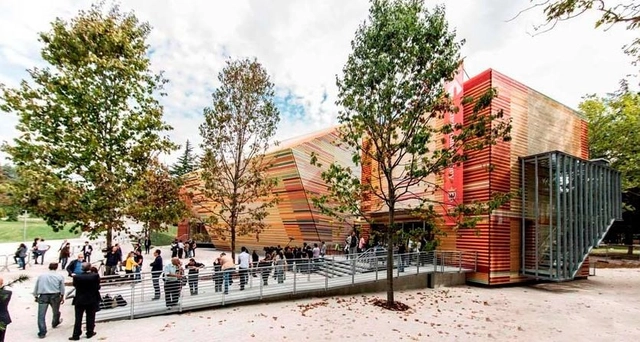
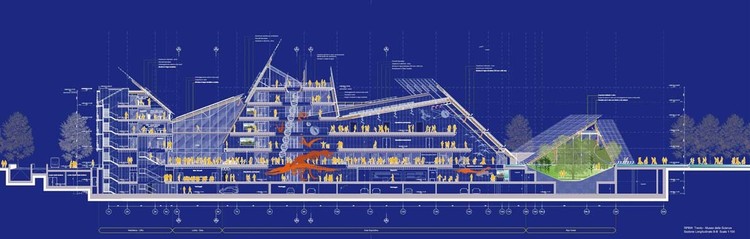
In honor of Renzo Piano’s 75th (gasp!) birthday, we offer an update on his latest projects. The septuagenarian has several large-scale works in various stages of construction scattered across the world, and has celebrated the opening of others within this past year. While we have been continuously following the conceptualization, construction and completion of the Shard, Renzo’s talent is sweeping across major cities both in the States and Europe, including: a satellite museum in New York; a cultural hub for Athens; an urban cultural catalyst for Santander, Spain; an interior renovation for Los Angeles; a recently completed museum wing for Boston; plus, a redeveloped brownfield site turned science center for Trento, Italy. No matter the project location, scale, or program, Piano’s ability to craft an architecture with a sense of lightness, strong attention to detail and overall aesthetic elegance sets him in a very particular category of the profession.
So, here’s to a happy 75th and 75 more years of great architecture, Renzo!
The disappointment generated by the Shard’s opening laser light show is not so surprising for a project that has been grounded in controversy for over a decade. Since 2000, when Piano sketched his initial vision upon meeting developer Irvine Sellar, the project has consistently met obstacles such as English Heritage and the financial crash of 2007. But, the biggest opposition of the tower has been its height. English Heritage claimed that the tower, formerly known as London Bridge Tower, would “tear through historic London like a shard of glass” (ironically, coining the new name of the tower), and Piano counters that, “The best architecture takes time to be understood…I would prefer people to judge it not now. Judge it in 10 years’ time.”
Leading us to wonder…does the Shard simply need time to be fully appreciated?
Tonight, Renzo Piano’s Shard will officially celebrate its opening complete with an amazing light show. A dozen lasers and thirty searchlights will beam streams of light across the city, creating a network between 15 other significant landmarks in London, such as the Gherkin, London Eye, Tate Modern, and Tower Bridge. (So, if you are in London, don’t miss the event at 10.15 this evening, and be sure to share some photos with us!)
Capping out at 310 meters, the Shard has become the tallest building in London, as well as the entire European Union. We have been following the history of Renzo Piano’s creation, and although laden with financial troubles, a change in developers, and criticism from Londoners, the project has finally reached completion.
More about the history of the tower after the break.
A week ago we told you about the Botín Center, Renzo Piano’s first major project in Spain. We also featured some preliminar models of the project and more information on this building, which will have the largest private foundation in Spain invest over 150 million USD. We now have more official images, including some drawings and sketches. Check them out after the break.