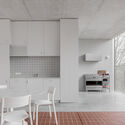
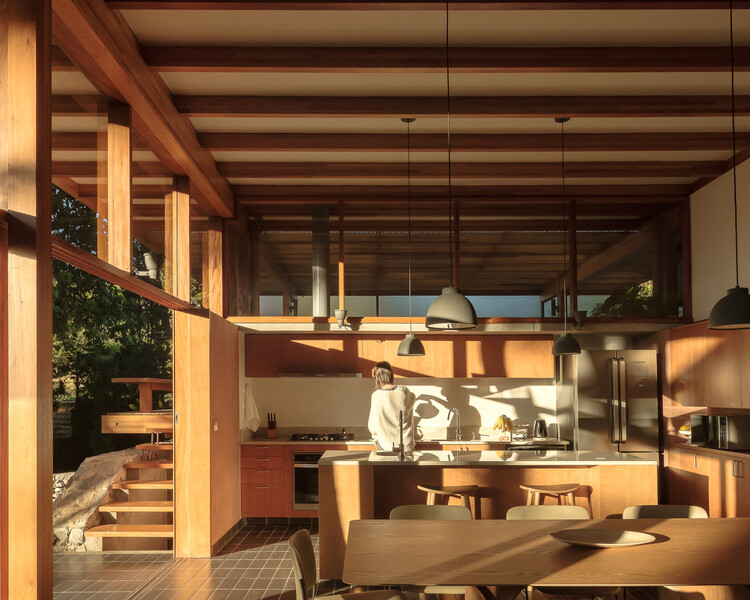
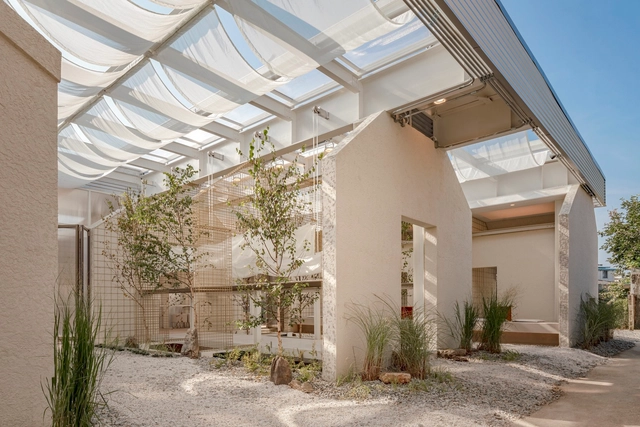
For decades, heritage has been easiest to recognize from the street. We protect facades, skylines, and monuments because they are visible, stable, and legible as cultural assets. Yet most of what we remember about living is how we eat together, withdraw, argue, care, and rest, which happen far from view. It happens inside rooms. As open plans quietly give way to thresholds, corridors, and enclosures, a deeper question emerges: what if cultural memory survives not in what architecture shows, but in how it is lived?
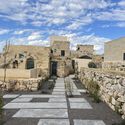
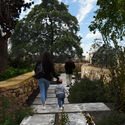
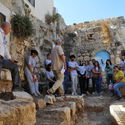
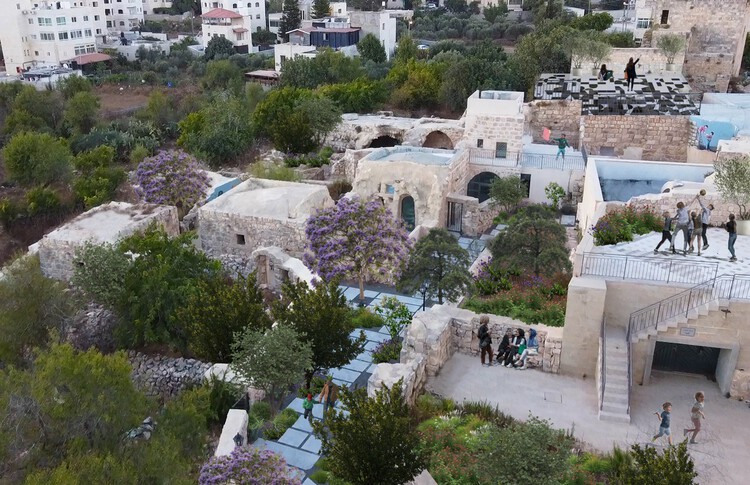
Qalandiya Rendering. Image Courtesy of RIWAQ – Centre for Architectural Conservation
Qalandiya: the Green Historic Maze, developed by RIWAQ – Centre for Architectural Conservation, has been awarded the Grand Prize at the Holcim Foundation Awards 2025, recognizing its sensitive and deeply contextual approach to heritage conservation in Palestine, selected among the 20 winners of this year's edition. Located in Qalandiya, north of Jerusalem, the project reactivates a historic village center long affected by political fragmentation, neglect, and spatial disconnection. Through an incremental rehabilitation strategy, the project restores deteriorated structures using traditional knowledge, local stone masonry, and native materials, transforming abandoned fabric into active public spaces while reinforcing environmental resilience through passive climate strategies and landscape-based infrastructure.
The potential of existing buildings to shape cities and communities in flux through reuse and adaptation is the key focus of HouseEurope! and their activism: addressing the pressing challenge across much of Europe, where it is often easier, cheaper, and faster to demolish buildings than to renovate. For decades, construction policies, industrial practices, and market systems have favored new development, often undervaluing the cultural, social, and environmental significance of existing structures. For their work advocating systemic change in architecture, HouseEurope! received the 2025 OBEL Award under the theme "Ready Made." In a conversation with ArchDaily, collective members of HouseEurope! Alina Kolar and Olaf Grawert discussed the organization's approach to architecture, policy, and collective action.
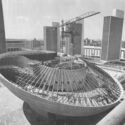
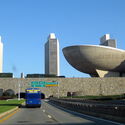
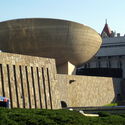
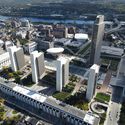
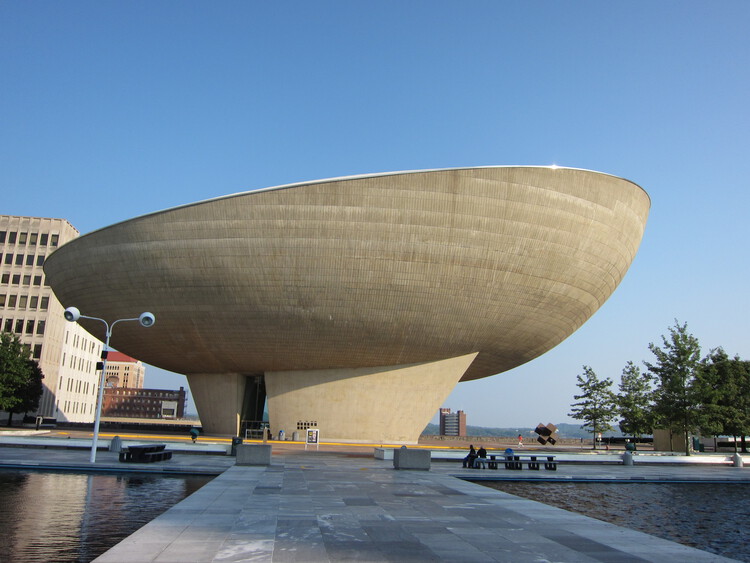
The Egg is a performing arts centre located in Albany, within New York's Empire State Plaza, designed by the North American firm Harrison & Abramovitz. Construction began in 1966 and was completed twelve years later, in 1978, with the aim of hosting a broad range of cultural events and performances for New York State residents. Drawing inspiration from Brazilian modernism, the domed, egg-like concrete structure stands out as a striking counterpoint within an otherwise rational urban ensemble. Surrounded by state government towers set in an open plaza and clad in stone, the building's exposed concrete, its seemingly suspended form, and pronounced curved geometry position it as a late example of modernist Brutalism. The venue is currently undergoing restoration and, after six months of renovations, is set to reopen on January 8, 2026, in what has been described as a "refreshed and reimagined" space.
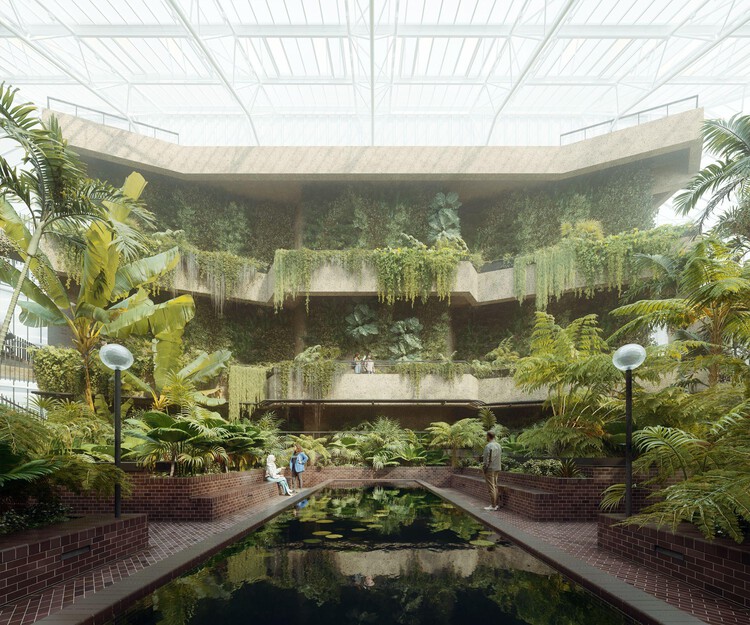
The City of London Corporation has formally approved the delivery plan for the renewal of the Barbican Centre, confirming a £191 million investment to support the first five-year phase of a long-term transformation programme. Approved in December 2025, the decision secures funding for major repairs, infrastructure upgrades, and public space improvements across the Grade II-listed complex. Subject to planning permission, major construction is scheduled to begin in 2027, with completion of this phase targeted for 2030, ahead of the Barbican's 50th anniversary. To facilitate the works, most programmes within the Centre will pause for approximately one year between June 2028 and June 2029, while preparatory upgrades, including essential works to the Barbican Theatre, are set to begin in early 2026.
Videos
First Prize Winner: Edge of presence. Image Courtesy of Buildner
Buildner has announced the results of its Re-Form: New Life for Old Spaces, an international ideas competition examining the adaptive reuse of small-scale existing buildings. The competition invited architects and designers to propose transformations of used, abandoned, or overlooked structures with an approximate footprint of 250 square meters, located anywhere in the world. With no fixed site or program, participants were encouraged to explore alternatives to demolition and new construction through reuse strategies grounded in contemporary social and environmental concerns.
As an open-format competition, Re-Form foregrounded sustainability, feasibility, and community impact over formal or typological constraints. Submissions ranged from precise urban insertions to more speculative rural interventions, reflecting a broad range of approaches to working with existing fabric. Many projects focused on how limited, often marginal spaces could be reactivated to support new forms of collective use while responding to material, climatic, and ecological conditions.
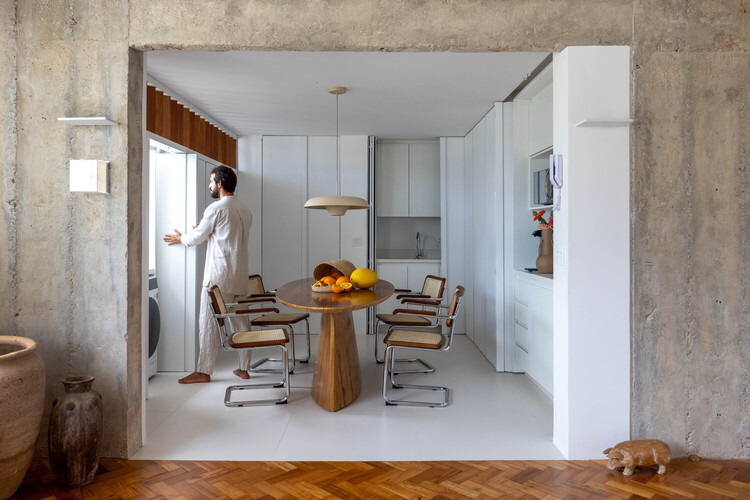
Across Latin America, renovation has become less about preservation alone and more about responding to changing ways of living. Rather than freezing buildings in time, many contemporary projects work with existing structures to adapt them to new domestic routines, social dynamics, and spatial needs. Through strategic changes in materials, composition, color, and light, these interventions reinterpret everyday spaces while maintaining a strong connection to their original context.
In this process, houses and apartments become sites of transformation where flow, continuity, and shared spaces are carefully reconsidered. Renovation operates as a precise architectural tool, one that prioritizes natural light, openness, and flexibility to support daily life as it evolves. Instead of imposing new forms, these projects repurpose what is already there, aligning spatial decisions with the habits and rituals of those who inhabit them.
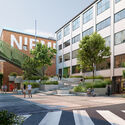
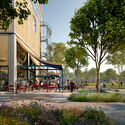
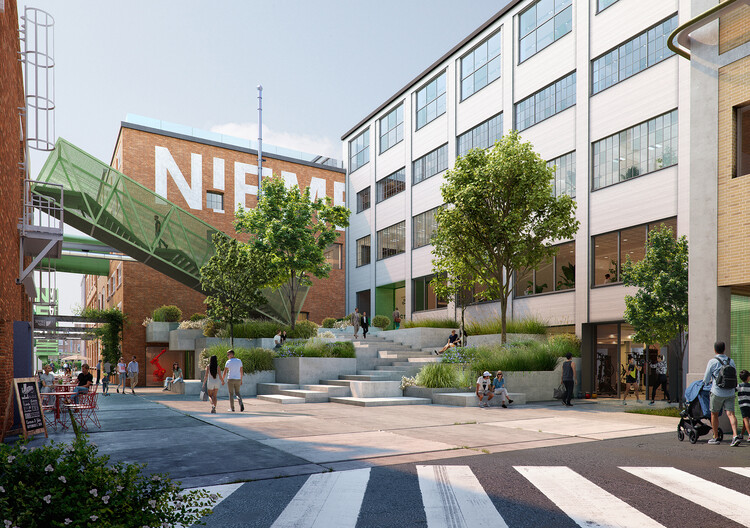
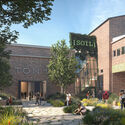
Studioninedots is leading the transformation of a 200-year-old tobacco factory site into Niemeyer, a mixed-use urban complex accommodating digital innovation, cultural venues, hospitality, education, and manufacturing within the existing industrial buildings. Located on Paterswoldseweg in Groningen, the Netherlands, the 38,000 m² project is commissioned by MWPO, with MWPO and Campus Groningen jointly acting as clients for the Shared Facilities. Currently in the design phase (2023–2025), the project's provisional timelines indicate a phased construction start beginning with the factory's southern section in 2026, followed by the northern section in 2027. The Amsterdam-based office's proposal opens the formerly closed industrial ensemble to the public, introducing cafés, galleries, workshops, and shared workspaces distributed across interior streets and adjacent park areas.
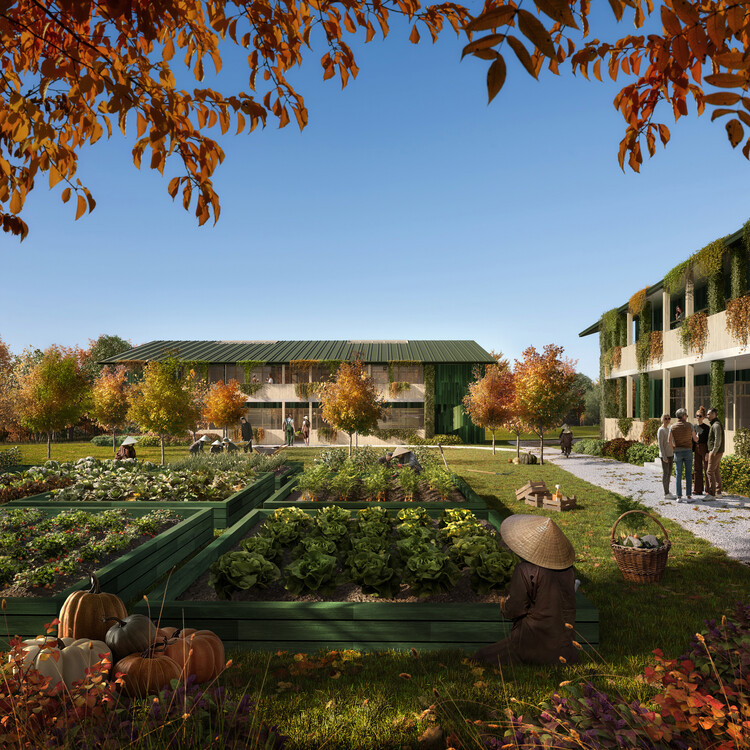
The Plum Village BuddhistMonastery in southern Dordogne, France, has received construction approval for the first phase of its ongoing collaboration with Dutch architecture studio MVRDV. The approvals cover the Upper Hamlet masterplan phase, including the construction of new guest houses and the renovation and expansion of the monastery's bookshop, as well as a new nunnery building at the Lower Hamlet. Developed in collaboration with co-architect MoonWalkLocal and consultants OTEIS, VPEAS, and Emacoustic, the wider project includes two masterplans for the Monastery's Upper and Lower Hamlets, four communal guest houses, a new nunnery, and the transformation of an existing bookshop. Working on a non-profit basis, the design team prioritises renovation alongside the use of circular and bio-based materials, aligning the architectural approach with the monastery's philosophical principles. The proposed additions aim to better accommodate the annual visitors who travel to Plum Village to engage with the teachings of Engaged Buddhism.
While adaptive reuse has been increasingly acknowledged as a vital architectural strategy worldwide, its discourse and implementation in Asia are still expanding—driven by growing ecological awareness and a shifting understanding of architectural knowledge. Rather than accelerating a developmentalist model centered on demolition and new construction, architects today are confronted with a different approach to the built environment: treating the existing structure as a resource—an archive of materials, spatial organizations, and informal histories.
Adaptive reuse is often associated with the preservation of historic buildings and culturally significant heritage. Yet the vast field of seemingly 'less-valued' structures—abandoned houses, standard yet old dwellings, non-conforming office buildings, and overlooked urban voids—has become ground for experimentation. These sites challenge architects and designers to reconsider prevailing standards of efficiency and market-driven development, and to imagine spatial and ecological practices that avoid the continual loss of embodied material and cultural knowledge inherent in constant rebuilding.
Behind layers of plaster, paint, and finishes lies an intricate network of pipes, electrical conduits, beams, and other structural elements that make a building function and stand, yet remain invisible to the everyday eye. Within these layers, traces of different periods accumulate: replaced systems, improvised adaptations, and technical solutions that once responded to specific contexts and urgencies. In adaptive reuse, the greatest challenge often begins before construction even starts, which is understanding what lies within when little or no reliable documentation exists. During a renovation, pleasant or unpleasant surprises are inevitable. The unexpected is part of the process, but it also represents cost, delay, and risk factors that often discourage investors and professionals from engaging in this type of project.
As the late urban planner Jaime Lerner once argued, the future of architecture lies not in building new cities but in updating those that already exist. In a world where resources are finite and urban space is increasingly saturated, his statement feels more urgent than ever. It calls for architects to look inward, to rethink what truly needs to be built, and to recognize the creative potential of what is already there. Within the constraints of existing structures lies an opportunity to design differently: to repair, adapt, and reuse. Or, as French poet Louis Aragon would have it, to reinvent the past to see the beauty of the future.
This month, ArchDaily exploresBuilding Less: Rethink, Reuse, Renovate, Repurpose, a theme that examines the growing shift in architecture toward working with what already exists. As urban spaces grow denser and land becomes scarce, architects are rethinking the impulse to build anew. Instead, they are extending the life of existing structures, embracing retrofit and adaptive reuse as strategies for sustainability and creativity. The question guiding this exploration is simple, yet urgent: How can architecture redefine urban futures by building less?
Theaters serve as cultural and social institutions, shaping society by providing spaces where stories of identity, race, and justice are brought to life. These venues foster community through shared, live experiences, sparking conversations that resonate beyond the stage. Architecturally, theaters are more than performance spaces—they are landmarks that embody both the history and future of the arts. Their design often reflects the cultural importance of storytelling, while their refurbishments ensure they remain relevant in a modern context.
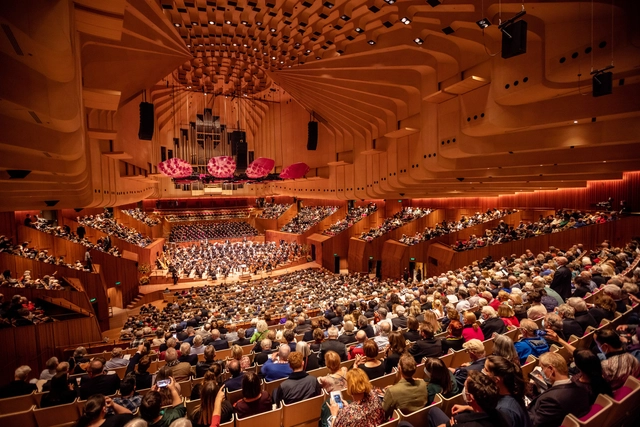
In this week's AD Interior Focus, ArchDaily explores how the refurbishment of iconic theaters like the Royal Opera House in London, United Kingdom, and Sydney Opera House in Australia goes beyond modernizing comfort and accessibility. It delves into how these projects preserve the architectural integrity of these historic landmarks, ensuring their design continues to serve as a backdrop for both artistic expression and social discourse.
The VELUX Group is launching the next step in its Action Leadership agenda as an experiment to explore how existing buildings can better serve both people and planet. The experiment builds on decades of demonstration projects and research into healthy buildings, including Living Places, which achieved an ultra-low carbon footprint and first-class indoor climate in an affordable and accessible way. The next step shifts focus towards existing buildings, from new build to renovation—named Re:Living.
Re:Living is a forward-thinking experiment to reimagine renovation to be more than a technical upgrade, and instead as a holistic opportunity to improve human well-being, support biodiversity, and reduce environmental impact. It's part of VELUX's long-term commitment to lead the building industry toward healthier, more sustainable practices, driven by a belief that simply reducing harm is no longer enough.
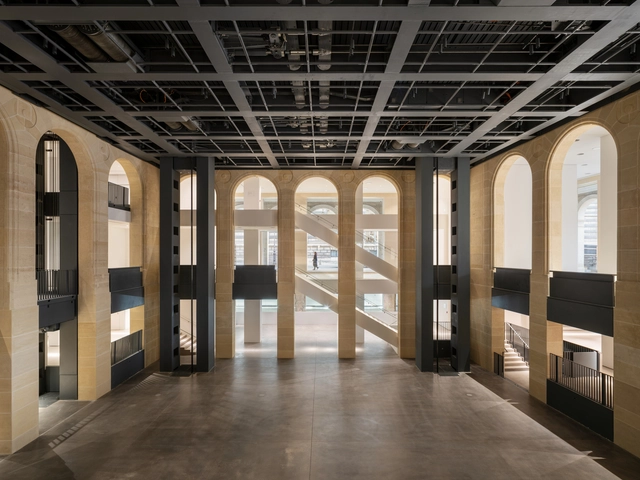
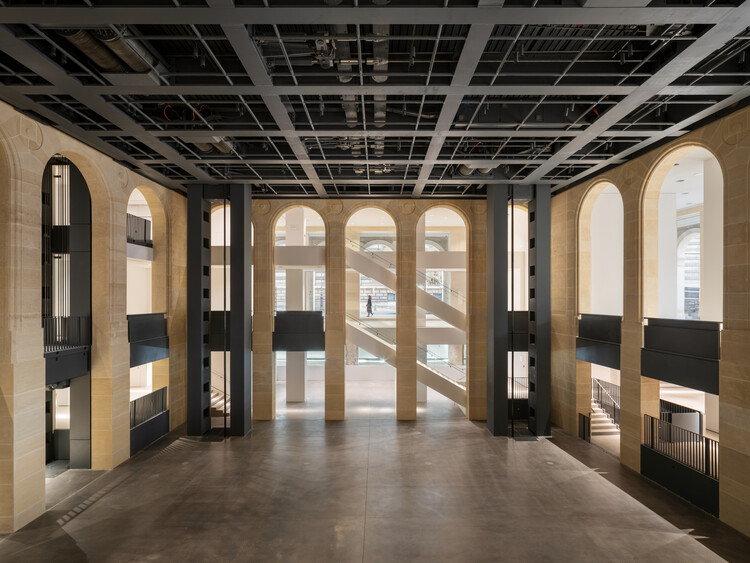
On October 25, 2025, the Fondation Cartier Pour l'Art Contemporain will open its new premises to the public with an inaugural exhibition drawn from its own Collection, entitled Exposition Générale. Located in the heart of Paris, the new space occupies a Haussmannian building that once housed the Grands Magasins du Louvre, recently reimagined by Jean Nouvel. Conceived as a dynamic architecture with five mobile platforms, the building was designed to expand the possibilities of a traditional exhibition venue. These mechanisms aim to accommodate all forms of visual expression, including photography, cinema, the performing arts, science, and craft, within a space that resonates with the urban life of Paris and engages with questions of urban planning and ecology. Within these parameters, the inaugural exhibition brings together more than 600 works by over 100 artists in a contemporary scenography designed by Formafantasma.
This week in architecture, global recognitions and new unveilings underscored the field's growing commitment to climate awareness, cultural continuity, and adaptive reuse. From Expo 2025 Osaka's closing ceremonies to international award announcements, the focus turned to architects and designers redefining the relationship between place, material, and community. Alongside these recognitions, major new projects, from Dubai to California, illustrated how design continues to evolve across scales: shaping cities, preserving heritage, and addressing urgent global challenges through context-driven architecture.
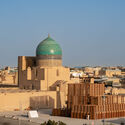
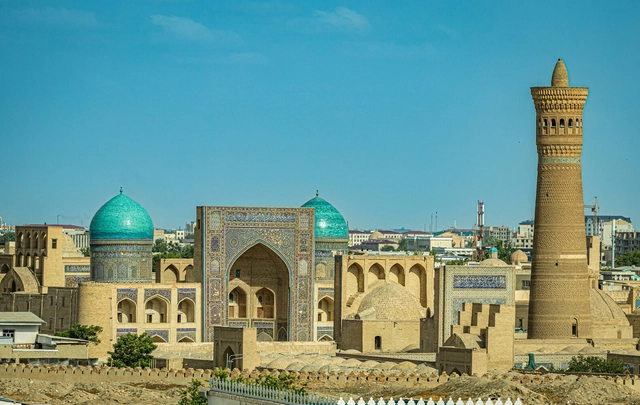
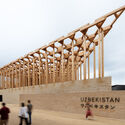
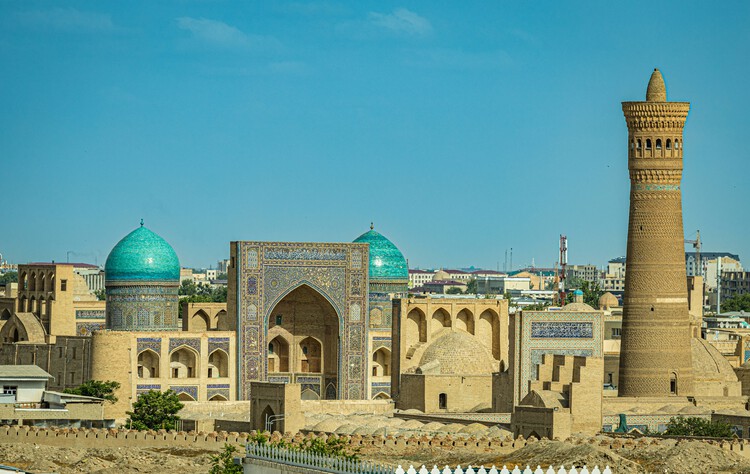
Uzbekistan's architectural and artistic heritage reflects a layered history shaped by centuries of cultural exchange along the Silk Road. From the monumental ensembles of Samarkand and Bukhara to the scientific and educational institutions of the Timurid era, architecture has long been a vessel of identity and knowledge across the region. In the twentieth century, Tashkent emerged as a new urban laboratory, where modernist ideals met local craft traditions and environmental pragmatism. The city's reconstruction following the 1966 earthquake became a defining moment, fusing Soviet urbanism with regional aesthetics to produce a distinctly Central Asian expression of modernity, one that translated cultural continuity into concrete, glass, and light.