1. ArchDaily
  2. Renewable Resources

Renewable Resources: The Latest Architecture and News

Studio NEiDA Designs The Falcon Cinema in Ghana, a Community Art Centre Dedicated to African Film

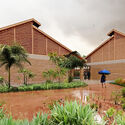
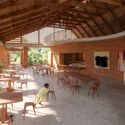
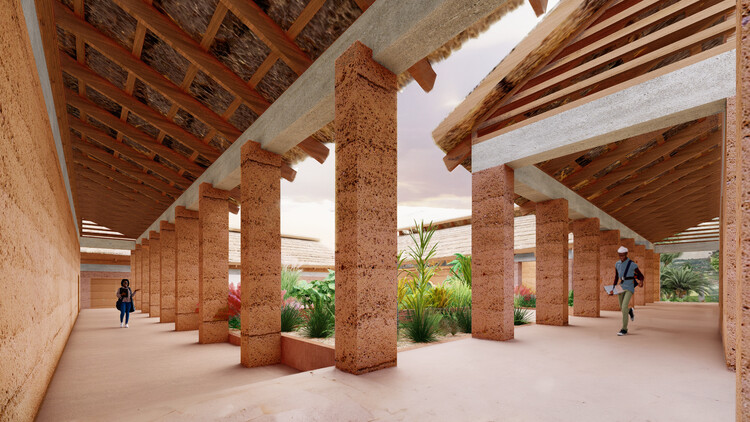
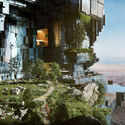
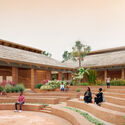
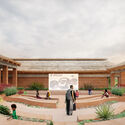
Designed by Studio NEiDA, The Falcon Cinema is a community and art centre located in Berekuso, Ghana, commissioned by film curator and Founding Director Jacqueline Nsiah. The cinema's mission is to create a home for cineastes to preserve Africa's cinematic legacy while hosting critical and creative thinking about contemporary filmmaking on the continent, designed and curated with a pan-African approach. The programme includes a 250-seat and a 150-seat screening room, a restaurant, an archive, communal spaces, an education hub, and an outdoor cinema. A second compound is planned for a future phase, to house living quarters for filmmakers in residence. Still in the design phase, the project started in 2024 and is expected to be completed in 2027.
Studio NEiDA Designs The Falcon Cinema in Ghana, a Community Art Centre Dedicated to African Film - Image 1 of 4Studio NEiDA Designs The Falcon Cinema in Ghana, a Community Art Centre Dedicated to African Film - Image 2 of 4Studio NEiDA Designs The Falcon Cinema in Ghana, a Community Art Centre Dedicated to African Film - Image 3 of 4Studio NEiDA Designs The Falcon Cinema in Ghana, a Community Art Centre Dedicated to African Film - Image 4 of 4Studio NEiDA Designs The Falcon Cinema in Ghana, a Community Art Centre Dedicated to African Film - More Images+ 8

The Line at a Crossroads: Revisiting NEOM's Vision for a Utopian City

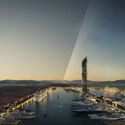
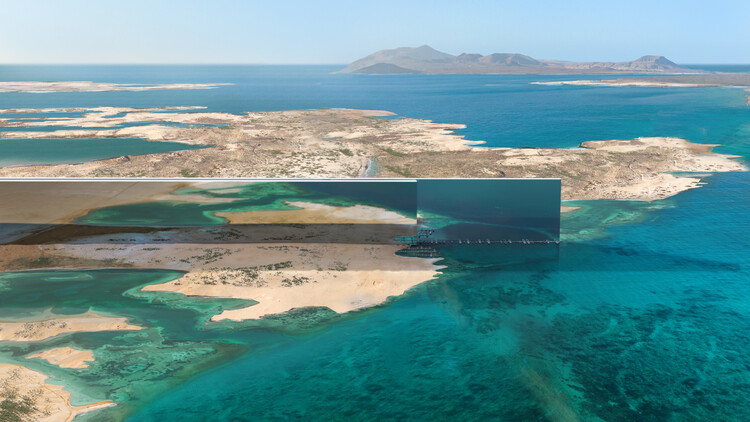
In 2023, ArchDaily's editor-in-chief sat down with Tarek Qaddumi, Executive Director of the Line Design at NEOM, at the closing of the Line Exhibition in Riyadh. Qaddumi described a layered, three-dimensional city organized around the idea of a "five-minute sphere" of access: walkable communities stacked vertically, connected by high-speed rail, freed from cars and conventional street infrastructure, and designed to coexist symbiotically with the surrounding natural landscape. It was a compelling vision, and in the context of the moment, it was simultaneously credible and appealing. For architects and urban thinkers grappling with the failures of twentieth-century city-building, the ideas articulated were worth engaging and planning.

The Line at a Crossroads: Revisiting NEOM's Vision for a Utopian City - Image 1 of 4The Line at a Crossroads: Revisiting NEOM's Vision for a Utopian City - Image 2 of 4The Line at a Crossroads: Revisiting NEOM's Vision for a Utopian City - Image 3 of 4The Line at a Crossroads: Revisiting NEOM's Vision for a Utopian City - Image 4 of 4The Line at a Crossroads: Revisiting NEOM's Vision for a Utopian City - More Images+ 5

Egypt’s Pavilion at the Venice Architecture Biennale 2025 Examines the Balance Between Conservation and Development

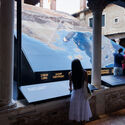
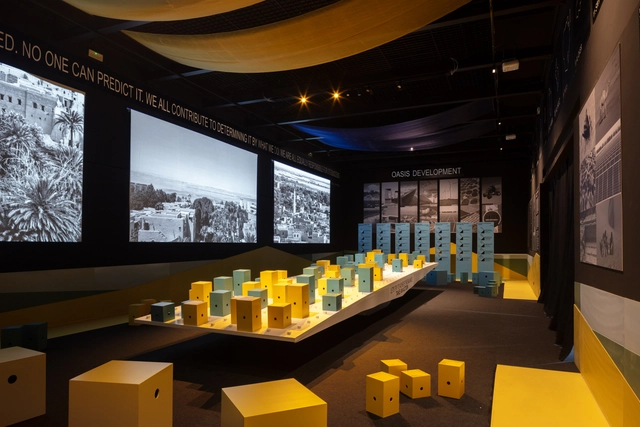
At the 19th International Architecture Exhibition - La Biennale di Venezia, Egypt presents Let's Grasp the Mirage, its national pavilion offering an interactive exploration of sustainability through the symbolic lens of the Egyptian oasis. Curated by Salah Zikri, Ebrahim Zakaria, and Emad Fikry, and commissioned by the Ministry of Culture Egypt and Accademia d'Egitto, the project reflects on the delicate balance between conservation and development, aligning with the Biennale's 2025 theme "Intelligens. Natural. Artificial. Collective."

Egypt’s Pavilion at the Venice Architecture Biennale 2025 Examines the Balance Between Conservation and Development - Image 8 of 4Egypt’s Pavilion at the Venice Architecture Biennale 2025 Examines the Balance Between Conservation and Development - Image 10 of 4Egypt’s Pavilion at the Venice Architecture Biennale 2025 Examines the Balance Between Conservation and Development - Image 9 of 4Egypt’s Pavilion at the Venice Architecture Biennale 2025 Examines the Balance Between Conservation and Development - Image 11 of 4Egypt’s Pavilion at the Venice Architecture Biennale 2025 Examines the Balance Between Conservation and Development - More Images+ 10

“Resources For a Future”: Tallinn Architecture Biennale Announces Program and Curation for 2024 Edition

The 7th Tallinn Architecture Biennale (TAB 2024) will commence on October 9th, 2024, at various venues around the city. Organized by the Estonian Centre for Architecture, this edition of the global architecture exhibition explores “Resources For a Future,” hoping to encourage dialogue, interdisciplinary work, and innovation within architecture. The event targets both architects and the general public and includes a comprehensive program featuring workshops, panels, seminars, and Open House Tallinn.

“Resources For a Future”: Tallinn Architecture Biennale Announces Program and Curation for 2024 Edition - Image 1 of 4“Resources For a Future”: Tallinn Architecture Biennale Announces Program and Curation for 2024 Edition - Featured Image“Resources For a Future”: Tallinn Architecture Biennale Announces Program and Curation for 2024 Edition - Image 2 of 4“Resources For a Future”: Tallinn Architecture Biennale Announces Program and Curation for 2024 Edition - Image 3 of 4“Resources For a Future”: Tallinn Architecture Biennale Announces Program and Curation for 2024 Edition - More Images+ 6

Learning from Global Architecture Exhibitions: Resource Efficiency, Vernacular Intelligence, and Social and Environmental Advocacy

Over the past year, architecture exhibitions have significantly addressed pressing global issues such as climate change, resource scarcity, and social advocacy. According to the Harvard Graduate School of Design, architecture exhibitions can foster dynamic engagement with contemporary issues, serving as platforms for experimentation and critique. These events, such as the Venice Architecture Biennale, Sharjah Architecture Triennial, Milan Design Week, and Concéntrico, serve as essential platforms for creatives to showcase and explore new ideas. Moreover, they have been instrumental in addressing the urgent challenges posed by the climate crisis by promoting sustainable practices.

Learning from Global Architecture Exhibitions: Resource Efficiency, Vernacular Intelligence, and Social and Environmental Advocacy - Image 1 of 4Learning from Global Architecture Exhibitions: Resource Efficiency, Vernacular Intelligence, and Social and Environmental Advocacy - Image 2 of 4Learning from Global Architecture Exhibitions: Resource Efficiency, Vernacular Intelligence, and Social and Environmental Advocacy - Featured ImageLearning from Global Architecture Exhibitions: Resource Efficiency, Vernacular Intelligence, and Social and Environmental Advocacy - Image 3 of 4Learning from Global Architecture Exhibitions: Resource Efficiency, Vernacular Intelligence, and Social and Environmental Advocacy - More Images+ 9

Circular Economy in Urban Design: Sustainability and Community Involvement

Circular Economy in Urban Design: Sustainability and Community Involvement - Featured Image
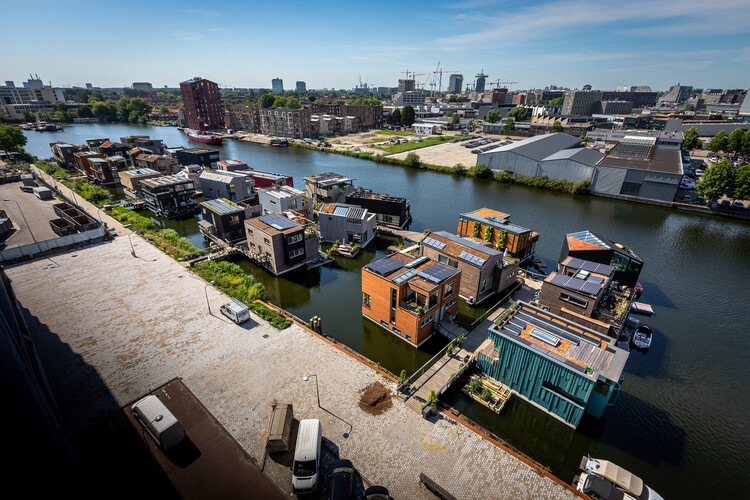
Schoonschip by Space&Matter. Image © Isabel Nabuurs

While circular economy is often discussed in relation to the architectural object through the lens of material recycling, design for disassembly, and material passports, the framework is most fully enacted at the neighbourhood and city scale. Whether it is visions of circular communities that hint at some level of self-sufficiency or policies set in motion by cities, urban-scale projects exemplify the guiding principles of the circular economy, providing a glimpse into what a fully-fledged version of it might look like. The following explores the strategies used in circular urban environments, from architecture and construction materials to energy production, waste management and food production, as well as the processes and operations that govern these designs, providing insights into the conditions that inform circularity. 

Circular Economy in Urban Design: Sustainability and Community Involvement - Image 1 of 4Circular Economy in Urban Design: Sustainability and Community Involvement - Image 2 of 4Circular Economy in Urban Design: Sustainability and Community Involvement - Image 3 of 4Circular Economy in Urban Design: Sustainability and Community Involvement - Image 4 of 4Circular Economy in Urban Design: Sustainability and Community Involvement - More Images+ 1

Olson Kundig's Hydro-Solar Generator Proposal Could Power 200 Melbourne Homes

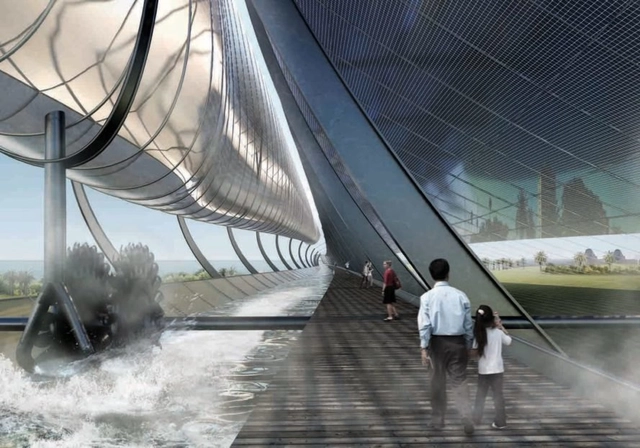
Seattle-based Olson Kundig has released details of their second-place winner from the 2018 Land Art Generator competition, set in Melbourne, Australia. The “Night & Day” scheme combines solar energy with a hydro battery, generating enough power for 200 Australian homes, 24 hours per day.

The St Kilda-situated infrastructure proposal doubles as an artwork and pedestrian bridge, with a flagship 5,400-square-meter solar sail suspended above the St Kilda Triangle in Port Phillip city. After sunset, further electricity is generated through two turbines capturing the kinetic movement of water released through them.

Tall Tinder: Are Wooden Skyscrapers Really Fire Safe?

Subscriber Access | 

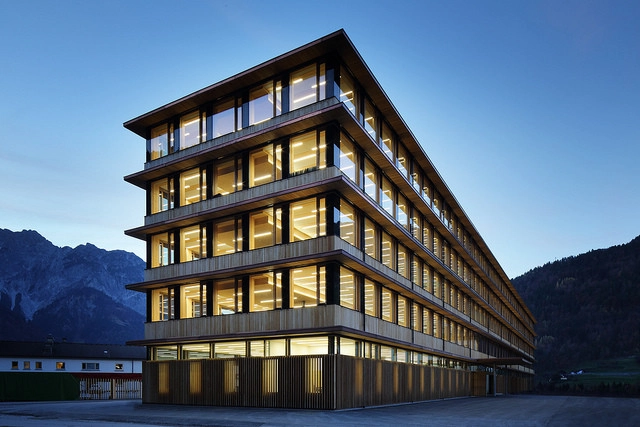
While interest in tall timber buildings continues to grow, there still remains one obvious concern: combustibility. So how safe are timber structures really? Arup Connect spoke with Robert Gerard, a fire engineer in Arup’s San Francisco office, to find out how high-rise wood buildings take fire safety into account.

The Case For Tall Wood Buildings

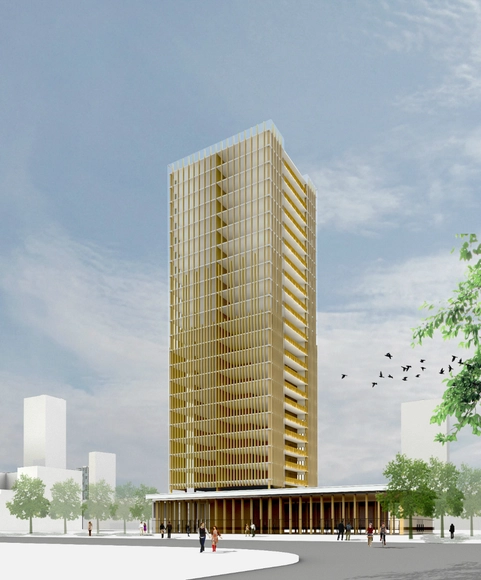
Michael Green is calling for a drastic paradigm shift in the way we build. Forget steel, straw, concrete and shipping containers; use wood to erect urban skyscrapers. In a 240 page report - complete with diagrams, plans, renders and even typical wooden curtain wall details - Green outlines a new way of designing and constructing tall buildings using mass timber, all the while addressing common misconceptions of fire safety, structure, sustainability, cost and climate concerns.