1. ArchDaily
  2. reclaimed tile

reclaimed tile: The Latest Architecture and News

Lu Wenyu: Quiet Radicalism and the Practice of Repair

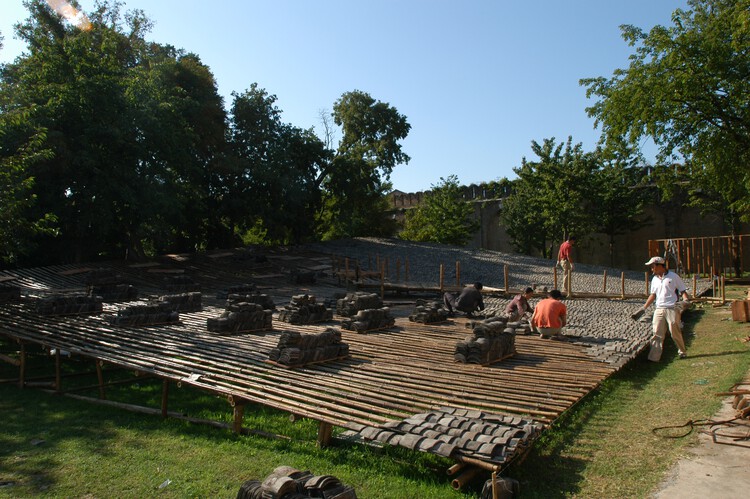
Lu Wenyu—co-founder of Amateur Architecture Studio with Pritzker laureate Wang Shu—has shaped many of the practice's most emblematic works across China, including the Ningbo History Museum and the Xiangshan Campus of the China Academy of Art in Hangzhou. Often working outside the spotlight, her leadership is unmistakable in the discipline of execution and the roles she has assumed: in 2003, together with Wang Shu, she established the Architecture Department at the China Academy of Art, where she also serves as Director of the Sustainable Construction Center. Her practice and teaching form a reciprocal loop: research conducted in studios at the China Academy of Art continually folds back into construction strategies on site, while lessons learned in the field return to the classroom as material intelligence rather than abstract theory.

Lu Wenyu: Quiet Radicalism and the Practice of Repair - Image 1 of 4Lu Wenyu: Quiet Radicalism and the Practice of Repair - Image 2 of 4Lu Wenyu: Quiet Radicalism and the Practice of Repair - Image 3 of 4Lu Wenyu: Quiet Radicalism and the Practice of Repair - Image 4 of 4Lu Wenyu: Quiet Radicalism and the Practice of Repair - More Images+ 12

Modern Spolia: Harvesting Building Materials from Demolition Sites

Subscriber Access | 

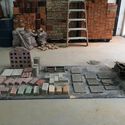
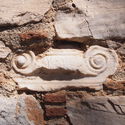
The circular economy, including the reuse of building materials, is fast becoming a key component in the fight against carbon emissions. This involves designing to minimize waste and utilize materials that can be reused at the end of the building's life. On the opposing side, the reuse of materials from partially or wholly demolished buildings can also reduce waste and carbon emissions that would have resulted from using virgin materials. Sustainability purposes aside, the reuse of building materials has a centuries-old history, both for symbolic reasons and simply out of necessity.

Modern Spolia: Harvesting Building Materials from Demolition Sites - Image 1 of 4Modern Spolia: Harvesting Building Materials from Demolition Sites - Image 2 of 4Modern Spolia: Harvesting Building Materials from Demolition Sites - Image 3 of 4Modern Spolia: Harvesting Building Materials from Demolition Sites - Image 4 of 4Modern Spolia: Harvesting Building Materials from Demolition Sites - More Images+ 8

Seaweed, Salt, Potatoes, & More: Seven Unusual Materials with Architectural Applications

Subscriber Access | 
Seaweed, Salt, Potatoes, & More: Seven Unusual Materials with Architectural Applications - Image 29 of 4

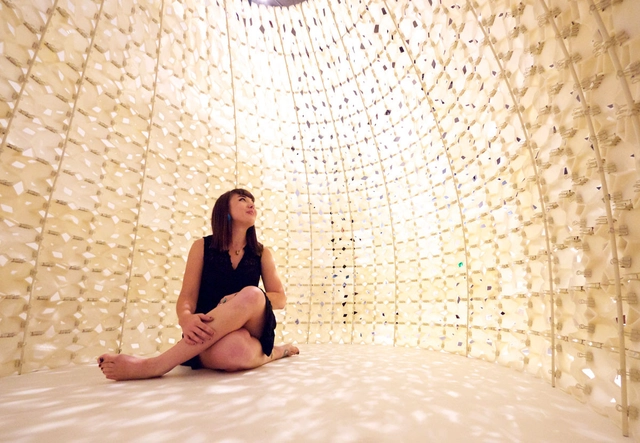
The following article is presented by ArchDaily Materials. In this article, originally published by Metropolis Magazine, Lara Kristin Herndon and Derrick Mead explore seven innovative architectural materials and the designers behind them. Some materials are byproducts, some will help buildings breathe and one is making the leap from 3D printing to 4D printing.

When Arthur C. Clarke said that any sufficiently advanced technology is indistinguishable from magic, he was speaking from the spectator’s point of view, not the magician’s. As our list of smart materials shows, technology solves difficult problems, but getting there requires more than just a wave of the magic wand. Each of the following projects looks past easy answers. Whether it’s a new way of looking at old problems, a new material that maximizes the efficiency of an old technique, or a new method to tap the potential of an abundant or underutilized resource, here are seven innovators who take technology out of the realm of science fiction.