Ammodo Architecture will launch the first edition of Ammodo Architecture Days in Amsterdam on November 9 and 10, 2026. Organized by Ammodo Architecture, a programme of the Ammodo Foundation, the event will bring together architects, landscape architects, urban planners, artists, communities, collectives and multidisciplinary design teams, alongside recipients of the 2024 and 2025 Ammodo Architecture Award. Taking place at Westergas, a former industrial complex now used as a cultural and public venue, the invitation-only two-day programme will combine a symposium, exhibition, publication launch and award ceremony, creating a setting for exchange between practices working across different geographic, cultural and disciplinary contexts.
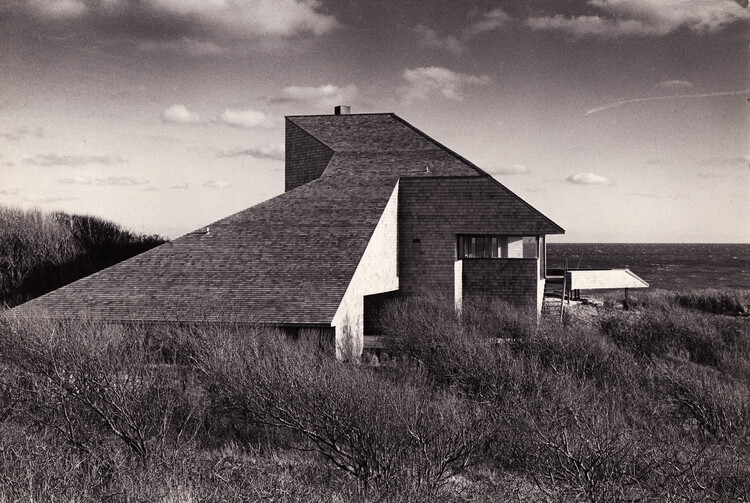
Norman Jaffe, Krieger House , Montauk, New York, 1975. Black and white photograph, 9 x 12 in. Courtesy Norman Jaffe Archives. Photo: Bill Maris. From the 2026 grant to Wandering Eye Studios for the film "Vanishing Point: An Architect’s Journey". Image Courtesy of The Graham Foundation
Since 1956, the Graham Foundation for Advanced Studies in the Fine Arts has fostered the development and exchange of ideas about architecture and its role in the arts, culture, and society. It awards project-based grants to individuals and organizations each year, and hosts public exhibitions and lectures. In June, the foundation announced the recipients of its 2026 Grants to Individuals program, awarding 54 projects that investigate architecture through exhibitions, films, publications, and research initiatives. In a second round announced this week, the organization has allocated funding to projects run by organizations with the same objective: expanding architectural discourse through diverse materials and cultural media.
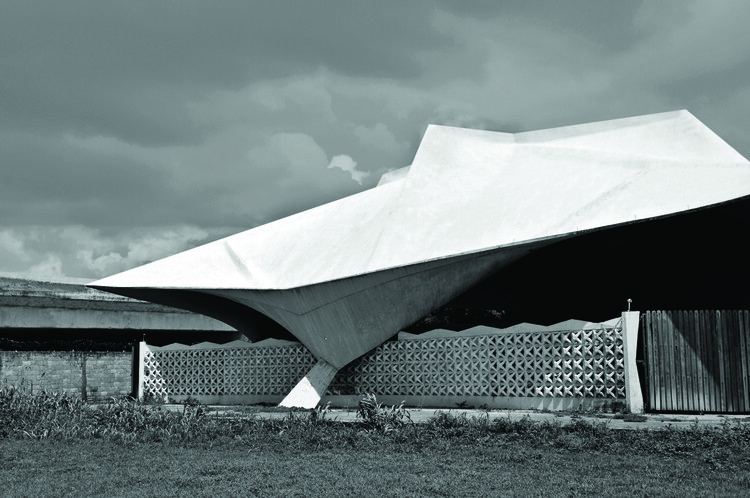
Alex Martínez Suárez, “View of Erwin Cott and Manuel Salvador Gautier, Capilla del Hogar Escuela Salesiana de Haina, Santo Domingo, República Dominicana, built 1965,” 2013. From the 2026 grant to Alex Martínez Suárez for the publication “Concrete under the Sun: Brutalism in the Dominican Republic”. Image Courtesy of Alex Martínez Suárez
The Graham Foundation has announced the recipients of its 2026 Grants to Individuals program, awarding a total of $506,000 to 54 projects that investigate architecture through exhibitions, films, publications, and research initiatives. Selected from more than 600 submissions to the Foundation's September 2025 application cycle, the grants support work by 86 architects, artists, curators, designers, filmmakers, historians, scholars, and writers, reflecting a broad range of interdisciplinary approaches to the built environment and its cultural, social, and political dimensions.
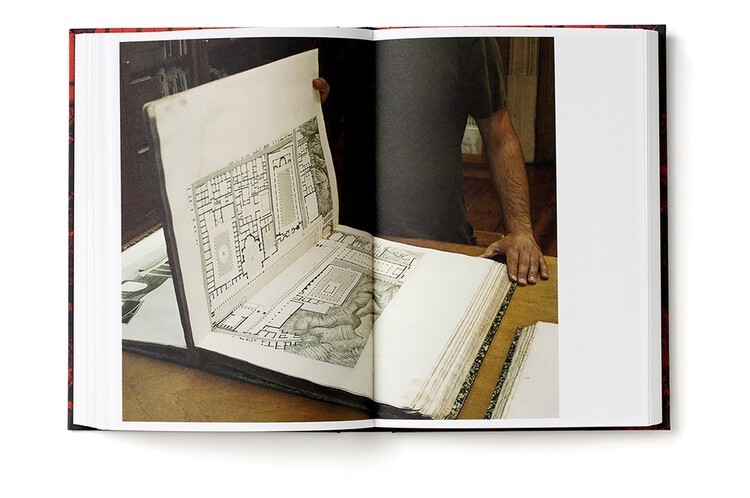
Historically—like other cultural forms—architecture has been documented, shared, and promoted primarily through print. Books, journals, and magazines carried the discipline's arguments and images, and because architectural practice relies so heavily on visual communication, printed journals created a bridge between academic publications and commercial magazines. Through the postwar decades, beautifully produced volumes curated a collective point of view, signaling what the field broadly considered discussion-worthy or exemplary.
Across major cultural centers, a handful of publications shaped this discourse: Their perspectives were typically sophisticated, professional, and carefully edited—distilling an unruly global output into a small constellation of remarkable projects. The system arguably privileged certain practices and geographies, but it also amplified architecture for wider audiences. Buildings began to lodge in public imagination; cultural travel—journeys taken expressly to experience architecture—moved from rarity toward ritual.
Architecture has always been more than bricks and mortar. It is equally constructed through words, ideas, and narratives. From ancient treatises to radical manifestos, from technical manuals to poetic essays, the written word has served as a spatial, pedagogical, and political tool within the field. Writing shapes how architecture is conceptualized, communicated, and critiqued — often long before, or even in the absence of, physical construction.
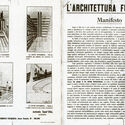
Historically, figures such as Vitruvius, Alberti, and Palladio employed writing to codify principles, project ideals, and legitimize architecture as a discipline. In the modern era, Le Corbusier, Adolf Loos, and Lina Bo Bardi wrote prolifically to expand the scope of architecture beyond form and function, often using publications as tools for persuasion and experimentation. The postwar period gave rise to new editorial strategies, as evident in the manifestos of Archizoom and Superstudio, and the polemical publications of Delirious New York and Oppositions, where writing served as both critique and project.
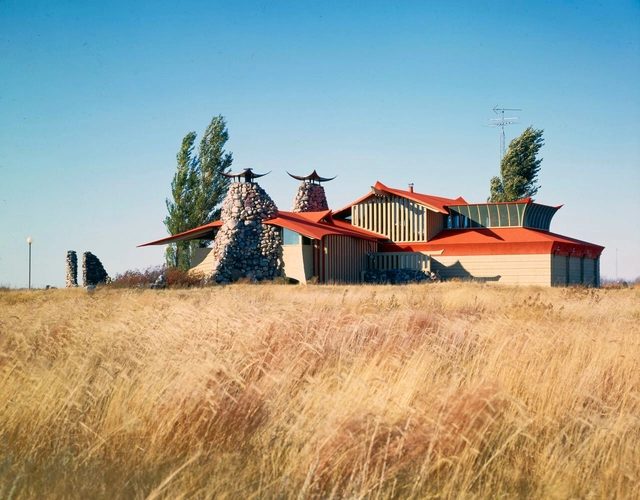
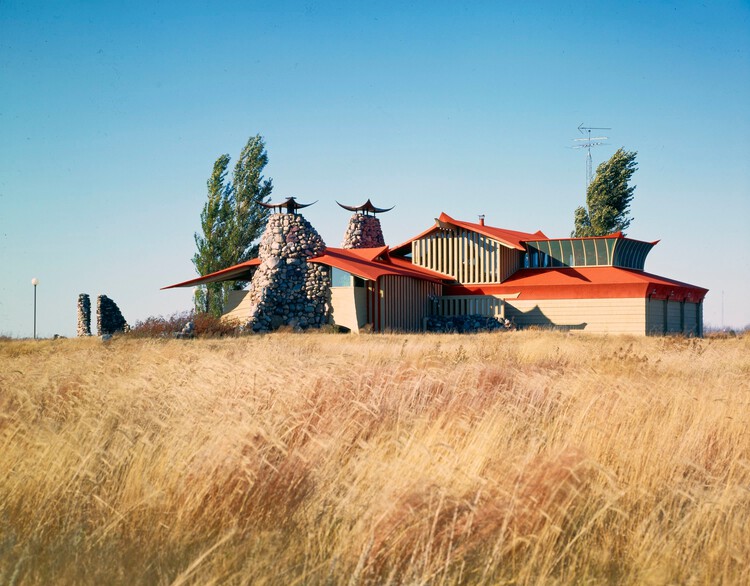
“Glen and Anna Harder House, Mountain Lake, Minnesota,” 1970. Color transparency, 4 x 5 in. Copyright J. Paul Getty Trust, Getty Research Institute, Los Angeles (2004.R.10). Photo: Julius Shulman. For the 2025 grant to the Art Institute of Chicago for the exhibition “Bruce Goff: Material Worlds”. Image Courtesy of Graham Foundation
The Graham Foundation for Advanced Studies in the Fine Arts has announced $573,300 in grants to 39 organizations worldwide. Chosen from more than 200 submissions, the 2025 awards support a broad range of initiatives, including exhibitions, installations, publications, podcasts, student-led journals, internationalarchitectureevents, and public programs that contribute to advancing architectural discourse and design experimentation. Over nearly seven decades, the Graham Foundation has provided more than $45 million in direct support to over 5,200 projects. With the addition of the 2025 grantees, the Foundation aims to continue to strengthen its international network of individuals and organizations advancing architectural ideas and public engagement around the world.
The Graham Foundation has announced 56 new grants to individuals, selected from nearly 600 submissions. Centered on publications, research, exhibitions, films, site-specific installations, and digital initiatives, the funded projects "expand contemporary architecture ideas through innovative rigorous interdisciplinary work on the design and the built environment." The projects are led by 84 individuals, including established and emerging architects, artists, curators, designers, filmmakers, historians, and writers.
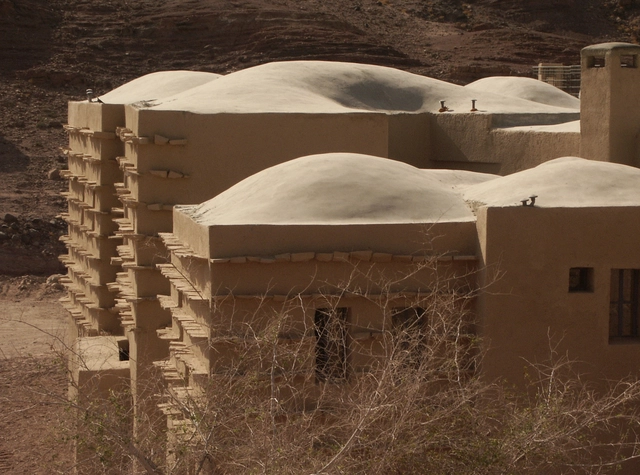
The Feynan Ecolodge project. Image Courtesy of Dongola DAS 01 | Notes on Formation and Ammar Khammash
Ammar Khammash is a Jordanian architect, designer, and artist best known for his approach that focuses on the preservation of cultural and natural heritage while crafting an architecture that engages with its surroundings. With deep admiration for nature and its ecosystems, Khammash trusts that "the site is the architect”, a statement for which he is renowned that underscores the profound influence of context on his architectural design. With over three decades of experience spanning various disciplines and across several Middle Eastern countries such as Jordan, Oman, Palestine, Egypt, Syria, and the UAE, Ammar Khammash has consistently attempted to preserve and enhance the symbiosis between human constructions and the natural environment. His contributions include the Royal Academy for Nature Conservation, the Wild Jordan Center, and the restoration of the Church of Apostles.
In 2022, he was featured in the first edition of the Dongola Architecture Series, a biannual publication that offers unique perspectives into Arab culture by highlighting prominent contemporary architects. The issue, titled “Notes on Formation: Ammar Khammash,” written by Raafat Majzoub, explores "architecture as a transdisciplinary tool of expression, and as a method of imagining and reimagining the future," encapsulating the ethos of the publication. ArchDaily had the opportunity to talk to Ammar Khammash and Sarah Chalabi, founder of Dongola Limited Editions, to delve into the architect’s perspectives on site, materiality, and culture, along with his philosophy, notions on academia, and insights into the future of the profession.
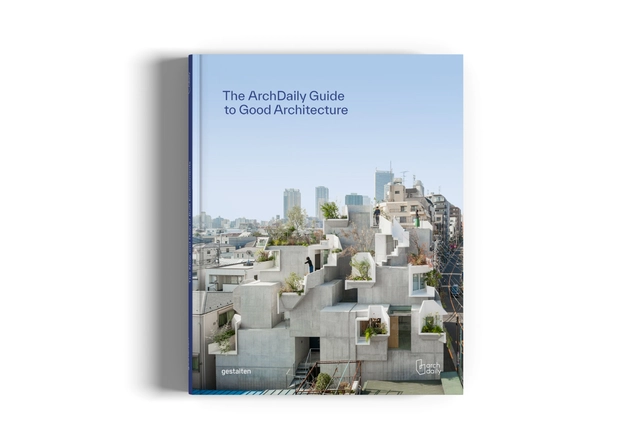
The ArchDaily Guide to Good Architecture, book cover
Dear community,
As your trusted companion along the journey of constant learning and inspiration, we are very excited to share a new format by announcing our first book ever: The ArchDaily Guide to Good Architecture.
In partnership with renowned international publisher gestalten, we have taken a pause to look back on the more than 40,000 projects curated over the past 15 years, to distill their contributions and answer the bold question of what is good architecture. The sheer scale of ArchDaily is a reflection of how important architecture is today, as the deepening complexity of our world places increasing pressure and demands upon our built environment. To deal with issues such as the climate crisis, energy scarcity, population density, social inequality, housing shortages, fast-moving urbanization, diminished local identity, and a lack of diversity, architecture needs to open itself.
To answer this challenging question the book spotlights the most innovative built environments of our age—those paving the way for a better, more sustainable future. Centered around ArchDaily’s 10 principles of good architecture developed by our team, the book showcases a rich variety of projects—both built and planned—from a sunken restaurant with subterranean views to a Mediterranean cave transformed into a remarkable residence. Reflecting a global community of world-shapers, it celebrates the most visionary architects, and introduces bold new talent. It explores the key topics and trends redefining the built environment, marking the forefront of architectural thought and practice today, with an eye on tomorrow.
Architecture Without Borders Quebec (AWBQ) has made public the catalog of practices “Architecture + Homelessness: Inclusive Practices for a Supportive City.” The publication, publicly available in both English and French, is created to encourage architecture and design practices that have the potential to contribute to the well-being of people experiencing homelessness. The catalog is part of an ongoing research project initiated by AWBQ and supported by the Government of Quebec and the City of Montreal.
During the last decade we have witnessed how the profession has diversified to work from different trenches, yes out of curiosity, but mainly due to economic factors related to the economic and environmental crises that have hit in recent years. I think that one of the great myths that is lived in architecture universities is to think that, when they graduate, that entire generation will dedicate themselves to building great buildings. The reality is that it is not like that and over the years, it is very common that according to the specific interests of each person, the opportunities are diversified to make them participate in other areas that make up the architecture in an integral way.
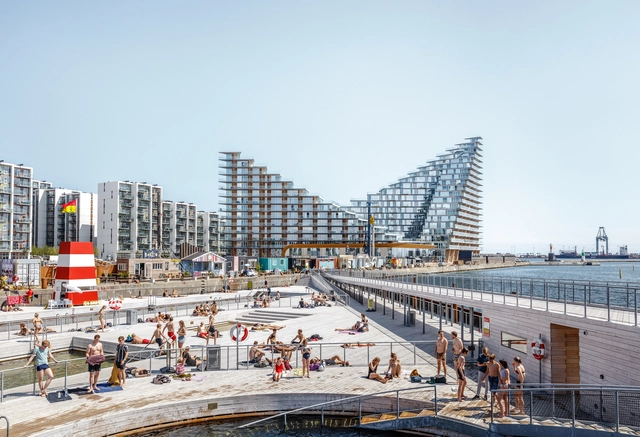
AARHUS, Image by Rasmus Hjortshoj . Image Courtesy of BIG
"The future is already here, it's not just very evenly distributed". Starting off with this William Gibson quote, BIG’s latest publication Formgiving looks at the past and present in order to determine the future. Talking of predictions that aren’t so far down the road, but rather than could occur in 5, 10, or 50 years, the book seeks to “give form to the future”, or to what has not taken shape yet.
ArchDaily had to chance to interview Kai-Uwe Bergmann, Partner at BIG-Bjarke Ingels Group, and discuss not only the firm’s latest manuscript but the trilogy of publications: Yes is More, an “Archicomic on Architectural Evolution”, Hot to Cold an “Odyssey of Architectural Adaptation”, and Formgiving, an “Architectural Future History”.
Believing firmly that "architecture is [...] too important to leave solely to architects", Ole Bouman embarked on diverse activities throughout his three decades of work, reflecting on “architecture, not so much as the art or technique of making buildings, but architecture as the intelligent way to organize our lives on earth, and infuse it with purpose”.
After having shared Bouman's essay Finding Measure, ArchDaily had the chance to discuss with DesignSociety’s founding director his thoughts on the role of architecture, the current challenges of the world, the digital revolution, and many other thought-provoking topics.
What kind of cities do we want to live in? What do we believe is important for a good life? And what makes a good home for all of us?SPACE10 with gestalten have teamed up to gather insights from world-renowned experts to explore a better urban future for humanity. Compiled in a book entitled The Ideal City, the findings draw five core principles: The city of tomorrow should be resourceful, accessible, shared, safe, and desirable.
Taking a holistic and multidisciplinary approach to rethinking how we could design, plan, build and share our cities going forward, the publication unfolds projects from 53 different cities in 30 different countries. Discover in this article, excerpts from the book, with the foreword by Bjarke Ingels and the last word by Xiye Bastida.
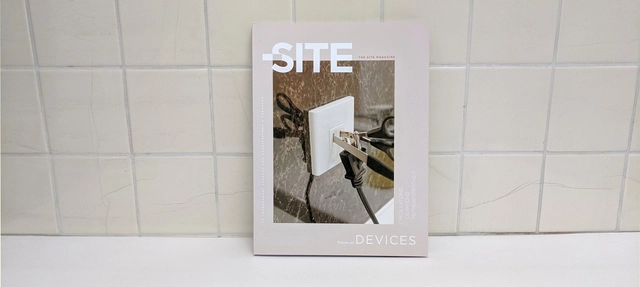
In the three years since our editorial collective launched The Site Magazine we have collaborated with designers and design institutions around the world to probe social, economic, cultural, and political questions through the lens of architectural knowledge. The discipline of architecture is simultaneously broad and incisive: the practice of architecture demands a constant reinvention of its role, a redefinition of design’s limits. Our forthcoming series “Does Architecture _______?” confronts the obstacles and opportunities afforded by architecture’s evolving agency while continuing to delineate relevant contexts for spatial design. “Does Architecture _______?” is conceived as a series of five thematic issues, each one curated to discursively champion or constructively critique the latent tensions and potential of the built environment that we know, or can imagine.
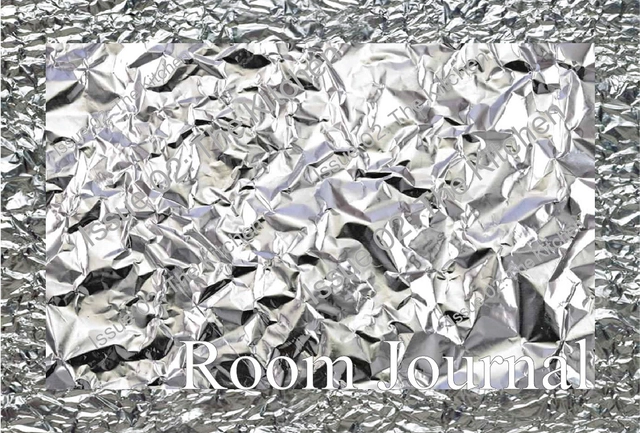
The second issue of Room will reconvene in the Kitchen; a space that savors the possibilities of both cultural appreciation and cross contamination, serving basic sustenance and special occasions. Taste here is significant though subjective, with its stainless steel tongue wiped perpetually in an attempt to cleanse the palate. Nuanced residues of gender, class, labour, race, and climate cling to the cloth among germs and grains of salt.
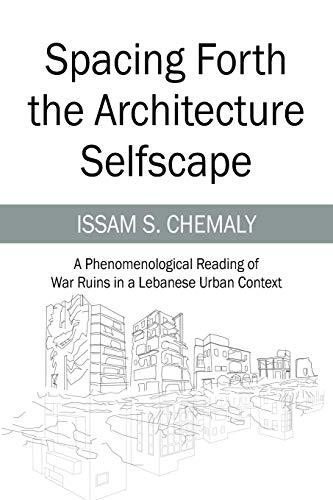
Book Review by Gioia C. Sawaya; Chemaly’s book offers a different attempt to reading war ruins in a Lebanese urban context. It suggests another perception of an architectural space, with the need for a built environment that encourages empathy with the user. He defines this space as a verb (an affording action) rather than a noun. The introduction of the book helps to locate the author’s main aim and frame his discourse.