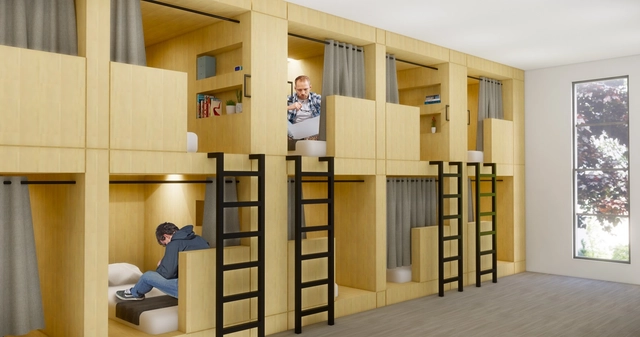
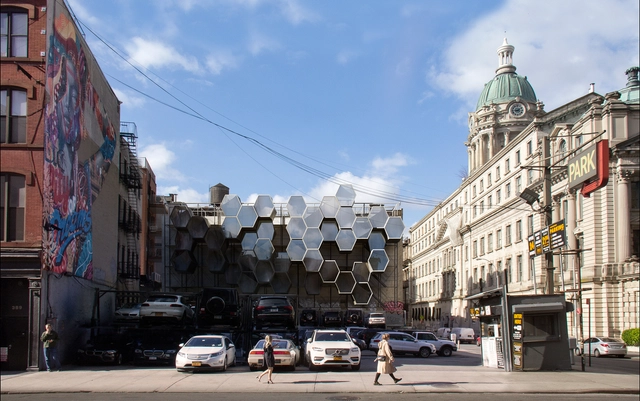
The dream of a home in the suburbs with a white picket fence is changing. Between housing crises and homelessness, mounting debt and downsizing, home ownership has become increasingly less attainable. The tiny house movement is a direct response to these forces, with cities and designers asking whether micro dwellings can address pressing issues or if they are glorifying unhealthy living conditions.
Architecture Without Borders Quebec (AWBQ) has made public the catalog of practices “Architecture + Homelessness: Inclusive Practices for a Supportive City.” The publication, publicly available in both English and French, is created to encourage architecture and design practices that have the potential to contribute to the well-being of people experiencing homelessness. The catalog is part of an ongoing research project initiated by AWBQ and supported by the Government of Quebec and the City of Montreal.
Social responsibility and the desire to improve society has long been influenced by the built environment. Looking at city centers, architecture has contributed to the improvement of the urban fabric, whether it being through planning and zoning strategies, integration of public spaces, or small interventions. In some cases however, these interventions are in fact used as tools to keep the homeless off the streets, disguised as art or conceptual designs. Several public urban policies have all implicitly prohibited the homeless and other marginalized social groups from city centers, claiming that their presence and “irregular” use of public space could compromise the reputation, security, and desirability of the city.
Mayor of New York, Eric Adams, expressed his support for a state bill that would make it easier for the city to convert underutilized or vacant hotels into affordable and supportive housing. The mayor urges New York state legislators to unlock a critical tool in combating the affordable housing crisis and tackling homelessness in the process. The conversion framework proposed by the bill would allow authorities to create affordable housing units at two-thirds of the cost and one-third of the time necessary for ground-up construction.
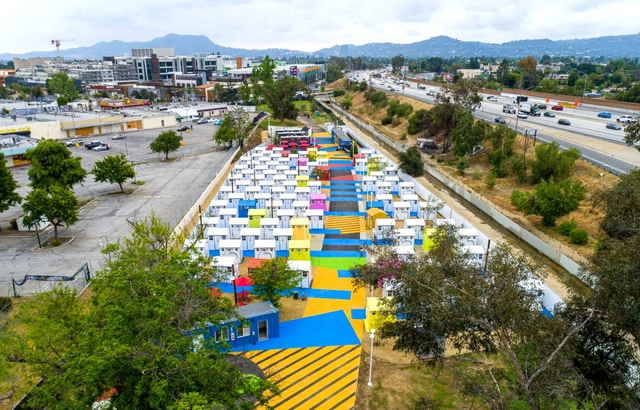
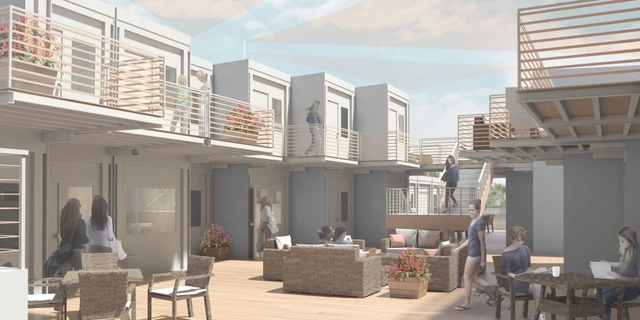
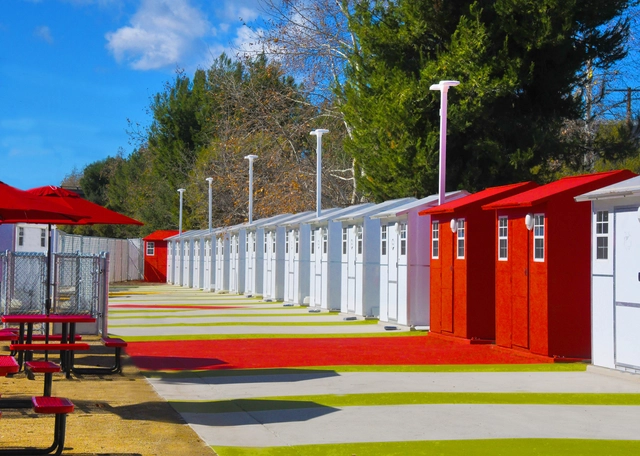
Lehrer Architects has designed a tiny home village for homeless residents in Los Angeles. Called Whitsett West, the project was completed with the City of Los Angeles’ architects and engineers in the Bureau of Engineering. Located in North Hollywood, the project is the fourth collaboration in the past seven months designed to be a prototype for transitional housing formats.
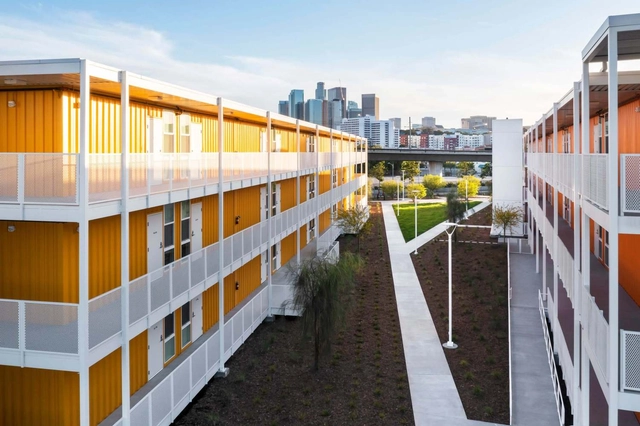
The Hilda L. Solis Care First Village (HSCFV), a large-scale interim housing project providing a wide range of amenities for both the unhoused and those in transition, recently opened in Downtown Los Angeles.
Alexandria Park Tiny Home Village. Image Courtesy of Lehrer Architects
Lehrer Architects converts several leftover plots in Los Angeles into micro-homes developments, unfolding an experimental template for tackling homelessness. Together with the Bureau of Engineering for the City of Los Angeles, the architecture firm creates an efficient yet functional design using prefabricated pallet shelters and brings character to the project through vibrant colours to shape a new sense of community and restore dignity through design.
The inertia of politics and governance in a time when major societal changes occur at an increasingly faster pace and the dissatisfaction with the decision process makes room for bottom-up actions, activism and bold endeavours. In the light of so many examples of social activism, do architects have the tools to make their own stand? Does architecture have the power to disrupt the status quo?
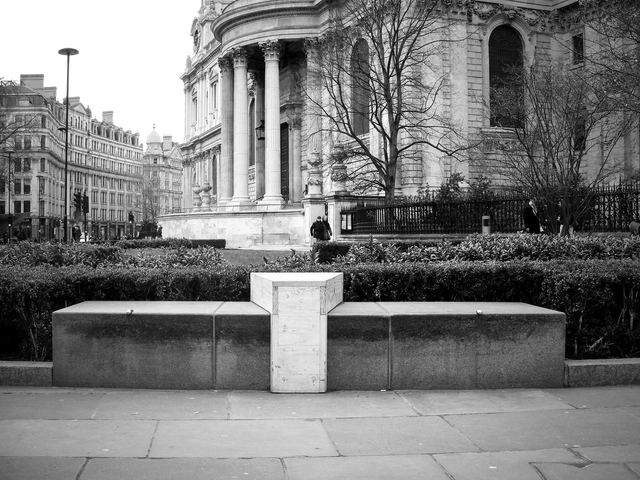
In recent years, the architectural community has become heavily involved, in both positive and negative ways, with the chronic global issue of homelessness. In response, James Furzer of UK-based Spatial Design Architects has undertaken a photographic analysis exploring defensive forms of urban design. Using the typology of public benches in London, Furzer documents public fixtures which act as deterrents to rough sleepers, essentially denying a right to the city for those who ultimately have no choice but to be there.
Isla Intersections. Image Courtesy of Lorcan O’Herlihy Architects
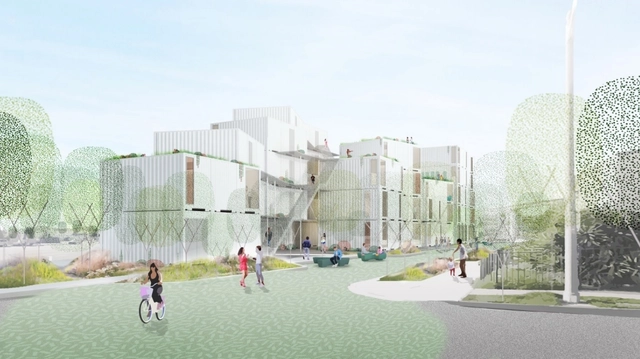
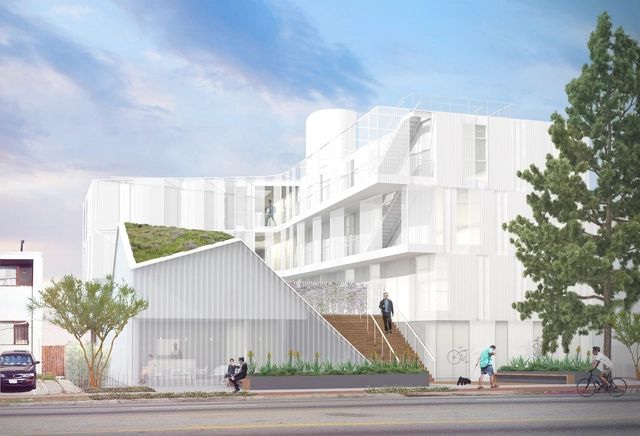
Lorcan O’Herlihy Architects have broken ground on a modular design for supportive housing in South Los Angeles. Dubbed Isla Intersections, the project is part of a triangular parcel of land next to the freeway being developed as LA’s first shared street. Designed with open public space and 54 homes for some of LA's most vulnerable residents, the project was made to explore the future of housing.
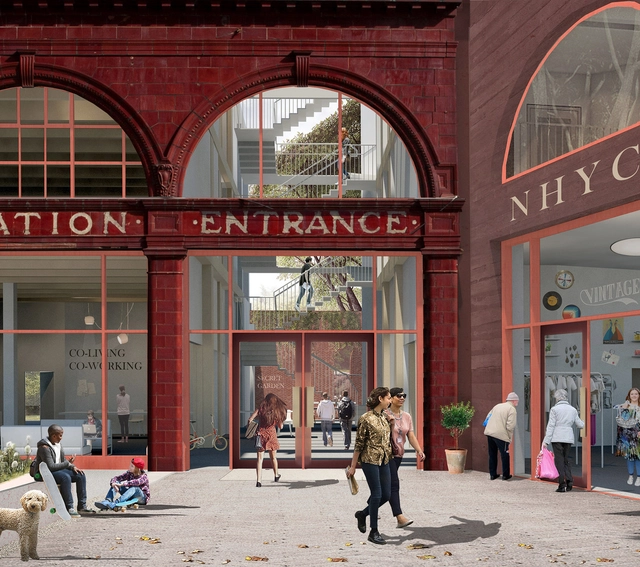
Morris + Company has unveiled images of their competition-winning vision addressing London’s homelessness crisis. The M+C scheme, produced for the New Horizon Youth Center and Mayor of London-led competition, repurposes the abandoned York Road tube station into a hostel and co-working space.
Titled “Stepping Stones”, the project seeks to provide “an inclusive, viable, and holistic site strategy that can support a managed and balanced community by providing homeless young residents with a sage, supporting stepping-stone into appropriate long-term housing solutions.”
https://www.archdaily.com/909115/morris-plus-company-imagines-london-tube-station-repurposed-for-the-homelessNiall Patrick Walsh
The Royal Institute of British Architects has awarded the 2018RIBA President’s Medal for Research to Chris Hildrey of Hildrey Studio for ProxyAddress: Using Location Data to Reconnect Those Facing Homelessness with Support Services. Hildrey’s project addresses one of the main causes of homelessness in the UK: the end of an ‘assured short-hold tenancy’, where a landlord is legally entitled to issue a possession order. ProxyAddress tackles this issue through collaborative research and real-world application.
Los Angeles-based KTGY Architecture + Planning’s Research and Development studio has unveiled an idea to reuse millions of square feet of empty retail stores as housing for the homeless. The “Re-Habit” concept calls for the installation of bathrooms, dining, sleeping, gardening, and job training facilities, transforming obsolete big-box stores into agents of social change.
The concept comes at a time when vast big box stores such as Macy’s, JC Penney, and Sears are closing in record numbers, leaving large vacant footprints throughout the urban landscape.
In the last global survey undertaken by the United Nations in 2005, there were an estimated 100 million people who were homeless around the world and 1.6 billion who lived without adequate housing. This number has escalated in recent years; unaffordable housing has become a global norm, making it increasingly difficult for the disadvantaged to seek out permanent, or even temporary shelter.
As housing becomes a means of accumulating wealth rather than fulfilling its fundamental goal of shelter, well-intentioned architects have attempted to solve the homelessness crisis through creative ideas and innovative design. But is architecture really the solution?
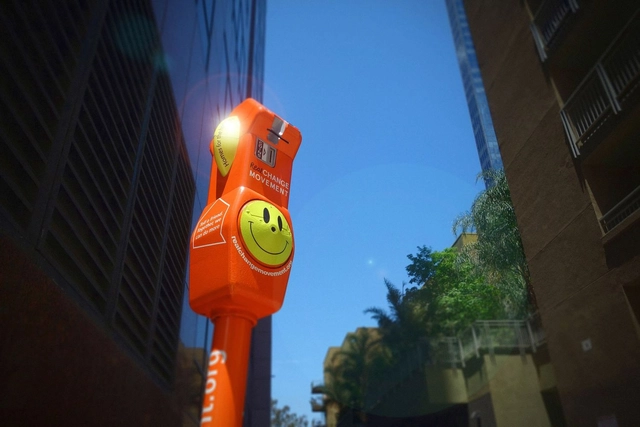
The Downtown Los Angeles meters will resemble those installed in Pasadena. Image via Curbed LA
Homelessness is a pressing issue faced by many cities across the globe. But, could the logistics of parking potentially assist in alleviating this epidemic by supporting community-based initiatives?
In Los Angeles County, where an estimated 58,000 people are homeless, city and county officials recently released six meters designed in collaboration between community advocacy organization the Flintridge Centre and the office of City Council member Jose Huizar to collect charitable contributions as opposed to parking fairs.
Aggravated by limited upward mobility and a dire housing crisis, LA County’s homeless population has shot up 23 percent to nearly 58,000 in the past year alone, according The Los Angeles Times. Their increased visibility recently guilted voters into passing (by a two-thirds majority) a sales tax increase (Measure H) and a $1.2 billion bond initiative (Measure HHH) to provide housing and amenities. With the city now better financially equipped to tackle the problem, a new issue arises: what to build?
With ever-increasing rates of chronic and veteran homelessness amongst low-income households, Los Angeles’ pressing demand for affordable social housing is being addressed by Lorcan O’Herlihy Architects, with their design of MLK1101 Supportive Housing, which has just begun construction.
Working in collaboration with non-profit Clifford Beers Housing, LOHA’s intention is to focus on health and community within a comfortable environment. This is achieved through a number of strategies, including exposing the building towards the street to integrate the building into the neighborhood creating strong community ties.








.jpg?1637201794&format=webp&width=640&height=580)




.jpg?1637201794)