1. ArchDaily
  2. Pool

Pool: The Latest Architecture and News

Public Pools as Public Spaces: The Role of Swimming and Bathing in Cities

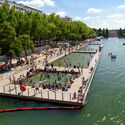
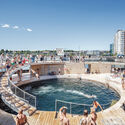
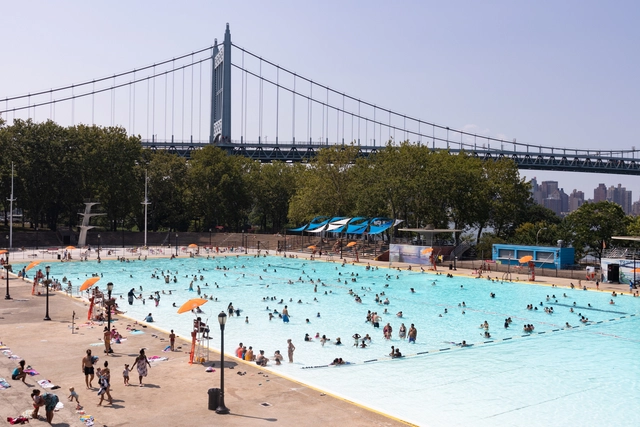
When one thinks of public spaces, the image of a pool rarely comes to mind. Public spaces are the center of civic life, places where most interactions, activities, and behaviors follow strict social and cultural norms to ensure the safety and comfort of all users. In contrast, swimming and bathing represent something more intimate and primordial, a sensorial experience distinct from any other. In addition to the health benefits, the act of floating in space creates a break from everyday life and its constraints.

As social spaces, public baths, and pools offer an even more unusual experience. Here, regular conduct rules and norms no longer apply. Social nudity becomes the new norm, and, as people strip off their clothes, they also lose their status markers, transforming the pool into an egalitarian oasis. Across history, these often-discredited spaces offered a heightened social experience, fostering connections and bringing a new element to dense urban environments. As a typology present since antiquity, public baths and pools have also been a disputed space, as a manifestation of difficult topics such as gender and racial segregation, gentrification, and surveillance in contrast to the freedom they promise.
Public Pools as Public Spaces: The Role of Swimming and Bathing in Cities - Image 1 of 4Public Pools as Public Spaces: The Role of Swimming and Bathing in Cities - Image 2 of 4Public Pools as Public Spaces: The Role of Swimming and Bathing in Cities - Image 3 of 4Public Pools as Public Spaces: The Role of Swimming and Bathing in Cities - Image 4 of 4Public Pools as Public Spaces: The Role of Swimming and Bathing in Cities - More Images+ 13

Refractions in Motion as Pools Become Luminous Forms

 | Sponsored Content

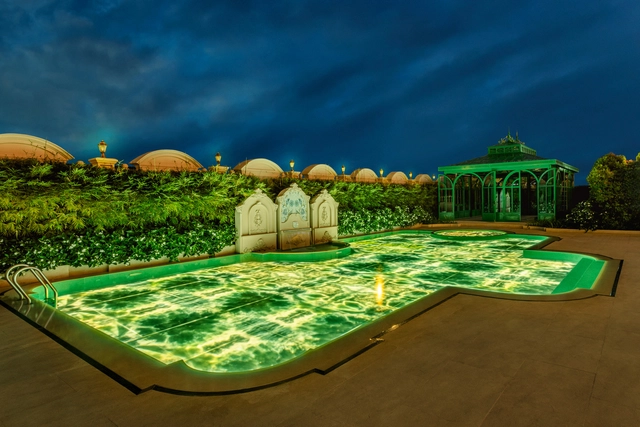
The trajectory of glass in architecture reflects the technological evolution of humankind. For centuries, it was a fragile, opaque material, restricted to small openings in churches or aristocratic residences, limited in size, with uneven transparency and a largely secondary role. With the Industrial Revolution and advances in manufacturing processes, this condition changed dramatically. From artisanal and imperfect stained glass, we now have a wide range of architectural applications, from fully glazed skyscraper facades to translucent pedestrian bridges, lightweight roofs, smart partitions, and movable elements. One of the most surprising uses, once thought to be impractical, is the direct interaction of glass with large volumes of water. Today, we see pools with transparent walls or floors that project out from buildings, float above streets, or visually merge with their surroundings, creating striking sensory experiences. A remarkable feat, especially considering that for a long time, glass was considered too fragile for submerged environments.

NYC’s First River-Based, Water-Filtering Pool Takes Shape at Pier 35

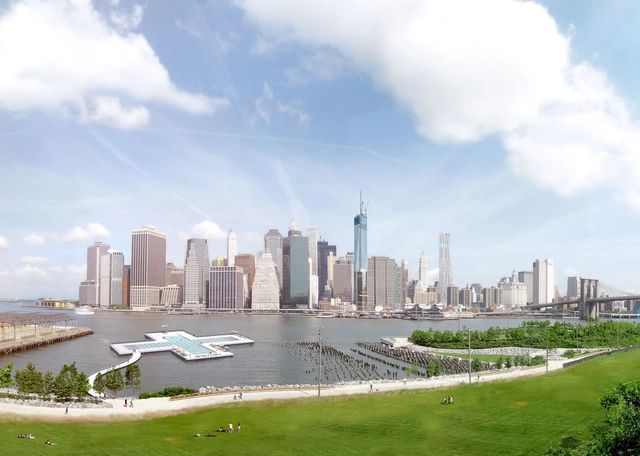
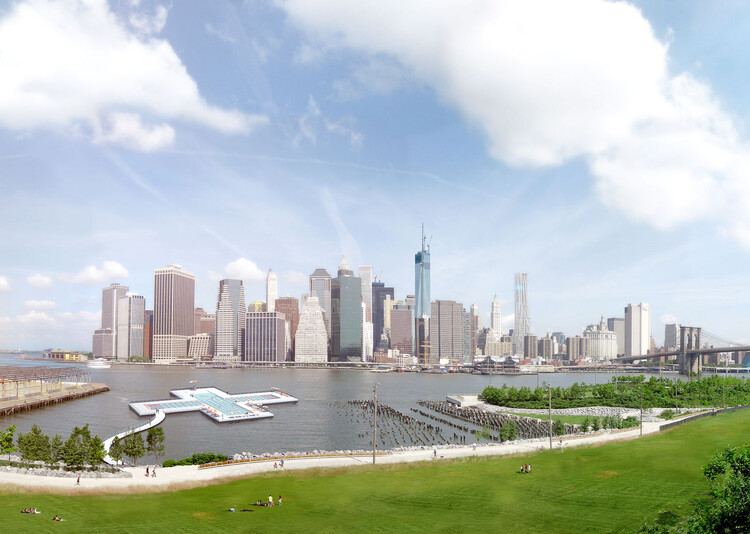
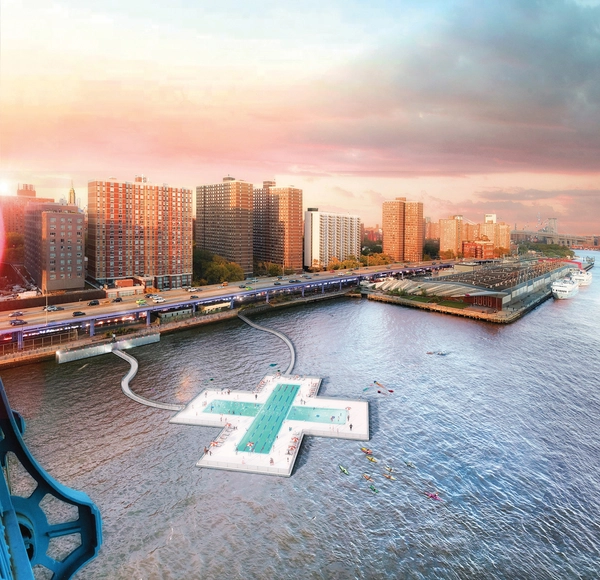
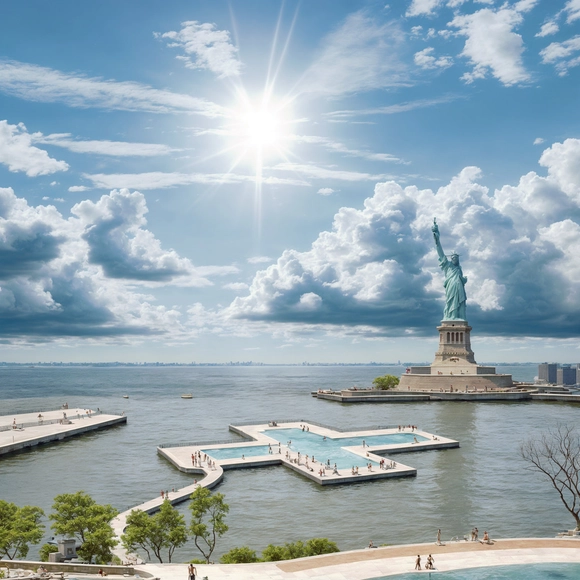
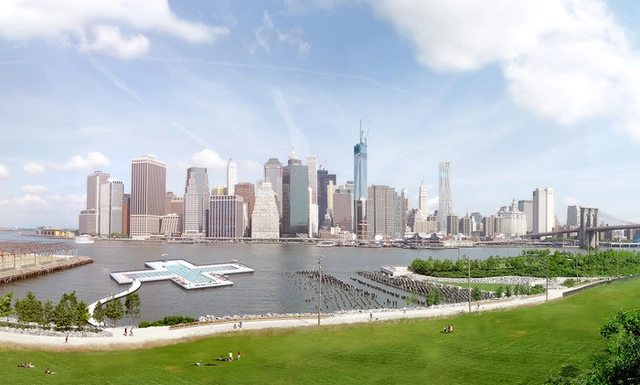
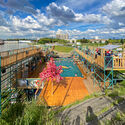
Friends of + POOL has announced the next steps in the realization of New York City's first water-filtering floating swimming pool, to be installed at Pier 35, north of the Manhattan and Brooklyn Bridges. The project seeks to provide safe public access to swimming in the city's rivers by integrating a custom-designed filtration system into a floating pool structure. Installation at Pier 35 is scheduled for May 2026, when the pool will enter its final phase of evaluation. Public access will be contingent on the successful completion of large-scale filtration testing and the full build-out of the facility for safe public use.

NYC’s First River-Based, Water-Filtering Pool Takes Shape at Pier 35 - Image 1 of 4NYC’s First River-Based, Water-Filtering Pool Takes Shape at Pier 35 - Image 2 of 4NYC’s First River-Based, Water-Filtering Pool Takes Shape at Pier 35 - Image 3 of 4NYC’s First River-Based, Water-Filtering Pool Takes Shape at Pier 35 - Image 4 of 4NYC’s First River-Based, Water-Filtering Pool Takes Shape at Pier 35 - More Images+ 4

Revamping Pool Design and Safety with Porcelain Solutions

 | Sponsored Content

Pools have always symbolized luxury, leisure, and social interaction. Beyond their aesthetic appeal—where water dances across textures, movements, and reflections—they also serve functional purposes, providing relaxation, exercise, and entertainment. Their history dates back over 5,000 years to the Great Bath of Mohenjo-Daro in the Indus Valley (modern-day Pakistan), possibly used for rituals and communal practices. Later, the Greeks and Romans refined the concept, creating elaborate pools for bathing, sports, and social gatherings. The famous Roman baths, often heated and adorned with intricate mosaics, laid the foundation for modern spa and wellness culture, reinforcing the relationship between architecture, water, and quality of life.
During the Renaissance, pools were primarily associated with elite properties, but by the late 19th and early 20th centuries, public pools became more common, driven by urbanization and the promotion of hygiene. The rise of Olympic swimming competitions in the early 1900s further popularized the concept, leading to increased construction of both private and competitive pools worldwide. Today, pools continue to evolve, incorporating advanced materials and designs that enhance safety and sustainability. Whether for recreation, aesthetics, or well-being, pools remain a central element of modern architecture and lifestyle.

New York Unveils NYC’s First-Ever Floating Swimming + POOL at Pier 35

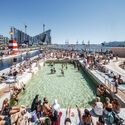
Governor Kathy Hochul and Mayor Eric Adams have just announced the installation of + POOL, a floating swimming pool equipped with an innovative water filtration system, at Pier 35 in New York’s East River this summer. Aiming to provide the New Yorkers with safe swimming opportunities in the city’s waterways, Friends of + POOL was founded in 2010 by Dong-Ping Wong, and later joined by designers Archie Lee Coates IV, Jeffrey Franklin, and Oana Stanescu. Furthermore, the project seeks to increase pool accessibility to underserved communities.

New York Unveils NYC’s First-Ever Floating Swimming + POOL at Pier 35 - Image 1 of 4New York Unveils NYC’s First-Ever Floating Swimming + POOL at Pier 35 - Image 2 of 4New York Unveils NYC’s First-Ever Floating Swimming + POOL at Pier 35 - Image 3 of 4New York Unveils NYC’s First-Ever Floating Swimming + POOL at Pier 35 - Image 4 of 4New York Unveils NYC’s First-Ever Floating Swimming + POOL at Pier 35 - More Images+ 2

The Role of Ceramic Tiles in the Rebirth of Tinnerbäcksbadet Leisure Center

 | Sponsored Content

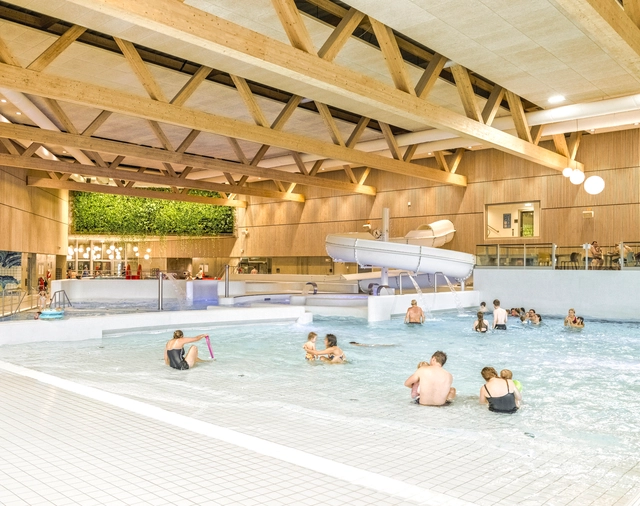
Tinnerbäcksbadet, a leisure center established in 1965 on the shores of a lake in Linköping, Sweden, was showing signs of aging. To revitalize the area and meet the ever-changing demands, the city launched an international architectural competition for a new facility. The winning design, conceived by the Danish firm 3XN, blends modernity and functionality. This integration into the surrounding urban landscape, with the new structure serving as a focal point in a newly reimagined neighborhood square, was crucial to the project's success.

However, it is in the material details and subtle undulations of its layout that the genius of the design is revealed, guiding visitors and users to the indoor spaces and verdant extensions surrounding the bathing lake. The project exudes warmth and sophistication with its palette of natural, earthy colors, through the extensive use of exposed wood, concrete, and ceramic tiles. Manufactured by Agrob Buchtal from natural raw materials, these tiles contribute to the space's elegance while promising longevity, a hallmark of truly sustainable architecture. Covering 18,000 m², the ceramic surfaces play a fundamental role in promoting visual comfort and unifying the entire structure.

First-Ever +POOL to Open in New York City This Summer, with Plans to Expand Swimming Access across the State

New York Governor Hochul has announced a partnership with the nonprofit Friends of + POOL to open the first urban river-sourced swimming facility in the United States. Utilizing + POOL’s design and technology, the 2,000-square-foot plus-shaped swimming pool is set to open in New York City’s East River in the summer of 2024. In 2010, four young designers, Archie Lee Coates IV, Dong-Ping Wong, Jeffrey Franklin, and Oana Stanescu, established + POOL with the goal of providing New Yorkers with access to free and safe river swimming. Now the state promised to invest $16 million to pilot and scale the system, hoping to expand it across the state of New York.

First-Ever +POOL to Open in New York City This Summer, with Plans to Expand Swimming Access across the State - Image 1 of 4First-Ever +POOL to Open in New York City This Summer, with Plans to Expand Swimming Access across the State - Image 2 of 4First-Ever +POOL to Open in New York City This Summer, with Plans to Expand Swimming Access across the State - Image 3 of 4First-Ever +POOL to Open in New York City This Summer, with Plans to Expand Swimming Access across the State - Image 4 of 4First-Ever +POOL to Open in New York City This Summer, with Plans to Expand Swimming Access across the State - More Images+ 8

BIG’s Twisting One High Line Skyscrapers Near Completion in New York City

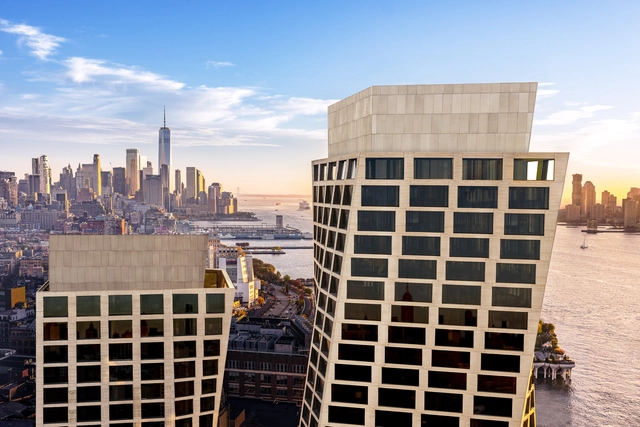
A new set of images showcases BIG's One High Line development nearing completion. Located on the ‘Architecture Row’ in New York, the coupled twisting towers share the Hudson River skyline with neighbors such as Frank Gehry’s IAC building, Renzo Piano’s Whitney Museum of American Art, and Jean Nouvel’s The Chelsea Nouvel ('100 Eleventh Avenue'), along with future works by Thomas Heatherwick and other renown architects. The two condominium towers designed by BIG are organized to define a central public courtyard, activating the public space with retail and commercial facilities. The towers’ exterior and the majority of the interior are completed, with the courtyard expected to be finished by early 2024.

BIG’s Twisting One High Line Skyscrapers Near Completion in New York City - Image 1 of 4BIG’s Twisting One High Line Skyscrapers Near Completion in New York City - Image 2 of 4BIG’s Twisting One High Line Skyscrapers Near Completion in New York City - Image 3 of 4BIG’s Twisting One High Line Skyscrapers Near Completion in New York City - Image 4 of 4BIG’s Twisting One High Line Skyscrapers Near Completion in New York City - More Images+ 4

How Swimming Pools Evolved into a Modern Status Symbol

Subscriber Access | 

Few architectural typologies have the power to invoke a sense of being dual-natured quite as the modernist swimming pool can. The design of pools themselves implies that there are moments of activity both above and below the water. Above, and in the more obvious and visible sense, pools act as a space for leisure and athletic training. But underneath the surface, swimming pools have a long-standing history of acting as symbols of surveillance, death, and social conditions associated with an economic class.

World’s First 360-Degree Rooftop Infinity Pool Designed for London

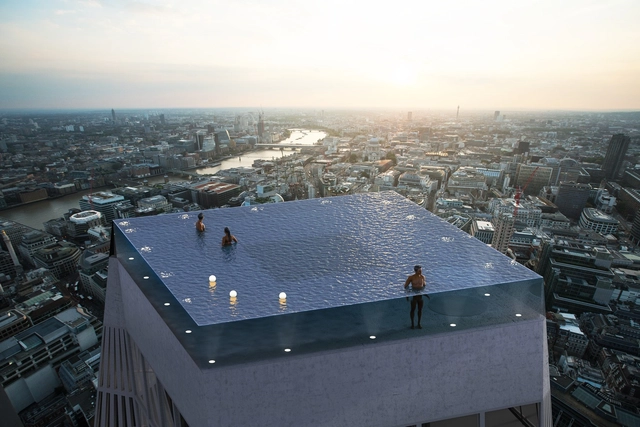
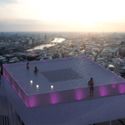
Manufacturer Compass Pools has unveiled a new concept for the world's first 360-degree infinity pool. Designed for a skyscraper rooftop in London, the 600,000-liter pool would offer views of the city's skyline from all sides. Called Infinity London, the project would be made from cast acrylic and feature transparent sides and floors, allowing visitors to see swimmers in the pool above them.

World’s First 360-Degree Rooftop Infinity Pool Designed for London - Image 1 of 4World’s First 360-Degree Rooftop Infinity Pool Designed for London - Image 2 of 4World’s First 360-Degree Rooftop Infinity Pool Designed for London - Image 3 of 4World’s First 360-Degree Rooftop Infinity Pool Designed for London - Image 4 of 4World’s First 360-Degree Rooftop Infinity Pool Designed for London - More Images

A New Guide by Architects Explains What Makes a Space "Instagrammable"

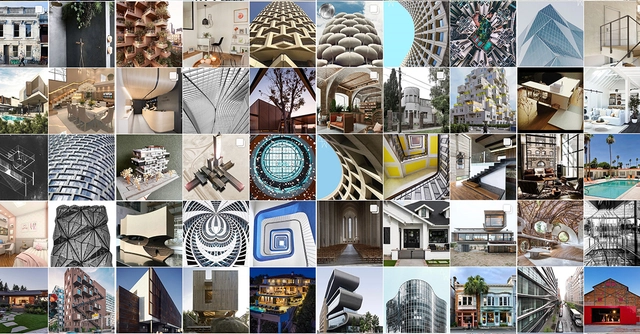
When you tap an Instagram geolocation, the nine most popular posts in that location float to the top. Sometimes, there's an uncanny similarity to these posts: near-identical pictures of smoothie bowls, tiled floors, or neon signs. In part, a place’s popularity on Instagram is a domino effect—one person posts a picture of a mural (Wynwood Walls, anyone?), and then everyone does. But a new Instagram Design Guide from Valé Architects suggests that some design features might be inherently more Instagrammable than others. Valé’s guide is interesting for its quasi-scientific analysis of Instagram aesthetic, but it also has real implications in the architecture world; a building’s popularity on social media (in this case, its Instagramability) can influence its perception in the non-digital world. Here are some of the traits that Valé says make a space successful on Instagram:

Will The +POOL Be The Largest Crowdfunded Civic Project Ever?

Will The +POOL Be The Largest Crowdfunded Civic Project Ever? - Featured Image
Courtesy of Family / PlayLab, Inc.

Historically, large city-changing projects have depended on the personal interests of a powerful individual: someone able to swim across both political and financial waters. But recently, projects like the High Line have shown the power and potential of projects envisioned and led by local communities.

Back in 2011 we visted our friends at CASE in their West Village office and they introduced us to a small firm across the hall: Family. While the team was working hard on a model in the middle of their large table, partner Dong-Ping Wong showed us some of their recent projects. One of them immediately caught our attention. A floating pool for Manhattan. In the form of a cross, it would sit in the East River, filtering its waters into four pools. This amazing -- and seemingly crazy -- idea was tantalizing.

+ POOL Hits Goal, Becomes Largest Civic Project Ever Kickstarted

+ POOL, the project (initiated by a duo of young architects) to float a public swimming pool in New York's Hudson River, has reached its latest kickstarter goal - making it the largest civic project to ever be crowdfunded online. As Architizer's Karen Wong reports, it's a remarkable gamechanger for architects (a profession where success often comes well into one's golden years) as well as public space in general: "It's a resounding demonstration of the public’s belief in young architects to rethink public space and manifest the untapped capital of waterways to benefit the common good." Read the full article here.

AD Round Up: Pool Houses Part I

Subscriber Access | 

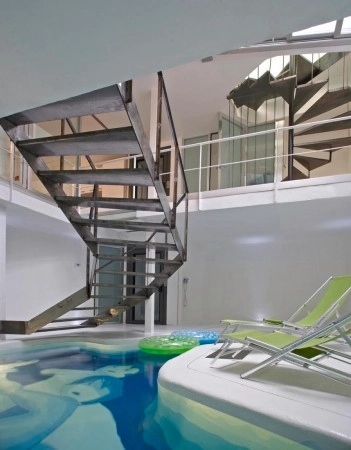
I guess there’s nothing better to sit back and relax after a long week than a pool. Fun and refreshing, pool houses are just great. So now, we bring you our Round Up of previously featured pool houses on ArchDaily.