1. ArchDaily
  2. Peter Stutchbury

Peter Stutchbury: The Latest Architecture and News

Grounded Interiors: Exploring Earth-Based Flooring Through 10 Contemporary Interiors

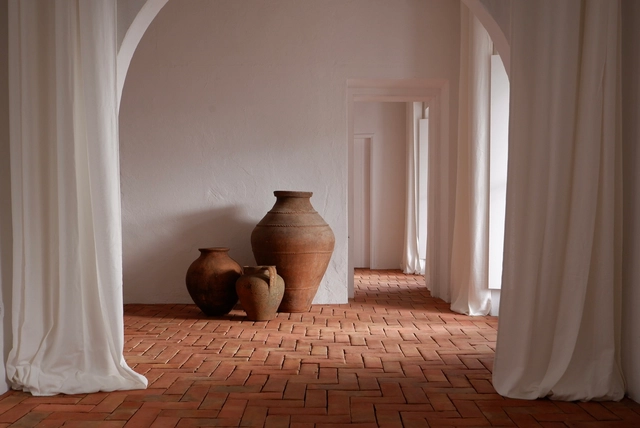
Earth-based flooring materials comprise natural elements such as clay, sand, silt, lime, and organic fibres. They offer both structural performance and sensory engagement when used in both outdoor and interior spaces. Due to their thermal properties, durability, and sustainable qualities, these materials have evolved from vernacular construction techniques into high-value architectural elements that are always being reinvented and optimized. There are several types of earthen floorings, each offering unique benefits, and they are increasingly used in interior settings.

Grounded Interiors: Exploring Earth-Based Flooring Through 10 Contemporary Interiors - Image 1 of 4Grounded Interiors: Exploring Earth-Based Flooring Through 10 Contemporary Interiors - Image 2 of 4Grounded Interiors: Exploring Earth-Based Flooring Through 10 Contemporary Interiors - Image 3 of 4Grounded Interiors: Exploring Earth-Based Flooring Through 10 Contemporary Interiors - Image 4 of 4Grounded Interiors: Exploring Earth-Based Flooring Through 10 Contemporary Interiors - More Images+ 18

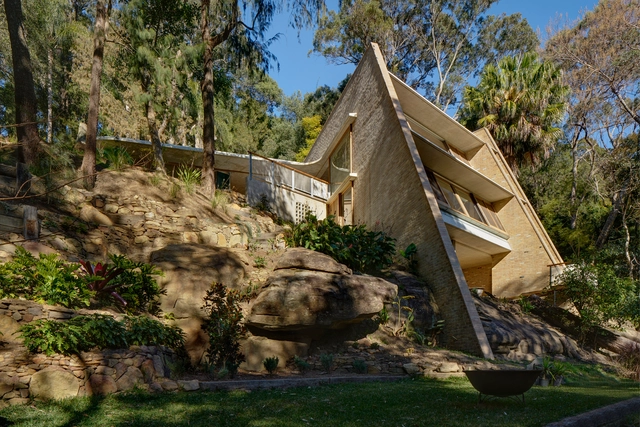
Sloped to Fit: 14 Homes That Embrace the Hill as a Catalyst for Their Design

Subscriber Access | 

When we think about cities, we often assume the orthogonal grid is the norm: neat, predictable, and rational. However, many urban areas around the world, notably those shaped by hills and uneven terrain, defy this convention. In cities like Lisbon, in Portugal orthogonal grids appear only in flatter zones such as Baixa, while surrounding areas like Alfama adapt organically to topography. These areas create more layered, irregular, and visually dynamic urban forms. Yerevan in Armenia, offers another urban example of this adaptation: the Cascade Complex transforms a steep hill into a terraced public space that connects different city levels while framing panoramic views. For other countries, this response to topography becomes even more critical. Cities like Tegucigalpa in Honduras or Valparaiso in Chile are defined by steep, irregular terrain that requires architects to engage deeply with the land. Designing in these contexts, especially for residential projects, demands technical adaptation and a contextual understanding that allows the slope to become a generative element in the design process.

Sloped to Fit: 14 Homes That Embrace the Hill as a Catalyst for Their Design - Image 1 of 4Sloped to Fit: 14 Homes That Embrace the Hill as a Catalyst for Their Design - Image 2 of 4Sloped to Fit: 14 Homes That Embrace the Hill as a Catalyst for Their Design - Image 3 of 4Sloped to Fit: 14 Homes That Embrace the Hill as a Catalyst for Their Design - Image 4 of 4Sloped to Fit: 14 Homes That Embrace the Hill as a Catalyst for Their Design - More Images+ 25

ArchDaily's Best Architectural Projects of 2024

Throughout the year, ArchDaily's team of curators works on expanding and populating our project library. Located all around the world, each curator carefully considers the best works emanating from their respective regions in an effort to have a diverse representation of the most inspiring and innovative built works. The team looks to new rising practices, new technologies, and the vernacular revival of traditional construction techniques. Seeking socially driven initiatives, as well as major works by renowned architects, the overall offers a holistic view of the built world today and is relayed through the yearly project review.

ArchDaily's Best Architectural Projects of 2024 - Image 1 of 4ArchDaily's Best Architectural Projects of 2024 - Image 2 of 4ArchDaily's Best Architectural Projects of 2024 - Image 3 of 4ArchDaily's Best Architectural Projects of 2024 - Image 4 of 4ArchDaily's Best Architectural Projects of 2024 - More Images+ 96

Grayson Perry, Martha Thorne and Bjarke Ingels Among the RIBA's 2016 Honorary Fellowships

The Royal Institute of British Architects (RIBA) have announced fourteen 2016 RIBA Honorary Fellowships (of whom two are in partnership) and eight International Fellowships which will be awarded at an event on the 1st February 2016, alongside the recently announced RIBA Royal Gold Medal. RIBA Honorary Fellowships are awarded annually to people who have made "a particular contribution to architecture in its broadest sense," be it in the fields of architecture, construction, media, education, or the arts.

Peter Stutchbury Awarded Australian Institute of Architects' Gold Medal

The 2015 Australian Achievement in Architecture Awards have been allocated by the Australian Institute of Architects in Melbourne. The prestigious awards honor emerging and seasoned architects, students, and academics whose interdisciplinary designs have excelled in embracing the possibilities of the profession. Granting 14 awards in 9 categories, the recipients’ work spans a wide range of subject matter and addresses various aspects of architecture’s inherent influences both locally and globally.

The highest award, the Gold Medal, was awarded to Peter Stutchbury, whose lifelong commitment to architecture has spanned education, professional practice, and involvement in organizations. His international work consistently speaks to its specific cultural and site conditions, while adhering to sustainable design principles.

See all the 2015 award winners, after the break.