1. ArchDaily
  2. Pedagogical Architecture

Pedagogical Architecture: The Latest Architecture and News

Reflecting on the International Day of Education: From Playful Environments to Youth Agency in Architecture

Education has long been understood as a cornerstone of social development, shaping not only individual futures but also the collective capacity of societies to respond to change. Observed annually on 24 January, the International Day of Education invites reflection on the role education plays in addressing global challenges and sustaining social progress. As the world confronts overlapping challenges, from technological transformation to deepening inequalities, the question of how education is imagined, governed, and experienced has become increasingly urgent.

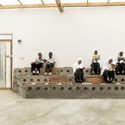
Reflecting on the International Day of Education: From Playful Environments to Youth Agency in Architecture - Image 1 of 4Reflecting on the International Day of Education: From Playful Environments to Youth Agency in Architecture - Image 2 of 4Reflecting on the International Day of Education: From Playful Environments to Youth Agency in Architecture - Image 3 of 4Reflecting on the International Day of Education: From Playful Environments to Youth Agency in Architecture - Image 4 of 4Reflecting on the International Day of Education: From Playful Environments to Youth Agency in Architecture - More Images+ 12

A Natural Childhood: How Architecture Connects Landscape, Culture, and Play

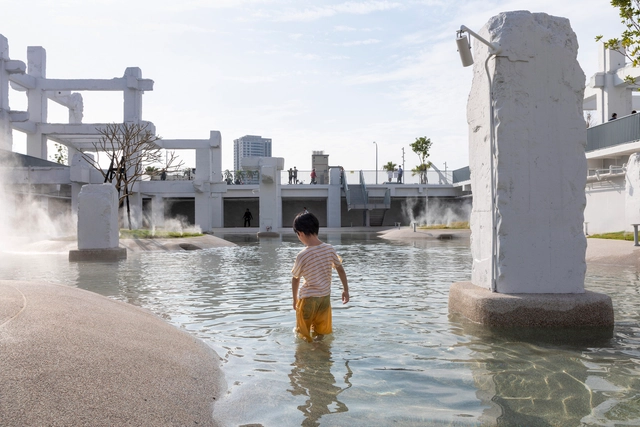
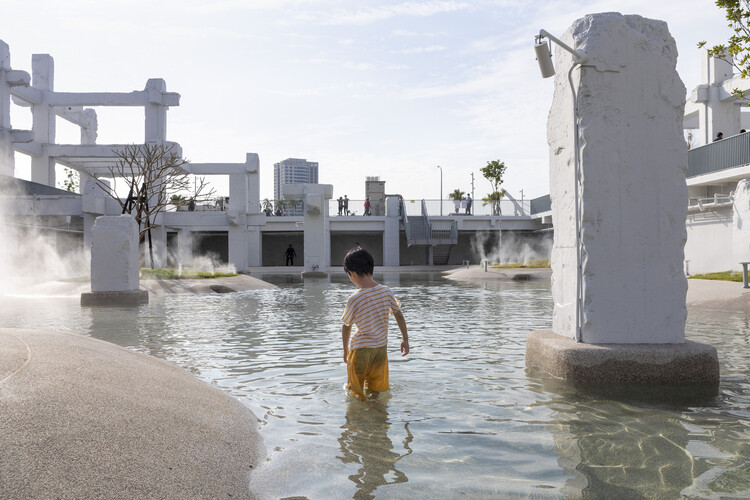
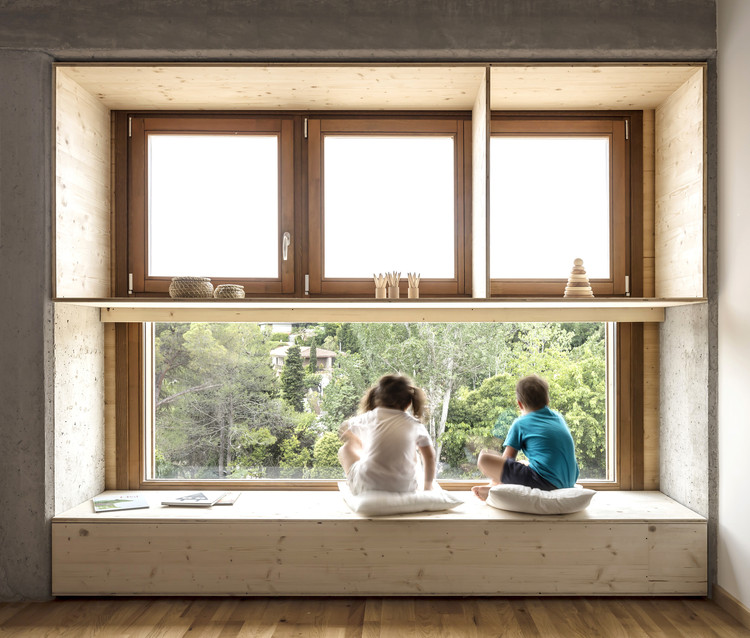
How do nature and landscape dialogue within spaces designed for children? How are architecture and urban design capable of shaping natural atmospheres that integrate practices of play, participation, and exploration? From participatory projects that involve children in the design process to built environments that incorporate furniture adapted to their needs, the conception of spaces for childhood entails the creation of places for encounter, learning, and coexistence. At times, these spaces are able to strengthen the relationships between interiors and exteriors, connecting their users with nature and the surrounding environment. Depending on their cultures, customs, and histories of attachment to place, several contemporary projects deploy tools and strategies that integrate architecture, nature, and pedagogy to form broad experiences of learning, play, and discovery.

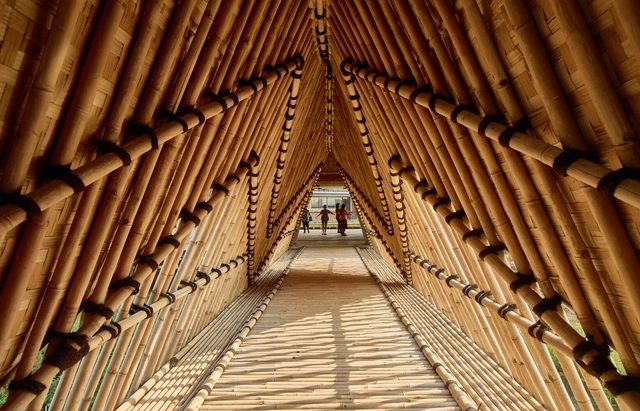
A Natural Childhood: How Architecture Connects Landscape, Culture, and Play - Image 1 of 4A Natural Childhood: How Architecture Connects Landscape, Culture, and Play - Image 2 of 4A Natural Childhood: How Architecture Connects Landscape, Culture, and Play - Image 3 of 4A Natural Childhood: How Architecture Connects Landscape, Culture, and Play - Image 4 of 4A Natural Childhood: How Architecture Connects Landscape, Culture, and Play - More Images+ 21

Forming a Distinct Identity: How Brutalism Shaped American Architecture Education

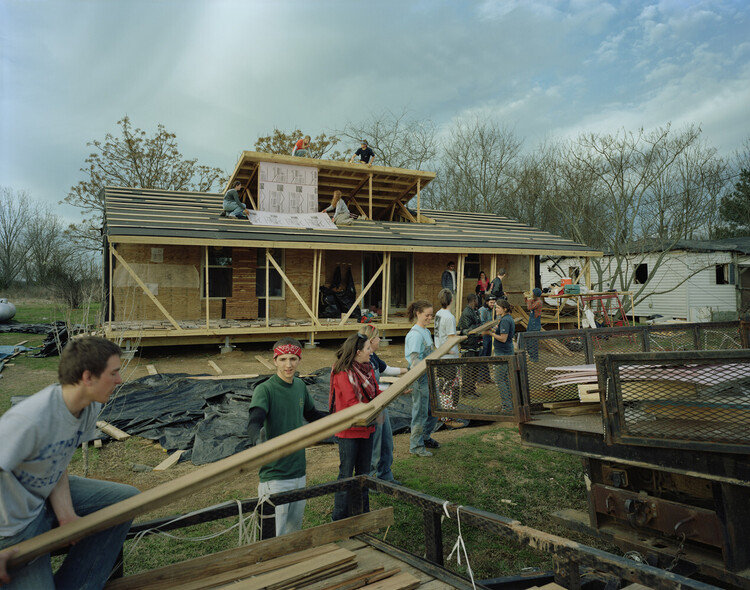
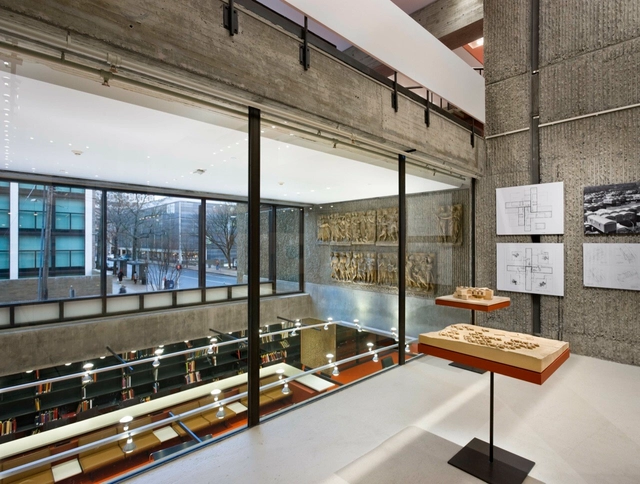
By the mid-nineteenth century, American universities began to distinguish architecture from civil engineering and the applied sciences formally. Architecture was emerging as a discipline defined by both technical competence and conceptual inquiry, spatial imagination, and cultural agency. As this disciplinary identity evolved in the postwar decades, its built expression coalesced into the emerging architectural language of Brutalism.

Forming a Distinct Identity: How Brutalism Shaped American Architecture Education - Image 1 of 4Forming a Distinct Identity: How Brutalism Shaped American Architecture Education - Image 2 of 4Forming a Distinct Identity: How Brutalism Shaped American Architecture Education - Image 3 of 4Forming a Distinct Identity: How Brutalism Shaped American Architecture Education - Image 4 of 4Forming a Distinct Identity: How Brutalism Shaped American Architecture Education - More Images+ 12

Environmental Politics: Lydia Kallipoliti’s Approach to Transforming Architecture through Ecological Pedagogies

Lydia Kallipoliti is a recognized architect, author, and educator whose pioneering research has transformed the way architecture engages with the pressing challenges of sustainability, technology, and environmental politics. As an Associate Professor at Columbia University's Graduate School of Architecture, Planning, and Preservation (GSAPP), Kallipoliti's approach to architectural education encourages students to confront critical issues such as waste, reuse, and closed-loop systems. Her pedagogical philosophy empowers students to see design not only as an aesthetic or functional pursuit but as a powerful tool for addressing global ecological crises, urging them to think systemically and creatively about the future of the built environment.

In addition to her role in academia, Kallipoliti has authored influential works such as The Architecture of Closed Worlds and Histories of Ecological Design: an Unfinished Cyclopedia, which delve deeply into the relationship between architecture and environmental politics. Her research and writings have sparked discourse on methods for architects to reconsider traditional design paradigms and embrace sustainability as a core tenet of architectural practice.

Environmental Politics: Lydia Kallipoliti’s Approach to Transforming Architecture through Ecological Pedagogies - Image 1 of 4Environmental Politics: Lydia Kallipoliti’s Approach to Transforming Architecture through Ecological Pedagogies - Image 2 of 4Environmental Politics: Lydia Kallipoliti’s Approach to Transforming Architecture through Ecological Pedagogies - Image 3 of 4Environmental Politics: Lydia Kallipoliti’s Approach to Transforming Architecture through Ecological Pedagogies - Image 4 of 4Environmental Politics: Lydia Kallipoliti’s Approach to Transforming Architecture through Ecological Pedagogies - More Images+ 4

Libraries for Children: Dynamism, Flexibility, and Adaptability in Interiors

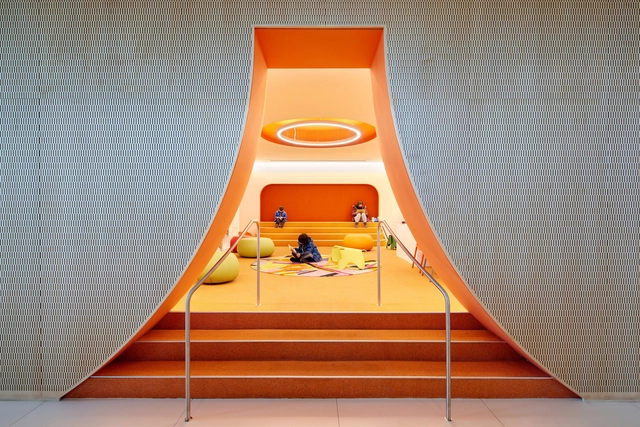
What is the vision for a 21st-century library? How can architecture professionals foster the interest of new and future generations in reading? Globally, the rapid growth of communication technologies, along with the increase in available information and the constant need to update knowledge, brings with it new educational approaches, cultural practices, and community activities that involve the creation of more dynamic spaces capable of adapting to different functions simultaneously. The connection with play, the integration of other uses, or even the incorporation of new technologies typically play a central role in the interiors of contemporary libraries designed for a young audience.

Libraries for Children: Dynamism, Flexibility, and Adaptability in Interiors - Image 1 of 4Libraries for Children: Dynamism, Flexibility, and Adaptability in Interiors - Image 2 of 4Libraries for Children: Dynamism, Flexibility, and Adaptability in Interiors - Image 3 of 4Libraries for Children: Dynamism, Flexibility, and Adaptability in Interiors - Image 4 of 4Libraries for Children: Dynamism, Flexibility, and Adaptability in Interiors - More Images+ 25

School Architecture: 70 Examples in Plan and Section

Subscriber Access | 

For architects, schools are often complex structures to design. They must provide a variety of spaces for education, and also consider sports and recreational activities. But beyond its size or surface, the greatest challenge is to design an area that fosters a positive pedagogical environment for children. Below, a selection of +70 school projects with their drawings to inspire your proposals for learning campuses.

School Architecture: 70 Examples in Plan and Section - Image 38 of 4School Architecture: 70 Examples in Plan and Section - Image 48 of 4School Architecture: 70 Examples in Plan and Section - Image 8 of 4School Architecture: 70 Examples in Plan and Section - Image 37 of 4School Architecture: 70 Examples in Plan and Section - More Images+ 210

Why Don’t We Teach Chinese Architecture in the United States?

This article was originally published on Common Edge as "Why Don’t We Teach Chinese Architecture?"

How many U.S. architecture professors know that there is a Chinese treatise equivalent to Vitruvius’ Ten Books of Architecture? Very few, I suspect. I taught architectural history for more than 20 years before I discovered the marvelous Yingsao Fashi, a Song Dynasty book by a prominent court official who, as far as we know, was not an architect or builder. In fact, prior to the Ming Dynasty no prominent temple, palace, or shrine in China was designed by an architect because the concept of a single mastermind in charge of a building project was foreign to the East Asian way of designing environments of any kind.
How to Design Schools and Interiors Based on Waldorf Pedagogy

Subscriber Access | 

Introduced by Rudolf Steiner, Waldorf pedagogy draws on the principles of anthroposophical philosophy. One of the theory's foundational characteristics is its holistic approach to the human being: feelings, imagination, spirit, and intellect are considered unique to every individual, and thoughts, feelings, and actions are understood to always be linked.

Thus, the focus of the philosophy is to cultivate individuals who are capable of relating both to themselves and to society (inter and intrapersonal intelligence) - fundamental skills for overcoming the challenges of the 21st century. This kind of learning takes place in schools that follow Steiner's method, introducing families to the school environment and bringing them into the community. Below, we review the operations and implications of this pedagogy. 

How to Design Schools and Interiors Based on Waldorf Pedagogy - Image 1 of 4How to Design Schools and Interiors Based on Waldorf Pedagogy - Image 2 of 4How to Design Schools and Interiors Based on Waldorf Pedagogy - Image 3 of 4How to Design Schools and Interiors Based on Waldorf Pedagogy - Image 4 of 4How to Design Schools and Interiors Based on Waldorf Pedagogy - More Images+ 14