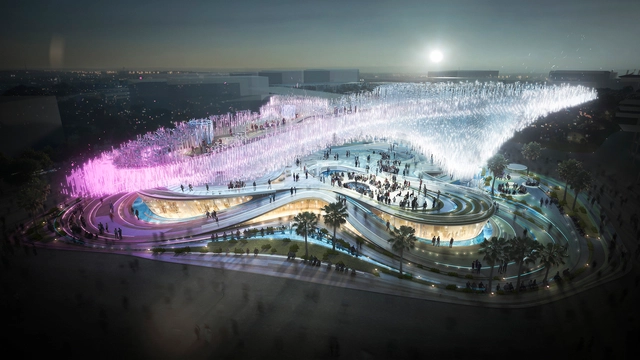
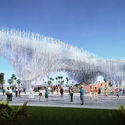
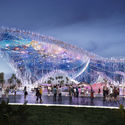
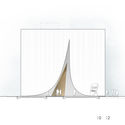
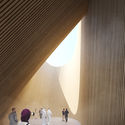
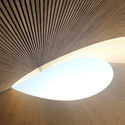
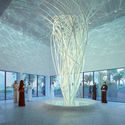
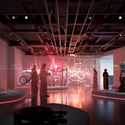
“A Country without Walls, a Future without Limits” is a proposal for an expo pavilion imagined by 10 DESIGN. Based on the ideas of communication, openness, hospitality, and change, the project puts in place a memorable experience for visitors.


“A Country without Walls, a Future without Limits” is a proposal for an expo pavilion imagined by 10 DESIGN. Based on the ideas of communication, openness, hospitality, and change, the project puts in place a memorable experience for visitors.
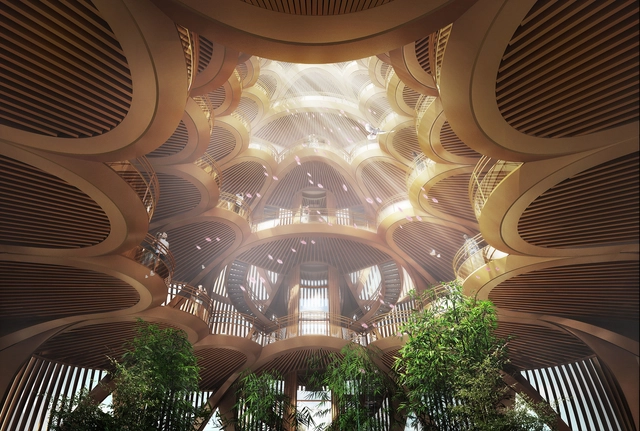
With more competition entries coming our way, our curated selection of best-unbuilt architecture features this week, exceptional projects presented in an international context. ArchDaily has rounded up another collection of proposals, gathering interventions from across the world, and highlighting never-seen-before programs, designs, and innovations from our readers’ submissions.
The article includes a couple of groundbreaking projects from the Far East with a Panda Sightseeing Tower, a production complex, and the regeneration of an industrial area in China. In addition, the selection showcases a proposal for the Jacques Rougerie Foundation Space and Sea Generation in Melbourne, Australia, and a finalist for the LACMA Not LackMA International Design Competition. Other proposals highlighted encompass a Multi-cultural Complex in South Korea, a recreational zone on an Austrian lake, a peace pavilion in Senegal, and a dream mansion "between mountain and sea" by Penda China, to name a few.
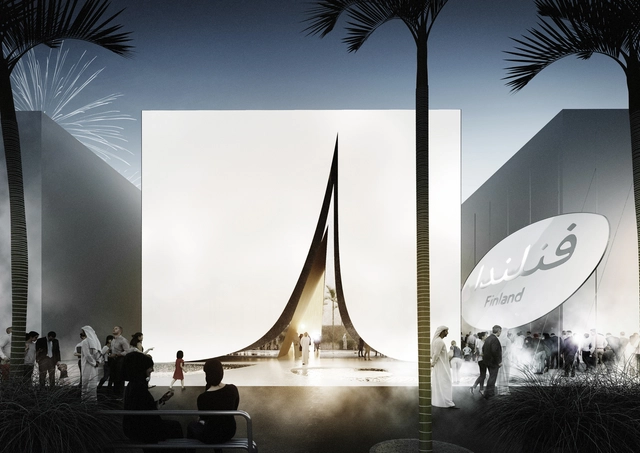
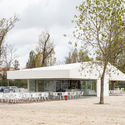
The Finland Pavilion for Expo Dubai 2020 draws inspiration from Finnish nature, design, and innovation. Imagined by JKMM Architects, the project also takes on elements from the local context, with tent-like features.
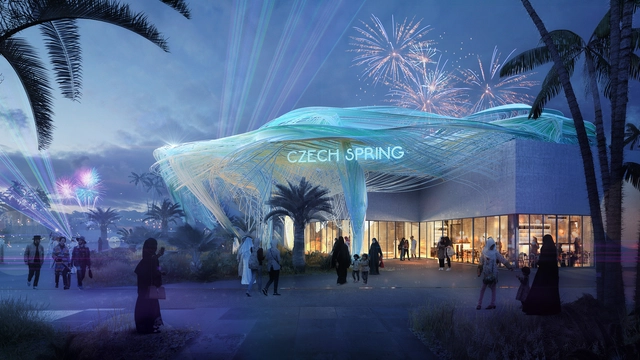
Located in the sustainability zone of EXPO 2020 Dubai, the Czech pavilion, designed by Formosa AA and R/FRM, is an invitation for discovery. Raising questions concerning desert cultivation, it integrates and exposes the S.A.W.E.R. system cultivation plant. Visible technologies form the main formal and visual components of the pavilion.
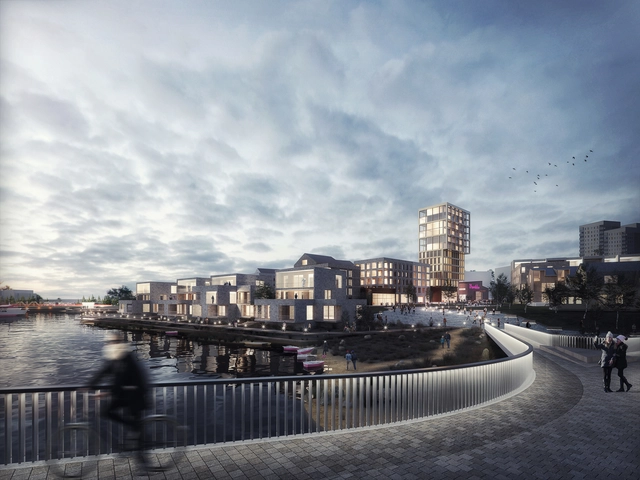
Focusing on competition entries, this week’s curated selection of the best-unbuilt architecture from our readers' submissions, highlights projects from across the globe, presented part of international contests. Some are winners, some are not but all of the featured schemes have an intriguing conceptual approach, and a different story to tell.
Tackling diverse programming, the entries include an urban public housing proposal in South Korea, the Dianju Village Library in China and a new Future-Oriented Neighborhood in Finland combining urban and sustainable living. Moreover, the article showcases rare and unconventional functions like a hospital for psychiatry & neurological diseases in Turkey and an intervention on a famed Oscar Niemeyer site.

Plastic has a huge contribution in the making of the modern man. It has revolutionized human activity and living because of its versatility as a material. It made space travels possible. It has revolutionized medicine. Daily, it saves millions of people making food resources safe and accessible to the poorest populations of the planet. Modern life is addicted to and dependent on this versatile substance, which is found in everything from cars, planes, computers and equipment to clothes made of polyester and nylon, to the adhesive seal on most teabags.
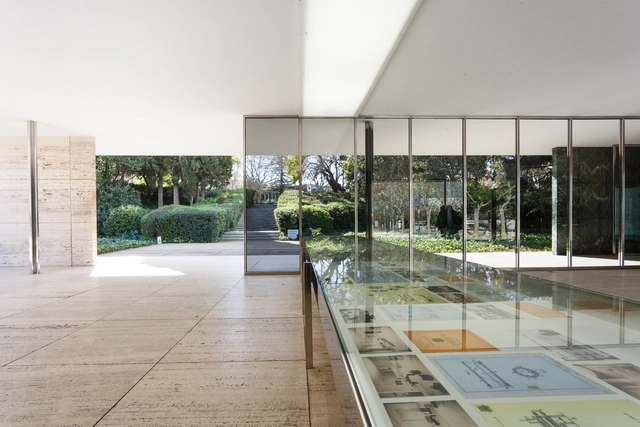
In time for Women’s Day, the artistic outcome of the first call of the Lilly Reich Grant for Equality in Architecture opened at the Mies van der Rohe Pavilion in Barcelona. Running till the 22nd March 2020, the exhibition entitled Re-enactment, carried out by Laura Martínez de Guereñu, aims to put the spotlight on Reich’s overlooked work.

The British Council has announced that curators Manijeh Verghese and Madeleine Kessler will represent the UK at the 17th International Architecture Exhibition at the Venice Biennale 2020. Selected from a shortlist of nine proposals, the winning project entitled “The Garden of Privatised Delights”, explores the creeping epidemic of privatized public spaces across cities in the UK.
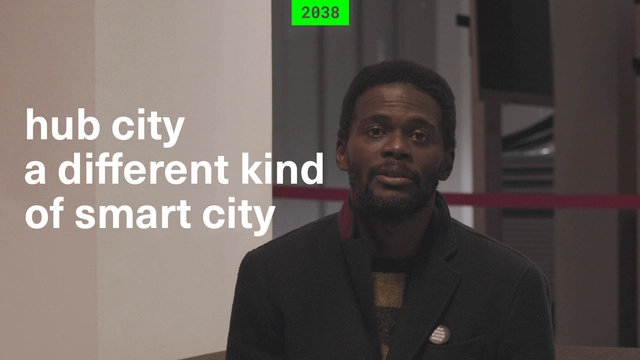
Entitled 2038, the German pavilion looks back from the future to the past, which is, in fact, our modern time. Seeking to provide answers, the pavilion imagines the world in the era of “New Serenity”, and tells the “story of a world in which everything has just about gone well”, an alternative future without war.
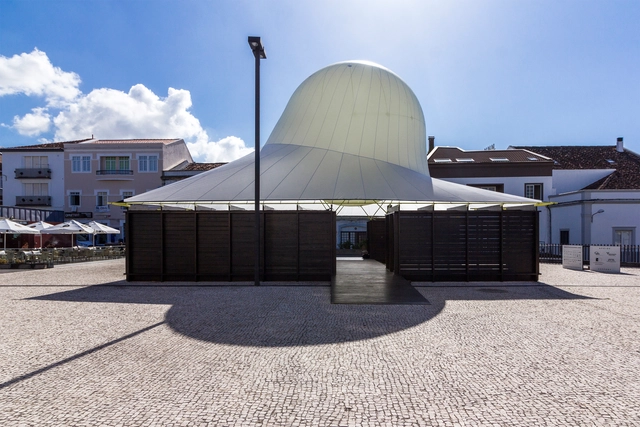
The Pavilion marked a new milestone in the history of Walk&Talk, creating an open and public house for the festival’s program, a symbol of the project's autonomy, maturity and capacity for innovation as a space of creation and experimentation in the various artistic fields.

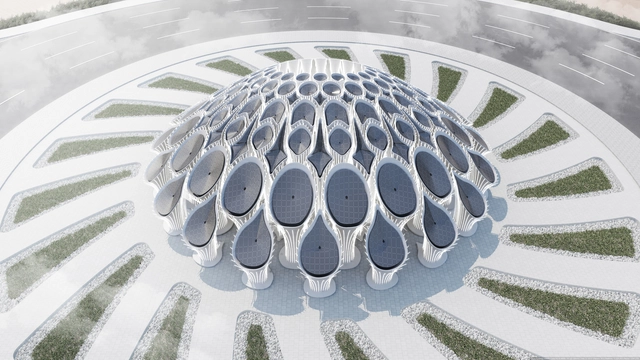
MEAN* or Middle East Architectural Network has proposed an intervention for Expo 2020 Dubai. The Boulevard Roundabout Pavilion, an 8-meter structure, will be an unmissable iconic proposal that welcomes the public to the world event.
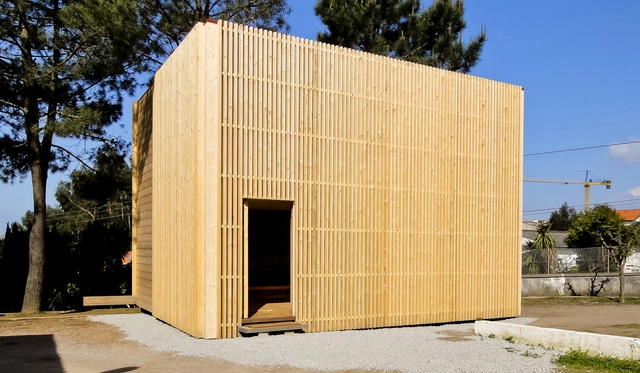
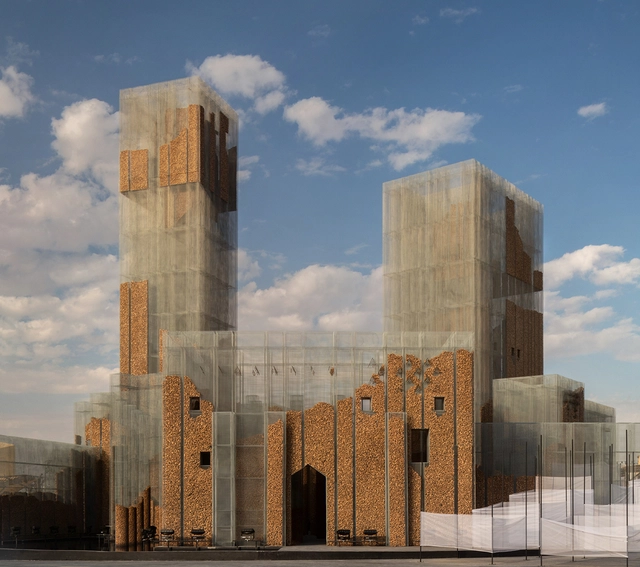
Created by Studio Studio Studio, the new interdisciplinary lab founded by Edoardo Tresoldi, Gharfa is a pavilion located in Riyadh, Saudi Arabia. The experimental installation is part of the temporary creative project Diriyah Oasis, designed and curated by Dubai-based studio Designlab Experience.
OMA'S architect and urbanist Ippolito Pestellini Laparelli will serve as the curator of the Russian Pavilion at the Venice Biennale 2020. Moreover, Teresa Iarocci Mavica, co-founder, and director of the V-A-C Foundation was appointed as commissioner of the Pavilion by the Russian Ministry of Culture. The exhibition entitled Open! will showcase young Russian architects and will focus on the renovation of the century-old building of the pavilion, built by renowned Russian architect Alexey Shchusev in 1914.
ArchinfoFinland.jpg?1576139638&format=webp&width=640&height=580)
Archinfo Finland has announced the theme and curatorial team for the Pavilion of Finland at the 17th International Architecture Exhibition of the 2020 Venice Biennale. Entitled New Standards, the exhibition conceived by Laura Berger, Philip Tidwell, and Kristo Vesikansa will explore Finland’s timber industry.

With the exception of Hollywood, there isn’t another place in the world that has become so inextricably linked to the film industry as the city of Cannes. For more than 70 years, everyone who’s anyone in the film world — and lots of other cinema enthusiasts— have migrated to the French Riviera in May for the biggest event of the year: the Cannes Film Festival, which combines glitzy red-carpet premieres with long and intense days of screenings, discussions and networking. Even though there are many obvious differences between a 12-day film festival and an awards show, Cannes is as big a deal as the Oscars. The local city economy not only thrives on it; it depends on it. Be it the murals on streets or the photographs adorning the walls of cafes and bars, cinema is deeply rooted in the fabric of the city.

Paul Andersen and Paul Preissner were selected to curate the United States pavilion for the 17th edition of the Venice Biennale. With a proposal entitled “American Framing”, the architects will try to respond to the general theme of “How will we live together?”.











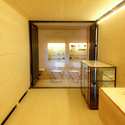
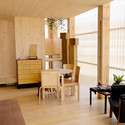


ELKA.jpg?1576139754 "Workmen carry a frame panel for a Puutalo house in northern Colombia where some 1,500 houses were constructed from 1955 to 1957 as dwellings for workers. These Puutalo homes can still be found throughout the Simón Bolívar neighborhood of Barranquilla today. Photo from 1956.. Image © ELKA")
ELKA.jpg?1576139683 "Stacks of pre-cut material stand ready and waiting for assembly in northern Colombia in 1956. Some 1,500 houses were constructed in the town of Barranquilla from 1955 to 1957 as dwellings for workers. These Puutalo homes can still be found throughout the Simón Bolívar neighborhood today.. Image © ELKA")
ELKA.jpg?1576140648 "A Puutalo house in Australia sits among a group of tall palm trees in the early 1950s.. Image © ELKA")
ELKA.jpg?1576139623 "A draughtsman finishes work on a sheet of drawings in the early 1950s at the Helsinki office of the Puutalo company.. Image © ELKA")
ArchinfoFinland.jpg?1576139638)