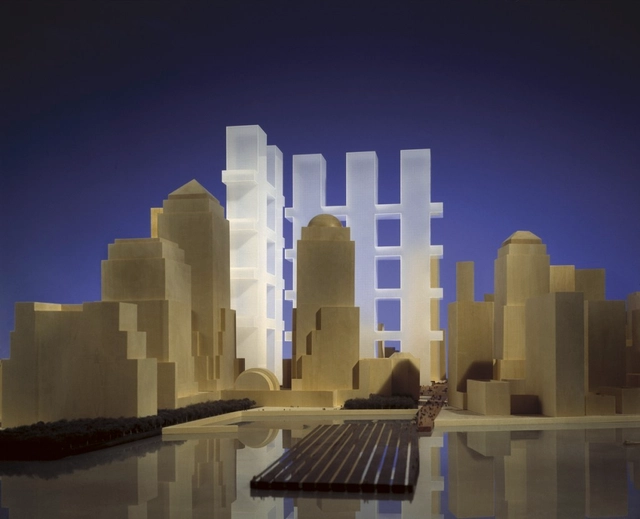
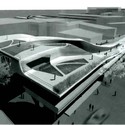
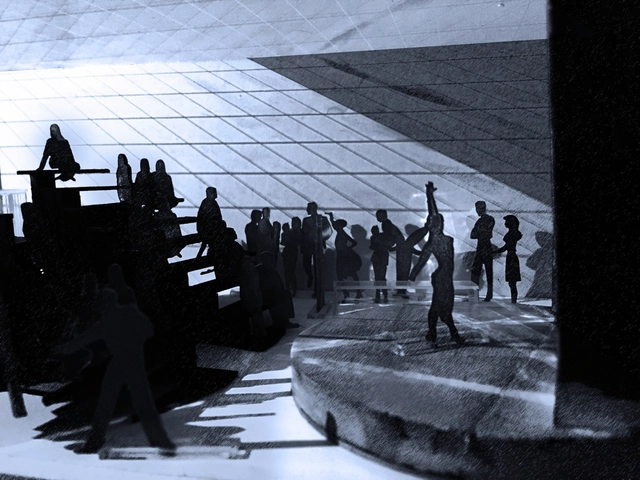
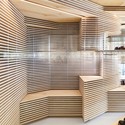
Model. Image Courtesy of Forward Slash ( / ) ARCHITEKTUR
Performa has selected the office of Christoph A. Kumpusch, Forward Slash ( / ) ARCHITEKTUR, as the winner of the competition to design the Performa 15 Hub. Held in New York City, Performa is a Biennale dedicated to live performance across artistic disciplines. This year’s Biennial, Performa 15, will take place November 1 -22, and the Performa Hub serves as the biennial's headquarters, offering a venue for special performances, screenings, panel discussions, artists’ seminars, a lounge, a shop and a visitor information center. Read more about the winning entry and Performa after the break.
A 1,200 square-meter "test lab" of what aims to be the world's first underground park has opened its doors to New Yorkers. View a sneak peek above, shared with ArchDaily by The Spaces, to see just how the Lowline (as the project's known) plans to "plumb" sunlight into an abandoned trolley terminal beneath the city's Delancey Street in an attempt to transform the forgotten space into a sun-lit, subterranean public garden.
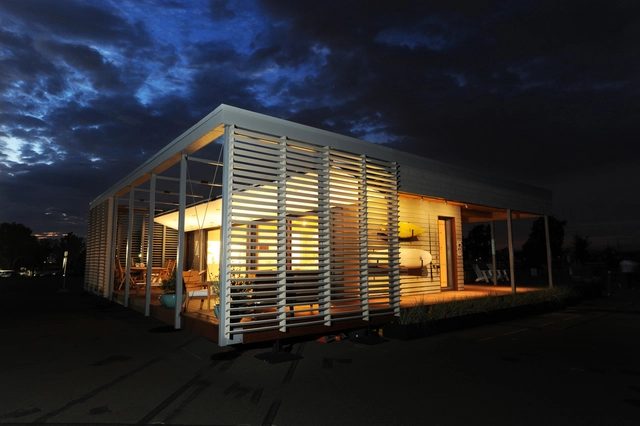
"SU+RE HOUSE powers itself with clean solar power, and uses 90 percent less energy than its conventional cousins," says the winning team. "In the aftermath of a storm, SU+RE HOUSE can become a hub of emergency power for surrounding neighborhoods."
Videos
Still from "Concrete Love" showing Gottfried Böhm's Neviges Mariendom. Image Courtesy of New York Architecture & Design Film Festival
October has become a busy month in the design world. If you’re living in the United States, New York specifically, it means Archtober: a portmanteau that means the city is flooded with architecture activities, programs and exhibitions, piled onto an already rich design calendar. One of these events is the New York Architecture & Design Film Festival, which started on Tuesday night and runs through Sunday October 18th, and will screen 30 films from around the world in 15 curated, themed programs.
This week, I was able to visit the festival to absorb the atmosphere and speak to the festival's director Kyle Bergman, to learn the ins and outs of this year’s festival, how things got started, and where it will go in the future.
In a culture dominated by smartphones and Instagram, with estimates that over one trillion photographs will be taken this year alone, it might seem impossible for photographs to make and shape issues in the ways they once did. Despite this, images still steer debates with shocking resiliency and, with luck, become iconic in their own right. As architecture is synonymous with placemaking and cultural memory, it is only logical that images of the built environment can have lasting effects on the issues of architecture and urbanism. It's never been easier for photographs to gain exposure than they can today, and with social media and civilian journalism, debates have never started more quickly.
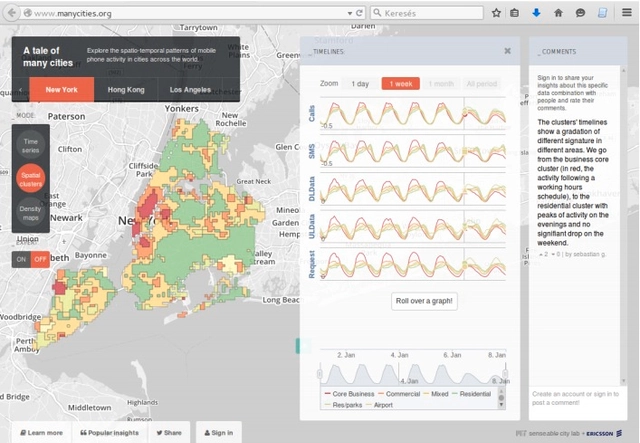
The SENSEable City Laboratory at MIT has developed a new tool with Ericsson to better understand human behavior. "ManyCities" is a new website that "explores the spatio-temporal patterns of mobile phone activity in cities across the world," including London, New York, Los Angeles and Hong Kong. Taking complex data and organizing it in a intuitive way, the application allows users to quickly visualize patterns of human movement within the urban context down to the neighborhood scale. You can imagine how useful a tool like this can be for urban planners or even daily commuters, especially once real time analytics come into play. Take a look at ManyCities yourself, here.
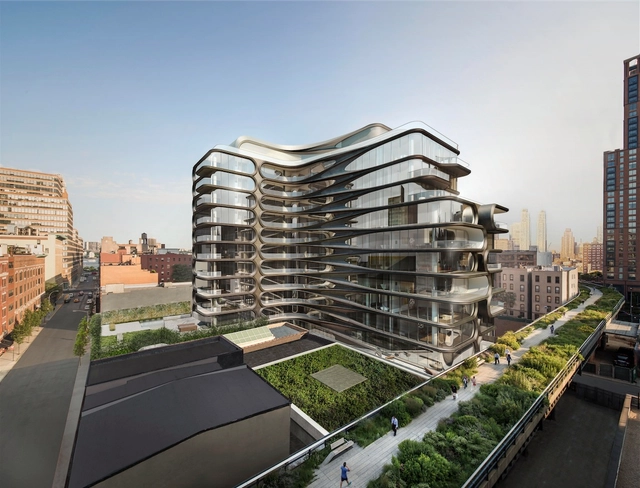
“I’ve always been fascinated by the High Line and its possibilities for the city. Decades ago, I used to visit the galleries in the area and consider how to build along the route. It's very exciting to be building there now,” said Zaha Hadid. “The design engages with the city while concepts of fluid spatial flow create a dynamic new living environment.”
The film, Pedro E. Guerrero: A Photographer’s Journey, explores Guerrero’s photography, showing his collaboration with Frank Lloyd Wright to “produce insightful portraits of important modernist architecture,” which launched him to become “one of the most sought-after photographers of the ‘Mad Men’ era.” While Guerrero was extremely popular at the time, his story today is still largely unknown.
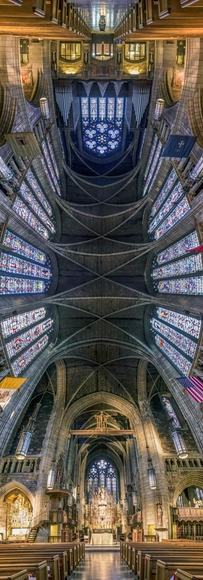
Seasoned photographer Richard Silver has captured the beauty of New York's churches unlike any other. By seamlessly stitching together a series of composite images from each location, Silver has created a stunning set of vertical panoramas that reveal the interiors of New York's most impressive religious structures.
“Finding the perfect location in the center aisle then shooting vertically from the pew to the back of the church gives the perspective that only architecture of this style can portray,” Silver told Colossal.
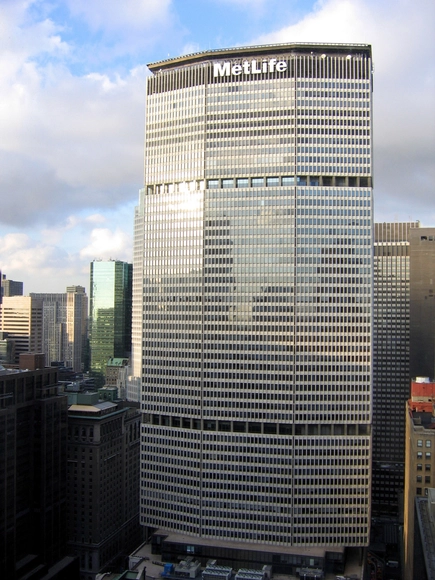
Metals in Construction magazine has launched a competition for architects, engineers, students, designers, and others from all over the world to submit their vision for recladding 200 Park Avenue, built a half-century ago as the world’s largest corporate structure, the Pan Am Building (now the MetLife Building).
The mandate is to reimagine this New York City icon with a resource-conserving, eco-friendly enclosure—one that creates a highly efficient envelope with the lightness and transparency sought by today’s office workforce while preserving and enhancing the aesthetic of its heritage. Entrants may now register on the competition's official website. The deadline for final submission is February 1, 2016.
It is surprising then to find the man or his eponymous firm Foster + Partners absent from a list like Fast Company’s “The World's Top 10 Most Innovative Companies in Architecture,” organized into superlatives: MMA Architects, “for thinking outside the big box,” Heatherwick Studio, “for reimagining green space,” or C.F. Møller Architects, “for rethinking high-rise living.” This is not to say that Foster or his firm should be substituted for any of these deserved accolades, but rather that for five decades Foster and his firm have ceaselessly worked to enhance and expand on the human experience with architectural solutions that are both inventive and practical - a fact that is perhaps lost as a result of his position within the architectural establishment.
With that in mind, we thought it was worth highlighting the many occasions over the decades where Foster + Partners has shown themselves to be among the world's most innovative practices. Read on for more.
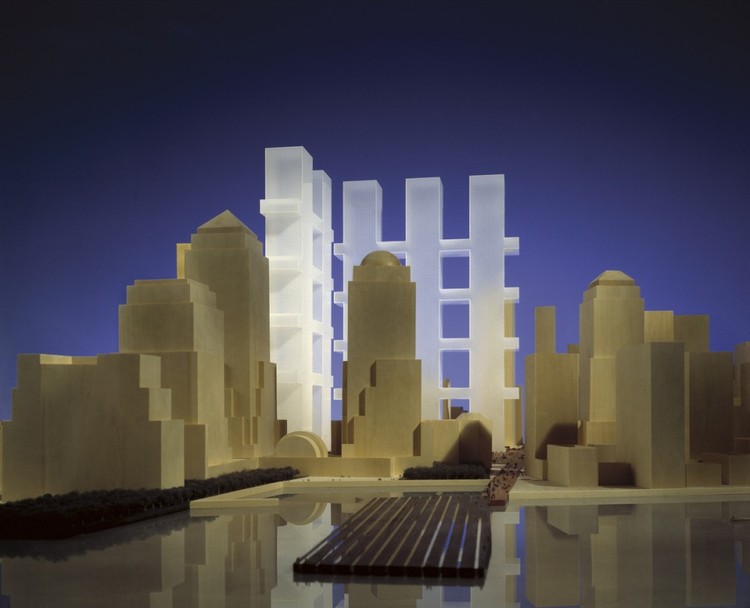
In It’s A Wonderful Life the film’s protagonist George Bailey, facing a crisis of faith, is visited by his guardian angel, and shown an alternate reality where he doesn’t exist. The experience gives meaning to George’s life, showing him his own importance to others. With the increasing scale of design competitions these days, architectural “could-have-beens” are piling up in record numbers, and just as George Bailey's sense of self was restored by seeing his alternate reality, hypothesizing about alternative outcomes in architecture is a chance to reflect on our current architectural moment.
Today marks the one-year-anniversary of the opening of Phase 3 of the High Line. While New Yorkers and urbanists the world over have lauded the success of this industrial-utility-turned-urban-oasis, the park and the slew of other urban improvements it has inspired almost happened very differently. Although we have come to know and love the High Line of Diller Scofidio + Renfro and James Corner Field Operations, in the original ideas competition four finalists were chosen and the alternatives show stark contrasts in how things might have shaped up.
On this key date for one of the most crucial designs of this generation, we decided to look back at some of the most important competitions of the last century to see how things might have been different.
“Students who enter schools of architecture today are entering it at a very young age, perhaps when their total world experience and awareness is relatively narrow, and they’re making the decision to become a practicing architect, and putting aside those studies—general ed., liberal arts studies—that might actually, in the end, make them more contributing architects. […] Fewer and fewer people are having that basic liberal arts, general ed. knowledge in the profession. And it’s a serious problem.”
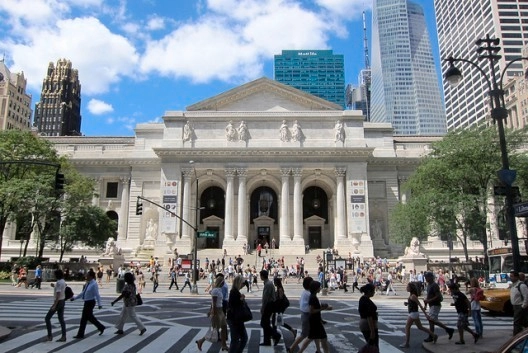
"The building should be about the journey of learning," Mecanoo's founding partner and creative director Francine Houben told the New York Times. "Maybe you come in for a book but also take lessons in English."
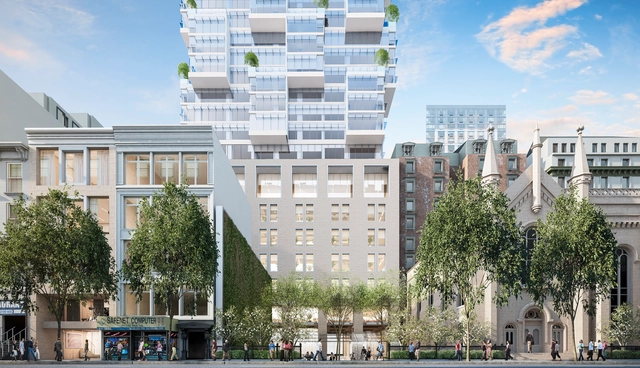
Images of Moshe Safdie's first New York project has been released. Planned to rise on a Manhattan site at West 30th Street, between Broadway and 5th Avenue, the 64-story mixed-use tower will feature a limestone base that compliments and serves its historic neighbor: the Marble Collegiate Church, one of the Collegiate Churches’ five ministries.
The building "will be distinguished by its vertical massing, which breaks down the scale of the tower into a series of three-story-high, offset projections," says Safdie Architects. "The offset projections also provide energy efficiency by self-shading the tower’s facade, further enhanced by additional sun shading at the south facade."




.jpg?1445011714&format=webp&width=640&height=580)