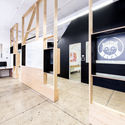
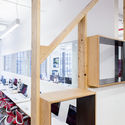

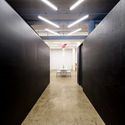

-
Architects: Desai Chia Architecture
- Area: 18000 ft²
- Year: 2015




Recently the subject of a competition to reimagine its expansive facade, the MetLife building is one of Manhattan's most noticeable - and hated - buildings. In this article originally published on 6sqft as "Great Game Changers: How the MetLife Building Redefined Midtown Architecture," Carter B Horsley tells the tale of how the building came to be.
Perhaps the most detested midtown skyscraper by the public, this huge tower has, nevertheless, always been a popular building with tenants for its prime location over Grand Central Terminal and its many views up and down Park Avenue. It is also one of the world’s finest examples of the Brutalist architecture, commendable for its robust form and excellent public spaces, as well as its excellent integration into the elevated arterial roads around it.
However, it is also immensely bulky and its height monstrous. As shown in the photograph ahead, the building completely dominates and overshadows the former New York Central Building immediately to the north, which had been designed by Warren & Wetmore as part of the “Terminal City” complex. The New York Central Building, now known as the Helmsley Building, straddled the avenue with remarkable grace and its distinguished pyramid. As one of the city’s very rare, “drive-through” buildings, it was the great centerpiece of Park Avenue. But by shrouding such a masterpiece in its shadows, quite literally, the Pan Am Building (today the MetLife building) desecrated a major icon of the city that will unfortunately will never recover from this contemptible slight on such a prominent site.
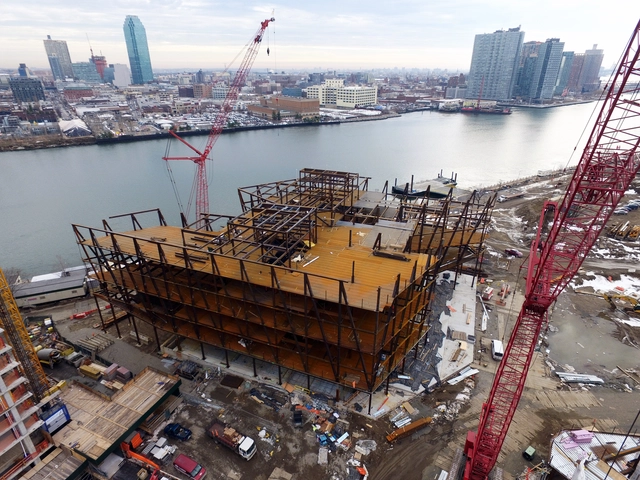
The Bridge at Cornell Tech, designed by WEISS/MANFREDI and developed by Forest City Ratner Companies, has been topped off after starting construction in the summer of 2015.
The building, which begins the first phase of the two billion dollar Roosevelt Island tech campus, will be a first-of-its-kind building that will house companies, researchers, and entrepreneurs who aim to drive the economic growth of New York through the commercialization of new products. The Bridge is scheduled to open to the public in the summer of 2017, along with two other CornellTech projects.

Turncoats, the irreverent architectural debate society from London, is launching an international series, starting chapters in Canada, Scotland, Serbia and the US. Originally created by Phineas Harper, Maria Smith and Robert Mull, Turncoats has “electrified London’s architectural scene” since its inception.
Combining architectural debate with unique settings, alcohol, and an absence of recordings or wireless devices, Turncoats has gathered significant attention, their signature flaming envelope emblem appearing on lapels across the city, and soon all over the world.

A Japanese Constellation: Toyo Ito, SANAA, and Beyond focuses on the work of architects and designers orbiting Pritzker Prize winners Toyo Ito and SANAA. MoMA’s first presentation dedicated solely to Japanese practitioners, the exhibition spotlights a small cluster of contemporary Japanese architects working within the larger field, exploring their formal inventiveness and close professional relationships to frame a radical model of practice in the 21st century.
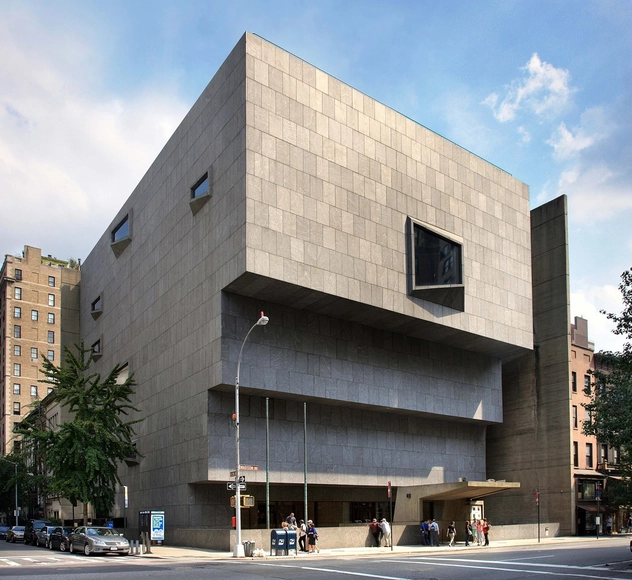
The New York art world let out a collective cry of grief when the Whitney Museum of American Art abandoned Marcel Breuer's iconic 1966 building on Madison Avenue at 75th Street. Whether New Yorkers loved, loved to hate, or hated to love the old Whitney, Breuer's building suddenly became the building that evoked more passion than any other.
Now, thanks to a restoration led by New York City firm Beyer Blinder Belle, the iconic building has been transformed into the Met Breuer—the bold new showcase for the Metropolitan Museum of Art's renewed embrace of modernist and contemporary art. It will open to the public on March 18, 2016, and as the crowds ready to descend, the curators and architects are no doubt anxious to see whether, by faithfully adhering to Breuer's original vision, the restored building will succeed in both delighting museum-goers and helping redefine the Met's public image.
If you haven't had the opportunity to step inside Santiago Calatrava's World Trade Center Oculus, here is your chance. Miguel de Guzmán of Imagen Subliminal has captured the incredible space in VR (Virtual Reality), granting you 360-degree views of the infamous oculus. Put on your Google Cardboard and see it for yourself.
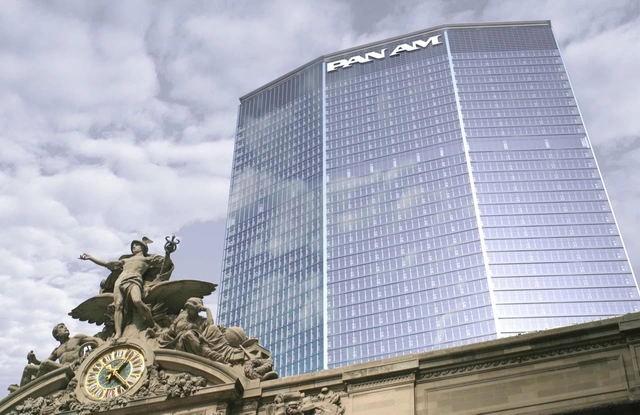
Metals in Construction Magazine and a jury of architects and engineers have announced the winners of the “Reimagine a New York City Icon” competition. The 2016 Design Challenge, which was sponsored by Metals in Construction magazine and the Ornamental Metal Institute of New York, called for submissions from architects, engineers, students, and designers from around the globe to reimagine the cladding of 200 Park Avenue (formerly the Pan Am Building, now the MetLife Building), with a “resource-conserving, eco-friendly enclosure” that simultaneously creates transparency and preserves the building’s original aesthetic.
Santiago Calatrava's long-awaited World Trade Center Oculus has officially opened. Thanks to EarthCam and the project's contractor Skanska USA, you can watch the $4 billion transportation hub take shape over the course of 42 months in just 65 seconds, from June 2011 to December 2014. For more, see what the critics have to say about the newly opened building here.
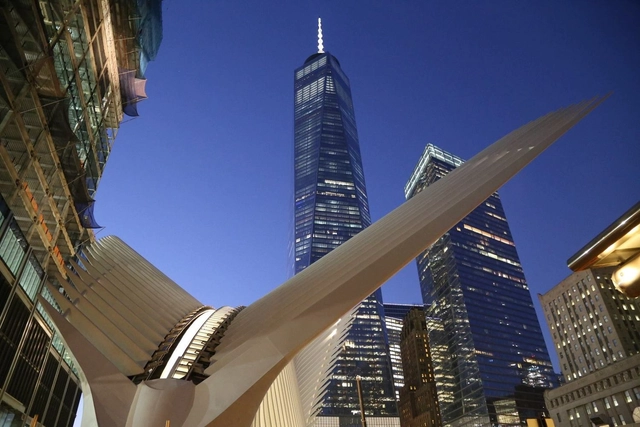
After 12 long years and a series of construction headaches, Santiago Calatrava’s $4 billion World Trade Center Transportation Hub has finally opened to the public. Once widely regarded as a symbol of hope for post-9/11 New York, the project’s ballooning budget and security-related revisions gradually soured the opinions of the public and top design minds including Michael Graves and Peter Eisenman, and provoked a multitude of mocking nicknames ranging from “Calatrasaurus” to “squat hedgehog” to “kitsch dinosaur.” All the while, Calatrava urged critics to reserve their opinion until the project’s opening. Now that day has arrived - did Calatrava receive the vindication he was insistent would come? Read on for the critics’ takes.
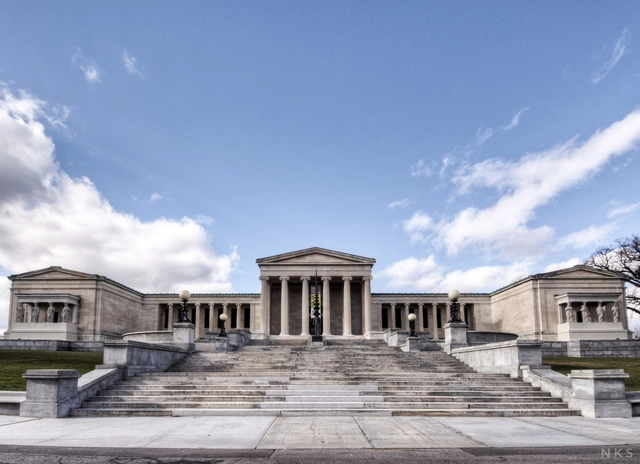
Five major firms have been shortlisted for the Albright-Knox Art Gallery's $80 million expansion in Buffalo, New York. Chosen for their "design intellect" and ability to collaborate, the competing firms will envision ways to expand the gallery's exhibition space and create a new public urban area that maximizes the site's potential, as the Albright-Knox campus is located on the edge of Delaware Park - one of Frederick Law Olmsted’s major works.
“The selection of the architects reflects that malleability, because none of them has a fingerprint style,” Albright-Knox director Janne Sirén said. “All of them, almost, specialize in an ability to build for a given context.”
The five practices include:
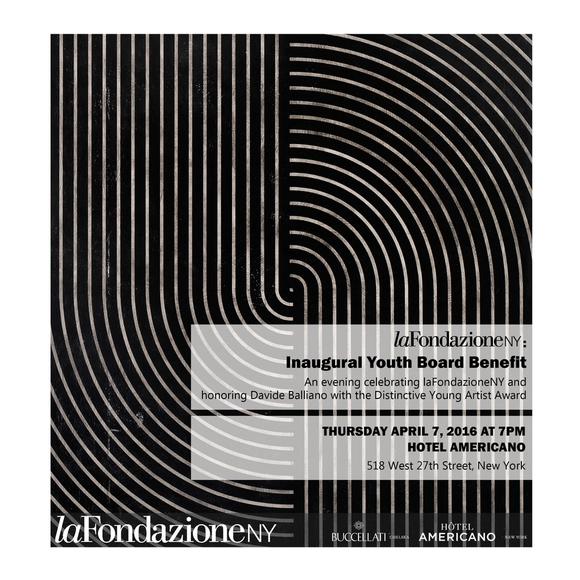
La Fondazione's Youth Board is proud to announce its inaugural Youth Board Benefit, an event that will raise awareness for La Fondazione NY’s mission as well as honor the work of emerging Italian artist Davide Balliano.
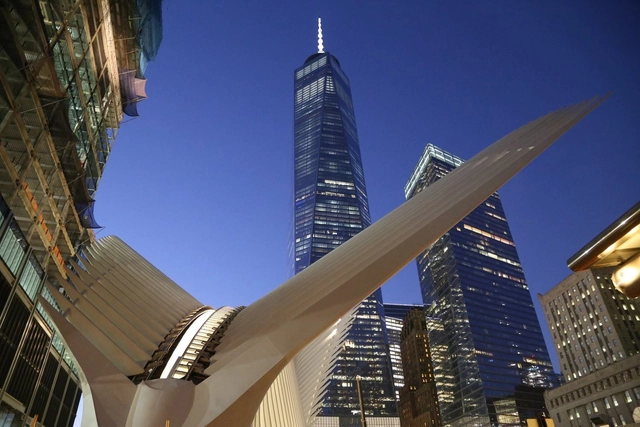
Half of Santiago Calatrava's $4 billion World Trade Center Transportation Hub is set to "quietly" open next week, according to a report by Crain's New York. Heavily criticized for being seven years overdue and twice its original cost, the public project has been labeled a "symbol of excess" by some and a "legacy project" by others. Despite the criticism, its 355-foot-long operable "Oculus" is "breathtaking" says New York Times reporter David Dunlap.
“It is necessary,” Calatrava told Dunlap, “that public space prevail... A balance is struck at Grand Central Terminal, and it will be here."
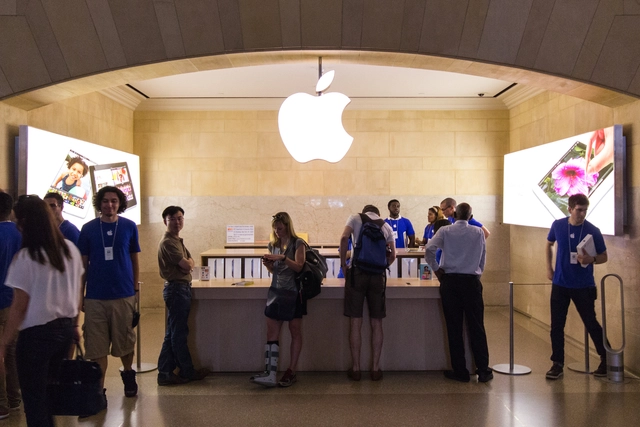
The New York Landmarks Conservancy has announced Apple, Inc. as the recipient of its 2016 Chairman’s Award “for their contribution to preserving, restoring, and repurposing notable historic structures in New York City.”
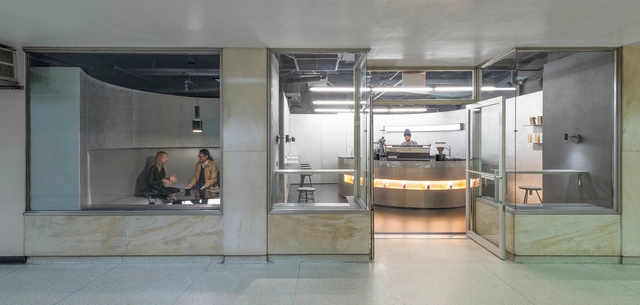

The American Institute of Architects (AIA) 2016 Jury of Fellows has elevated 149 AIA members and eight international architects to its prestigious College of fellows, an honor awarded to members who have made significant contributions to the profession.
“The Fellowship program was developed to elevate those architects who have made a significant contribution to architecture and society and who have achieved a standard of excellence in the profession. Election to fellowship not only recognizes the achievements of architects as individuals, but also their significant contribution to architecture and society on a national level.”
Some of the elevated members are: