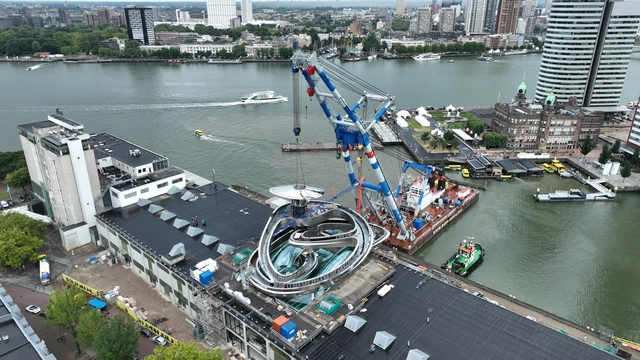
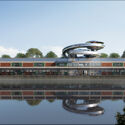
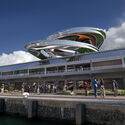
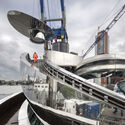
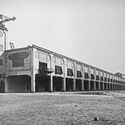
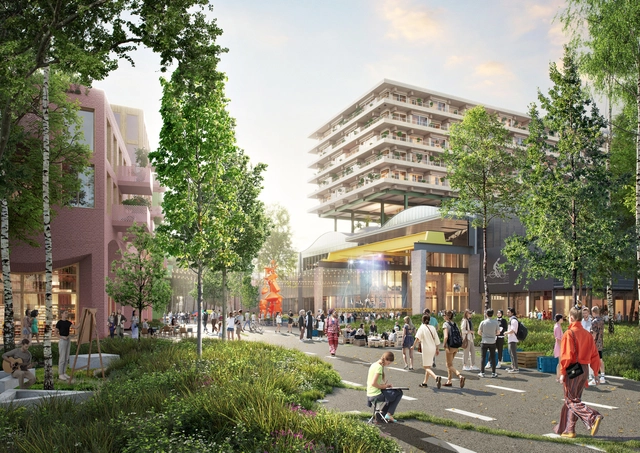
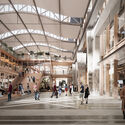
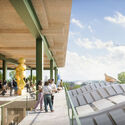
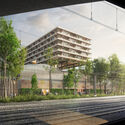
Designed by MAD Architects, the FENIX Museum of Migration is scheduled to open in Rotterdam's City Harbor in 2025. Currently under construction, the museum is set to explore the global narrative of migration through art, architecture, photography, and history. Situated in a 16,000-square-meter warehouse built in 1923, once part of the world's largest warehouse, the building has historical significance as a key storage and shipping hub for the Holland America Line. New construction photographs showcase the assembly of the metallic helix, named The Tornado, taking shape above the historical warehouse.
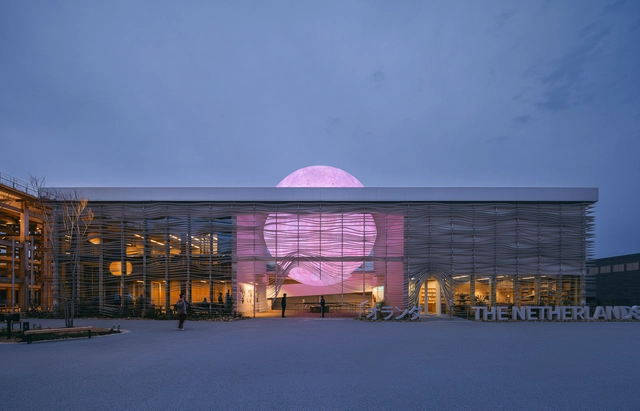
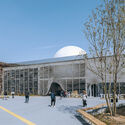
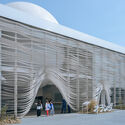
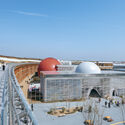
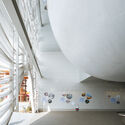
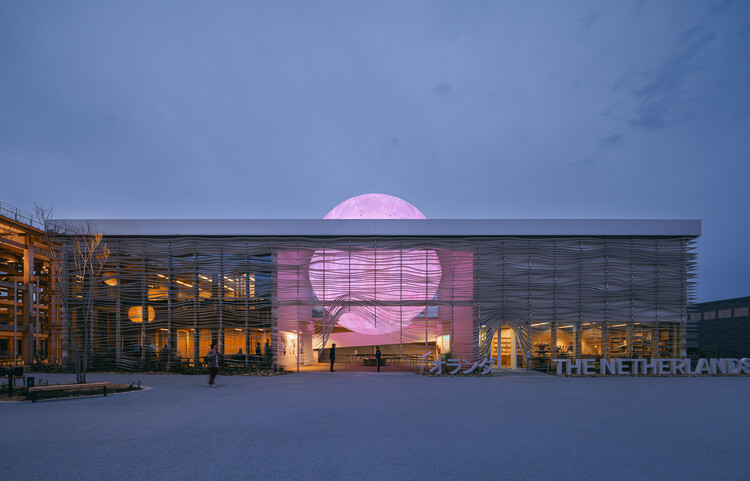
The Kingdom of the Netherlands's pavilion, presented at the Expo 2025 Osaka, Kansai, Japan, features the theme, "Common Ground: Creating a New Dawn Together," emphasizing the Netherlands' dedication to fostering mutual understanding to address global challenges. Designed by RAU Architects, the pavilion's circular design features a prominent illuminated sphere at its center, symbolizing a new era of unlimited clean energy, akin to a "man-made sun" signaling a future powered by sustainable resources.
The Centre de Cultura Contemporània de Barcelona (CCCB) has announced the finalists for the European Prize for Urban Public Space 2024. Selected from a total of 297 projects corresponding to 35 European countries, the 2024 edition nominates 5 finalists in the General category, promoting quality public spaces throughout the European territory, and 5 in the Seafronts category, addressing coastal cities' climate vulnerabilities. The European Prize for Urban Public Space is an honorary biennial competition aiming to highlight best practices and innovations in the creation, transformation, and recovery of public spaces in European cities.
As the first edition to include a dedicated category for Seafronts, this year’s awards recognize the importance and particular challenges faced by coastal cities. This is aligned with the Cultural Regatta, a schedule of activities running parallel to the America's Cup sailing competition in Barcelona. For this edition, the International Jury was presided over by the urbanist architect, landscape, and industrial designer Beth Galí, and made up of Sonia Curnier, Fabrizio Gallanti, Žaklina Gligorijević, Beate Hølmebakk, Manon Mollard, Francesco Musco, and Lluís Ortega. The winners of the 12th European Prize for Urban Public Space will be announced during a ceremony at CCCB on October 29, 2024.
Over the years, the nocturnal landscape of cities has witnessed a significant transformation, marked by the emergence of more than 80-night mayors globally, a trend that has been on the rise since the early 2000s. Andreina Seijas, currently working as an Associate at Gehl, has analyzed these shifting dynamics of night-time governance in her research and during her doctoral studies at Harvard GSD. Seijas speaks in the interview about this development, challenges, and opportunities with night mayors, global differences, and the role of climate change. Seijas' upbringing in Caracas, Venezuela, where safety concerns dictated strict curfews, ignited her passion for creating safer, more inclusive urban environments, particularly for the youth. Her quest for a better future for the urban night explores the potential for cities to become safer, more inclusive, and more productive by creating spaces for work and leisure after dark.
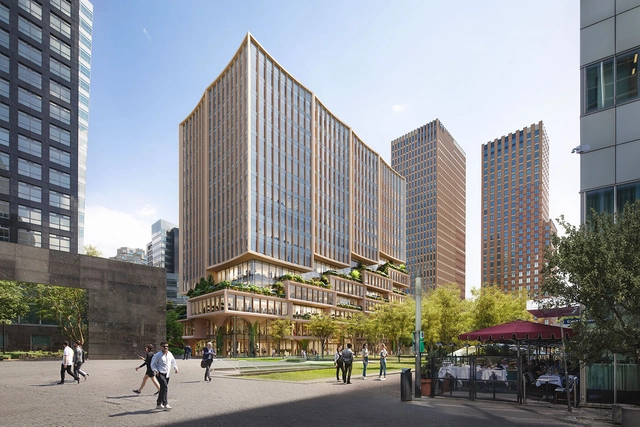
3XN GXN has revealed its design for Mahler 1, a 15-storey mixed-use office building. The structure, developed in collaboration with Victory Group, Icon Real Estate, and Erik Dhont Landscape Architects, features a hybrid-timber construction system that creates a stepped volume, breaking down the building’s mass. At the street level, the development offers a wide variety of public amenities, striving to become an active hub for both residents and office workers. The project is expected to begin construction in the first half of 2025 and conclude in late 2027.
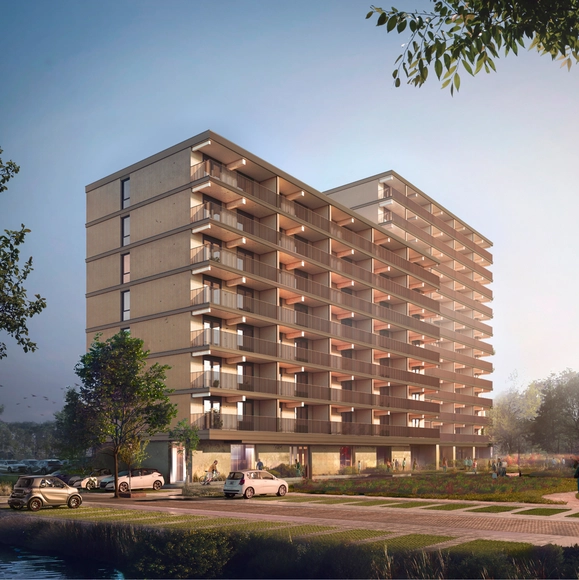
Powerhouse Company has revealed the design for the largest timber-built affordable housing complex in the Netherlands. “Valckensteyn” is a circular design featuring a 12-story timber structure and 82 homes. Situated within Pendrecht, a post-war neighborhood in Rotterdam, it sits on the site of a residential flat bearing the same name, demolished a decade ago. The timber structure seeks to be circular and sustainable in its design, creating a nature-inclusive environment that is accessible to all.
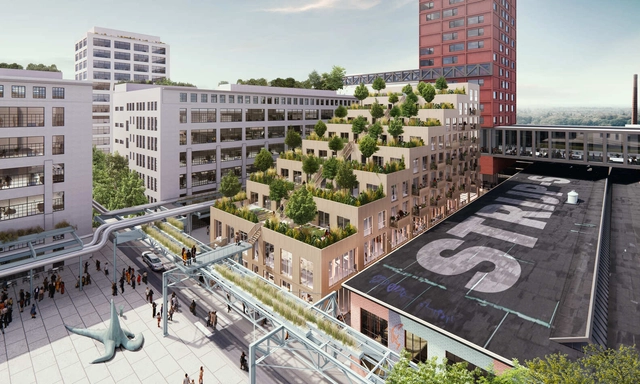
MVRDV has unveiled its design for a new mixed-use building in Eindhoven, The Netherlands. Situated in the heart of the vibrant Strijp-S district, the design was created in collaboration with the Trudo housing association. Titled “The Tribune,” the architecture boasts a stepped tribune-like structure, offering residents and visitors access and views onto the public square below.
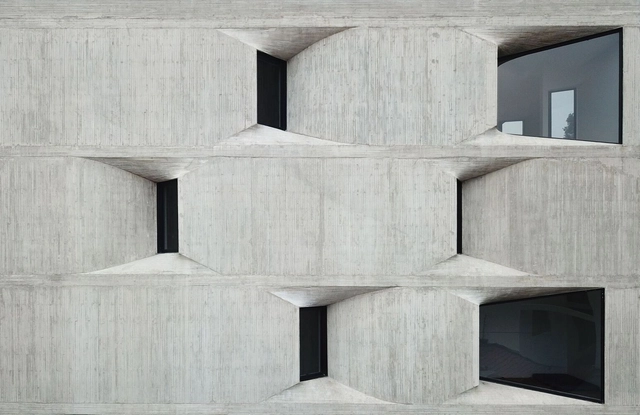
Formally, transparency usually takes the shape of a window, a door, a curtain wall, or a skylight. These are commonly created through rectangular punched openings or in the form of glass curtain wall systems or translucent screens. The following projects play with traditional notions of transparency and window-making in playful and unconventional ways. They create visually striking facades and dynamic relationships between their exterior and interior. They filter light and frame views through their glazing and opening articulation to craft memorable architectural experiences.
Courtesy of Powerhouse Company, Vivid-Vision, Atchain
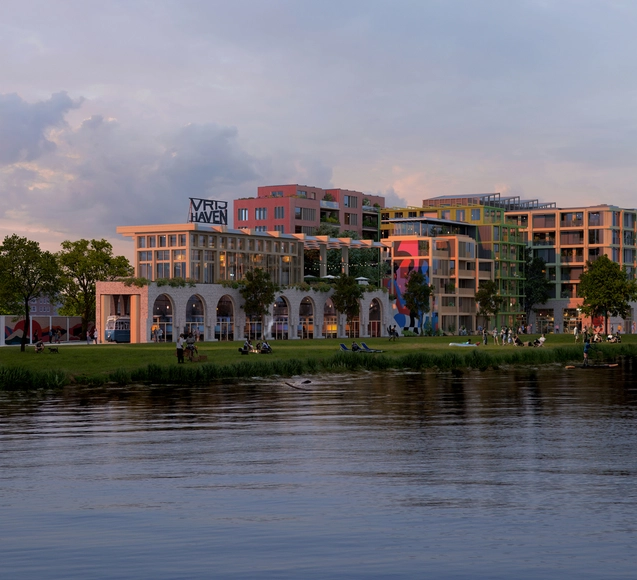
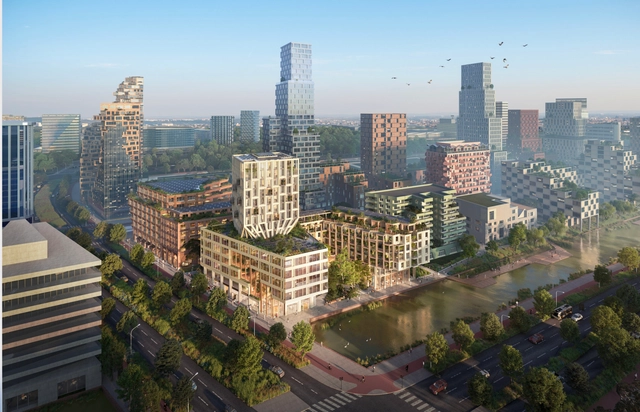
Powerhouse Company has just revealed its designs for “The Harmony” in the AmsterdamZuidas area. Featuring two towers, The Canyon and The Coast, the project aims to blend office spaces, commercial areas, and affordable housing. “The Harmony” establishes a new link between the Zuidas district and the upcoming residential zone of Ravel.
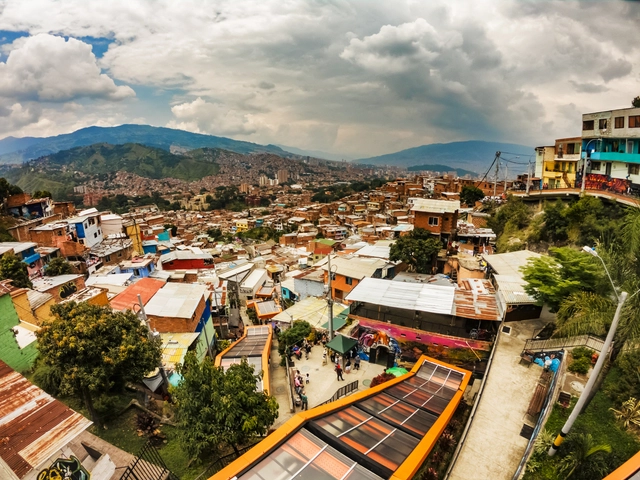
Comuna 13 of Medellín_via Shutterstock. Image Courtesy of CityMakers
CityMakers, The Global Community of Architects Learning from Model Cities and Their Makers is working with Archdaily to publish a series of articles about Barcelona, Medellin, and Rotterdam. The authors are the architects, urban planners, and/or strategists behind the projects that have transformed these three cities and are known in the "Schools of Cities" and "Documentary Courses" made by CityMakers.
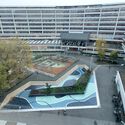
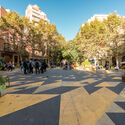
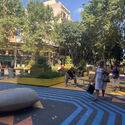
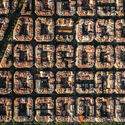
There is currently a broad consensus on the importance of public space in the city. Although it may seem quite logical, its significance is not as old as human settlements, which have existed for millennia. The Athens Charter, written just 91 years ago, did not speak so much about the city as a place to live but as a functional machine. Almost a century later, the paradigm has shifted: the city is, above all, its public space. But what happens when public space is threatened by car proliferation, insecurity, or even water?
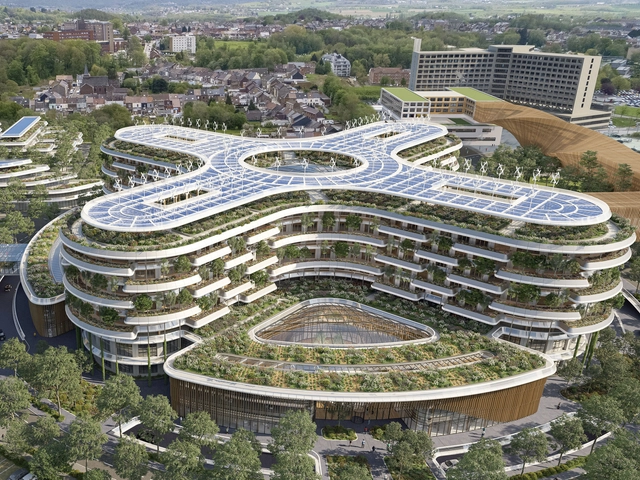
This curated selection of the Best Unbuilt Architecture highlights projects submitted by the ArchDaily community that demonstrate the use of organic shapes in various forms of architecture and program use. Many times, organic architecture stands as a testament to what we are able to make in 2024, innovating in structural and material technology. From Vincent Callebaut’s HospiWood to Zomorrodi & Associates’ Cadence Art Center, these instances showcase this shift in desigin thinking. Whether its a residential villa in the United States or a resort centered around a curved pool in the Netherlands, organic architecture has been trending globally.
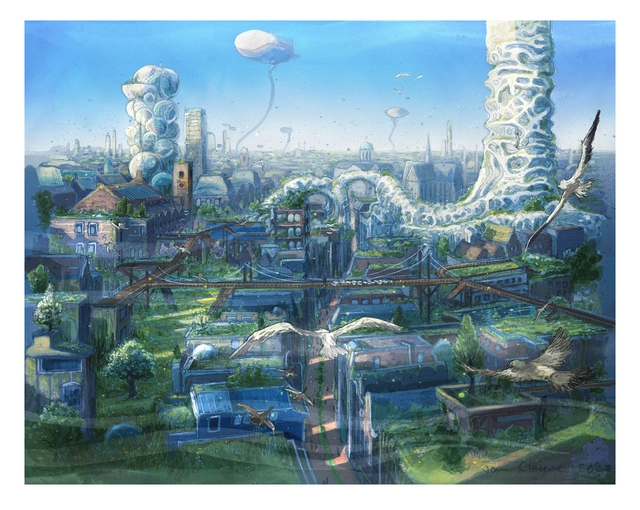
Studio Monnik, 'Alles Komt Goed', 2023. ‘Poreuze Stad’, Illustratie van Jan Cleijne. Een toekomstscenario voor Amsterdam in 2089. Image Courtesy of Het Nieuwe Instituut
Still, the country faces expected and unexpected challenges, from an acute housing shortage to raising concerns regarding climate change and shifting ideas of ecology. In the words of curator Suzanne Mulder, the country is “once again on the drawing board,” as architects, urban planners, and designers are reopening conversations about the future by looking at past lessons. To come to their help, Rotterdam’s Nieuwe Instituut is organizing the exhibition ‘Designing the Netherlands: 100 Years of Past & Present Futures.’
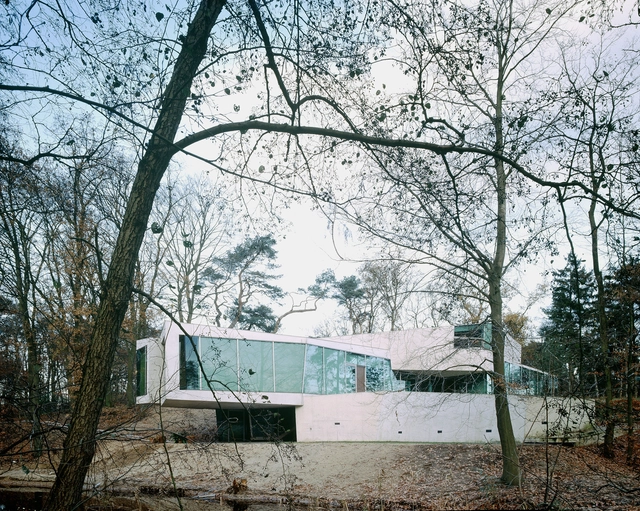
In 1993 a young professional couple from Amsterdam set out to build a private house unlike any other. They wanted to create something that “would be recognized as a reference in terms of renewal of the architectural language.” They reached out to several architects, including Rem Koolhaas, but finally decided to entrust the commission to Dutch architect Ben van Berkel after he studied the site and came up with a vision for the project, relating it to the couple’s lifestyle.
Located in Het Gooi, its design took over 5 years, going through several iterations, but always coming back to its core inspiration: the Möbius loop. The shape, defined as a single-sided surface with no boundaries, was the key to a new architectural language that aimed to weave together all the individual activities of each family member, allowing the functional program to be integrated within the dynamic structure. By 1998, when the house was completed, it became widely published and internationally recognized. It also became a sort of manifesto for its architect, as it uses an organizational principle to inform the final image.
MVRDV has just announced the WärtZ masterplan, that repurposes a former business park near the railway station into a dynamic innovation hub. Developed by AM and designed by a team including MVRDV, Orange Architects, and LOLA Landscape Architect, the scheme introduces residential homes, creative workspaces, dining establishments, and various neighborhood amenities. At the core of the new design is the newly renovated Wärtsilä hall, a former factory redesigned with a signature undulating roof topped by a hovering wooden apartment block.
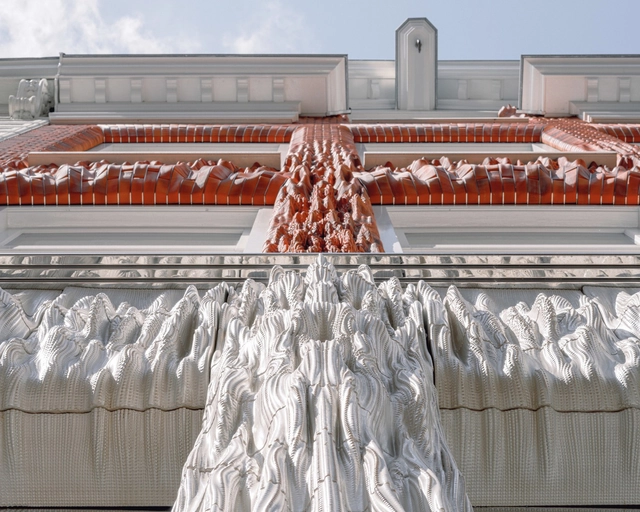
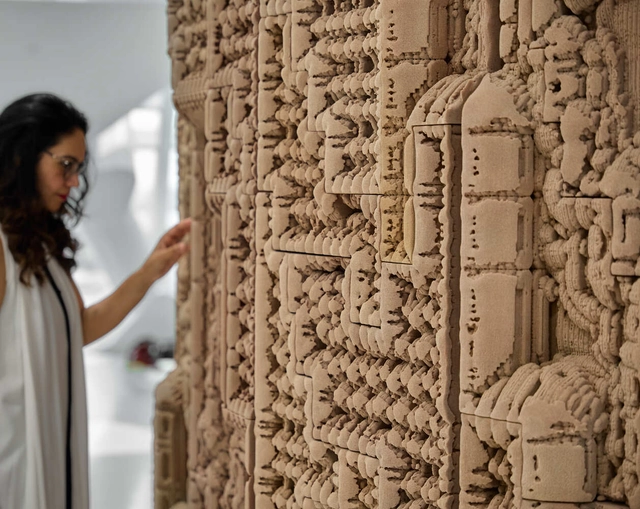
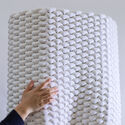
Advancements in 3D printing technology are progressing at an unprecedented pace, accompanied by a parallel surge in computational power for manipulating and creating intricate geometries. This synergy has the potential to offer architects an unprecedented level of artistic freedom in regards to the complex textures they can generate, thanks to the technology's remarkable high resolution and rapid manufacturing capabilities. If the question of production was out of the way, and architects could now sculpt virtually anything into a facade effectively and efficiently, what would they sculpt?
Vitryak Visitor center / MAKHNO Studio. Image Courtesy of MAKHNO Studio
Whether temporary or permanent, pavilions and urban installations represent an opportunity for architects to experiment with different shapes, materials, and textures. The results are often theatrical, welcoming visitors to new types of spaces, and blending the exterior and the interior. Pavilions are often commissioned for events, exhibitions, or cultural programs, offering opportunities to explore innovative materials, construction techniques, and spatial concepts on a smaller scale. Some events, like the Serpentine in UK or the MPavilion in Australia, propose a yearly reimagining of their structures, offering opportunities for established and emerging architects to express themselves. Others, like the Venice Biennale, reuse the permanent garden pavilions, but invite curators to prepare exhibitions to reimagine them for every edition.
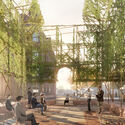
This week's curated selection of Best Unbuilt Architecture highlights projects submitted by the ArchDaily community showcasing pavilions and urban installations proposed in various environments, from urban plazas to agricultural fields or even airports. In Frankfurt, a translucent foliage-covered structure aims to honor the memory of a lost synagogue. in Ukraine, a visitor center reimagines an industrial landscape into an attractive meeting place, while a decentralized installation in the Netherlands hopes to bring communities together by collecting and sharing stories on scents. Whether temporary or permanent, these projects aim to provoke reflection and contemplation, while addressing larger themes of sustainability, resource availability, or the role of social spaces.
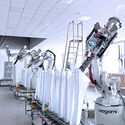
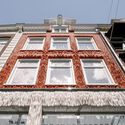
3D printing holds vast potential due to its ease of large-quantity manufacturing, its flexibility in terms of material exploration, and its ability to materialize all kinds of geometries. This year, architects and designers have looked at 3D printing technology to decarbonize construction materials, integrate contemporary aesthetics with traditional construction methods, and add a layer of craft and artistry to interiors and facades.