1. ArchDaily
  2. Light in Architecture

Light in Architecture: The Latest Architecture and News

Atelier Bow-Wow and Climate Scientists Honored with 2026 Daylight Award on UNESCO International Day of Light

On UNESCO's International Day of Light, celebrated annually on May 16, the Daylight Award announced its 2026 laureates. Established to support research into the scientific understanding of daylight and its significance for health, well-being, ecosystems, and architectural design, the award recognizes achievements in two categories: Daylight in Architecture and Daylight Research. This year, Japanese architects Momoyo Kaijima and Yoshiharu Tsukamoto of Atelier Bow-Wow were honored for demonstrating how daylight can shape shared spaces and everyday life, while marine biologists Brittany N. Zepernick, Steven W. Wilhelm, and R. Michael McKay of the United States and Canada were recognized for their research on aquatic microorganisms and their implications for planetary health and biodiversity.

Self-Sufficient Facades: Where Solar Protection Meets Renewable Energy

 | Sponsored Content

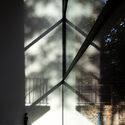
Taking a deeper look at the interplay of light and shadow in architecture seems to be a recurring topic on the agenda of many professionals in the field. Spaces of light and darkness are conceived to enhance circulation and spatial directionality, as well as to highlight the colors, textures, and forms of specific architectural elements. That said, the impact of natural light on building facades reveals the need to develop strategies that support energy savings, improve the thermal and visual comfort of interior spaces, and promote the reduction of carbon emissions. Considering light as another material in architecture, in what ways could its power contribute to the architectural experience?

Self-Sufficient Facades: Where Solar Protection Meets Renewable Energy - Image 1 of 4Self-Sufficient Facades: Where Solar Protection Meets Renewable Energy - Image 2 of 4Self-Sufficient Facades: Where Solar Protection Meets Renewable Energy - Image 3 of 4Self-Sufficient Facades: Where Solar Protection Meets Renewable Energy - Image 4 of 4Self-Sufficient Facades: Where Solar Protection Meets Renewable Energy - More Images+ 1

The Evolving Practice of Designing Light in Scandinavian Environments

Subscriber Access | 

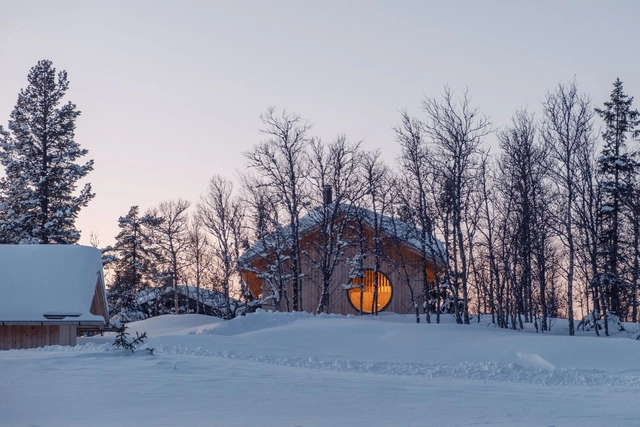
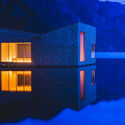
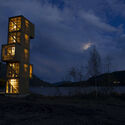
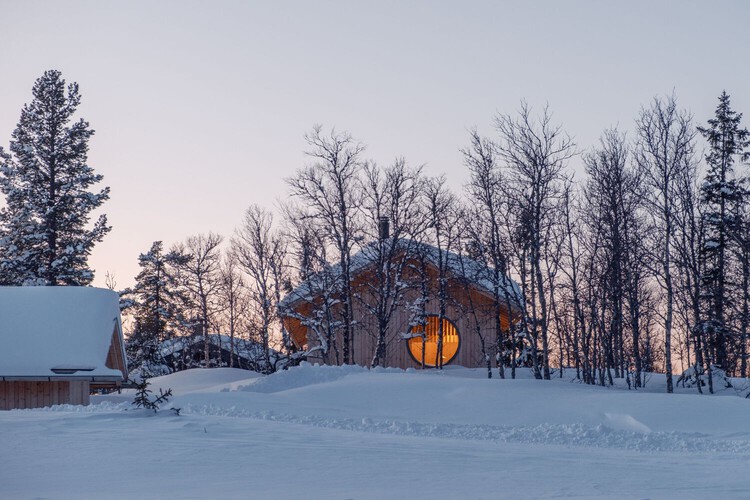
Scandinavia is shaped by environmental conditions that test both human endurance and architectural ingenuity, with long winters defined by limited daylight, low sun angles, deep snowfall, and cold winds that transform everyday movement, gathering, and habitation into deliberate acts. In this context, architecture is never neutral, and hospitality is never incidental. Buildings that welcome visitors across cities, forests, and coastlines must respond directly to darkness and cold, not by denying them, but by creating interior worlds that offer orientation, warmth, and psychological relief. The act of welcoming in Scandinavia is therefore inseparable from the climate, grounded in the understanding that shelter, light, and human presence are fundamental resources in Arctic environments.

The Evolving Practice of Designing Light in Scandinavian Environments - Image 1 of 4The Evolving Practice of Designing Light in Scandinavian Environments - Image 2 of 4The Evolving Practice of Designing Light in Scandinavian Environments - Image 3 of 4The Evolving Practice of Designing Light in Scandinavian Environments - Image 4 of 4The Evolving Practice of Designing Light in Scandinavian Environments - More Images+ 18

What if the Smallest Detail Helped Shape the Mood of a Space?

 | Sponsored Content

Across recent architectural discourse, interior design has been centered on how spaces shape psychological and atmospheric experience, and on what gives interior environments their emotional resonance. Attention has shifted toward small details rather than relying primarily on form or structure. Light, for instance, is not only a technical requirement but also an architectural material in its own right. It can structure space, animate surfaces, define textures, and shape atmosphere while influencing well-being. At the same time, the characteristics between minimalism and maximalism shape how atmospheres are perceived, prompting reflection on how approaches to simplicity or exuberance might influence mood. Rather than existing as opposing aesthetics, these tendencies explore how interiors interact with mental states, reflect personal identity, and respond to the subtle shifts in the way people inhabit and experience space.

The Line of Fragile Radiance: Neon Light as Atelier, Architecture, and Archive

Subscriber Access | 

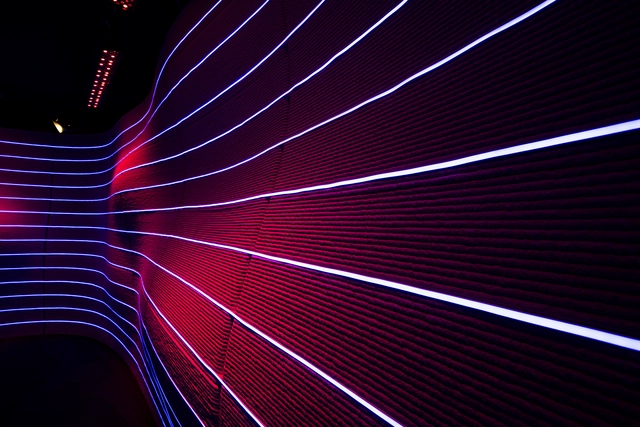
The fragility—and temporal beauty—of neon has captivated audiences since the early 1900s. First shown commercially by French engineer Georges Claude at the 1910 Paris Motor Show, neon spread rapidly, achieving broad popularity in the United States from the 1920s through the 1950s. Mid-century America saw it everywhere: from the casinos of the Las Vegas Strip to roadside motor inns along Route 66 and the spectacle of Times Square. By the latter half of the century, however, many signs were scrapped or left to decay, and numerous municipalities restricted neon as visually garish or power-hungry—despite the technology's comparatively modest energy use. In the U.S., renewed interest in neon arguably didn't meaningfully return until the early 2000s.

In Hong Kong, by contrast, neon was embraced with unusual enthusiasm at a time when it began to lose popularity elsewhere. Even as installation slowed in recent decades—largely due to updated ordinances requiring removal of overhanging signs whose support structures failed to meet safety standards—the city's affinity for neon never fully disappeared.

The Line of Fragile Radiance: Neon Light as Atelier, Architecture, and Archive - Image 1 of 4The Line of Fragile Radiance: Neon Light as Atelier, Architecture, and Archive - Image 2 of 4The Line of Fragile Radiance: Neon Light as Atelier, Architecture, and Archive - Image 3 of 4The Line of Fragile Radiance: Neon Light as Atelier, Architecture, and Archive - Image 4 of 4The Line of Fragile Radiance: Neon Light as Atelier, Architecture, and Archive - More Images+ 16

Cities Light Up in Solidarity with Ukraine

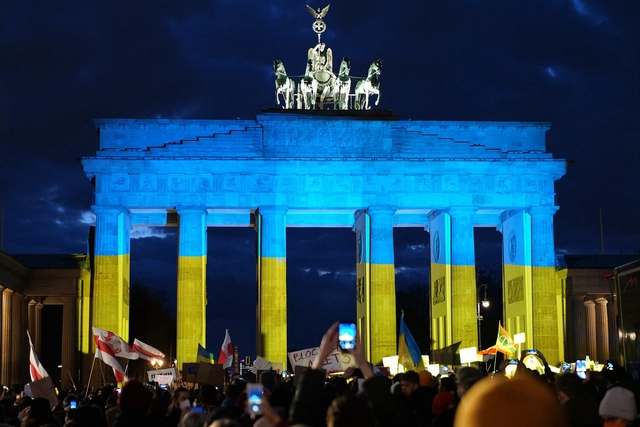
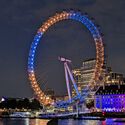
In the realm of media architecture and its role in supporting struggles for social justice, the recent Media Architecture Biennale 2023 (MAB23) in Toronto, Canada, shed light on a captivating aspect: The rapid and vast propagation of solidarity lighting in response to Russia's invasion of Ukraine in 2022. The synchronized illuminations, infused with activism and global art projects, became a powerful emblem of worldwide support for Ukraine during its time of crisis. Two emphatic female political leaders in Europe initiated the lighting solidarity message. Surprisingly, the blue and yellow Ukrainian flag illumination on iconic buildings worldwide defined an image of solidarity even faster in the press than large crowds of people in anti-war protests the weekend after the war began.

Cities Light Up in Solidarity with Ukraine - Image 1 of 4Cities Light Up in Solidarity with Ukraine - Image 2 of 4Cities Light Up in Solidarity with Ukraine - Image 3 of 4Cities Light Up in Solidarity with Ukraine - Image 4 of 4Cities Light Up in Solidarity with Ukraine - More Images+ 3

The Use of Light as a Divine Element in 5 Modern Churches

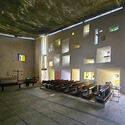
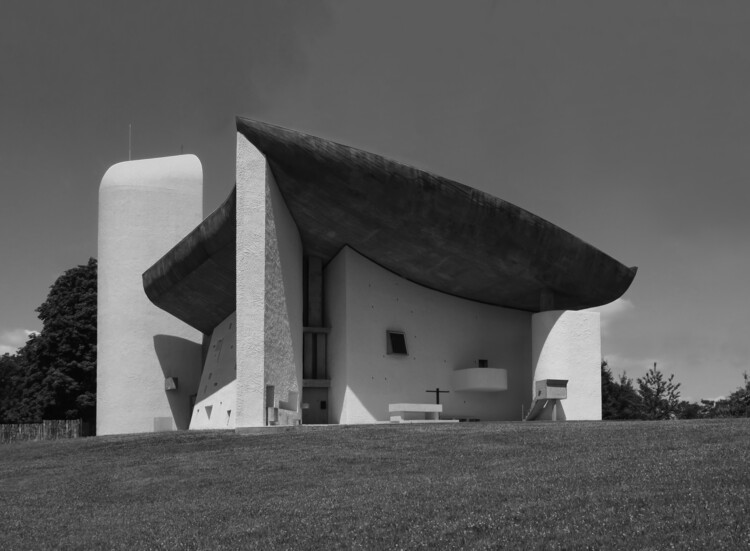
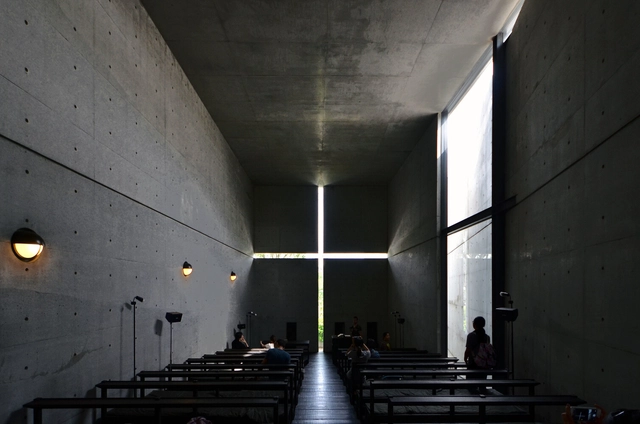
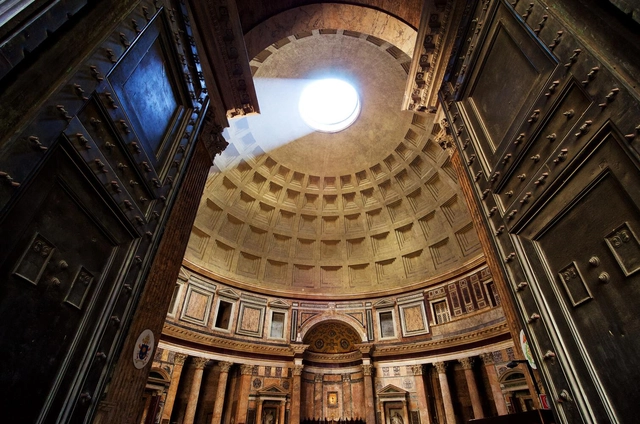
The use of light in religious constructions as an element of association with the divine has been present throughout the history of humanity. Historically, a series of temples from various religions have used this technique as an attempt to visually and perceptibly approach humans to a sacred and intangible dimension. Light is often given a spiritual connotation and significant symbolic force, capable of modifying people's relationships, perceptions, and experiences with their surroundings. Thus, it is an element that has been, and still is, used by architecture to create scenarios and effects in many religious spaces, especially churches.

The Use of Light as a Divine Element in 5 Modern Churches - Image 13 of 4The Use of Light as a Divine Element in 5 Modern Churches - Image 3 of 4The Use of Light as a Divine Element in 5 Modern Churches - Image 6 of 4The Use of Light as a Divine Element in 5 Modern Churches - Image 8 of 4The Use of Light as a Divine Element in 5 Modern Churches - More Images+ 10

Zanzibar: The Many Meanings of Light

Light — how we perceive the world around us — is an integral, emotive architectural element. Access to light is enhanced and limited in an architectural capacity globally, with architects of expensive tropical dwellings celebrating sunny vistas with expansive glazing, while a wide range of art galleries reject light in its natural form, eliminating it in adherence to the sensitive exhibit requirements of art pieces. Light in an architectural and urban sense is also highly symbolic, evident in the many metropolises of our world, but where this symbolism takes on an interesting dimension is in the archipelago of Zanzibar.

Zanzibar: The Many Meanings of Light - Image 1 of 4Zanzibar: The Many Meanings of Light - Image 2 of 4Zanzibar: The Many Meanings of Light - Image 3 of 4Zanzibar: The Many Meanings of Light - Image 4 of 4Zanzibar: The Many Meanings of Light - More Images+ 5

The Safety of Light: A Short History of Light in Public Spaces

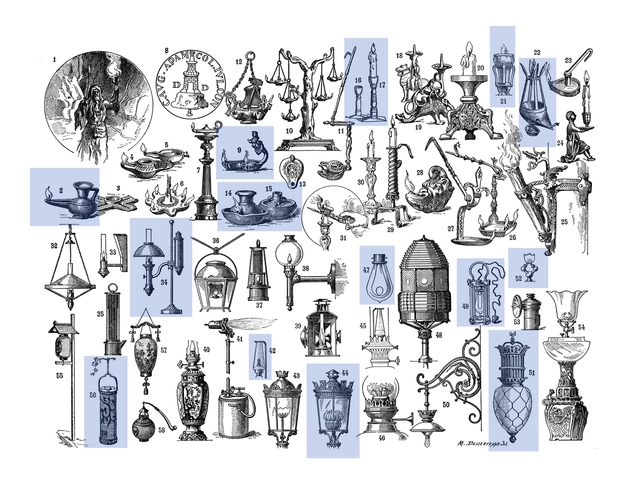
The simple activity of taking a walk in the evening can easily turn from a relaxing leisurely activity to a dangerous endeavor by removing just one element from the streetscape: public lighting. While not often recognized as defining aspect of urban environments, artificial illumination has played an essential role in defining the character of modern cities. Crime control, the appeal of nightlife, the rise of the shop window, revolutionary movements, utopias, and ideals of social equity are all concepts whose development is tightly linked to the history of public lighting. Technological advancements over the past centuries have continuously shaped the appearance and symbolism of streetlamps. Still, the this element has remains a constant throughout its history.

The Safety of Light: A Short History of Light in Public Spaces - Image 1 of 4The Safety of Light: A Short History of Light in Public Spaces - Image 2 of 4The Safety of Light: A Short History of Light in Public Spaces - Image 3 of 4The Safety of Light: A Short History of Light in Public Spaces - Image 4 of 4The Safety of Light: A Short History of Light in Public Spaces - More Images+ 7

Less is More: Minimal Window Systems for Maximum Light

 | Sponsored Content

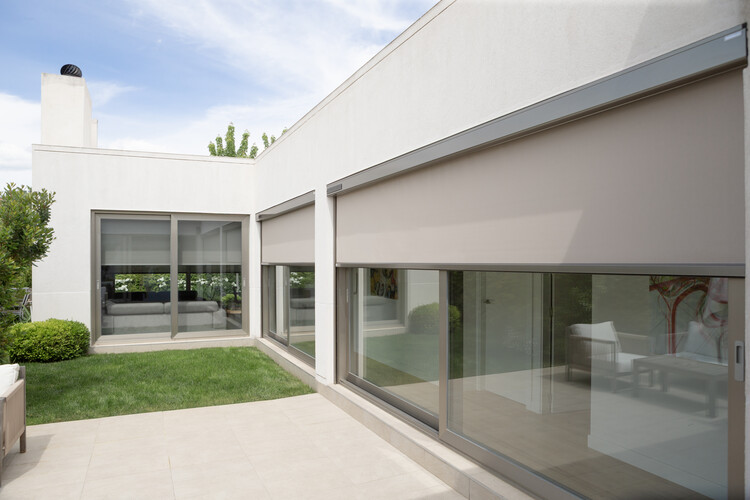
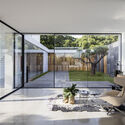
Le Corbusier once described architecture as “a learned game, correct and magnificent, of forms assembled in the light.” Natural light –and its accompanying shadow– plays a crucial role in shaping our perception of architecture, serving a long list of functions that define how users experience, engage and interact with buildings. From illuminating and accentuating to enhancing views and evoking warmth, the presence of daylight has the power to set a room’s tone and aesthetic language. It even has a significant impact on human health and well-being, including boosting mood and productivity, regulating circadian rhythms and reducing eyestrain and headaches –it makes our lives brighter, literally.

Less is More: Minimal Window Systems for Maximum Light - Image 1 of 4Less is More: Minimal Window Systems for Maximum Light - Image 2 of 4Less is More: Minimal Window Systems for Maximum Light - Image 3 of 4Less is More: Minimal Window Systems for Maximum Light - Image 4 of 4Less is More: Minimal Window Systems for Maximum Light - More Images+ 8

The Phenomenology of Light in Contemporary Religious Architecture

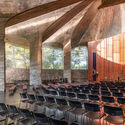
The significance of daylight in volumes of space exceeds its function of illumination. Light is a creative tool manipulated by architects to infuse a space with a metaphysical spirit, influencing the emotional states of its occupants. Having a phenomenological effect on the human psyche, light and shadow have been played with to invoke a sense of divinity and spirituality into the character of religious buildings. The interplay between architecture and light is a powerful one, shaping a deeper experience of spirituality.
The Phenomenology of Light in Contemporary Religious Architecture - Image 1 of 4The Phenomenology of Light in Contemporary Religious Architecture - Image 2 of 4The Phenomenology of Light in Contemporary Religious Architecture - Image 3 of 4The Phenomenology of Light in Contemporary Religious Architecture - Image 4 of 4The Phenomenology of Light in Contemporary Religious Architecture - More Images+ 7

World’s First 3D-Printed Film Studio Integrates Smart LED Lighting Technologies

World’s First 3D-Printed Film Studio Integrates Smart LED Lighting Technologies - Image 1 of 4World’s First 3D-Printed Film Studio Integrates Smart LED Lighting Technologies - Image 2 of 4World’s First 3D-Printed Film Studio Integrates Smart LED Lighting Technologies - Image 3 of 4World’s First 3D-Printed Film Studio Integrates Smart LED Lighting Technologies - Image 4 of 4World’s First 3D-Printed Film Studio Integrates Smart LED Lighting Technologies - More Images+ 35

By emulating manual manufacturing techniques, 3D printing utilizes digital models to create customized three-dimensional objects through an additive production process. This tool enables architecture to explore innovative forms, structures, and materialities, providing new paths for creative thinking. Progressively expanding its limits, 3D printing is integrating other existing technologies to unlock new uses and typologies. Such is the case with the work of Philipp Aduatz, which combines 3D printed textured structures with LED lighting, adding a new layer of complexity to enable the creation of the world's first 3D printed film studio.